Slayer – Show No Mercy

This album just turned 40 years old last week. Let’s relieve some arthritis, check out senior discounts, and get into it.
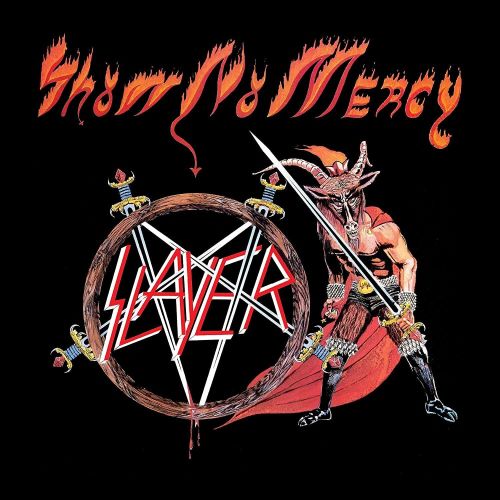
Slayer – Show No Mercy

Released December 3, 1983 via Metal Blade Records

My Favorite Tracks – Black Magic, The Final Command, Die By The Sword

This is more than just the story of Slayer’s debut album, it’s also the story of the formation of Slayer. The band did not fiddle about with a ton of members before getting a functioning line-up together – the founders of the band were Tom Araya on vocal and bass, Kerry King and Jeff Hanneman on guitars, and Dave Lombardo on drums. The group initially played cover songs, stuff like Maiden and Priest as well as the highly influential Venom. Slayer would incorporate the leather and spikes look as well as Satanic imagery into their performances.

Brian Slagel, the founder of Metal Blade Records, happened upon a Slayer gig and got the group to commit to the third volume of the Metal Massacre compilation series. He also got the band into a recording contract and Slayer set out to get their debut album recorded. Metal Blade did not have financial backing for the album so Araya and King used their own money and borrowed more to get the album done.

This album comprises 10 tracks at a slender 35 minutes of runtime. I am not going to go through every one of them today, instead I’ll just give the tracklist and then go over some highlights.

Evil Has No Boundaries

The Antichrist

Die By The Sword

Fight Till Death

Metal Storm/Face The Slayer

Black Magic

Tormentor

The Final Command

Crionics

Show No Mercy

There are other versions of this album out and about, some have a package that includes the band’s next EP Haunting The Chapel, this is a CD I used to have way back when and kind of wish I still did. There are others that have various bonus tracks.

The sound on this album is one that can be surmised from the bands Slayer were covering in their first days – this is a mix of the New Wave of British Heavy Metal, along with a heavy dose of Venom and Mercyful Fate. I’d hesitate to call this thrash, though Slayer are clearly a defining band of that genre. This is a bit of something else, maybe speed metal on Satanic steroids. But it also isn’t really wrong to call it an early thrash banger.

This album is brash and rough, though it does flow and is very listenable. It does not descend into a near parody of heavy metal in the way many might say Venom did. While this wasn’t produced by a mastermind of the studio (Slayer self-produced along with Brian Slagel), it also isn’t crude and unwieldy the way, say, Sodom’s debut stuff was.

The dissonance that would come to define Slayer’s music was already present here, with super fast riffs running along with Tom Araya’s vocals, which for this debut could be found in the higher register. He stayed in his more usual pocket for a lot of stuff but would let out a falsetto scream on many occasions, something in keeping with King Diamond. It’s also something we wouldn’t get much more of as Slayer charted more of a thrash course and Tom decided to preserve his vocal chords for a 26 year long career of belting out some of the most subversive heavy metal to be found.

This album can be reviewed fairly simply, it is an all-or-nothing affair if a person will get into it or not – it’s an early heavy metal album, very heavy, that sets a course for being the truly monstrous stuff that a lot of other acts got accused of being through the 1980’s and the Satanic Panic. The riffs and drumming are lightning fast, if not necessarily constructed in the greatest songwriting fashion. Yet, it all holds together far better than a lot of other examples of “rough” early ’80’s metal that didn’t wind up being massively influential. These songs are “on the rails,” if only just barely, but there is a cohesive unit here.

I will say that I absolutely love this album, it is one of my favorite Slayer records. It is not their defining sound by any means, we’d get that a few years later on Reign In Blood and beyond. But this one has a very nice quality in its rawness, yet still being a functional unit. We can praise Venom all day and night for being the forefathers of the extreme metal that would come, but Slayer and Mercyful Fate were the two early bands that made this sound like actual music.

If there’s a song that hints at the Slayer to come, it’s Die By The Sword. This brutal tale of ancient warfare give the staccato, militant sort of rhythm that Slayer would employ as they went along. It remained a staple of the band’s set throughout their career, being the most-played live song from this album (just ahead of Black Magic). What Slayer was to be was truly found in this grotesque epic.

But that isn’t to discount the rest of the record – personally, I love it all. The Antichrist is a high-pitched attack that goes as fast as it can, while The Final Command builds in pitch through running riffs and Dave Lombardo’s psychotic drumming ability. Tormentor is a tale of night stalking that sees some fantastic early Araya screams, and the closer Show No Mercy is an early showcase of how the NWOBHM influenced the next generation that would be called extreme.

Show No Mercy was the first salvo from what would become a heavy metal icon. It was somewhat immature and not expertly executed, yet it works in its juvenile and unformed charm. The record would do wonders for an early Metal Blade Records, selling over 20,000 when the label had nothing that had hit over 5,000 at the time. And Slayer would be off and running, launching a tour that recruited family members as the road crew.

It would only be a few years before Slayer truly broke through, becoming one of the Big Four of thrash metal on the back of their genre-defining Reign In Blood album. But Show No Mercy should not be overlooked, nor should its follow-up Hell Awaits. This was the true bowels of heavy metal in the early ’80’s. Parents and the wives of politicians might have been upset over what a lot of other bands were doing, but Slayer was on a whole other plane of existence from that.

Slayer – Divine Intervention (Album of the Week)

It was 1994 and Slayer were set to release a new album into an uncertain climate. The label was concerned about explicit themes, the band were writing songs more based in the darkness of reality than ever before, and their legendary drummer had quit the group a few years before.

Slayer – Divine Intervention

Released September 27, 1994 via American Records

My Favorite Tracks – Divine Intervention, 213, Killing Fields

Slayer had previously navigated a line-up change at the drum position, but back in 1987 they were able to convince Dave Lombardo to come back. In 1992, Lombardo was gone for real and for a decade, so Slayer would have to replace someone for a recording for the first time in their history. With Lombardo being considered Slayer’s strongest asset, it would be all eyes and ears on the replacement.

That role would go to Paul Bostaph, who had been the drummer for thrash act Forbidden. Bostaph delivered far more convincing performances than others who auditioned and also took the time to practice up the back catalog in the style of Lombardo to ensure fans would get the experience they wanted. He joined Slayer’s usual suspects – bassist and vocalist Tom Araya and guitarists Kerry King and Jeff Hanneman.

Slayer had gathered up a new round of songs to follow up their 1990 album Seasons In The Abyss, which was a critical and fan hit. King and Hanneman composed the music while Araya handled a fair share of the lyrics along with King and a few contributions from Hanneman. This time around the themes would be mostly based in the grim facets of reality rather than exploring the supernatural or demonic.

The focus on murder would be an issue as the album was deemed very explicit. It was banned for a time in Germany, who have very stringent laws around that sort of thing. The album’s imagery would fall in line with the brutal themes. While the cover is a well-done piece by noted metal cover artist Wes Benscotter, the CD’s inside tray and CD itself featured the image of someone who had carved Slayer into their arm with a scalpel.

This album is 10 songs that finish in 36:33, a pretty lean effort but fairly typical of Slayer.

Killing Fields

The first thing this song does is allow Paul Bostaph an extended intro to let the world know who he is. It then jumps into a mid-tempo yet very loud affair about killing, which is a theme for the record. This song has a bit more of the subtle dynamics of Slayer than a lot of others here and comes out toward the top of the heap. Good way to open things.

Sex. Murder. Art.

This one is not even two minutes long and sounds like Slayer going back to their speedy past. This is another one about brutality, as a sadist takes pleasure in consuming his victim. This one feels like a blip on the radar with how other songs get a bit more space and tempo to breathe on here but it shouldn’t be overlooked for its throwback to Slayer of yore.

Fictional Reality

It’s a shift now to political and social issues, though of course through the filter of Slayer these are looked at from a grim perspective. This one is simply about how everything is messed up and is going down the tubes, it’s not so much a message as it is an observation. The song works really well as a 90’s era Slayer track, this one fits right in.

Dittohead

The band slams through this one, also a political sort of song. The title is taken from the name given to fans of now deceased conservative media figurehead Rush Limbaugh. The song’s message of how criminals walk free in society isn’t really a diss of Limbaugh and probably more something he’d agree with.

Divine Intervention

The title track cools things off for a bit and gets into a creepy, atmospheric vibe for a bit. It’s a fitting approach as the song is one about alien abduction. This is very well done, hitting on the sheer horror of what that process would actually be like. The one departure from reality here turns out to be the album’s real highlight.

Circle Of Beliefs

Another pretty standard Slayer cut that visits the topic of religon, one of Slayer’s favorites. The lyrics don’t break a ton of new ground, it is mostly a confrontational song and some of the stuff just sounds like words put together to fill the line. It’s not all a lost cause, there are nuggest of wisdom here and the song itself is pretty good.

SS-3

Up next is a song referencing notorious Nazi Reinhard Heydrich. He was the chief architect of the Holocaust and one of the SS’s darkest figures. The song doesn’t get much into Heydrich’s dark history other than to reference his nickname the Hangman of Prague. A lot of the lyrics are about how Heydrich was successfully assassinated by the Czech resistance in 1942, with the song’s title being the license plate of the car he was in when he was attacked.

Serenity In Murder

This song would serve as the album’s single as it was released as an EP and got a video. It is just as the title suggests – another song about murder. This was one of the songs focused on when controversy arose over the album’s dark themes. It is a pretty good song, reflective again of ’90’s Slayer and also maybe a hint of shifts in sound to come later in the decade.

213

With an album centering around murder, nothing would be more appropriate as a centerpiece than a deep dive into the realm of serial killer Jeffery Dahmer, one of America’s most notorious butchers. While a bunch of Slayer songs are words thrown together to compliment buzzsaw riffs, Tom Araya truly delved into this one and delivered a very haunting and specific account of Dahmer’s tortured psyche. The idea of consuming someone to make them a part of you is in vivid detail here and this song was crafted with care and is a standout. Dahmer likely wouldn’t have enjoyed the song as he did not celebrate his terrible crimes and also he wouldn’t have much time to – he was killed in prison just two months after the album’s release.

Mind Control

As I just said above, some Slayer songs are words thrown together over riffs. This closing track is one of those. It’s suitably heavy and brutal but it’s not covering any kind of new ground. It’s just Slayer being Slayer.

Divine Intervention would come out of the gate strong – the album debuted at number 8 on the US Billboard 200, at the time a record high position for Slayer. It would gain gold certification in both the US and Canada and has been one of the band’s most successful albums.

Despite that success, this one is kind of a quiet one when discussing Slayer albums. It doesn’t have the same legacy as Seasons… or other Slayer records. It is a bit of an underrated or forgotten album. Part of that might be down to the production, which every Slayer member has said could have been better. The album was recorded in fits and spurts across multiple studios and producers were changed a few times, so there is something to that. The music still works but it does lack certain sound dynamics, even for Slayer.

I personally do rate this album pretty highly, I enjoyed it right out of the gate in 1994 on release. Sure it’s a bunch of noise, but what else is Slayer supposed to be?

Metallica – Kill ‘Em All (Album of the Week)

It was inevitable – I would someday write about the first Metallica album, as I’m pretty well assured to write about them all at some point. Today is the day for the first one.

Metallica – Kill ‘Em All

Released July 25, 1983 via Megaforce Records

My Favorite Tracks – The Four Horsemen, Jump In The Fire, Whiplash

There is a lot of history behind the rise of Metallica, and that can be accessed in any number of interviews, videos and books so I’ll spare a lot of it here. Essential to this album – A Metallica line-up of James Hetfield, Lars Ulrich, Cliff Burton and Dave Mustaine went cross-country from San Francisco to New York to record this album. Mustaine was let go from the band in New York and replaced by Kirk Hammett in what is probably the most discussed line-up change in heavy metal history.

Megaforce Records founder Jon Zazula (Jonny Z) had put up every dime he had to finance the recording, which is why Metallica hauled ass that far to record in the first place, as Metal Blade Records head Brian Slagel couldn’t quite afford the costs. After necessary re-mixing, Jonny Z was totally out on his ass financially and it took awhile for him to find distribution for this album. I guess many record label execs wanted “Passed on Metallica” as a line item on their resumes.

Metallica wanted to call the album Metal Up Your Ass but Jonny Z convinced them to rename it for marketability purposes, thus Kill Em’ All was born. Once Metallica’s stock began to rise they sold plenty of Metal Up Your Ass t-shirts as well as copies of Kill ‘Em All.

Kill ‘Em All is a fairly hefty album with 10 songs coming in at 51 minutes. There are now several other versions around but I’ll handle the base version today, as I typically do. Dave Mustaine is credited on four songs, he would attest to having been involved with more in what is heavy metal’s biggest argument ever. All I know is that I was about to enter kindergarten when they recorded this and I have no clue who did what.

Hit The Lights

The opener comes in with a grand bit of noise and then kicks into a whole lot more noise. The lyrics are simply a verbal account of what the song and Metallica’s first album will do, which is to play loud, fast and get the crowd whipped into a frenzy. Mission accomplished.

Hit The Lights had a few other versions before the album release so this song was out there a bit. This was a song James Hetfield brought to the band from his prior band, he and Lars re-worked the tune for Metallica.

The Four Horsemen

The next track is one of Mustaine’s contributions and a song he originally brought in. His old version was called Mechanix and had much different lyrical themes. For post-Mustaine Metallica, the band reworked the song into a tale of the riders of the Apocalypse. This is a lengthy track, showing off early that Metallica were unafraid to challenge the conventional length of songs. And the riffs here are totally New Wave Of British Heavy Metal on steroids, showcasing the direct influence of one metal movement on another.

Motorbreath

This is an all-out banger in both music and lyrics. Not subtle at all, this one pounds the point home from start to finish. It’s all about living fast and hard, the inspiration for and rallying cry of this new form of heavy metal back in its infancy. It would seem as though Metallica pulled the title as tribute to their massive influence Motörhead, though band members have said this was coincidental as it relates to this song.

Jump In The Fire

This was another song Dave Mustaine brought into Metallica. It was originally a song about sex, but after Mustaine left it was re-written to be about being damned to Hell and literally “jumping into the fire.” This one really shows off how Metallica could deftly walk the line between savage heaviness and catchy songwriting – sure this is super heavy, but those riffs are attention-grabbing.

Anesthesia (Pulling Teeth)

This is a Cliff Burton bass solo. It’s not some typical bass work either – this is effect-laden and shows Cliff using the instrument like a guitar. Burton was a massive part of Metallica’s early legend and remains a mythical figure. Burton played this a lot in his early days and it was what first drew attention from Lars and James.

Whiplash

Celebrated music journalist Mick Wall wrote in his Enter Night: A Biography On Metallica that Whiplash was the moment thrash metal was introduced to the world. He’s totally correct, this is total breakneck stuff that set the template for heavy metal’s 1980’s course. This was also the first single released from the album. Lars has cited Venom as a primary influence for the speed of this song.

Phantom Lord

This is another song that shows off the NWOBHM influence mixed with Metallica’s early savagery. It is a menacing tale of a warmongering tyrant, something that would become a thrash trope over the years. This is another one credited to Dave Mustaine.

No Remorse

This one hangs out mid-tempo for most of its run, the almost marching feel of the rhythm compliments the lyrics about excelling on the battlefield without feeling remorse or regret for one’s actions. In the last few minutes this song explodes out of its mid-paced shell and goes off the rails for a crazy finale.

Seek And Destroy

This extended cut would become a venerable classic in Metallica’s huge live catalog. This one keeps it pretty simple, with a riff that jumps out and grabs hold as the lyrics paint a tale of terrorizing whatever unlucky souls happen to be out at night. It is Metallica’s third most-played song with nearly 1,600 live airings, and assuredly more to come.

Metal Militia

The closer is another thrash monster that celebrates the leather and denim clad legions found at the early thrash shows. This army would grow to millions as the ’80’s went on and Metallica ascended to the kings of the heavy metal mountain.

Kill ‘Em All got the attention of music critics on release, who loved the heavy yet still somewhat refined sound of Metallica’s delivery. Commercially the album sold better than expected out of the gate, allowing Megaforce Records to get more solid financial footing and quickly spreading the word about Metallica. As Metallica gained in stature, Kill ‘Em All was along for the sales ride, eventually breaking 5 million copies worldwide, with 4.5 of those being in the US.

This album is more raw than the band’s offerings afterward, and of course Metallica would conquer the world with a sound more trimmed down from the thrash period of the ’80’s. But this record is a massive landmark in the development of heavy metal. While the mainstream of the 1980’s would be known for hairspray and ballads, Metallica would be the flag-bearers for a far heavier version of metal that spawned countless scenes and offshoots in the decades since. It was ok to play as heavy and fast as you could or wanted, there was an audience for it.

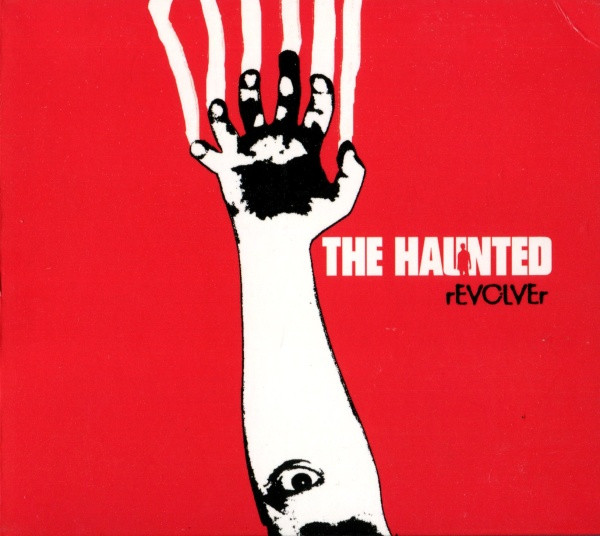
The Haunted – Revolver (Album of the Week)

In 2004, one of Sweden’s leading purveyors of death and thrash hooked back up with an old flame, threw a few new bits into their metal, and had a day with the response.

The Haunted – Revolver

Released October 18, 2004 via Century Media Records

My Favorite Tracks – Who Will Decide, Abysmal, Sabotage

The Haunted have a curious history, having been formed in 1996. The band was formed by 3/5 of the former lineup of Swedish death legends At The Gates, who had broken up one day prior to The Haunted’s founding. The band was founded by brothers Jonas (bass) and Anders Björler (guitar) and Adrian Erlandsson (drums), all former members of ATG. They were initially joined by vocalist Peter Dolving and guitarist Patrik Jensen. Dolving and Erlandsson would leave The Haunted after the band’s first album, to be replaced by Marco Aro and Per Möller Jensen.

The Haunted gained acclaim on their next two albums with a pretty straightforward Swedish thrash sound. Marco Aro left the band somewhat suddenly in 2003, which led to the group seeking a reunion with original vocalist Peter Dolving and the release of this album.

The album’s name was styled as rEVOLVEr, which was meant as an indication that The Haunted’s music was evolving from its entrenched roots in Swedish thrash. Though for the sake of clarity I will style the album’s name as Revolver in this post, maybe someone will get confused and think I’m talking about The Beatles. A few seconds of riffs from The Haunted album will likely correct any confusion.

Revolver is a hefty slab of music, no matter which configuration it comes in. The standard edition features 11 tracks at 47 minutes, while the red-covered deluxe edition offers 2 bonus tracks. And as usual, the Japanese version has its own bonus track and keeps another track from the deluxe set. For brevity’s sake I will go over the standard tracklist though I have always had the deluxe version. Here is the standard album’s tracklist:

No Compromise

99

Abysmal

Sabotage

All Against All

Sweet Relief

Burnt To A Shell

Who Will Decide

Nothing Right

Liquid Burns

My Shadow

The album opens with a pair of songs that are pretty standard fare for The Haunted – brutal, fast and loud. No Compromise and 99 both come in hard and stay that way. No Compromise is one of a few songs on the album that isn’t woefully negative in its outlook, it is more of a rallying cry for the outcasts. 99 is a very bleak look at the state of the system and doesn’t offer much in the way of hope, something that isn’t to be found on this album hardly at all.

Abysmal starts off as something quite unexpected – this is, in many respects, a ballad. It starts off very quiet, with Peter Dolving almost speaking the lines, until the song suddenly gets much heavier though keeps its dirge-like pace. The song lives up to it’s title, this is as dark as it gets with no way out and no light at the end of any tunnel.

Up next is Sabotage, which is a full-tilt delivery that is like punk on steroids. It’s followed by All Against All, a more mid-paced track that is a very harsh look at an ended relationship. This one has the “feel” of a hardcore song though still bringing its thrash underpinnings. The Swedish thrash and death sound was a huge influence on the metalcore scene and here we have one of the Swedish bands putting it all together.

If you were hoping that Sweet Relief would bring you respite from the bone-crunching riffs and stark lyrical themes, well your hope was misplaced, as the song slams in and keeps the metal flowing. The next song might be the one you’re really looking for – Burnt To A Shellis another quasi-ballad and this one is also not negative to the point of being psychologically disturbing. It does offer some of that bleak imagery but also gives a fair respite from it in the chorus.

Up next is Who Will Decide. This is another hard one and also features guest vocals from Sick Of It All frontman Lou Keller. This song really exposes the true problems with the system and why things never really seem to get truly better. And this was recorded in 2004, this one is even more relevant 19 years later.

The album heads into the home stretch with Nothing Right, another hard hitter that spells out exactly what the title says. Liquid Burns comes in next and is a very messed up look at some crazy relationship and abuse stuff, as well as the influence of alcohol and its numbing effects on the ills of society. The album closes with My Shadow, this being a full-on “ballad” and also the bleakest of the bleak in terms of theme. This conclusion is the most desperate and hopeless song of them all, just totally giving up and being nothing.

Revolver was a remarkable moment in The Haunted’s career. The album served to both honor the musical legacy of the band as well as update the sound a bit and it slotted in nicely alongside the emerging metalcore movement of the early 00’s. If The Haunted were living somewhat in the shadow of At The Gates, Revolver saw them cast off that legacy completely and fully flesh out their own identity.

It isn’t a huge secret that the lyrical themes of extreme metal tend to dwell on the negative side, but on this album the lyrics truly are dynamically written to be as hopeless as possible in many cases. It’s not like a lot of metalheads even really take in the lyrics on a lot of death or black metal – the voice is often just another instrument. But with this album Dolving’s vocal delivery is comprehensible and the words truly stand out in their desperation when they’re taken in.

The Haunted would continue course with Peter Dolving for three more albums before he departed the group in 2012. The band would also contend with double duty, as At The Gates reformed in 2008. The band nearly split up but would reconvene with singer Marco Aro and release yet more vital music in the 2010’s.

For all of the band’s history in the hallowed Swedish metal scene, Revolver might be the most unique and dynamic moment of The Haunted’s catalog. The songwriting featured variety and dynamics and the lyrical content went to a place far scarier than the imagined hells of most metal albums – the cold, stark facts of reality for many hopeless souls.

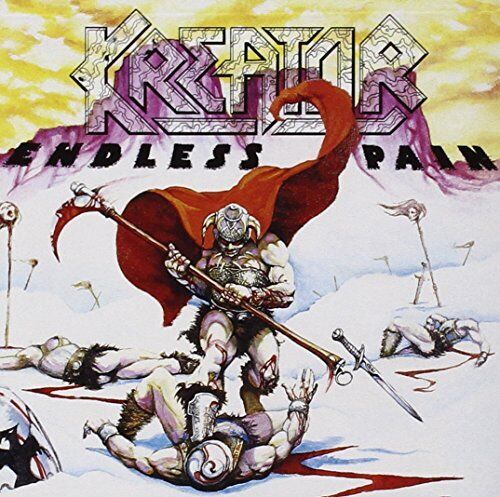
Kreator – Endless Pain (Album of the Week)

Going back to the mid-80’s to visit with a cornerstone of the German thrash scene and the debut of one of metal’s most prolific acts. This week will also showcase a new feature – me not using a shitload of words.

Kreator – Endless Pain

Released October 11, 1985 via Noise Records

My Favorite Tracks – Endless Pain, Flag Of Hate, Total Death

Kreator formed in 1982, known by the names Metal Militia, Tyrant and Tormentor before finally settling on Kreator. The band was staffed by guitarist/vocalist Mille Petrozza, bassist Rob Fioretti and drummer/singer Jürgen Reil, aka Ventor. Both Mille and Ventor remain the nucleus of Kreator to this day.

Noise Records was an upstart metal record label in Europe that was just off the ground and running by 1985. The label signed Kreator and Endless Pain was recorded in just ten days. Noise would become a hotbed of European heavy metal and Kreator would rise to be a signature act for Noise.

Endless Pain was a primitive and cruel-sounding record, a thrash album coupled with the early extreme metal noise fathered by the likes of Venom, Celtic Frost, Bathory and Mercyful Fate. This was raw, aggressive and evil – it was not cultivated for a greater pop audience, rather it was metal made by and for the growing masses who were pushing for heavier and heavier music in the wake of thrash’s arrival.

Given the album’s savage and simple construction, as well as no real need to visit the lyrical themes of each song in isolation, I’ll skip a lot of steps today and simply list the tracks, then discuss a few highlights.

There is one other thing to note here – while Mille has been the voice of Kreator for the bulk of existence, on this album Mille and Ventor split vocal duties. Mille does vocals on songs 2, 4, 6, 8 and 10 while Ventor handles the odd-numbered stuff.

Endless Pain

Total Death

Storm Of The Beast

Tormentor

Son Of Evil

Flag Of Hate

Cry War

Bonebreaker

Living In Fear

Dying Victims

This album is a buzzsaw, with lo-fi production and a savage approach to both instruments and lyrics. There is a similar cadence to many of the songs, it is in some ways an embryonic version of what Kreator would become. It doesn’t offer much in the way of variety – either you like this album or you don’t, there isn’t a lot of “track 5 is cool but 6 I can skip.” It’s an all or nothing deal.

While this could be called “underdeveloped” by some, Endless Pain is hailed as a classic just the way it is. Thrash as a whole was moving toward major label deals and high-end production values around this time in the US, while in Germany it was a far more raw offering that kept the underground and “dangerous” feeling alive – while Satanic Panic parents where wailing about hair metal, this kind of stuff was also around.

For me this album is the perfect balance of listenable production and the raw sound many metal bands were looking for, or were perhaps stuck with due to budget constraints. No this production won’t win any industry awards, but the music is clear and listenable. I have heard and even liked a fair number of awfully produced albums in my years, but Endless Pain was never one that upset me. It walks the line very well and its lo-fi atmosphere enhances the record.

And this noise would bear influence – just as Kreator and their countrymen Sodom and Destruction were keeping thrash lo-fi and running along the same lines as Venom and the like, a new group of musicians influenced by all of this would lay the groundwork for death metal and black metal. By the time 1990 rolled around, heavy metal had mutated quite a bit from how it entered the 1980’s.

A few of the songs from Endless Pain have become Kreator staples – the title track and Flag Of Hate are the signature tunes from the record, and Tormentor also sees a fair bit of play to this day. This raw set was not forgotten as Kreator refined their sound through the ensuing years, rather it was celebrated as the savage beginning of a new metal legend.

Endless Pain kicked off the nearly 40-year career of the band that became legends of thrash, German and worldwide. While US thrash was creeping up sales charts and was just about to explode in mainstream popularity, Kreator and their peers offered up a new, raw approach that would help steer several other metal subgenre offshoots in the years since. Kreator have refined and reinvented themselves over the decades but at times it seems their first notes still ring the loudest.

Megadeth – Peace Sells … But Who’s Buying? (Album of the Week)

This week it’s time to dig out the seminal second album from what would become thrash legends and another of the foundational albums of the “Big 4 of Thrash” movement.

Megadeth – Peace Sells … But Who’s Buying?

Released September 19, 1986 via Capitol Records

My Favorite Tracks – Peace Sells, Devil’s Island, The Conjuring

Megadeth had released an essentially self-produce debut, Killing Is My Business, a year prior. The album did light sales but did put the world on notice that Metallica’s former guitar player was up and running with his new outfit. Major label Capitol Records came calling on Megadeth and signed the group to a deal while the follow-up album had already been mostly recorded and really only needed a remix.

Megadeth’s line-up was the same as it was for the prior record – Dave Mustaine on guitars and vocals, Chris Poland on guitar, Dave Ellefson on bass and Gar Samuelson on drums. This line-up stability would not hold for very long.

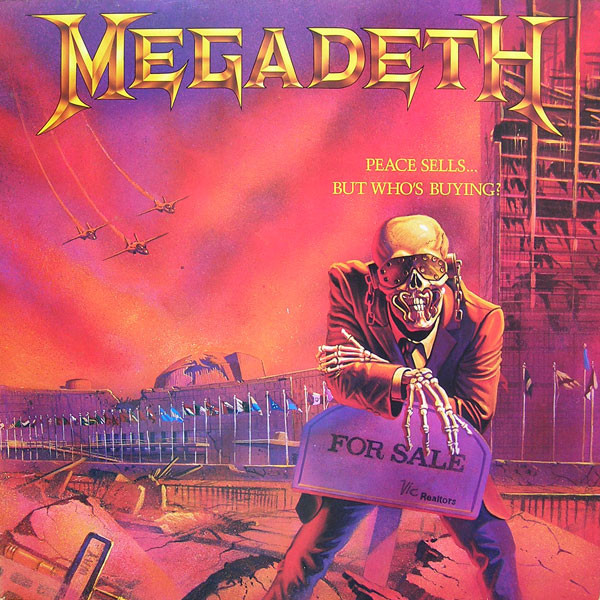
The cover art was done by Ed Repka and has been one of heavy metal’s most celebrated album covers. The distinct image of Megadeth’s mascot Vic Rattlehead on a For Sale sign outside a United Nations building that was destroyed in an apparent nuclear strike is one of heavy metal’s enduring images. It would lead to a lot of work for Repka and notoriety for Megadeth.

Today’s affair is a lean one at 8 songs and 36 minutes, though packed with songs that would come to define both Megadeth and thrash metal.

Wake Up Dead

The opener was issued as a single in the UK. The song kicks in straight away with monster riffing and a tale Mustaine spins of sneaking into his house, trying not to wake his lover because he fears she’ll kill him if he’s caught coming in late. This was apparently based off true events, Mustaine was living with one girl but in love with another, but was also homeless and needed the girl he was living with not to know he was messing around.

The lyrics are funny but rather brief, it is the guitar work that is the star of this song. Mustaine and Poland absolutely go off all over this song, both with electric solos and also some rhythm changes to keep the song fresh and moving along. It is absolute guitar wizardry on this album and it gets started right out of the gate.

The video for this song was directed by Penelope Spheeris, known for her work on the Decline Of Western Civilization series.

The Conjuring

The second track gets into the subject of evil – specifically performing occult rituals and summoning the Devil. It is another solid, breakneck thrash tune with a dash of sinister riffing thrown in to truly deliver its insidious message home.

The Conjuring was a song removed from the Megadeth setlist for many years, starting in 2001, due to the born-again Christian beliefs of Mustaine. Eventually in 2018 he was convinced to play the song again and it has been a fairly regular part of modern setlists.

Peace Sells

The sort-of title track is next and it offers up what has become one of Megadeth’s signature songs. The instantly memorable bass line opens the track, a snippet that would be used by MTV News for a very long time, and apparently without compensation. As the other instruments join it’s pretty clear this is going to be a song not to be forgotten.

The song famously rattles off a list of stereotypes about metalheads and Mustaine sarcastically retorts to each – “What do you mean I don’t pay my bills? Why do you think I’m broke?” being one of many snarling and honestly accurate observations. The song was meant by Mustaine to counter the negative perception of metalheads, showcasing that the group were far more intelligent than conventional wisdom let on.

Peace Sells hit gold as a single and has been carved in stone onto the list of greatest Megadeth songs. Even in the wake of future success for the band, Peace Sells might be the band’s most distinct and recognizable song.

Devil’s Island

The hard hitting thrash does not relent as this song slams through a haunting story about Devil’s Island, a former French prison in French Guiana in South America. The prison was infamous for ill treatment of inmates.

The song outlines the plight of a condemned prisoner who is eventually spared from execution, but must then face the reality that his life will be spent on Devil’s Island and the execution might have been a better option.

Good Mourning/Black Friday

This two-part song begins with an instrumental, then transitions into a savage account of a serial killer inspired by occult influences. Black Friday goes a pretty breakneck pace through the account of this butcher. The song has become a something of an unofficial theme for the day after Thanksgiving in the US, at least among metal fans.

Bad Omen

This one builds with an elaborate intro before launching into a more mid-paced version of the sound found elsewhere on the album. It’s another guitar wizard entry, with both leads and some of Mustaine’s god-level rhythm work. This song is also about the occult, this time a few people stumble into a satanic ceremony where the participants basically get what they asked for, of course it doesn’t end well.

I Ain’t Superstitious

Up next is a cover song, from what was originally a blues tune in the 1960’s penned by Willie Dixon and performed by Howlin’ Wolf. The song was famously covered by Jeff Beck, with Rod Stewart on vocals.

Megadeth’s version is suitably thrashed up for the record, it isn’t a stumbling block and the music perfectly fits the album. It also manages the great task of also not sounding like shit, something that can easily happen when metal bands decide to “spice up” non-metal songs. The Megadeth-isms work pretty well here and the song is an enjoyable listen.

My Last Words

The album closes with one last thrash barnburner and of course another guitar workout. This one goes all out as Mustaine relays a tale of people playing Russian roulette. The song perfectly matches the intensity that must be felt when playing one of the stupidest “games” ever invented. While the song stays on the rails much of the time, it does twist and turn a bit towards the end and the hard-hitting outro/chorus. It is perhaps one of thrash metal’s underrated tracks and one that Dave’s former bandmate Lars Ulrich cites as his favorite Megadeth song.

Peace Sells … But Who’s Buying? was a true moment of arrival for Megadeth. The album did not chart well initially but did see sales that would lead it to a US platinum as well as other international certifications. It was well-received critically on release and in years since has gone on to be considered one of the cornerstone albums of thrash metal. It joins Metallica’s Master Of Puppets, Slayer’s Reign In Blood and Anthrax’s Among The Living as the pillars of the Big 4 of Thrash.

The Megadeth line-up would not hold for long after the album’s release – both Chris Poland and Gar Samuelson were fired for excessive drug use just after touring for the record. Both Mustaine and Ellefson would remain and cycle through a few members before nailing down the band’s most stable line-up entering 1990.

For Megadeth it would mark only the first of many career achievements. While many bands only get to record one great album, Mustaine and company would do it again a few albums down the line with Rust In Peace, then they would achieve heights of commercial success next on Countdown To Extinction. Many acts would give up valuable body parts to record one thing as great as Peace Sells…, yet for Megadeth it was but one of several notches in the belt. The argument over Megadeth’s best moment can be contested, though this album is certainly in the conversation.

Slayer – Die By The Sword (Song of the Week)

Welcome to now-regular Tuesday posting and the new home of my infant series Song of the Week. I’m sure the premise is easy to grasp – I’ll talk about a cool song each week. Sometimes the song will just be one I want to talk about for no other reason, other times the song might have some link with events, the day in question, or whatever. Today is more of the latter.

This is June 6th, which is a special day in the world of heavy metal. It is the International Day of Slayer, or International Slayer Day if you’re more concise. This was started in 2006 (6/6/6, heh heh heh) as a means to honor Slayer and also mock certain other entities. Slayer themselves called it a day in 2019, which maybe was a great time to quit a band when looking back in hindsight, but their legacy lives on and this is a day to pay respects to them.

Last year I dove into the thrash masterpiece Reign In Blood to honor the day, this year I’m going all the way back to 1983 and the debut album Show No Mercy to highlight a favorite of mine. This was Slayer’s debut which they put up the money to record. I’d say the gamble paid off after 36 years of heavy metal terror.

Die By The Sword is, much like the whole of the album, an immediate and sinister tune that’s a call to arms, but of course for the legions of the fella down under. (Satan, not Australians) Musically this is a fairly standard early thrash number, in fact maybe a bit more thrash than other songs on the debut. The verses move along at a more fast, speed metal pace while the brief chorus chugs along more in what would become familiar thrash territory. It’s a conventional song structure but the very short chorus makes its final reprise at the end a bit abrupt, though with Slayer abrupt is a household term.

Lyrically the song is full of fairly crude references to glorifying Satan and slaughtering, well, whoever; all of this was common fare among early Slayer songs. There is some actual, biblical basis for the song’s title and premise, as Jesus offered a paraphrased version of “live by the sword, die by the sword” in the Book of Matthew. Of course in the “ceremony of opposites” fashion of heavy metal, Slayer are talking up the concept as opposed to cautioning on it as Jesus did. And that concludes today’s Bible study.

Die By The Sword is a fan favorite from among the early Slayer catalog, it was the band’s 12th most-played song live and the highest placing among tracks from Show No Mercy, at least according to Setlist.fm. It makes many appearances on the several live materials released over the years and was one of the early songs played on night one of the band’s two-night finale in November 2019. While Slayer changed form well away from the sound of their early material, Die By The Sword was one that stuck around for the duration.

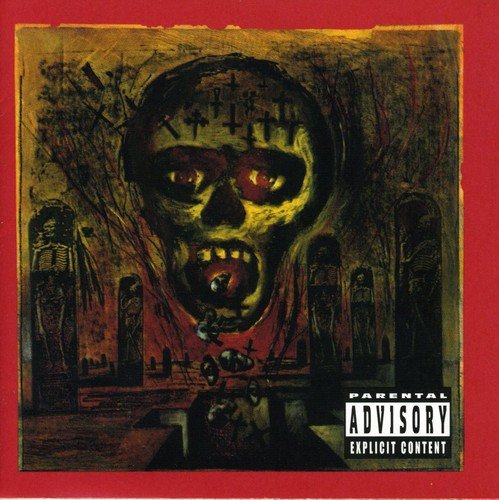
Slayer – Seasons In The Abyss (Album of the Week)

This week it’s time to head back to 1990 and have a look at an album that propelled Slayer into a new decade.

Slayer – Seasons In The Abyss

Released October 9, 1990 via Def American

My Favorite Tracks – Seasons In The Abyss, Dead Skin Mask, Skeletons Of Society

Slayer had quite a run of it through the late ’80’s, what with essentially redefining thrash metal with Reign In Blood and then pulling up on the throttle and chilling out a bit on South Of Heaven. The change in speed and/or sound did not resonate with everyone but was probably a wise choice, as attempting to do RIB again would have likely proven disastrous.

The band hit the studio with Def American mastermind Rick Rubin to crank out their next album and hit on a bit of gold with a combination of their more mid-tempo fare along with some bursts of energy. Slayer would also mostly pull back their lyrical fare from the demonic and supernatural to more of a look at real-world issues.

Seasons In The Abyss comes in with the standard American Recordings track list of the time at 10 songs (that’s all Rubin and company would pay a group for) and a run time of 42 minutes, which is a virtual eternity in Slayer world.

War Ensemble

The opener sets a quick pace as the band pound through a dark look at war, one of metal’s favorite topics. This is a stark look at the true scope of a battle and it’s supplemented with a very aggressive and re-energized Slayer. We don’t necessarily know what or where this battle is, though the Rhine is mentioned so Germany is a good guess, but it is definitely brutal.

Blood Red

The pace comes down just a hair as the band shred through a condemnation of governments using violence to silence their citizens. This one is quick and dirty and the next song kicks straight off.

Spirit In Black

This time we do revisit the more supernatural with a descent into Hell. Tom Araya is running the show as some poor sap is sent on his way to the eternal torture chamber. The song gives a few call backs to prior Slayer works, such as “blood forever rains” and “Hell awaits.” It’s also clear that the band did not piddle around with finding new guitar tones or anything – they have their sound locked in and banged this out efficiently.

Expendable Youth

A song that discusses gang violence, though of course in Slayer fashion. Gangs were the number one scapegoat of media and politicians around this time and of course the root causes of gang existence were never truly addressed. Slayer are not offering any solutions, though, this is more of an observation of the battle for turf and the cold reality of bodies on the ground.

Dead Skin Mask

This track is a look at infamous murderer and grave robber Ed Gein, the real-life influence for many Hollywood serial killers. Slayer amps up the creepiness factor with a twisted riff as Tom Araya yells through the process of a killer’s mind deteriorating. It would mirror how Gein would claim that he did not remember moments during his murders or grave robbing. This one has been one of Slayer’s marquee tracks through the years.

Hallowed Point

Pretty simple here – the band kicks the speed up a fair bit and discusses the issue of hollow point bullets, which were a hot-button issue in the early 1990’s. The bullets expand on impact and can literally tear apart a person’s insides, as opposed to the more straight shot of a “typical” bullet. The song does not really participate in the debate over the bullet, rather it simply follows the journey from firing to shredding someone apart.

Skeletons Of Society

The tempo on this one goes way down, almost to a doom metal pace. The song marches through the eyes of a survivor of an apparent nuclear holocaust. It’s probably not shocking that Slayer’s version of the post-apocalypse is a grim one. The solos from Kerry King and Jeff Hanneman here, always dissonant, are an extra special touch on this track that’s a bit of a departure from the album’s norms.

Temptation

Back to a thrash pace again and also the topic of satanism and the old classic stuff like possession and being corrupted. While couched in a lot of fanciful and supernatural stuff, the song does make a fairly real-world point about how it’s always evil that is the tempter and the attractive option, at least viewed through the lens of belief in that sort of thing.

Born Of Fire

Slayer breaks it open speed wise here as they get at least within the ballpark of Reign In Blood speed. The song is kind of a stock rundown of more evil imagery as the lyrics were written last minute by Kerry King. While Slayer’s slower pace has worked well through this album, it is nice to hear some straight-ahead bashing for a bit.

Seasons In The Abyss

The album closes with a track that really slows things down and gets into some gnarly sounding tones. A creepy intro runs for a few minutes before the song really kicks in and picks things up a fair bit. The lyrics are a bit more abstract here, they are dealing with the concept of The Abyss as presented by noted occultist Aleister Crowley. I personally have no clue what it’s really about so I’ll leave it alone. A brilliant video was also filmed for the song and was shot in Egypt, adding a huge degree of visual awe to the song.

Seasons In The Abyss would mark another notch in Slayer’s now-lengthened thrash belt. The album would get to number 40 on the Billboard album charts and also break on several other nations’ charts. An eventual US gold certification would come, and the album has sold at least 800,000 copies.

For Slayer it was a boost in reputation after South Of Heaven and its transitional nature left some fans alienated. Now people were used to the newer Slayer sound, and there were still a few all-out thrash moments to be had. It also positioned Slayer quite nicely entering the 1990’s, as their style would fit in with rising “alt-metal” movement while conventional thrash fell by the wayside. These songs, both in studio and live form, would frequent MTV programming, especially Headbanger’s Ball.

Though Slayer would make it through the very tough 1990’s relatively well, it wouldn’t come without some cost – drummer Dave Lombardo, often regarded as the band’s best asset, would quit the group in 1992. But he left after a successful album and tour cycle for a record that reinvigorated long-time fans and brought in many new ones, myself included.

Metallica – For Whom The Bell Tolls

This post was part of a series that I called S-Tier Songs. I later decided to abandon the series in favor of a simpler Song of the Week format. I am keeping these posts as I wrote them but removing the old page that linked to the list of S-Tier Songs, so that is why these posts might look a bit odd. Enjoy.

I always have the next handful of songs for this planned out. I was about to work on one of them when I went back and read through the list of what I did so far. I could have been knocked over with a feather to find that this song was not already on my list. So today it’s time to right that wrong.

Metallica – For Whom The Bell Tolls

The third track from 1984’s seminal thrash record Ride The Lightning was a massive force that captured the attention of the metal world out of the gate. The song was released as a promotional single and has endured as one of Metallica’s best-loved songs through the course of their 40-plus year career.

Ride The Lightning has been the subject of the Album of the Week before, that post is here.

The intro to the song is classic, but it actually begins with something else. Two bells ring, followed by the drop of the riff. If you hear more than two bells, then you are most likely about to enjoy the classic song Hell’s Bells by AC/DC. Or maybe some other song that has bells but isn’t as good as either this or AC/DC. It’s a fun game to play if listening to the radio or whatever and the bell starts ringing to figure out which song is playing.

Once the bell is over with it’s all guns blazing with the guitars and – wait, what is that infernal noise? It’s actually bassist Cliff Burton with his rig plugged into a few effects, doing a part he used to do in old Bay Area bands alongside Jim Martin and Mike Bordin, who would go on to form Faith No More. Cliff’s twisted bass piece fits the guitar part very well and the song trudges on to begin the verses.

The song’s lyrical fare is inspired by Ernest Hemingway’s 1940 novel of the same name as the song. I’ll just get this out of the way – I read the book in high school because of the song and I wasn’t all that into it. But it’s pretty badass when distilled into a song – it’s set in the Spanish Civil War of the 1930’s. In the book, a group of fighters are planning to blow up a bridge to stall an enemy advance when shit hits the fan and people are butchered. In the song, a group of fighters takes a strategic hill but get blown apart by an air raid or artillery strike soon after. Different specifics but same general concept.

For all the song’s epic feel and delivery, it is also a very, very simple song. This takes a few minutes for even a novice guitar player to pick up on, and yet it is the full weight of heavy metal crushing down on someone. It was proof that metal was more than just “play fast and scream” and that songwriting and arrangement were a part of the process. And also proof that Metallica especially would be sharp in that field.

For Whom The Bell Tolls entered Metallica’s setlists and did not leave – according to Setlist.fm, it is the band’s fourth most-played song live. It would appear the song has never left the stage in the band’s many gigs over the years. It would be a clear inclusion on any “greatest hits” of Metallica list and certainly ranks toward the top of many fans’ favorite songs lists. And the single went gold in the US, an impressive feat as the band were not a radio or MTV darling in their early years.

Why is this an S-Tier song?

For Whom The Bell Tolls is one of Metallica’s immortal anthems, a crushing tale of the horrors of war set to a simple yet devastating heavy metal track. Even in all the subsequent world-conquering fame Metallica would enjoy, this song remains one of their most beloved. It was a showcase for Cliff Burton and it proved the band had the writing chops to excel beyond the scope of simply playing fast and loud.

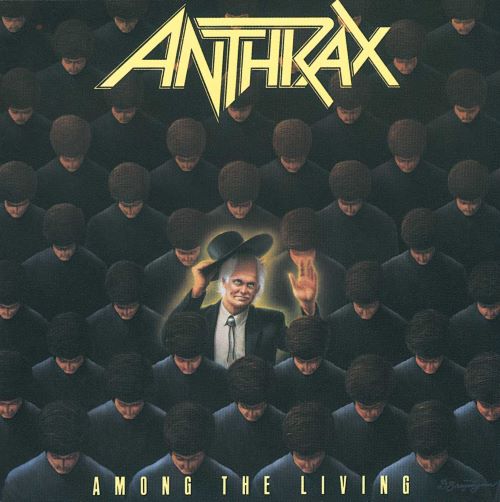
Anthrax – Among The Living (Album of the Week)

This week it’s a deep dive into one of the pivotal albums of thrash metal. This record has come to be the defining moment of one of thrash’s most enduring institutions and would launch the group into heavy metal royalty.

Anthrax – Among The Living

Released March 16, 1987 via Megaforce and Island Records

My Favorite Tracks – I Am The Law, Among The Living, A Skeleton In The Closet

Anthrax had been a band on the rise after their second album Spreading The Disease. The group had toured extensively with a variety of metal luminaries and were in Europe opening for Metallica when a bus accident claimed the life of Cliff Burton. Anthrax were motivated by grief at the loss of their friend and peer, and hit the studio to vent their anguish. They chose to record at Compass Point Studio in the Bahamas, and purely because it was where Iron Maiden had laid down their classic run of albums.

Anthrax worked with super producer Eddie Kramer on the album. Kramer has an extensive list of works to his credit, for my own purposes he is best known as the caretaker to the legacy of Jimi Hendrix. Among The Living was recorded in quick and easy fashion, but then Kramer had an idea for a mix laden with more modern techniques. Anthrax did not like Kramer’s embellishments and it was decided to proceed with the original, dry mix. A wise choice, as what was released truly captured the music in its pure form.

The album was primarily written by drummer Charlie Benante and guitarist Scott Ian. It is 9 songs with a 50 minute run time, so a fair bit to go over here.

Among The Living

The opener/title track bears lyrics inspired by Stephen King’s epic novel The Stand and the main antagonist Randall Flagg. The song thrashes hard and also lays down a groove foundation, an element that would go on to redefine and carry metal several years later.

As with all of the songs here, Anthrax deftly walk a line between heavy and melodic, incorporating more melody than their thrash peers were known for. Much of that had to do with the talents of singer Joey Belladonna, a more accomplished vocalist than what was found across much of thrash.

Caught In A Mosh

The lyrics see Scott Ian venting frustration at any number of dumb people and occurrences, but the song itself became a calling card for the mosh pit and outgrew its original meaning. In life or at a show we are all often caught in a mosh. At least the second one is fun (if you’re under 30).

I Am The Law

It’s geek time on the album as Anthrax offer up a homage to Judge Dredd, the gritty comic book character from an apocalyptic future. While it’s not rare for bands to offer up tribute songs to fictional characters they like, it is pretty rare for the songs to turn out as great as this. This truly does capture the essence of Judge Dredd and the harsh atmosphere of his comic series.

I Am The Law was the first single from the album and was backed with I’m The Man, Anthrax’s first foray into combining rap with their metal. They are chief among acts who deserve credit/blame for the 1990’s.

Efilnikufesin (N.F.L.)

Contrary to popular opinion, the song is not about the National Football League. Rather the NFL refers to the song’s full title backwards, “Nise Fuckin’ Life.” It’s a song warning of the dangers of drug addiction and, unlike last week’s band, Anthrax walked the walk in that regard. The primary inspiration for the song was John Belushi, the beloved actor who died of substance abuse at age 33.

A Skeleton In The Closet

It’s back to the dark, dark world of Stephen King, this time his story Apt Pupil provides the backdrop for the song. The story involves a very sadistic teenager discovering his neighbor is a Nazi war criminal in hiding and a lot of murder and other bad stuff, like faking report cards. The songs does a pretty good job of summing up the story.

Indians

This tune pays tribute to the Native Americans who were genocided off their lands by evil colonizers (i.e., our ancestors). Lest they be accused of cultural insensitivity, singer Joey Belledonna has heritage from the Iroqouis tribe. This was another single from the record and remains one of Anthrax’s most popular songs. The “war dance” riff is one of the band’s most memorable.

One World

In a bit of a twist for thrash metal, this song actually warns of the dangers of environmental destruction and nuclear holocaust, rather than wishing for it to happen like many in the thrash world. It is steeped in Cold War-era dialog, which was still simmering in the late ’80’s when this hit.

A.D.I./The Horror Of It All

The first part of the song is an instrumental, the second pays tribute to Cliff Burton. Though the lyrics are a bit vague in that regard, Scott Ian did eventually shed light on their true meaning.

Imitation Of Life

No science fiction here – the final track is about all of the slimy people in the music industry. Far more than what can be compressed into one song, for sure.

Among The Living saw Anthrax rise to a new level of recognition. The album would go gold, and I’ll admit that I’m a bit shocked it wasn’t platinum. It does appear the band never had a US platinum, which is surprising. But no matter, Anthrax were now a band of note with this 1987 magnum opus.

One area where Anthrax got a lot of love was the skateboarding world. The Anthrax image didn’t quite “fit” the thrash scene, even if the music did, but they were a big hit among the skateboarding faithful. And while I myself never really got into skateboarding, my peers who did were who I got a lot of my early music from, including this.

This album essentially “made” the careers of Anthrax, giving them a far bigger platform and bigger tours to go along with it. It can be tough to haggle over the best of their catalog, what with their different phases and shifts, but this is the album that probably lands a consensus number one.