I figured I would jump in with what a lot of other bloggers do and start going through my collection of music singles. It’s a pretty easy way for me to add another post each week – just pick out something and talk a bit about it.
For the first few months I’ll go over one a week, these are not related to each other in any way other than they are singles in my collection. I think there’s roughly 17 to look at, that number could go up by a few after I have another look through my collection.
If my count is right, this should conclude my “general” singles series in November. At that point I’ll get into the one band’s singles collection that I do have a fair number of – that being Iron Maiden. (shocking, I’m sure). That series will run for at least half a year at a once-a-week clip and will grow by at least a little bit in the time before and during it.
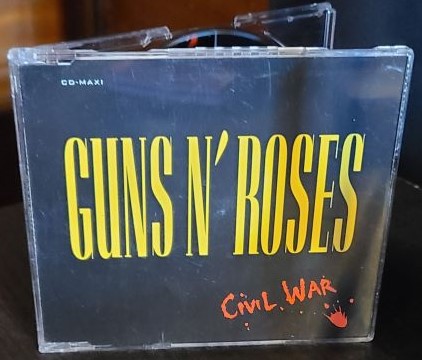
But enough exposition, let’s just get to it. The first one I’m gonna go over is the one I most recently acquired. As the title suggests, it is the Guns N’ Roses Civil War “EP.” This was released in a variety of configurations, I opted for a cheap CD version with three tracks – two songs and an interview with Slash. This version was a European release – while other parts of the world got versions of the EP, nothing was distributed in the US.
The song is a little bit odd in history as it was originally released as part of a charity compilation about a year before its appearance on Use Your Illusion II. This EP was released in several countries in 1993 though in some odd way it doesn’t technically count as a single released from the UYI albums. I don’t know why and the distinction isn’t really important.
I previously discussed the Use Your Illusion albums in great detail back last September – here’s a link to the first of four (!) parts of that where I went about turning the two albums into one. In the final portion I talked about my five favorite tracks on the albums and – spoiler alert – number one was
Civil War
The song is the reason for being in terms of this single. I wrote about it before – it’s an amazing work. It’s a gripping look at the tangled threads wove in society from the 1960’s until 1990, and it’s not any less meaningful today. Sadly, it’s probably more poignant. Civil War might have gotten a bit overlooked in the wake of the bombastic singles from the records but over time it’s gotten due recognition as one of the best tracks from those albums, if not the best. I really don’t need to say much more about it since I’m almost positive this song will turn up in another series of mine…someday.
Garden Of Eden
This song appears on some configurations of this EP and not on others. Since it’s on my CD it’s what I’ll go with. The song is a short one and pretty good. It does pretty well on sequencing here since it’s a fast and loose song that is a bit of fun to contrast the heavy subject matter of Civil War. The song has a punk-ish edge to it and, although I didn’t select it for my “final cut” of UYI songs, it’s one I’m happy to hear.
Interview with Slash
The exclusive content to this EP is a small interview with Slash. It runs seven minutes and there is no one asking Slash questions. I assume the questions were edited out and that Slash didn’t really talk for seven minutes straight but I honestly don’t know for sure. Slash talks about how the band’s mega success wasn’t entirely clear to him as it was happening and goes over a few other things through the interview. It doesn’t have any dirt or jaw-dropping revelations but it’s a nice listen from a few years before he would originally leave the group.
All in all this was a neat little single to add to the collection. It doesn’t offer any alternate versions or anything, both songs are album cuts. The interview stands as the exclusive content. Not a red-hot collector’s item but not a bad pick-up.
I’ve written about this a few times now but it’s time again to look at the price of vinyl. It’s a massive topic in the world of music collecting (obviously) and it’s been a thorn in the side of many a collector for the past while. I know I feel the pinch and have tightened up my buying, and several others have relayed that they too are either limiting or cutting out buying altogether.
But – there is a mitigating factor to consider here. It’s a big one too. The economy? It’s a pile of trash right now. Inflation is out the yazoo (though prices are apparently creeping their way back down). Wealth disparity is at some kind of all-time high and everything just seems like a burning wreck right now. Even if things get better, it will be incremental and will likely take time to get to some kind of plateau.
So – what’s the rule about what happens to the prices of collectibles in a crap economy? Collectibles take a nose dive in price when the economy sucks. It makes sense – spending money on collectible stuff is a luxury, and in tough times many people have to pare down and focus on the essentials. It might be a lovely thought to have a collection of every Air Supply single released in all major countries, but who can afford that when rent is quadrupling in price?
There is a bit of caveat here – this possible drop in price likely only applies to the secondary market. New vinyl releases will most likely retain their current price points. New vinyl has been going up, a symptom of supply constraints and the rising costs of everything. Vinyl costs more to make so it will cost more to buy. Maybe there will be some budget-minded reissues or something once the supply issues are fully worked out, but I would imagine the new vinyl market will remain mostly where it is now.
But old records? Those have been priced to the moon in the past few years. Before the great vinyl boom of the 2010’s, a person could hit up a yard sale or flea market and walk away with a nice copy of an old standard for a quarter or a buck at best. Even a copy of a hallowed release like Air Supply’s Greatest Hits could be tripped over at the entrance to a flea market.
Since the vinyl boom, though, prices of even pedestrian old releases can bust $20. Budget record shopping is almost non-existent. Anything with a hint of collectible value is through the roof, and scarce releases like a lot of 1990’s vinyl have insane prices. That is the market that is likely to suffer in an economic downturn.
All out of love AND money
I haven’t noticed much action on prices yet, or much of anything from the vinyl market. But the signs are out there in other collectible categories. The collectible card games market (Magic The Gathering, etc) is seeing soft demand and lower prices on old product. The warning bells are already ringing in that sector, and it only stands to reason that other markets will follow.
Of course any real kind of downturn doesn’t happen overnight. There will still be tons of listings on Discogs for prices well above the listed median. But those records will just sit there. Stores that want to move inventory will begin marking down. And private collectors faced with troubling times will list their stuff in fire sale mode, driving prices down.
This scenario isn’t necessarily a boon for the budget-minded collector. The vinyl boom brought about a host of new record stores, owned and operated as small business ventures. Those stores will suffer during a vinyl downturn. This whole thing won’t just be a price correction because of the economy – it will lower demand and stunt the ability of sellers to find buyers. The ability to get vinyl at lower prices would come after a massive culling and our collecting landscape would not be the same.
Now I don’t know what will truly happen – it could be total doomsday, or it could be some lesser version of events that knocks stuff down a bit but doesn’t have earth-shattering effects on the scene as a whole. But the formula for a vinyl downturn is there – simply put, it’s in the economic downturn as a whole. How it all plays out remains to be seen.
On the note of vinyl and prices – I know myself and many others have been limiting purchases, or given up totally. I’ve only bought a few things this year and I have few plans for future buying – it’s expensive and I need my money for other things.
Here is a video done recently by my buddy David on his YouTube channel Hard Rock Reverie. He talks about this issue and his own suspension of purchases. There are a lot of collecting dominoes falling right now and that’s probably not a good sign for the state of the market.
It is time to update the ongoing Tool Fear Inoculum vinyl saga. I have posted about it before, this was when I brought it up as part of a larger look at vinyl prices. While I want to cover that latter topic again, this Tool thing has grown legs of its own now and deserves its own post.
Last I wrote, the band had offered an ultra deluxe 5 LP, signed version of the album to VIP ticket holders at concerts. The box was priced at $800 for them. A “normal” (or, uh, unsigned) version of the box was made available to the public in April for around $160. I secured a copy, even though I’ve had a bit of a year and have better things to spend my money on.
My last line about the Tool LP package in that post has me cracking up right now:
“These will be flipped very hard when they hit in April, no doubt about it.”
It’s LOL time. Quite the opposite of being flipped hard, it turns out there is plentiful supply of the 5 LP box set. As soon as the boxes hit the market it was clear that supply was going to outpace demand. $160 quickly turned into $130, then the Discogs median crashed into the $99 dollar range. It is very easy to pick up a copy of the 5 LP box set for $99 plus $8 or so shipping today, months after release. Brick and mortar stores will sell them at cost just to get rid of them, which is a touch more than online pricing but should tell you something about just how depressed this asset is financially.
It turns out I was wrong about something. But hey, in today’s climate of Record Store Day flipping and price gouging, can anyone blame me for guessing that the Tool box would go for big money? I was far from the only one – many Tool fans rushed to get their pre-orders in, with good old FOMO (fear of missing out) playing its part in the modern vinyl economy.
Before I move on I do want to mention something – I am not, at all, mad about this. I wanted Fear Inoculum on vinyl and I have it. It’s not “worthless” by any means, though it is worth less than what I paid for it. It is an album I really wanted to have on vinyl and now it is on my shelf – its financial value is not a concern beyond any possible replacement cost from a disaster of some sort. I don’t feel “ripped off” because the price is less than I paid for it. I don’t complain when a record has a secondary market value far above its retail price, so I’m not gonna cry over spilled milk if one isolated album actually was pressed beyond demand.
If the Tool vinyl saga ended here, it would be a mildly funny but not all that out there story. It’s almost a nice thing – in the age of vinyl scarcity and supply constraints, a group of fans got a deluxe format for not a bad price. But, alas, the saga does not end here.
This is actually the third time I brought up the Tool vinyl in a post. I also covered it in a post called “Sticker Shock” when the world first learned of the deluxe box. I’ve updated it once to reflect a lower price point than what I originally anticipated, and I’m about to update it again to reflect that almost everything I said in that post is now bullshit. Or actually, it isn’t.
Here’s a choice cut from the Sticker Shock post:
“After all – if the vinyl takes up 5 sides, that only requires 3 LPs.”
It’s true – the deluxe version of Fear Inoculum is on 5 single-sided vinyl records with etchings on the other sides. That would easily fit on 3 LPs, it’s very obvious. It was obvious to me when I typed it in February and it’s obvious to Tool and their record label, who will be releasing a 3 LP version of Fear Inoculum in August. The price point for this release is running around $65.
On the surface it does seem funny that there will be a $65 version of the record when a $99 deluxe version can be had. But hey, in today’s economy, that $35 difference can add up. It saves money, it takes up less space than the gigantisaur 5 LP box, it (probably) isn’t insanely reflective and impossible to photograph like the 5 LP box. This version also has unique artwork from guitarist Adam Jones, so I’ll bet even some people who bought the big box will also buy this. Tool fans are easily parted from their money, we’ve certainly seen that in action. (I will not be buying the new configuration, for clarity’s sake).
Something else I said in Sticker Shock still rings true – Aenima is not readily available on record, the original pressing is scarce and costs several hundred dollars. And yet that’s better than the status of 10,000 Days, which is 16 years old and has never been pressed on (official) vinyl. But here we are with now two official pressings of the most recent album. That is one point several fans have been up in arms about that I can’t fault them for. I too would like to have vinyl copies of both of those records.
Of course, no one outside of the usual channels knows if there are plans for pressings of those other albums – we’ll find out if an when pre-orders open, more likely than not. It would seem strange to essentially flood the market with Fear Inoculum yet ignore highly sought-after versions of past records. But Tool is a strange band, so I won’t place a bet on it either way.
And so now, finally, I can (probably) lay the Tool Fear Inoculum vinyl saga to rest. My old “Sticker Shock” post from February seems freaking obsolete now, and even the blurb in the other post barely covered the tip of the iceberg with how this whole ordeal panned out. But hey, it’s hard to complain about having a ready supply of something on vinyl, given the scarcity and supply constraints still gripping the industry.
I’ve done a few posts about money and prices of a few different things recently. I thought I’d do a few quick updates and also discuss the insane prices of a few records. But first, I’ll provide two quick recaps of prices I covered awhile back.
Megadeth cryptocurrency
As I wrote in the original post, I was a foolhardy individual and dropped $10 on Megadeth’s crypto launch awhile back. That was in December when $MEGA was first on offer. The price was tanking when I posted about it, my $10 had whittled down to $7.
Here we are a month and a half later. My $7 in 21 Megacoins is now a bit under $5. It appears that economic forces have further stifled any fortune I might have made off Megadeth and cryptocurrency. I really don’t know what to do with these Megacoins so I will probably just ride this rocket straight into the ground. I could have done any number of things with that ten spot but oh well, the meme was worth it.
Tool’s last album on vinyl
I did a post just after we all found out that Tool were selling “tour editions” of Fear Inoculum on record for $800 at their shows. The price point was insane, even for an autographed edition of an unwieldy, super deluxe 5 LP edition in ornate packaging.
As updates to my original post indicate, the band opened up the “normal” edition of the album for pre-orders to ship in the beginning of April. Those not-tour editions came with a much more reasonable price tag of $170. Though I probably have better things to spend money on I went ahead and pulled the trigger on a pre-order. It’s excessive and not at all necessary, but under $200 is a justifiable price point for the ultra deluxe package. A more budget-friendly 3 LP edition could be manufactured, but as I noted in the original post, Tool are in no rush to get their albums on vinyl so I didn’t want to be left out. These will be flipped very hard when they hit in April, no doubt about it.
Vinyl prices are nuts
I’ve been over it a few times, including just the other day – vinyl prices are crazy. The supply is constrained by outsized demand and undersized manufacturing. Things do not appear poised to get better any time soon, it seems people are hoping that capacity magically increases itself or something.
One thing I’ve noticed is that the secondary market is really getting out of hand. I don’t know enough about it to know if it’s coordinated flipper/gouging activity or if it’s simply supply and demand. Maybe it’s both, I don’t know.
Over the past 18 months or so I picked up most of the Alice In Chains discography on vinyl. Facelift got a new reissue in 2020 and I got it from the local record store on release. I bought Dirt, Unplugged and Jar Of Flies/Sap as well, all were older reissues that I paid normal retail prices for. I don’t have the self-titled release as it hasn’t been reissued and goes for big money, I also don’t have 2000’s albums as they spiked quite a bit right after release.
But going back to the Layne Stayley-era albums I did get – I bought these about a year ago, maybe late 2020. Again, I paid $30 or less for each of them, they were all on the store shelves and priced in the normal $25-30 range. Here are the present Discogs median values for each of these releases.
Dirt – $111
Facelift – $37 (nothing listed for sale under $50 though)
Jar Of Flies/Sap – $109
Unplugged – $189
Those prices are crazy. Facelift is still holding serve as a newer reissue but the intent of sellers to mark it up is clear. The others have flown up in value and are approaching crazy territory. And, as usual, the copies listed for sale are well over the median prices.
Alice In Chains is a very popular act and their vinyl will remain in high demand. Everything could be reissued again to keep prices at retail for buyers who don’t want to sell a kidney for the records, but of course the supply constraints of vinyl manufacturing come into play. How long would it take to press new runs of these albums? Would the major label take priority at a record plant and shut out smaller labels already far behind on album releases, or will the label just let the high secondary market continue and do a reissue later on? It isn’t like record labels really care about secondary prices, other than to gauge perceived demand for a back catalog repress.
I’ve had thoughts about selling off my AIC records with these insane prices going on. I don’t want to mess with the online marketplace though and I don’t know what I’d get from a record store for them, so I probably won’t. But these prices are tempting to sell into.
The price of vinyl records and the scant supply remains a hot button issue in the music world. Prices of records, even fairly recent reissues, are causing eyes to pop out of heads. Even a run through stuff I bought at retail prices last year is making me consider offloading some stuff at inflated secondary values.
But the core issue at the heart of all ills in the vinyl world is the supply constraints. Existing plants are backlogged for months on end. Bands wishing to release albums often wait months after a digital and CD release date to offer a vinyl version. Some independent labels have floated the idea of not pressing vinyl or only doing it as an ultra-limited format. Vinyl is a red hot market but its supply issues could cause a bubble burst that might lead to a collapse of the format. People can’t be interested in what they can’t get.
All of this is at the heart of a new communication from Jack White, released yesterday. White has been involved in every facet of the music business – fan, artist and producer, as well as label owner, retail store owner and vinyl manufacturer. His statement discussed the issues at hand in the record industry through what he sees via his Third Man Records group.
This article from Pitchfork provides White’s statement, which is also in the above YouTube clip in abbreviated form. In it White is asking the 3 major record labels to invest in their own vinyl record production facilities in order to head off the massive supply issues currently plaguing the industry.
White’s appeal takes the high road and does not throw major labels under the same bus that many music fans like to throw said labels under. Last year Adele’s latest release was widely blamed for clogging record plant capacity as half a million records were pressed. This NME article has some industry experts explain, in their terms, why Adele and the majors aren’t the core issue behind record delays. I don’t know where I am in this argument but the people in that article possess a lot more knowledge of the landscape than I do so I’ll defer to their judgment.
One paragraph in White’s statement really hits home with me.
There are people who will say—isn’t this good for Third Man? More demand than you can handle? To which I say, even though Third Man benefits in the short term, in the long term it ultimately hurts everyone involved in the vinyl ecosystem given the bottlenecks and delays. Something needs to be done.
This is a point I’ve made in a few posts since I’ve been running this site. If these vinyl bottlenecks aren’t dealt with, it is going to have several ripple effects that cause the format to suffer. Bands and labels, especially independents, will abandon or at least curtail their use of vinyl due to lack of power to have their products made. The prices of highly sought-after records will climb on the secondary market if reissues can’t be pressed to meet demand. Vinyl will become a purely high-end market and effectively price out the average consumer in a time when the average consumer’s money isn’t going as far as it used to for a number of reasons.
Vinyl demand has climbed in the past decade or so and has skyrocketed since the 2020 pandemic. The industry is left without ways to quickly answer the demand, which in the end will lead to shrinking demand. Some collectors will give up out of disgust at high prices, others will scale back to only grabbing their personal essentials. Maybe the next year will see something tilt the pendulum back towards consumers but it isn’t a rosy outlook right now.
More pressing plants is the easy answer to the problem. Hell, I spent a bit of time last year looking into the prospect. While it isn’t hard to get presses, they are very expensive and the cost of starting a pressing plant is very, very high. It is honestly out of my reach as an individual with no business ties or experience in the industry.
Of course, Jack White isn’t asking everyday blokes like me to find millions in capital and open vinyl plants. He’s asking the major labels to shoulder the burden of producing their own records. The majors closed up vinyl shop in the 1990’s when the format fell off a cliff and are now using the handful of operators around that mostly opened shop to service independent labels.
It is a logical solution to the problem, though of course there is another side of the argument. If I were a major label, I’d be reluctant to fund any massive kind of vinyl pressing operation. They get by as it is via buying out the capacity of existing providers and they may not want to tie up the money and infrastructure in a format that has no guarantee of lasting. It’s a cold and clinical business outlook, but that’s exactly how these huge businesses look at things.
White’s message does reference investors standing by, willing to get in on the action while the market is hot. Perhaps enough new plants can open up to stave off a massive burst in the vinyl bubble. And, with the most rose-colored of lenses, perhaps the appeal to the majors to press their own damn records will be heard and heeded. I won’t bet money on it, but I’ve been known to be wrong a time or two.
There are looming problems on the vinyl horizon, and this appeal from Jack White should be taken as stark recognition of that fact. Plenty of people are willing to collect physical formats and vinyl has become the format of choice, but it is getting out of hand. And the supply not meeting demand poses a huge issue that could sink the format before it got its 2020 legs under it.
UPDATE 2-25-22: Pre-orders for the Fear Inoculum 5 LP version are now live, shipping on April 8th. The price is a manageable$169. A bit pricey but far less than I was expecting.
We are in a pandemic economy, rife with supply shortages, inflation, and a lot of other things that are complicated but make stuff cost more. We are also in the marketing era of the hypebeast, where FOMO rules the day and stuff that is hard to get becomes all the more attractive. Combine the two and things get really, really expensive.
Even all of that might not account for the latest music-related marketing craze. Earlier this week fans at Tool concerts began circulating the news – the long-awaited vinyl version of Fear Inoculum was for sale to VIP ticket holders.
The price? $750, with assorted fees and taxes, $810.
There is context here, though likely not $800 worth. The record box set comprises 5 LPs. Yes, Fear Inoculum is a long album at a bit over 80 minutes but it does not take up 5 records. The LPs are single-sided and feature etched designs on the second sides. The packaging is a deluxe version to accommodate the lofty record total and the editions being sold are signed by the band. A “general” edition will be for sale around April according to the band’s social media. No word yet if that version is this same one just unsigned (likely since it’s already pressed) or if there is a different (read: cheaper) configuration planned.
Obviously there’s a lot to unpack here. I’ve never been one to gripe about high-priced merch, as a rule. If Kiss wants to sell “Koffins” for stupid amounts of money, have at it. I don’t have to buy that, I don’t have to buy super mega deluxe collector’s versions of anything and I don’t have to spend $800 to buy Fear Inoculum on record.
All this does point to a problem, though – is this the only version of the record being released? I don’t expect it to hit for a $750 price tag on wider release in April but this could be $200 or $300 easily (EDIT – It’s $169, expensive but not horrible I guess). And if it’s the only official vinyl version of the album available, well, that kind of sucks. It forces a purchase at retail right away or a prospective buyer runs the risk of paying out the nose for it on the secondary market. It does break the line of affordability, even when considering this is something of a luxury market in the first place.
Tool is not one to shy from expensive memorabilia. Their merch table features many items priced far above the median line for arena bands. Having a $800 record might seem insane, and it is, but it’s not out of the ballpark for the group.
Perhaps this is just a limited, ultra version and a baseline, no-frills set will be released? Sure it will. I’d love to have their 2006 set 10,000 Days on vinyl. That album has been out for 5,778 days as of the date of this post and no official vinyl has been released. And their seminal 1996 set Aenima? An original pressing exists and will set a collector back several hundred dollars. No reasonable reissue in sight. I’m skeptical that there will be any consideration to a halfway affordable version of Fear Inoculum given the band’s proclivities with high-priced merch and no urgency to reissue scarce or non-existent pressings of past records.
I can easily say I won’t be buying this record, unless something happens and it is cheaper than expected (EDIT – it is cheaper and I am buying it) or a different version at a lower price point is released. I don’t have the money to prioritize to a high-end collectible thing at this point and honestly I don’t want to spend that much on what amounts to one album. I’ve spent a bit more on a highly collectible set before but that has 26 records in it and was a different story at a different time.
Tool fans are in a tizzy over the news of the record’s scope and price. Not Tool fans are having a laugh at the state of Tool merch and the six-figure job needed to acquire it. I guess time will tell if Fear Inoculum will be made available in a more budget-friendly configuration later on. After all – if the album takes up 5 sides, that only requires 3 LPs. I don’t know and we won’t know until release, but I pretty well do know what album won’t be on my record shelf.
One thing I’ve meant to write more about but haven’t got to much of is the topic of collecting. Though the issue of collecting is not necessary to discuss music, it is an important part of music for me and many other people.
Music collecting looked to be going the way of the dinosaur roughly a decade ago as digital music and streaming took completely over. But just as the digital revolution seemed to be ready to deal physical formats a death blow, something happened – vinyl sales shot up. They shot up big and are still going strong today. In fact, the industry is plagued with delays and shortages. The secondary market has become a nightmare of price gouging and watching stuff that was once a dollar in the bargain bin go for $20 or more.
While vinyl saw a new life in the 2010s, one format that looked to be on the way out was the compact disc. The CD revolutionized music in the 1980’s and especially the 90’s. It bulldozed cassettes and vinyl records into near oblivion, then saw itself outmoded in the face of digital formats. People sold off their CD collections, the prices tanked, and stores tied to the format faced extinction.
2021 delivered a bit of favorable news for the CD – sales were up a bit over 1% for the year. This article from Pitchfork gives the stats breakdown – the CD moved 40.4 million units in 2021, up from 40.1 a year prior. Though not the biggest sales spike ever, this is the first year CD sales increased since 2004.
One wonders how much life the CD truly has in it. The sales spike was prompted by the two biggest names in music – Adele and Taylor Swift. A new Adele album will cause sales to soar, and Taylor is re-recording her music to escape unfavorable rights management of her old catalog.
Is this sales surge a flash in the pan or a sign of a shift back to the nearly-dead CD format? Adele doesn’t release new music that often and can’t prop up the music industry on her own. And Taylor will run out of back catalog to re-do at some point. Are there other sales drivers to sustain a renewed push for CD’s?
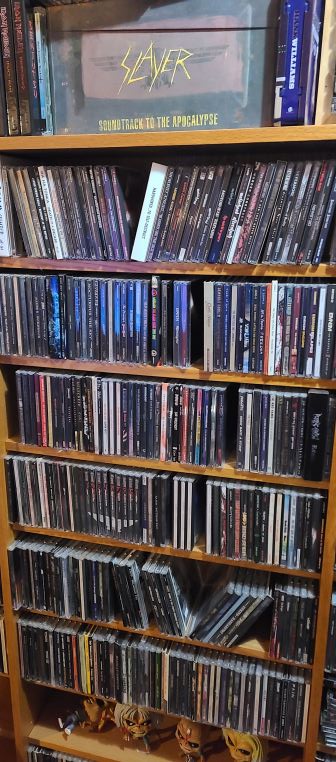
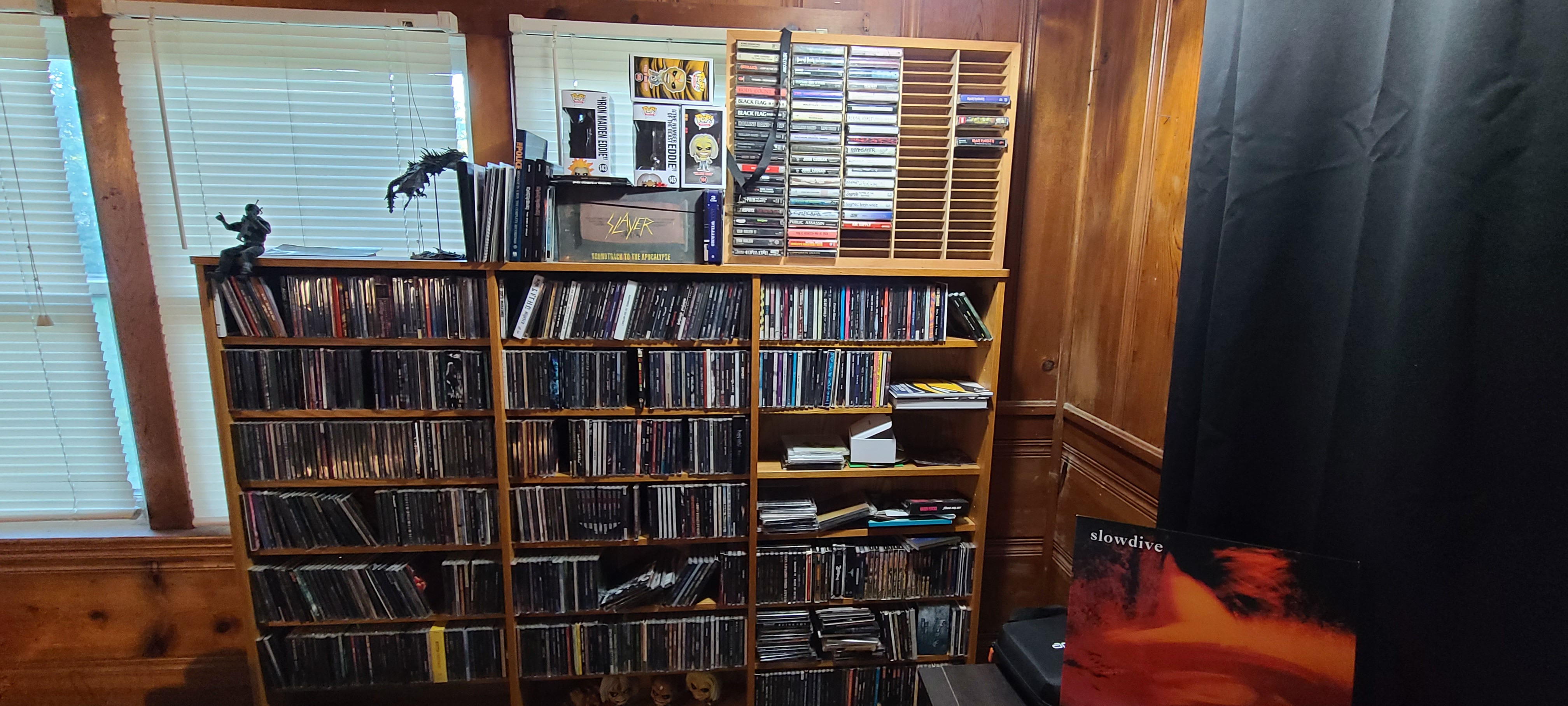
A fair portion of my disorganized CD collection
It is easy to write off the CD surge as a one-off event. After all, the CD format is outpaced by the convenience of streaming. While streaming is not generally of the same quality as a CD, it is obviously good enough for the masses. There doesn’t seem to be an indicator that people might move from streaming back to the CD.
Except, well, there are a few. The jump back to CDs might not have anything to do with streaming – it lies in the current state of vinyl.
Vinyl is in the midst of a huge renaissance right now. Sales are huge, record stores have opened across the land and collectors are gleefully shoving handfuls of cash off for the sweet new limited pressing of their favorite acts. It was an unlikely resurrection, fueled in no small part by the much-reviled hipster of the late 00’s and early 10’s.
But there are signs of trouble on the horizon. Right now vinyl is expensive and only growing in price, much like everything else these days. The secondary market is out of reach for most collectors of modest means. And manufacturing plants are backed up enough that some albums are getting their vinyl release almost a year after the same album dropped on CD and streaming. Major players like Adele hogging limited production resources only exacerbate the vinyl supply problem.
I know this shit is getting expensive
I don’t have statistical data in the same way we can track the rise in CD sales but I do have anecdotal evidence that some collectors are backing off vinyl and returning to the CD format. A little money goes a much longer way on CDs than on vinyl. Especially for back catalog collecting – imagine the amount of money someone would need to get, say, the Scorpions extensive catalog on record. Now have a look at used CD prices for the same band the next time you’re out. Much, much cheaper.
There is another issue looming – again anecdotal, but some independent and underground labels are having such fits getting vinyl pressed that they are considering abandoning the format. That might be a bit extreme but there is a realistic possibility that vinyl becomes a very niche and expensive high-end market while the masses may have to find content in CDs or streaming.
I don’t want to be a prophet of doom, except maybe when I’m plugging the doom genre, but it might be looking a bit hairy for vinyl. I’d guess it still has legs under it for awhile but the market forces do need some correction before a segment of the marketplace turns their backs on it. I don’t know if that will equal a new boom for CDs or not, or if this new advent of the format is just a glitch brought about by a few major artists releasing albums at once.
I do know that I and many others will maintain collections no matter what happens with the market at large, but the present and future states of affairs do shape and inform what we do. I hesitate to say that the CD is on the way back, even with some promising signs. The unfortunate part is that the most positive indicators for a CD revival are at the expense of the vinyl resurgence. Only time will tell.
I’ve talked a bit before about how I, and we as a whole, consume music. I grew up in the old days where you had to have some form of a physical collection if you didn’t want to be stuck with the radio. I’ve transitioned through a few different formats over the decades, from tapes to CD’s to digital and back to vinyl.
Now we are in the streaming age. While vinyl sales are still holding strong, there are some cracks in the wall. I wrote at length about my concerns a few weeks ago with where vinyl could be headed if something isn’t done to address the supply issue, among other concerns. The CD is still a semi-viable and cheap format, but it doesn’t do a lot that streaming doesn’t do.
And let’s face facts – streaming is by far the most convenient way to enjoy music. Pay roughly $10 a month and enjoy access to a service’s entire catalog of songs and albums? Yeah, there has never been a better deal in music. Sure, pirate downloading was fun and free I guess, but the RIAA’s heavy-handed lawsuits that would demand six figures from working-class people for downloading Appetite For Destruction weren’t so fun or cheap.
As an aside on streaming – yes, the audio is compressed and yes I’ve noticed the differences when comparing how things sound on Spotify compared to when I load a FLAC version of an album up that I own, but the vast majority of the music listening audience isn’t concerned about audio quality. The streaming services work just fine for the masses and they aren’t going anywhere.
Despite still being a physical format collector myself, I do use streaming. Spotify is the service I use. I pay for the normal premium version so I don’t have to listen to annoying ads. I had the student discount for a few years but I’m fine with the $9.99.
Honestly, Spotify is a wonderland for music. About 99% of what I look for is there. All I have to do is type in a name and boom, there’s a complete discography within reach. Some artists have 50 or more albums out – I do ok for myself but I don’t have the money for that kind of shit.
The big pro of Spotify, or any streaming service, is discovery. I’ve been able to explore new genres like indie rock or all the post-punk, post-metal or post-whatever stuff that I simply couldn’t get to with X amount of money to spend on records or CD’s. When I find an artist I really, really like, then I can shell out the cash on their physical releases.
For the listener, there are no real cons to streaming services. Sure, a service might delete an artists’ catalog in the case of “cancel culture,” but stuff like that is rare. I wasn’t queuing up R Kelly for my next playlist anyway so it’s no real skin off my back. And, without getting too much into it, I can type in plenty of nefarious names and find all their stuff still on the service. The companies aren’t on some moral crusade to rid their catalogs of anyone who has broke bad – rather they simply do what every company does and respond to the greatest outcries. Pretty common stuff in the 2020’s.
Of course the listener is only one part of the music chain. The artist is the one who makes the music and has to make a living on the music. And the streaming services are infamous for low payouts to artists. This article outlines how Spotify pays out to artists and a rough average of $3 to $5 dollars per 1,000 streams seems to be the going rate. That isn’t a truckload of money, especially for independent and underground artists who might be lucky to hit 10,000 streams on their most noteworthy songs.
Am I obliged as a more than casual music fan, to spend money on physical releases to truly support my favorite artists? Does me streaming a new band I’ve never heard of take money out of their pockets and hence food off their tables? I know music fans with this total diehard mindset, that “true fans” should support the artist as directly as possible.
I’ll say that I consider the stance admirable but misguided. Here’s a helpful lesson – the music artist has been getting ripped off since the dawn of the music industry. Read about Motown, read about payola, read about how album sales and money really work. Look up how much TLC got for being one of the most mega-successful groups of the ’90’s.
I get the argument that streaming services don’t provide artists the financial support they need, but nothing in the industry really ever has. Anyone who isn’t a supernova success won’t see windfalls, and even some of them will find themselves ripped off through shady label tactics, bad management, or greedy dope dealers.
I myself am just one person and I can’t counteract the financial sins of business by not using streaming. The service serves too many useful purposes in terms of discovery and also in not having to blow more money than I make just to find out if an artist is up my alley. I can enjoy more music and cover more, different stuff on here without having to go in debt to do it. If anything, I can use Spotify for the more “mainstream” stuff I like and give my money to the independent and underground acts that more desperately need it. I won’t say that’s the line I’ve taken just yet but it’s something that I’ve seen on the horizon as I go forward, and also as I round out grabbing those bigger releases I want in my collection.
There are alternatives to bigger streaming services, of course. Bandcamp is now relatively famous as a place for alternative or underground, even unsigned artist. Bandcamp gives artists and now labels a far greater degree of control on how their music is purchased and distributed, and as a result, lands more money in the artists’ pockets. Both digital and physical sales are supported on the site, and Bandcamp has even begun helping artists obtain small-run vinyl pressings to sell, a very tough thing to do for smaller artists in today’s supply shortage market.
I do use Bandcamp and at some future point I’ll start a semi-regular thing where I go over some of the lesser-known artists I’ve found through there. I don’t go hog wild on it but I don’t at all mind giving a band ten bucks or whatever for a good album or shelling out for a small-run vinyl pressing of something that really catches my attention. Bandcamp is helping keep the underground alive in the wake of the digital revolution that threatened to swallow everything whole.
As I go forward I’m sure I’ll remain a combination user of both streaming and physical releases. I don’t really wish to have the world’s largest collection or anything but I like having what I have. I do use the digital space to my benefit, though, in order to find more areas of music that I might not have access to through old-school means.
The face of music listening has changed a lot in 20 years and will probably change again in ways many of us can’t foresee as we sit here today. For the time being, streaming is here to stay and is the prime method for music consumption. It has its bad sides, but so does anything that is a business. For the fans? It really couldn’t be much better.
One topic I want to cover more aspects of on here is music collecting. Not everyone does it these days but several of us still have collections of various physical formats. I’ve done one post so far on my own collection, as well as this post specifically about my Iron Maiden collection. And there are numerous issues within the realm of collecting that I plan to discuss going forward.
Today I want to get into vinyl collecting specifically and one huge elephant in the room that comes with modern-day record buying. Overall it’s the price of records today that has become an issue of huge concern among collectors. Back ten or so years ago old records were in flea markets for a few bucks apiece, while new records that were coming out could be had for maybe $20.
The music industry flipped on its head a few times in the past decade though, and now we live in a world where new releases push $30 or more and many old records are sought-after relics that command big prices depending on the shape they’re in. Flea market rummaging these days is reserved for the old polka classics that never had much of a market in the first place.
This isn’t a simple examination that ends with “damn, records are expensive.” There are a number of factors that play into the vinyl price inflation and why the market is the way it is today. Of course the prices of everything go up over time. If that was the only issue here I wouldn’t have a topic to write about. I know people love to lament how much cheaper things were way back when, but it’s a baseline business education fact that prices go up every year. This affects manufacturers, distributors and obviously, consumers. There’s nothing else to see here in regards to increasing prices.
What we have is a resurgence in vinyl interest. The record was a dead format, having been killed off in the early ’90’s in favor of the smaller CD. Then the digital revolution came and threatened the very existence of physical collections. I myself was still buying CDs and even a few records into the 2010’s but by and large people kept their music on their phones. This then gave way to streaming, where all you have to do is pay someone $10 a month to listen to more music than most people could ever bother with.
But then the vinyl boom came around and totally turned the physical market on its head. Records had never totally gone away – they were issued in limited pressings for diehard fans and collectors. Some of those 2000’s releases are now small goldmines. I’d love to have a vinyl copy of Neil Young’s 2007 Chrome Dreams II, but the price of admission is at least $100. And in the same year Nine Inch Nails released Year Zero, one of my favorite albums from them. If I want that record? We’re talking $250, at least.
Now both Neil Young and Trent Reznor have been pretty good about doing album reissues. I don’t have the income or desire to have original presses of everything ever released so I’d be more than happy with a new pressing of either album. Reissues do come around for a lot of albums, some that were scare in the first place or perhaps not even done on vinyl, as with much of the 1990’s. It is the saving grace for the middle-class or modest-income music collector.
But even reissues can be tough to come by, much like new releases. I don’t have a huge problem getting what I want but I have learned one valuable lesson – if I know a record is coming out, I better pre-order it and make sure I get a copy. Some new releases might be available at retail price until the pre-order sells out and will be two or three times higher ever after. And while some labels do their best to make sure reissues of even recent material are out there, the record manufacturing sector is in such short supply that lead times on new pressings are months out. It especially hits independent labels hard when the majors are filling orders in every available plant for Record Store Day reissues of the same ten albums.
I will say this about Record Store Day – I think it’s fantastic for the stores. Retail music stores were nearly extinct before this vinyl resurgence. I don’t at all mind seeing lines of people outside shops I frequent, I want these businesses to succeed and more customers is always going to be a good thing.
But RSD has a bad side, too. Multiple, in fact. It clogs up record plants, which again are in very short supply. But it also feeds into the modern market we have going on in music, gaming, shoes and even toilet paper at times – the secondary “flipper” market. In less savory terms, vinyl has fallen prey to the scalpers and price gougers.
The play is this – a record label offers a reissue or new release in limited scope, between 1,000 and 2,500 copies. Flippers buy up as many as possible and immediately post them on eBay and Discogs for insane mark-ups. Regular fans who really wanted the record but had no shot at the one copy in their local store with 35 people ahead of them in line on RSD are left out in the cold. It’s either suck it up and pay the scalpers’ prices or go without.
This issue plays out in consumer goods everywhere today. Scalpers using bots have turned current-gen gaming consoles into a total fiasco. PC stuff like GPUs are unobtainium these days. But it has redefined music collecting and not for the better.
I honestly have not gone to a Record Store Day. I’m not fond of huge lines for small buildings and also I often don’t see anything I absolutely have to have on the release lists. There’s always a record or two I wouldn’t mind having but nothing that gets me out of the house.
I did miss out on one record I would have like to have, though. In 2020 a reissue of Skid Row’s excellent Slave To The Grind was released for RSD in a limited format with bonus tracks, which is a creative way to get the clean and explicit versions of the album on one release. I was very stoked for a chance to get the record, but that chance never came. None of the local shops were able to get a single copy for their RSD allotments and the record instantly sold for $75 or more the day of release. The current price has gone over $100 on Discogs. It’s truly cheaper to get an original 1991 copy on record which was only released in a few countries and is pretty scarce.
I’m not willing to pay that much for the record even though I’d love to have it. It’s something I’ll just have to live without unless a local store gets a copy in someday and I can trade a bit into it. I’m fine with the CD copy of the explicit version I have that cost me $4.
Even without the dark aspect of flippers and scalpers, sticker shock is getting to be a thing with vinyl these days. Prices had moved to a rough average of $30 for a new copy of either a new release or reissue. But now that needle is moving upward. I’ve noticed a fair bit of new releases going for $40 or more. Hell, I paid $60 for the triple-vinyl copy of Iron Maiden’s new album Senjutsu. Yes, it’s Iron Maiden and yes I’m going to pay it, but I sure as hell noticed.
I do think this combination of factors like scalpers, supply shortages and rising prices might lead to the end of this vinyl boom. Let’s be real – this was never going to last forever. Collectibles as a whole are a weird market with unpredictable rises and falls, and in some cases those markets have now been entered into by investors. Just look at the collectible card game market for a prime example of that.
I’m not trying to be doom and gloom here, if I had my way a healthy vinyl market would continue on for the end of time. My town is lucky to have a handful of local stores that offer great selection and a much better shopping experience than ordering crap from Amazon or Discogs. But there are some alarming signs that, when put together, could lead to reduced interest in vinyl and an eventual crash in the market.
First off, labels are having issues getting records pressed. Smaller labels especially face months-long delays in getting their new albums to press. This causes smaller runs of vinyl, which feeds the scalper market by creating scarce supply to feed greater demand. The prices rise, both because of flippers and the natural or otherwise rise in prices.
What does this do? Seriously – Spotify is $10 a month. The other streaming services are roughly the same price. This is what the vast majority of music listeners use anyway so the economy of that is going to sway yet more people to it versus hunting down overpriced vinyl.
And for the diehard physical collector that refuses to give all the way in to streaming? As luck would have it, there is a much cheaper and more convenient format to consume music with. The CD is still around, though it was a battle for life there for awhile. I’ve noticed more collectors and music fans going back to the CD. Hell, any back catalog release is $5 or less these days and CD’s are literally all over the place. It’s a quiet undercurrent of people returning to that format but it’s noticeable and it’s getting a bit louder.
Should more people be turned off by the array of factors leading to higher record prices, I fear the market will suffer as a result. Many of the stores today are small businesses – they can’t survive a huge drop in demand. The vinyl boom needs to continue or at least plateau to something sustainable for them to continue on. If people keep running from the format or limit their purchases to their absolute favorite artists who often sell directly, it could spell trouble for what has been a fantastic renaissance for record stores.
Again, I hope this doomsday scenario doesn’t play out. In this crazy world that changes and mutates more often than most people change their underwear, I’d like to have something last for longer than a few years. I have X amount of life left and I’d like to spend it as a music fan and collector. Hopefully circumstances change a bit and the market can push through the rising prices, supply issues and scalper problems.
In the end, the price of records is an issue that needs to be dressed for the long-term health of the market. I can’t fix flipping nor do I have any practical ideas on how to, even though it’s a much-despised part of the modern process. But it’s not the only issue the vinyl industry faces today.
As a footnote – let’s give credit where credit is truly due to the vinyl resurgence. The independent and underground scenes in every genre kept vinyl going in a time where no one else cared. But it’s that oft-derided subculture from a decade or so ago that truly brought vinyl back. Give a round of applause to your local hipsters for kick-starting the vinyl revolution. I’ll talk more about them (uhhh, them…) another time but I wanted to throw a mention in while I was talking about this.
One aspect of music fandom/appreciation/worship/whatever is collecting. In our day and age, having a collection is not at all necessary. Collections of anything are cumbersome – they take up space, they cost money, they are at risk to perils like flood and fire, and they cost money.
I came up in the old days, when everyone had a music collection. And I’ve maintained one most of my life, from when I started piling up cassettes in the late ’80’s and early ’90’s. (Thanks, fake names and Columbia House!)
I would quickly move to CDs as the ease of use over tapes was massive. No more rewinding or fast-forwarding the end of a side, just let the album play. The CD would be my primary music format for a long time, probably from 1992 through to 2017.
Then there is the matter of the vinyl record. I would be exposed to vinyl at an early age – it was abundant in the early ’80’s. It was still for sale at retail along with cassettes and the just-emerging CD. I messed around with my parents’ collections, including a bunch of old 45 singles. That was mostly popular ’70’s stuff like Fleetwood Mac and Heart.
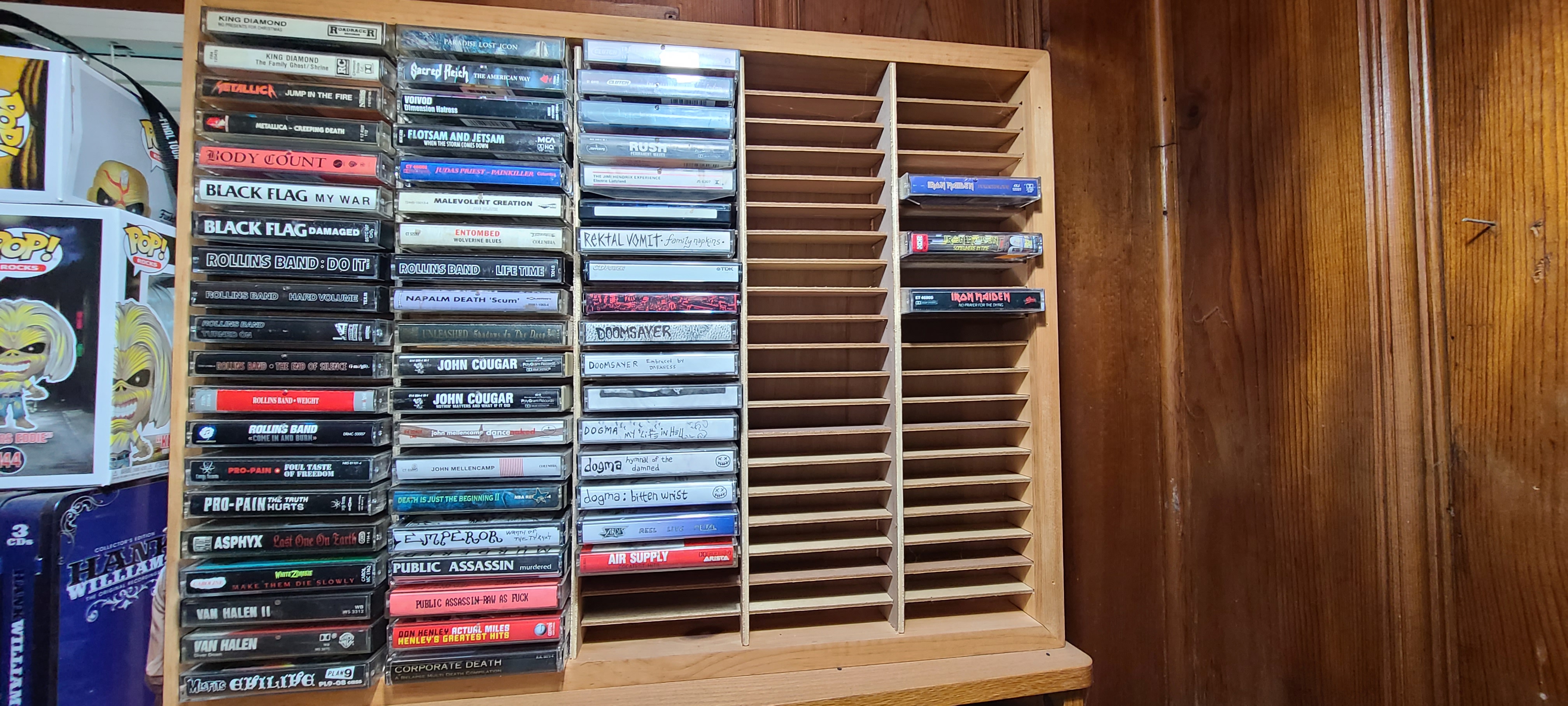
My current tape rack. This is only for looks, I don’t have a tape player.
I would wind up with a handful of my own records. I ended up with a stack of Sammy Hagar’s solo records that had originally belonged to my deceased uncle (sadly I no longer have those). I also wound up with other relatives’ hand-me-down records. I do recall having multiple copies of Boston’s first album and Frampton Comes Alive! There was some, uh, other stuff in there too – I kinda recall Captain and Tenille as well as a bit of Barbra Streisand. But overall I got some pretty good classic rock scores from my betters.
Then, of course, everything changed in the 2000’s. The digital music revolution hit – first as a pirated fileshare mechanic, then as a legit sales source innovated by Apple. What used to take up a lot of space on shelving could fit on a hard drive, on an iPod, and later on a phone.
I did not go quickly or quietly into the digital age – I went late as hell, kicking and screaming the whole way. “Only physical formats are real! I’d rather die with an 8-track in my hand than play an MP3!” I’m sure I said a bunch of other stupid shit, too.
My very disorganized CD shelf
Eventually I would give in and truly join the digital wave. In 2008 a buddy of mine upgraded his iPod and sold me his old one. And yeah, I finally understood it. I don’t think I need to explain the nuances of digital music versus physical formats. Can’t play your records on a drive or a stroll through the park, we all know that.
I never did fully adopt buying digital music, though. I kept with the CD as my main purchase point and I wound up with a collection of about 800 before I finally got sick of looking at so many plastic cases taking up so much space. I still haven’t moved on from them to this day but I’m on the verge of actually downsizing and keeping only the ones I really want.
Of course I’m not going to be left without a physical format to collect, and I’m sure most know what every good hipster got into back several years ago. Yes, friends, the LP record is back in business.
I had been buying records occasionally over the years and I finally made the switch to it as my primary format a few years ago. I got a bit panicked by the collectibles price spike of 2020 and quickly fleshed out my Iron Maiden collection, and also bought a bunch of other stuff because fiscal responsibility is for losers.
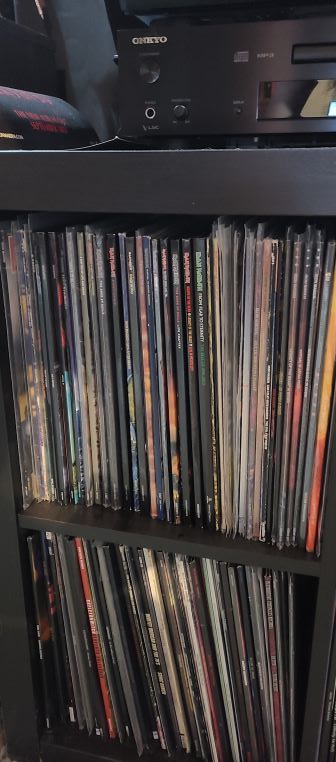
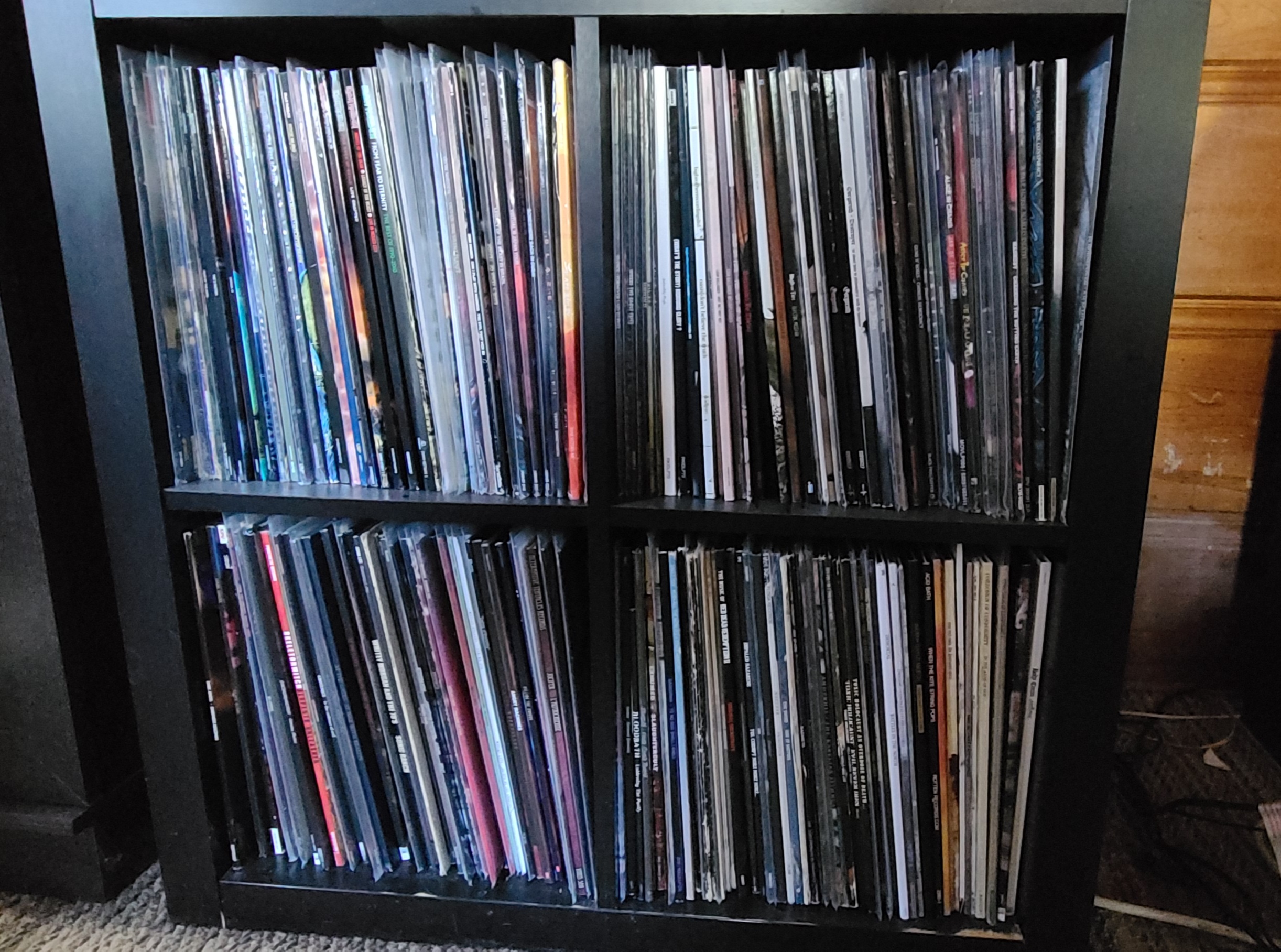
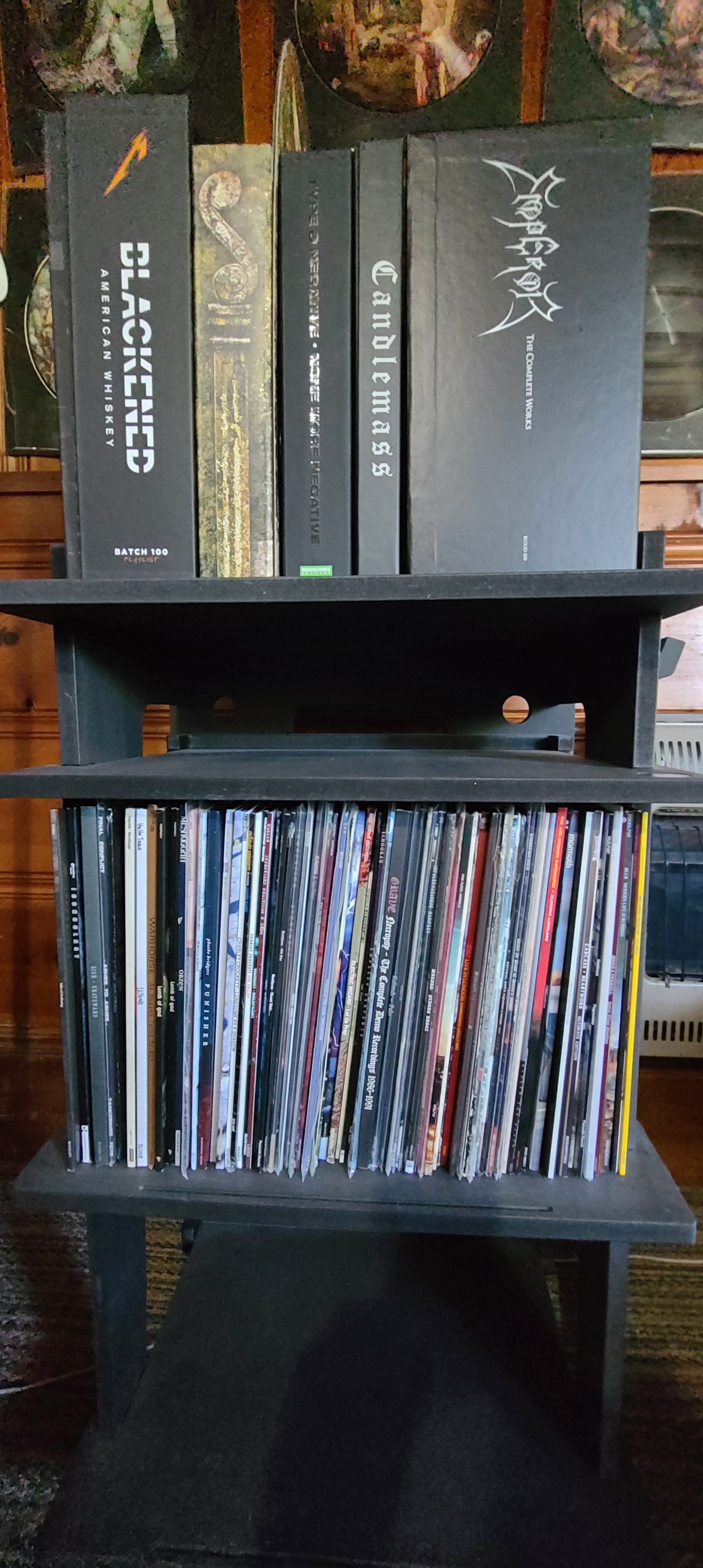
My first record shelf. Iron Maiden takes up the top left part, not sure how visible everything is.
As I sit today I do still buy records. Hell, I occasionally buy a CD because it’s cheap and I might need to evaluate it for a future project of some sort. But, like a lot of people, the allure of streaming music isn’t lost on me. I use Spotify pretty regularly to keep up on new releases and visit past music I don’t own or explore scenes and genres I haven’t previously had exposure to. And being blunt, it’s a hell of a lot cheaper to give them 10 bucks a month than it is to drop a few hundred on any record I might possibly be interested in. I know there are issues of artist support there but I’ll let that thread hang for another time.
It’s been quite an adventure going down these twists and turns in how music is distributed. I like having a collection but I could point to more than a few reasons not to. At this point though I have some pretty cool pieces and there’s stuff I wouldn’t part with unless a total catastrophe hit. I still have a fair bit of Iron Maiden stuff I want to get and that’s before getting into the more expensive things out there. And even if I pare down how much I spend there are still boatloads of old, cheap albums out there I certainly wouldn’t mind having.
We’ll see what roads music takes in the future. The ultimate physical format, the vinyl record, prevailed just as it looked like physical collections were dead. But digital still serves the masses when it comes down to it. Is the next step a sort of neural implant, akin to something from Cyberpunk? Hard to say, but until then, I guess I’ll have some form of music taking up too much space in the house.

 The Crooked Wanderer