Album Of The Week – November 14, 2022

This week’s pick is a watershed moment in extreme metal. The album is hailed as a cornerstone of its sound and it casts a massive influence on the direction of heavy metal for generations to come.

At The Gates – Slaughter Of The Soul

Released November 5, 1995 via Earache Records

My Favorite Tracks – Slaughter Of The Soul, Blinded By Fear, Under A Serpent Sun

By 1995, At The Gates were part of an emerging Swedish death metal scene also including In Flames and Dark Tranquillity. Their music would carry the term “Gothenburg Sound” in reference to their home city, but would widely come to be termed melodic death metal.

For At The Gates, fortunes had been rising after the release of their third album, 1994’s Terminal Spirit Disease. The stage was set for a release that would capture international attention and make the band top players in the death metal game. As it turns out, even that bar was too low to describe what happened.

The distinctions between melodic death metal and, uh, “normal” death metal lie in guitar and vocal delivery. Death metal was built on buzzsaw guitars and deep, guttural vocals; while melodic death employed riffs bearing influence from the traditional heavy metal of the 1980’s and a higher register of vocals, rendering the output more comprehensible.

Our album today comprises 11 tracks from the original version, with a very lean runtime of 33 minutes. I’ll handle that before tackling the legacy of the record, which could pretty well fill a book.

The album kicks off with Blinded By Fear, an intense thrasher reflecting on the concept of death being the only release from fear. The template for the record is set here, with fast riffs and vocals leading into a brief yet intense solo section. There isn’t a lot of deviation from this formula for the record’s course.

The title track arrives next. Slaughter Of The Soul has become the signature anthem for At The Gates, encapsulating perfectly the sound on display. The song both rolls smoothly and stomps over everything in its path. Cold comes next and features a guest guitar solo from Andy LaRocque of King Diamond and Death fame.

The assault continues with Under A Serpent Sun, tacking the tried and true metal theme of the end of the world. The album’s first half (roughly) is wrapped up with the instrumental Into The Dead World.

It is a nice, quiet break from the otherwise relentless proceedings.

Things pick straight back up with Suicide Nation. This song deftly straddles the line between thrash and death. World Of Lies emphasizes the low end a bit more, while Unto Others goes back to the higher register and also picks up the pace a fair bit. The album rounds out with Nausea and Need, two songs that lay on the throttle and bring the album home. Everything wraps up with another instrumental, The Flames Of The End, which would come to be a more fitting title than it would initially communicate.

Slaughter Of The Soul captured the attention of the metal underground and thrust At The Gates into the limelight. The band toured extensively behind the record, especially in the United States. The saturation of the market would lay the seeds for metal’s next big movements in the early 2000’s.

While the album would go on to be hailed as a genre-defining classic, much of At The Gates’ celebration of that legacy would not come until much later. In 1996, only a year after Slaughter… was released, ATG called it quits. The members would float through various projects until 2008, when they would reunite for a tour. It would be 19 years between albums as no new recorded music saw the light of day until 2014.

One could be forgiven for thinking that At The Gates did release albums in that time between – hundreds, in fact – the influence of Slaughter Of The Soul is stamped all over American heavy metal of the early millennium. Strains of melodic death metal would pop up all over the US and also abroad, and it wasn’t hard to hear the influence of At The Gates in the music. Both death metal and melodic metalcore would be top-selling fare during the 2000’s and lead the pack in terms of exposure and discussion.

Perhaps the true beauty of Slaughter Of The Soul is that its groundbreaking sound wasn’t really new or innovative, or even groundbreaking. At The Gates had already laid that foundation with three prior albums, along with their peers In Flames and Dark Tranquillity. Slaughter… is a beautifully executed record that is a high mark for melodic death metal but also doesn’t really do anything other than distill what already was into a finer form. There isn’t much in the way of innovation – rather, it’s just the sound turned up to 11.

Today Slaughter Of The Soul remains as a staple of the heavy metal diet, in fact At The Gates have been playing the entire record live in recent shows. The album’s legacy is secure and has honestly only grown as the music it inspired became the law of the land in heavy metal.
Gold In The Bargain Bin – Where To Buy Music

Today’s post is about buying music, a topic I like to cover here from time to time. This time it isn’t so much how to buy it or what it costs, but it’s about where to buy it. And, more to the point, where I’ve bought it over the years.

While I was born in the late 70’s, I was a child of the 80’s and music was a big deal back then. Radio was huge, MTV was going full blast (with actual music), and people were scooping up albums left and right. Records were still a thing, cassettes were likely the predominant format, and CDs were around but just getting their legs under them.

Pop music was massive in the 80’s. Rock and metal were at their highest point of exposure and sales. Rap was emerging as a force. Country, well, it wasn’t necessarily great in the 80’s but a few legends of the game were setting themselves up on the scene. Music was everywhere – in ads, in movie soundtracks, it was big business in the decade of Reagan and cocaine.

For a good part of the population, buying music in the 1980’s was as simple as having the money for it. Mainstream releases flooded the shelves of both specialized music stores and general retail outlets. Mail order buying clubs existed, even if their best use wasn’t exactly above the board. It was pretty easy to get what you wanted when it came to music.

Well, mostly. I had it a little different. I didn’t grow up in a big city, my hometown’s population was around 2,500. It left one option, that being Wal-Mart. This wasn’t one of the SuperCenter Wal-Marts, either – this was a plain, old-fashioned Wal-Mart. The store was a different animal before the SuperCenter concept took off.

And as a side note – while I rarely ever visit my hometown anymore, I’m fairly certain that the store there is still a regular Wal-Mart, which is an oddity.

Anyway, Wal-Mart is where I had to buy music in my younger days. The selection was honestly pretty decent – I remember records still being in stock when I first really started paying attention to music, but I took to the cassette format due to cost and all that. I was into rock and hair metal at the time, and the store carried all a person could want and more of that.

As my tastes evolved in the early 1990’s, Wal-Mart would still serve a purpose but did become outmoded. I sought more and more stuff with the dreaded “Parental Advisory” sticker, and a holy site like Wal-Mart wouldn’t sell that.

They sort of did, once. I’ll post about it someday but I have to try to dig up more info on it first.

Thankfully a music store opened in the college town just 20 minutes down the highway from me. They had no qualms about selling PA sticker stuff to minors (that was never a law, despite many peoples’ misunderstanding of it) and they’d special order stuff that wasn’t on their shelves. I made out my remaining years of high school with that and the occasional order from underground distributors and labels.

I was in the military for four years and over in Europe during that time. While it seems nice on the surface, since a lot of metal comes from Europe, here’s a reality check – the music there is still just as underground as it is here, or at least was in the late ’90’s. There were plenty of music stores where I could get cool stuff, but mail order was still the lord of the land for more underground fare. That got easier with the advent of the Internet and online ordering, speeding up the process quite a bit.

After returning to the States just before the dawn of the new millennium, things began to shift. Music stores were still in force when I got back, but the digital music revolution clearly eroded the physical distribution model. Music stores began to decline as album sales fell, though the shops were far from extinct.

I was lucky for a very long time – a very quality CD store held out for a long time. Its name was CD Warehouse, and it was an awesome place to buy music. They had a great selection, the staff were super cool, and it was easy to spend a lot of time just browsing for something with no specific purchase in mind. A lot of what still sits on my shelf today came from CD Warehouse over the past few decades.

Sadly, the changing times caught up to the store, and they closed in the late 2010’s. It seemed as though buying physical music was confined to the online retailers. I was at a point where I had too much stuff anyway, so I was only making selective purchases when I really, really wanted to have something. It seemed that the idea of collecting music was going the way of the dinosaur.

But that’s not quite what happened, is it? I wasn’t paying all that much attention to it, but all through the last decade, a once thought-dead format was surging forward in a massive way. Even before my beloved CD store died out, vinyl was again a booming market. What’s old was new again, and the vinyl resurgence has carried into the 2020’s.

While there are plenty of places to buy records, we’ve been lucky that independent shops have seen a comeback. It’s so much better to buy in a shop run by people who know and care about what they’re selling, and the vinyl comeback has been a great opportunity for that sort of business.

Of course it’s getting to be a more rocky road. Vinyl prices are high, inflation is shit and it’s getting tougher to buy music. I’ve personally cut things off entirely for a bit as I regroup financially, and I know many others who have curtailed or eliminated purchases altogether. It’s a necessary thing in the present reality, but it’s a terrible thing for those independent stores who rely on those sales. Big box stores and online monoliths can get buy without music sales, but it’s the thing keeping the good shops alive.

And that sums up the journey of buying music from 1980-whatever through to the present day. I’m sure there will be further adventures in that regard, that is, if I can ever find that elusive thing called “surplus money” again. Nothing beats hitting up the store and finding that perfect album to haul home and put on.

A Quick Note On The Singles Series

For the past while I’ve been running through my singles collection on Thursdays. I have a few left, but I’ve decided to pause the operation for now. I’ll do a special one near Christmas time, but beyond that I am going to take a break until the end of the year.

Once the calendar flips I’ll do my deep dive into my Iron Maiden singles collection. That’ll take up six months or so at the rate of one a week, so I’ll take a bit of time to get the text and photos for that all set up. Then later next year, once that’s done and I’ve (maybe) acquired a few other singles, I can run through what else is left in my collection.

In the meantime I may do some kind of quick post on Thursdays to fill the gap, maybe highlight a song or go through a few of my box sets, I don’t know for sure yet. I have a week to figure it out, I suppose.

That’s about all for today. Since I was on about Van Halen earlier this week, here’s some more.

Tool – 10,000 Days (Wings Pt 2)

This post was part of a series that I called S-Tier Songs. I later decided to abandon the series in favor of a simpler Song of the Week format. I am keeping these posts as I wrote them but removing the old page that linked to the list of S-Tier Songs, so that is why these posts might look a bit odd. Enjoy.

So I last left off with A Perfect Circle and their hit single Judith. The song was an attack on the deep faith Maynard James Keenan’s mother felt despite an injury that left her debilitated for nearly 30 years. It wasn’t the first time Keenan had used his mother’s malady as lyrical inspiration – the Tool song Jimmy from 1996’s Aenima was about his experiences being 11 years old after his mother’s injury.

And it wouldn’t be the last time Tool would visit with Judith for song inspiration. Judith died in 2003, and in 2006 Tool would release the 10,000 Days album. While the album title pays homage to Saturn’s 29 year long cycle of moons in orbit, two songs on the album serve as eulogy to Judith Marie.

Tool – 10,000 Days (Wings Pt. 2)

10,000 Days the song is preceded by Wings For Marie, a more intro-like song that sets the stage for the epic rollout to come. And while Wings For Marie is its own track, it’s very difficult to assess it in isolation, as it is clearly a companion to 10,000 Days.

The song 10,000 Days itself begins with a rolling, quiet intro that is clearly building to something and also features the sound of storms in it. The payoff will come, but this 11 minute long song isn’t in a hurry to get to its point.

As the bass and the storm rolls along, Maynard begins singing about the end of his mother’s mortal journey. He takes a shot at the hypocrites who surrounded her after her health issues, but then deliberately writes them off and focuses the rest of the song on Judith.

The lyrics accompany Judith as she ascends to Heaven. Rather than be a humble servant, Maynard says Judith should arrive at the gates proudly and demand her wings. She is truly “the light and the way they only read about” and is the main event at the pearly gates.

The song ends with a quiet reflection from Maynard offering further suggestion for what Judith should say as she enters the afterlife. Everything is a bit of a roller coaster in the 11-minute long surge of music and movements, but the quiet ending sums everything up perfectly.

The rest of the band is up to some real atmosphere generation on 10,000 Days. This isn’t a long song that just goes from point A to point B with a few riffs and fills – no, there are plenty of movements and changes to keep everything fresh and also flowing along with the varying intensity of the lyrics. Tool never was much of a straightforward band anyway, and they up the ante on this song with arrangements and progressions that stand apart from a lot of popular fare of the time.

10,000 Days was not released as a single. It was played live during the album’s tour cycle, but met with some resistance from a portion of fans. The popular cuts from the record were the singles like Jambi and The Pot, and in some instances people at concerts were screaming for those while the band was playing 10,000 Days.

The fan backlash, however strong it may have really been, coupled with the extremely personal nature of the song, led Maynard James Keenan to feel a bit burned by doing the song. He said this about it in a May 2022 interview with Loudwire:

“I think probably the stupidest thing I could have done on 10,000 Days was put myself out there as much as I did with the tracks ‘Wings for Marie (Part 1)’ and ‘10,000 Days (Wings Part 2),’ Keenan said in an interview to promote the album. “I’ll never make that mistake again. It just took too much out of me – too much emotionally, mentally, physically – all those manifestations. Those songs were exploited and misconstrued, people were flippant and dismissive. I won’t be doing that anymore. And technically, ‘Wings’ is very difficult to pull off. If any one of us is off, it falls apart and makes that thing tragic, and that’s not a good song for me to have fall apart. It’s just too personal.”

It is a shame that the song was shrugged off by some, but I know me and many others found it to be a masterwork. The majestic instrumentation along with the powerful lyrics that could only come from such a harrowing place were the perfect song combination. Tool no longer performs the song, though in part that might be due to a whole other album full of 10-minute long songs that eat up a fair chunk of a set list.

Why is this an S-Tier song?

10,000 Days is a triumphant movement, wrapping the emotionally-charged death of Maynard’s mother Judith into a masterful piece of music. It’s a movement that goes beyond our regular notions of music enjoyment and enters a kind of space reserved for the more transcendent of songs. It is a long build up for a payoff only paid if you have any amount of patience within you.

This is the type of song to be enjoyed over a course of time, and to be appreciated for the scope of what is being communicated. A “fan” looking for immediate payoff won’t be welcome here. This is for the more discerning ear, preconceived notions about Tool be damned.

Album Of The Week – November 7, 2022

This week’s pick is one of rock’s greatest albums. The songs married the sounds of the time with the band’s already-established formula and created a whirlwind that marks one of the most successful periods in the group’s career. It would also be the last offering from this phase of the band for many years.

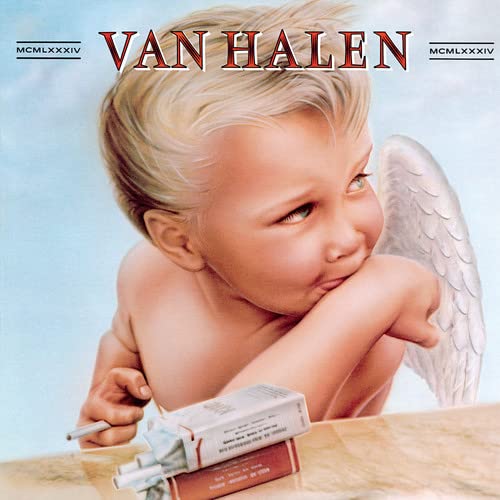
Van Halen – 1984

Released January 9, 1984 via Warner Bros. Records

My Favorite Tracks – Hot For Teacher, Panama, I’ll Wait

The lead-up to 1984 was a bit contentious for Van Halen. The band had rushed out Diver Down and Eddie Van Halen was prevented from his desired use of synthesizers. In 1983 he sequestered himself in his new home studio and used a synthesizer for the whole year, in defiance of the wishes of David Lee Roth and the record label.

The results weren’t to be argued, though. The slate of songs Eddie came up with worked, both within the band’s sound and as an update to their offerings. This album was chock full of hits and several of the songs would become iconic pieces of Van Halen’s catalog.

It is a rather short album in some respects – 8 songs with a total time of 33 minutes. But there is a lot to talk about, given the legendary nature and success of these songs.

1984

Keeping things even more concise is the first track, a minute long instrumental that only features synthesizer. That’s about all there is to it.

Jump

The proper lead track is likely Van Halen’s most recognized song. Jump features the keyboard front and center, with Eddie’s guitar taking complimentary role. Roth originally based the lyrics around footage of someone contemplating suicide from a tall building, but later reworked them to fashion a more inspiring message.

Jump is Van Halen’s biggest single, being their only number one entry on the Billboard Hot 100. Jump has been ever-present in society in the 38 years since its release.

Panama

Eddie put up the keyboard here and offered a more conventional Van Halen track. The song sounds like the prototypical Van Halen party track but is actually about David Lee Roth’s race car. It’s all the same, really, and this is another widely celebrated song. Panama was a top 20 single and is another VH tune that’s never more than a stone’s throw away. It’s also a very nice bridge to the earlier material.

Top Jimmy

Another guitar-focused track, this upbeat song is a tribute to a gigging band Roth used to catch at a club in Hollywood. Many rock songs have been written about the rise and fall of music stars, but this song simply shines light on a group that went out and played, without the shitty ending.

Drop Dead Legs

Nothing much to get into here – it’s a groovy, Eddie-on-the-guitar tune whose lyrical content is blatantly obvious. Nothing wrong with short and to the point.

Hot For Teacher

The band’s final single from the DLR era is a thing to behold. Alex Van Halen rumbles in with an intense double-bass drum solo intro, then Eddie joins in with some crazy fretwork to kick off this massive rock tune.

The song is, again, simple in premise – guy’s got the hots for his teacher. It has been a common deal since school has been a thing. The song is electric and takes everything to 11. While the single didn’t’ crack the US Top 40, the MTV video was a sensation and saw massive airplay.

I’ll Wait

Another single, this song goes back to the keyboard-heavy approach of Jump. It’s a bit of a slower tune and the synth being at the forefront works well.

An outside collaborator was brought in to help with the lyrics – Michael McDonald, he of the Doobie Brothers and sundry other projects, helped Roth along with the words. McDonald was not credited on certain versions of the release initially, for reasons not made clear.

I’ll Wait matched Panama’s success on the US Billboard singles chart, hitting position 13.

Girl Gone Bad

Heading toward album’s end with a song that showcases a bit of a cleaner guitar tone from Eddie, something a bit brighter that might be a preview of Van Halen to come. There are also words sung about a girl gone bad, which is literally all there is to say about the song’s lyrical theme.

House Of Pain

The album closes on a very old-time VH sounding tune with a very heavy, driving riff. It’s about rough sex, or about not enough rough sex, or not about rough sex, or maybe all of the above – all is possible within the David Lee Roth multiverse.

1984 was a smash success for Van Halen. The album sold well out of the gate, hitting gold just a bit after release. It is in a virtual tie with the debut album as Van Halen’s best-selling record, both being over 10 million and diamond certified in the US. 1984 is often at or very near the top of many VH album rankings and is cited as one of the best albums of the 1980’s.

It’s worth noting that the “synth” arguments about the album are pretty overblown. It’s two whole songs, three if you count the intro. It wasn’t the first time VH used synth either, so the fuss probably comes down to the success of Jump as a single. It might have been different to hear Eddie base a song off of keys rather than guitar, but it gets boring when artists do the same thing over and over again, and Eddie Van Halen wasn’t going to be that kind of artist.

The band would tour behind the album and then long-running tensions would see David Lee Roth exit Van Halen to pursue a solo career. Van Halen would regroup with Sammy Hagar and enter a musically different yet commercially fantastic era.

Roth’s exit was a foregone conclusion, as fans would find out mostly in retrospect. Roth and Eddie Van Halen butted head creatively, with Roth not fond of the synth-based direction Eddie wanted to take. 1984 seems to be Eddie’s response to that. Roth was also presented with opportunities that later didn’t pan out, so heading out on his own was a fairly logical choice.

However things afterward went down, there is no argument that 1984 was a pinnacle album for Van Halen. It was a more cohesive effort that offered up quality work even in secondary tracks, something other early-era albums could sometimes lack. It captured the attention of the world at large and made Van Halen one of rock’s biggest names in an era where rock was king.

Album Ranking – Metallica

It’s time to cap off Metallica week and that means it’s time for my album ranking. I’ll be going worst to first on the Metallica discography, sorting out the cream from the chaff (whatever that really means, I don’t know).

This ranking will include the ten full-length studio albums credited to Metallica. It will not include EP’s , singles, live albums with orchestras, live albums without orchestras, etc. It will also not include Lulu, the 2011 collaboration album with Lou Reed. That one is a bit tricky since it’s a full-length album that features the band in its entirety, but I’m going to go with the typical list that most people use. Also, Lulu is an abomination.

Let’s head into the waters here, I don’t think my list is radically unpredictable (mostly).

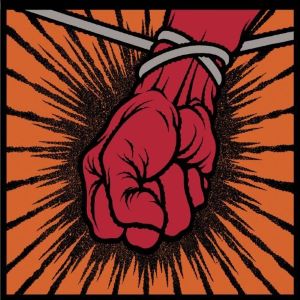
10 – St. Anger (2003)

This isn’t a hard call. I can find people in the wild who defend this album, but honestly I think it sounds bad and I have a hard time even listening to it. The production choices are beyond questionable, they’re flat out trash. And the songs are generally a mess. Finding a few diamonds in the shit doesn’t mean the album is redeemed in any way.

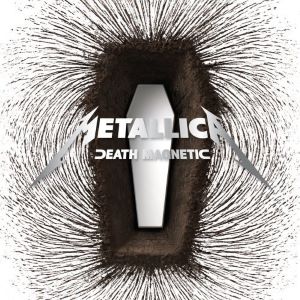
9 – Death Magnetic (2008)

This album is far, far better than its predecessor, but it’s still not all that great. The band did sound like they were trying again, but it also does sound like they are trying, rather than succeeding. And the album after this stands as proof that such is the case. There are a few nice songs on here, The Day That Never Comes stands out to me. But it’s not an album I feel like visiting much, or at all really.

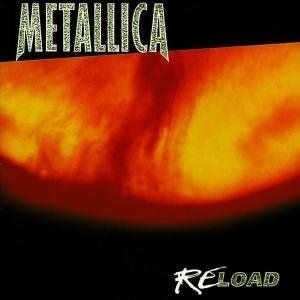
8 – Reload (1997)

Kind of a “second half” album to their 1996 effort, Reload is a groove-based, almost blues and country styled album. A departure for Metallica, sure, but a pretty decent sounding effort overall. I do think this lacks real heavy hitters but it’s a collection of songs that are fine enough to listen to. I’d cite The Memory Remains as my favorite.

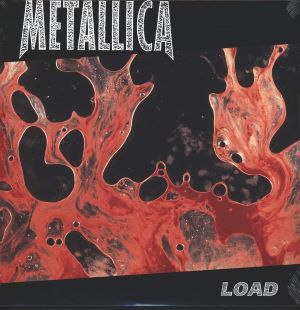
7 – Load (1996)

The band, not content with their 1991 reinvention, got haircuts and released some alt-metal. The world was abuzz about the physical and musical changes, but honestly they put out some stuff here that I really like. I think the first seven tracks are all bangers, that includes I think all of the singles. I like the last two songs as well – it’s the stuff inbetween that loses me a bit. If that were trimmed up some, I’d probably be ranking this one higher. I do truly think they wrote some really good songs here, regardless of what they were “supposed” to do.

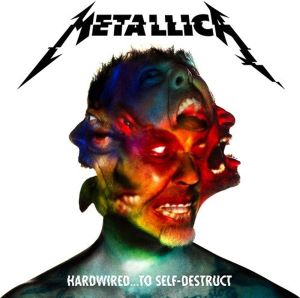
6 – Hardwired … To Self Destruct (2016)

If Death Magnetic was supposed to be a return to form, Hardwired truly was, at least in places. Several of the songs here are the kind of bangers not really heard since 1991, if not even earlier. There are some secondary tracks on this huge album, to be sure, but even some of those are pretty nice. This album did recapture the magic in some way and it was damn nice to hear. The title track and Spit Out The Bone are the best work Metallica have cranked out in a very long time.

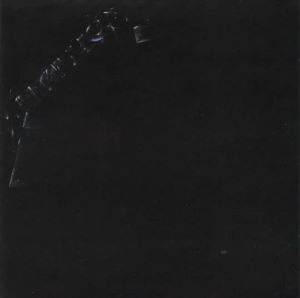
5 – The Black Album (1991)

I’d almost be cheeky and rank this lower but that would be dishonest – while I’m not in love with the whole thing, there some damn great songs on here. Wherever I May Roam and Sad But True are stellar songs, a handful of others are very nice and a few are good without being great. There are some, mostly towards the end of the album, that I can’t quite get into, but overall this was a success, both in my book and in the sales book. Can’t really argue with it.

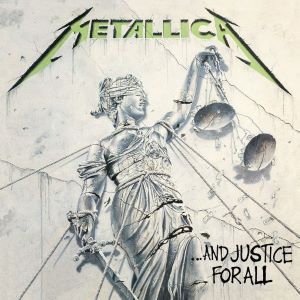
4 – …And Justice For All (1988)

The first album without Cliff Burton could have went any number of ways, but Metallica were able to alter their formula some without sacrificing the core of their sound. Harvester Of Sorrow always gets me going, and One is a masterpiece and one of the band’s most iconic songs. While it sounds odd production wise (and lacking in bass), it makes up for that with a batch of great songs.

And this was the album I talked about in much more detail back on Monday – post here.

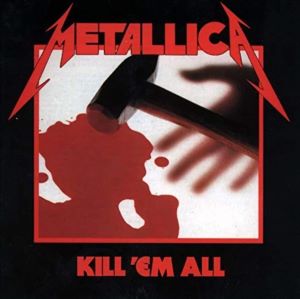
3 – Kill ‘Em All (1983)

The debut was a monster of a record – putting thrash on the map when the genre wasn’t a known quantity yet outside of local live scenes. This was very hard-hitting, fast and savage metal that pulled no punches and delivered a fist full of great songs. Not a weak note here and a still beloved collection of metal all these decades later.

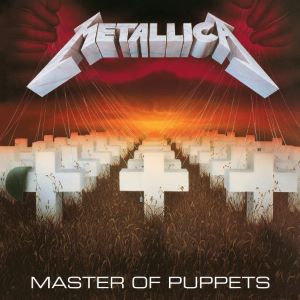
2 – Master Of Puppets (1986)

The band’s third album is often cited as a “perfect” metal record, and for good reason. All eight songs are total masterpieces and every note hits hard. The album is crisp, clear and totally devastating. It set the band on a path of superstardom not touched by any other thrash act.

I had this record as an Album of the Week awhile back, here is that post.

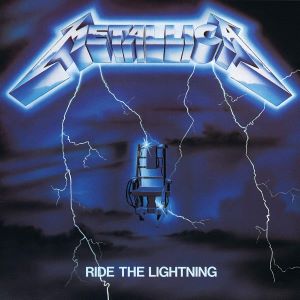
1 – Ride The Lightning (1984)

Metallica’s second effort still possessed a bit of the savage energy found on the debut, but the songwriting refinement here ramped things up exponentially. Some stuff still hits heavy, like For Whom The Bell Tolls and Creeping Death. And the band’s first ballad Fade To Black was a metal masterpiece. While some find fault with a few songs on the album, especially Escape, nothing on the record bothers me any. I’ve played this album thousands of times and I’ll likely play it thousands more before I push up daisies.

Ride The Lightning has been an Album of the Week in the past, here is that post.

That does it for the Metallica album ranking. I doubt this is a “final” ranking as I would expect at least one more album, but all that can be sorted out down the road. And while I’ve talked plenty about them this week, this will be far from the final time I discuss Metallica on here – they are a lynchpin in heavy metal as well as my own musical formation.

Metallica – Creeping Death and Jump In The Fire

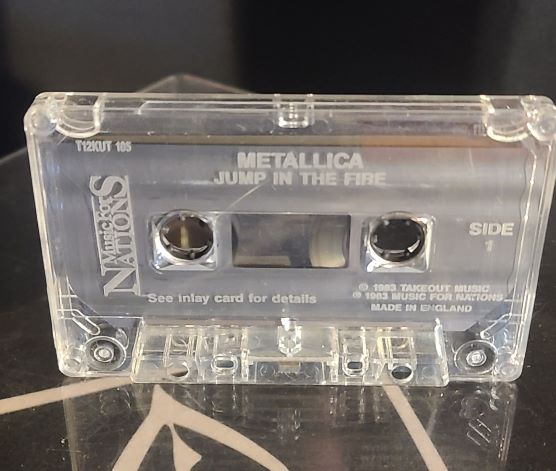
Today I’m going over the two Metallica singles I have in my collection, both on cassette. These are the early singles Creeping Death and Jump In The Fire. Both were released in Europe when Metallica was distributed by Music For Nations over there, I don’t think these singles ever got North America releases.

These are somewhat collectible, owing to them being Metallica releases. They aren’t all that rare and can be had without coughing up huge cash, at least for the cassettes. They do get price gouged a fair bit, but these aren’t worth a huge premium or anything.

Creeping Death

I’m going out of chronological order just because this one was sitting on top of the stack. First up is Creeping Death, from Ride The Lightning. It is absolutely one of my favorite Metallica songs. It’s one I’ll probably talk about in the future in more detail so I won’t get too much into it here, but it is a total beast of a song and is a staple in live sets, I believe it is their most played song. It really doesn’t get much better from Metallica.

The two B-sides are cover songs and are very iconic in Metallica lore. Up first is Am I Evil?, a song that has become an anthem for the originators, England’s own Diamond Head. While Diamond Head’s original did make some waves in the UK, they did not break international markets until Metallica’s cover.

The original is a fantastic tune and Metallica’s version is amazing. This might be the best cover song they ever did, and they’ve done quite a few. It was a boon to Diamond Head, who never broke huge but have had a respectable career.

The obscure picks for cover songs theme marches on with Blitzkrieg. This is a case of the song Blitzkrieg by the band Blitzkrieg. Sadly it was not also from the album Blitzkrieg, as it was a B-side to their debut single and they have never had a self-titled album.

This is also a well-executed cover and one that’s still a highlight of Metallica’s covers selection. Blitzkrieg the band have been on-again and off-again over the decades but were active as of 2019.

Jump In The Fire

The next single on the list is Jump In The Fire. This song is from the debut album Kill ‘Em All and the single was released in early 1984, roughly six months before Ride The Lightning hit shelves. This one has three tracks and repeats the program on both sides. I’ll still use A-side and B-side to denote things but I guess they aren’t technically correct terms here.

The A-side is a fantastic cut from the ferocious debut album. James Hetfield could wail back in the day and it’s on full display here. This is also one of Dave Mustaine’s contributions to the group (no shaking his immense influence).

The two B-sides promise live tracks in the form of Phantom Lord and Seek And Destroy, both also from the debut album. The thing is that both songs are fake live tracks – Metallica recorded alternate versions of the songs and added crowd noise to the recordings. Odd choice but I’m guessing capturing the band live during their first tours didn’t result in the best audio, so this was the chosen alternative. It’s fine from a curiosity standpoint but these B-sides clearly don’t push any real value.

That’s it for my Metallica cassette singles. Tomorrow I’ll wrap up Metallica week with my album ranking.

When The Line Up Changes – Metallica (Part Two)

Yesterday I talked about two line-up changes from Metallica’s early days. Today I’ll get into the two remaining changes, both at the bass position. (Three if you ask Bob Rock, I guess…)

The first change came in 1986 and was born of tragedy – a bus accident claimed the life of Metallica’s legendary bassist.

Cliff Burton dies, succeeded by Jason Newsted

On September 27, 1986, Metallica’s tour bus crashed in Sweden. The cause is disputed – a point I’ll leave alone here. The result was the death of Cliff Burton at 24 years old.

Cliff’s death was an obvious shockwave through the Metallica camp, as well as the metal scene in general. Cliff was a massive force and contributor to the Metallica sound, his presence was going to be missed no matter what.

The band did decide to press on and after a huge audition process, chose Jason Newsted for the role. Newsted hailed from Arizona thrashers Flotsam And Jetsam, who had just been getting the ball rolling on their output. F&J would go on to have a nice career, but Newsted would find something far beyond nice in Metallica.

The lineup formed in 1987 would stay intact until 2001. In this period, Metallica would become one of the best-selling bands in the world. Their first effort with Newsted, …And Justice For All, would become their biggest seller to date. Then in 1991, their self-titled effort smashed records and stands as one of the best sellers of the 1990s.

Success would not necessarily be easy for Newsted. He wound up with just a few songwriting credits during his time in the band, which saw four full-length albums released. Jason was a total sparkplug when playing live, he was often cited as a highlight of the show for his energy and headbanging. The physical toll of that, coupled with another huge issue, led to him departing the band in 2001.

Jason Newsted quits, replaced by Robert Trujillo

When Jason Newsted announced his departure from Metallica, it wasn’t a quiet event. The band happened to have a film crew around them, shooting for a very drama-filled movie that became Some Kind Of Monster.

Newsted cited physical issues from touring, as well as discouragement from the band when he wished to do a side project. The discouragement came solely from James Hetfield, Newsted originally found the rest of the band and management keen on the idea.

Newsted would perform in a variety of bands over the years after Metallica – with that “side project” Echobrain, a tour with Ozzy Osbourne, as a member of Voivod and in a self-named band. Newsted disbanded that outfit sometime in 2014, citing the extreme expenses he was funding to take the band on tour. He has sporadically appeared in various capacities since, though not with a full time act.

For Metallica, they were between a rock and a hard place as they were working on their next album. With a lot of delays and drama found in plentiful supply on the Some Kind Of Monster film, the band’s producer Bob Rock filled in on bass for the album. It did at least come off as if Bob thought he was joining the band in a full capacity, though I don’t wish to speak for someone I’ve never met.

In any case, the audition process for a new bass player commenced, also documented on Some Kind Of Monster. The band chose Robert Trujillo, a career musician with an impressive resume spanning from Suicidal Tendencies to Black Label Society and Ozzy Osbourne (Newsted directly replaced Trujillo as Ozzy’s bassist, in fact).

Trujillo hit it off well with the established members of Metallica and was accepted fully into the band, something that never found his predecessor Jason. And it’s fair to say that Robert’s embrace into the group was the result of lessons learned from Newsted’s departure, James and Lars have said as much over the years. The band have released two albums with Trujillo and have toured extensively as the bearers of a now 40 year legacy as metal’s most successful band.

That about does it for the line-up changes in Metallica. There are other things that could be discussed, like fill-in guitarists when James has injured himself, the luminaries who auditioned for the bass role in 1986 and 2001, and the band’s idea to bring in John Bush as a vocalist and let James concentrate on guitar. But all of that is side stuff that can wait for another day. For today I’ll rest on the band’s present (and likely final) construction, ending with a final mention of Dave Mustaine simply because it’s not a Metallica discussion without Dave Mustaine.

When The Line Up Changes – Metallica (Part One)

Today and tomorrow I’m going to look at the major line-up changes in Metallica. The band have had a few over the years and they are some of the most-talked about personnel changes in music.

For the first part I’ll go into the two early era changes that would shape the band’s first run. One saw the addition of the “heart and soul” of the group, while the other change is one of the most discussed band member exits in music history.

Ron McGovney quits, replaced by Cliff Burton

When Metallica originally formed, James Hetfield brought with him Ron McGovney, a bandmate in prior outfits. The band used McGovney’s parents’ house to rehearse in during the early days, and Ron played bass on several demos.

There were apparent tensions between McGovney and the rest of the band, and Ron quit in late 1982. McGovney was not especially active in music after departing Metallica, but has joined the band at anniversary celebrations in the years since.

The titanic shift in Metallica came when McGovney was replaced – James and Lars watched the band Trauma performing at the famed Whiskey A Go Go. They discovered that the crazy sounds came from the band’s bassist, Cliff Burton. Burton was approached about joining Metallica and agreed, as long as the band relocated from Los Angeles to the Bay Area. The move was made and history would follow.

Burton would be a massive addition to the band. He played his bass much like a guitar, employing effects pedals and playing riffs seemingly more suited to six strings. His unique sound became a hallmark of the band’s early recordings and landed him solo spots on albums. Burton was also a huge contributor to the songwriting process, responsible for many of the band’s landmark songs in the first era.

While Cliff Burton’s time would be cut short through tragedy in 1986, he bears great responsibility for Metallica becoming a worldwide phenomenon. His entry into Metallica in 1982 is the catalyst for the band becoming what they were. There isn’t a Metallica as we know them without Cliff Burton.

Tomorrow I’ll talk about Cliff’s death and the shockwaves from that. But for now, it’s time to write about that which has already had trillions of words spilled about it. A few line-up changes in history have been titanic and are discussed widely even to this day, but this one might take the cake as far as how often it’s brought up, both by fans and by the aggrieved party.

Dave Mustaine is fired, replaced by Kirk Hammett

The story is well-known – Dave was in the early version of Metallica. The band were drunken hellraisers as a rule, but Dave took it to a line beyond that. Though specific stories are thrown around and disputed, Dave was eventually booted from the group just as they prepared to record their debut album. Mustaine was given a cross-country bus ticket back to Los Angeles from New York and he would form Megadeth. With a giant chip on his shoulder, Mustaine blazed his own trail in the thrash realm and remains the head of the Megadeth table today (a Megadeth line-up change post would be novel length and may or may not materialize someday).

To replace Mustaine, Metallica called across the country and asked Exodus guitarist Kirk Hammett to join. Hammett flew out directly to New York and was given the Metallica job in quick order. Hammett remains Metallica’s lead guitar player to this day.

It’s kind of funny how much there can be to talk about regarding this line-up change, and almost none of it revolves around Kirk Hammett. Kirk seems to be a pretty reserved, quiet guy who doesn’t stir the pot much. Kirk left Exodus, the band he had formed, for Metallica.

Exodus already had a reputation in the Bay Area scene, much of it for their violent live shows. Kirk’s departure left Gary Holt to be the main creative force in Exodus, a path that has served the band well in the decades since. Hammett has appeared live and in studio on occasion with Exodus in the years since.

But, as most already likely know, this line-up change isn’t really about Kirk Hammett. No, it’s about Dave Mustaine. Dave has given countless interviews over the years expressing his displeasure at being bounced from Metallica. While Mustaine is credited for songwriting contributions on the first two Metallica albums, he has in the past claimed to have written far more than he was credited on.

Mustaine also attacked Hammett in the past, accusing Kirk of simply ripping Mustaine off. Mustaine was a vocal thorn in the side of Metallica for many years, though the members of Metallica didn’t often take the bait and discuss Mustaine in any great detail.

It was clear that Mustaine was bitter about Metallica – most likely envious of their huge success, even as he found his own way with Megadeth. I hate to speculate about a person’s thoughts and motivations, but it’s pretty clear there was something to that with Mustaine and Metallica.

Over the years stances would soften, and Mustaine wound up jamming a bit with his old bandmates and his replacement during the Big Four shows. The feud entered an era of relative peace, even though Mustaine can still be counted on to say something occasionally.

A lot is made of Mustaine’s contributions to early Metallica, and this sometimes gets heated fan discussion going over what the band would have sounded like had he stayed, or if he really did provide more early material than he’s credited for, what have you. Various scenarios are argued over and over again, to no real effect but to take up bandwidth on the Internet. No one really “knows” what happened since none of us were there, and it’s so long ago now that it really isn’t important. But people have to have stuff to talk trash on, I guess.

It was just one line-up change for a band in their early years, just before recording their first record. But the saga of Dave Mustaine being tossed from Metallica lives on 40 years later, and will probably remain in the metal consciousness for so long as people have access to the Internet (and Mustaine is around to offer his occasional thoughts).

That wraps up the first part of Metallica’s line-up changes. I’ll be back tomorrow with the death of Cliff Burton and also the departure of the guy who replaced him.

Album Of The Week – October 31, 2022

It’s time to do another week revolving around one artist. This will involve a post every day, it’ll include a (long) look at the band’s line-up changes, a few singles I have and cap off with an album ranking on Friday.

I’m leading off with the band’s fourth album, one recorded and released after great tragedy. Despite a few curious choices in sound, the album would be a huge success and propel the group forward to a state of total world domination a few years later.

Metallica – …And Justice For All

Released September 7, 1988 via Elektra Records

My Favorite Tracks – Harvester Of Sorrow, One, Blackened

Metallica had made great strides in heavy metal and music in general, achieving commercial success without the benefit of radio or MTV play. Things would change with this album, and Metallica would start to become not just a successful metal band, but one of the world’s most popular acts.

The group were enjoying a fantastic touring cycle for Master Of Puppets when an icy bus crash in Sweden claimed the life of bassist Cliff Burton. Burton’s death was a massive loss and one that still reverberates today. The band decided to press on after the accident, hiring Jason Newsted away from Flotsam And Jetsam.

…And Justice For All features 9 songs at a massive run time of 65 minutes. The album cover is a fantastic image and possibly the band’s best ever. Singles released from the album include Harvester Of Sorrow, Eye Of The Beholder and One, the latter marking the band’s first MTV video.

It’s impossible to discuss the album without bringing up the curious production choices. The album sounds dry and tinny, with the high end very emphasized. The drum sound is odd, but the missing bass is the typical talking point. The band have blamed “hearing loss” for the bass omission, though a lot of people speculate that it wasn’t an inadvertent decision. The album succeeded even with the odd mix, though it is still a huge topic of discussion all these decades later.

With that out of the way, let’s get into the songs. There is a lot to go over, even with an average number of tracks.

Blackened

The album opens with a super heavy track that firmly suggests Metallica are out to snap necks again. This is a pummeling song that details the nuclear end of the world, a topic prevalent in thrash and also Metallica’s own back catalog. While much of the album drifts away from “pure thrash,” Blackened is one of the more outright thrashy songs.

Blackened is also Jason Newsted’s sole writing credit on the album – he had the main riff “laying around” and played it for James Hetfield, who immediately set about crafting the song.

…And Justice For All

This very extended play at nearly 10 minutes is a direct attack on the hypocrisy and ineffectiveness of the justice system. It is a song that is sadly still very relevant, if not more so, today than in 1988. While the base of the song is pure thrash, there are several interludes and guitar passages that keep things from getting monotonous.

Eye Of The Beholder

The tempo slows a bit for this crunchy track that concerns itself with the idea that expression is not free and is instead bought and controlled by those in power. It’s an interesting topic that could sadly go down too many dark roads these days. The song is one of the more straightforward ones from the album, keeping its pace and general rhythm throughout.

One

The most recognized track from the record and certainly one of Metallica’s most known songs, this single marked the first music video release from the group. The video features movie footage from Johnny Got His Gun, a dark story similar to what is told in One. Both feature a World War I casualty who was blown apart by artillery but is still alive, though unable to do anything but think.

One begins slowly, with a very haunting guitar passage while the lyrics outline the victim’s plight. The song picks up steam as it goes along, eventually entering total thrash-out territory around 4 minutes in. The song’s extended remainder is a solo fest.

One was a triumphant single and video for Metallica and it marked the beginning of what would be a long ride on MTV for the group. Metallica wound up purchasing the movie rights to Johnny Got His Gun so they wouldn’t have to pay royalties to the prior rights holders. The song is a staple of live sets and is also often brought up when people are asking the age-old question “You know that one song?”

The Shortest Straw

Metallica return to the political theater here, offering a song that derides political witch hunts such as the Red Scare of the 1950’s. The song is another of the “thrashier” tunes from the album. Some fans speculate that the title has to do with how Cliff Burton wound up in his fatal section of tour bus the night of the crash, but honestly that seems like a reach to me and I doubt it’s the case.

Harvester Of Sorrow

An extremely dark and twisted song about a victim of childhood abuse that grows up to be traumatized by the abuse and, after going insane, murders his family. Harvester is a slower yet still heavy song that lends the right kind of dark atmosphere to its terrible story. While Metallica did plenty outside the thrash realm on this album, Harvester is a true highlight of how they could turn down the speed yet still offer a compelling song.

Frayed Ends Of Sanity

Very easy song to peg here, it’s a thrash tune about going insane. It slots very well on this album that’s all about the dark side of things. The song has a bit of trivia with it, as Metallica didn’t play the song live until it was voted in to the set via fan request in 2014. They would often tease the intro before going into a different tune.

To Live Is To Die

This is a mostly instrumental passage that serves as tribute to Cliff Burton. You can’t hear the bass, but if you could, you would hear Jason Newsted playing parts that Burton had previously written. There is a brief spoken passage around the 7:30 mark – the first two lines were from poet Paul Gerhardt and the last two were Cliff Burton’s. The lines and the bass parts mark Burton’s final contributions to Metallica’s music.

Dyers Eve

The closing track brings back the thrash in a big way. The lyrics reference someone criticizing their parents for sheltering their child and damaging their development through childhood. The lyrics were born of James Hetfield’s childhood, who had to deal with his father’s abandonment and his mother’s death, as well as growing up in a twisted belief system that would be responsible for his mother’s end.

…And Justice For All was a massive success for Metallica. The album went platinum just a bit after release and charted well in many parts of the world. The album would go on to sell over 8 million copies in the US, some of that of course coming after the band ascended to practical godhood with the Black Album.

Metallica ran into a practical issue while touring behind …Justice – the songs were too damn long. One was a constant fixture and the shorter Harvester Of Sorrow got plenty of stage time, but many other tracks were left alone due to time constraints. Eventually every song made it on to a set list, but highlighting the album live is a very tall task.

Metallica’s course was well on track for future success after this record. The form that took was something beyond which anyone could have realistically predicted, but of course all of that is a story for another time. …And Justice For All was a fitting bookend to the group’s thrash career and a fantastic effort born of the grief over the death of Cliff Burton.