This story has to do with buying music in a strange land, far away from home. For the song I’ll choose one from one of the two albums I bought that day – Pantera’s The Great Southern Trendkill was one of my pickups at a mall in France at some point in 1996.
War Nerve was one of the album’s signature songs. Like much of the record it is harsh, abrasive and even more heavy and savage than anything from their 1994 offering Far Beyond Driven, which was (and likely still is) the heaviest album in history to hit number one on the Billboard charts. …Trendkill would hit number four on the same charts and also slot in during Pantera’s time at the top of the metal heap in the mid-1990’s.
War Nerve is a song that sees frontman Phil Anselmo lashing out at how the media portrays him. While he had some room for argument there, he has also historically given the media more than enough material to work with. Whatever the circumstances, the song is a savage onslaught and is one of my favorite tracks from the album.
Now for the story. As I said, I was in France at some point in 1996. I honestly don’t remember which city we were even in – I am over 90% certain it was Marseilles but it possibly was Cannes. This is when I was in the US Navy and was in Europe for most of the late 90’s. Memories are a bit fuzzy after all these years but we were definitely in France and one of the cities on the Riviera, that much is certain.
A handful of us music die-hards went to the shopping mall to hunt for albums. Of course CDs were the format of the day and also a very easy to use format when living on a Navy ship. And the mall wasn’t much different from an American mall – maybe a bit less garish and more along the lines of a sterile department store, but it had a bunch of stores selling a bunch of shit so there we go.
I was in the mall and found a few CDs I wanted. I went to check out at the register. A quite lovely woman was behind the register and she rang up my purchase. She told me the total in French, a language I don’t speak. Thankfully the register was like one over here that displays the total so I could read how much money I was supposed to hand her. This was a few years before the Euro became the currency of the continent so I was using francs and wasn’t radically familiar with how many francs a dollar was worth and all of that.
I gave her the money and she handed me my change, then in the snottiest, rudest voice possible told me “merci.” And the look on her face matched the utter contempt in her voice. This woman did everything in her power to murder me with her eyes and her voice. I quickly gathered my CDs and got the hell out of there.
I obviously have no actual explanation for her attack upon my person. Most likely she was offended that I did not speak French. It was (and I guess still is, I don’t know) a thing that many French people were not into Americans who couldn’t communicate over there. It has always been my assumption about the episode. Maybe she was just having a bad day, but she seemed pleasant enough when I first got to the counter. Or maybe she found Pantera distasteful, I don’t know.
I find it a little odd, since it was probably common news that several hundred Americans were running around the city. I wasn’t even the only US Navy person there at the time I was in the store, and I know for sure that other non-French speaking US sailors went to the same store. Maybe she just got fed up with communication barriers and I was the one she took it out on, I don’t know.
And I don’t mean to type this as some customer service complaint from 26 years ago or anything. I’m just filling space in a post and recalling an amusing story from buying music overseas. It was more funny than anything and I hope the woman had a better day after I left her death gaze. I got my CDs in the end and all was well for me.
That’s essentially the story, nothing more to note. No one else that I talked to on the ship had any kind of run-in at that store, though many more seasoned vets did recount similar incidents with the French in their travels.
I guess there is one other bit of information – what is the other CD I bought? Like how The Great Southern Trendkill was a new release at the time, so was the Scorpions’ Pure Instinct. And anyone who has heard that album can easily figure out why I chose to feature Pantera.
A short post today but one to confirm some very welcome news that came down the pipe last week. I had just discussed Spinal Tap a few weeks prior – I dug into the music as part of the Album Of The Week and I gave a post to the immortal film.
Last Thursday some earth shaking Spinal Tap news came out – Rob Reiner has confirmed that a second Spinal Tap film is in the works. This is a proper sequel to the 1984 film, in contrast to the 1992 offering that was mostly a live show. Spinal Tap II (or whatever it will be called) is intended for release in March 2024, which will coincide with the 40th anniversary of the original film.
This is very happy news, of course. Fans have clamored for a sequel ever since the original gained its cult-like following decades ago. The principal actors refused, saying they would only do it when they felt they had a good premise and the time was right. Apparently they found their premise and here we are, a shade under two years away from a Spinal Tap sequel.
Reiner has given some details about the film’s plot – the band, having been splintered apart for years, reconnects with Marty DiBergi after being unhappy about the documentary he filmed years ago. The band are on the hook for one more gig – in their contract with manager Ian Faith there remains one legally binding performance. Ian has passed on but his widow is calling in her owed performance, so the group must reunite for one more show.
It sounds like the troupe have a solid idea for a film that should tick many of the same boxes as the original. The cynical cash grab reunions of many legacy acts has been a long-running joke in the music world for a long time now, and it’s perfect fodder for Spinal Tap’s deadpan delivery.
I’ve notice a fair bit of negativity towards the announcement, but that’s not something I’ll really bother with. The cure for cancer would be shouted down online these days. I see no reason why a new Spinal Tap movie can’t work. It might not be the masterpiece the first one was but with the key players still involved there’s no reason it can’t be good.
We have a ways to go before this movie hits in March 2024. Hopefully society doesn’t collapse before then, it is a real possibility. But it’s great news that we’ll get to visit this glorious movie and band one more time and I have every hope for another killer masterpiece.
And one more thing – hopefully the reunion gig is booked in Cleveland.
This week’s album comes from 1993 and when extreme metal looked like it might be poised to be big business. This album marked a stylistic departure for one of Sweden’s pioneering death metal acts and also served as an ill-fated marketing ploy on the part of an opportunistic record label.
The unedited, original version of the album
Emtombed – Wolverine Blues
Released October 4, 1993 via Earache/Columbia Records
My Favorite Tracks – Contempt, Full Of Hell, Demon
Entombed were one of the original Stockholm wave of Swedish death metal luminaries, along with Grave and Dismember, who used headache-inducing guitar tones to accent their brutal approaches to extreme music. The band’s first two albums Left Hand Path and Clandestine are hailed as essential building blocks of the death metal genre. The magic of downtuning and the Boss HM-2 pedal were on full display in Sweden’s death metal scene.
In 1993 Entombed threw a curveball with their third effort. Wolverine Blues, while still savage and rancid-sounding as ever, was not standard death metal issue. Instead the band were playing fast and loose with their sound and incorporated a fair bit of rock and groove into their formula. They would be chief among several in starting the subgenre of “death n’ roll.”
There is a lot to talk about here, both the implications of stylistic change and a major media tie-in offer quite a bit to discuss. But for now I’ll get through the 10 tracks that run a lean 35 minutes, then I’ll jump into those other issues.
Eyemaster
The opener sets the tone with sick riffing and a lot of hoarse singing going on about “I’ll do me and you do you” kind of stuff. A bit of philosophy sprinkled in with our death metal, I’m cool with that.
Rotten Soil
A very gnarly, nasty tune that exemplifies how scuzzy and scummy death n’ roll can be. The lyrics are a bit of an incomprehensible mess but apparently walking on rotten soil will cause your blood to boil, and even better, blood will be pissing down your spine. Pretty good shit there.
Wolverine Blues
The title track lives up to its animal namesake’s ferocity. The wolverine is some kind of mutant badger/bear thing that is just utterly destructive. It is towards the top on a list of animals you don’t want to run into and Entombed capture the ferocity of the animal very well in song form.
This is also the link to the coming media tie-in I’ll be discussing later.
Demon
A very tight, well-done tune that invites demonic possession. Not something for church but a highlight from the album, which as a whole is also something not for church.
Contempt
This blistering song takes aim at society, or “civiliezation” as the lyrics spell it. While heavy metal and misanthropy have long been dance partners to the point of it getting boring, Entombed bring the fire on Contempt. The low-tuned, sloppy music fits like a glove but is almost secondary to some of the lyrics L.G. Petrov is belching out here. The line “No matter how low you are, there’s always someone to look down upon” is one I find in my head a lot these days as society seems desperate to tear itself apart. This is the star of the show.
Full Of Hell
Not to be outdone, this song also shines with its descent into willful madness and chaos. The lyrics flow right along with the disgusting riff and it’s a full-speed bullet train straight into insanity. It’s a death-groove stomp through just going nuts and it works splendidly.
Blood Song
We’re out of the peak of the album now and into a bit of a valley. As the title might suggest, we are cosplaying as vampires here. The marriage of death n’ roll and vampirism doesn’t quite pan out. The song is sufficiently heavy but the theme doesn’t quite land. It sounds like Petrov is just fucking off as he delivers the lines, which include gems like “I fuck your blood.” It’s probably a good thing that Entombed’s media tie-in wasn’t with Interview With A Vampire.
Hollowman
Off now to the song chosen as the album’s single. Hollowman was released as an EP, which for an album the length of Wolverine Blues is like half the album. The song is a bit abstract in its lyrical fare but does post the equally profound and dumb question “Who examines the doctors?” I think doctors do but I’m not entirely sure. At any rate it’s another worthy track and a good pick-me-up after whatever the hell happened before it.
Heavens Die
The song is monstrously heavy and a nice addition to the record. I have no clue what’s going on in the lyrics, this is some masters-degree level philosophy shit here. It’s beyond me.
Out Of Hand
We close the record on a song that leaves no lingering philosophical questions – everything is fucked and fuck it all. Even on an album full of nasty, intense songs, this one kicks the dial up a notch further and bookends the album in properly brutal fashion.
Wolverine Blues was a curveball album from Entombed. Just as death metal was making international noise and gaining in popularity in 1993, one of its formative bands changed gears and threw out a death n’ roll platter instead of staying on the death metal train. The album did alienate a fair portion of fans, to this day many swear off the record.
The album does have its fans, myself included. There’s just something about the nasty, unhinged approach to it that makes everything work. Death n’ roll would not spring up as much of a subgenre though a few other bands took a stab at it. It would mainly become the music that Entombed was known for. They would continue on a similar course for years afterward with the band eventually splintering and leaving only vocalist L.G. Petrov, who for legal reasons had to change the group’s name to Entombed A.D. Petrov would succumb to cancer in 2021.
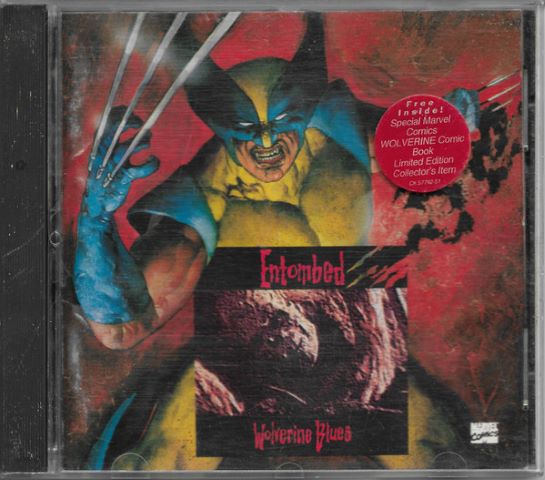
For all the talk of the album, there is also a discussion to be had involving the record label and their decision to force a corporate tie-in on the band and record. Against the wished of Entombed, the label Earache Records got a hold of Marvel Comics and produced a variant cover to the album featuring the mutant comic character bearing the same name as the album. A mini-comic was included in the CD’s booklet.
The Marvel version
It was an attempt at marketing to a wider audience and it wasn’t a really good one. There was no real connection between the Wolverine of the comics and the song or album. Comics were a bloated mess by this point in the 90’s and were destined for a huge crash, and any link between comic books and death metal is minimal at best. The album was also edited in order to avoid issues with the tie-in that would obviously appeal to younger audiences – instances of the f-word in multiple songs were cut out, and the track Out Of Hand was cut completely.
It’s also worth noting the presence of Columbia Records on the label spine – this album was part of an ill-fated pact between Earache and Columbia to capitalize on interest in death metal in the early 90’s. Nothing really came of the merger and it ended without doing much good for any of the bands. If anything, dumb tie-in ideas like this were all that the partnership brought. Carcass did get paid for an album twice because of the dissolution of the arrangement, but that is another story for another time.
The Wolverine and Entombed mash-up did not bear much fruit – the band remained underground and hordes of comic nerds did not seek out the album or become death metal converts due to the tie-in. There are probably a few instances of that happening but those are few and far between I would imagine.
But at the end of the day the Marvel crossover is just a footnote in the story of Wolverine Blues. The true story is that a band changed course and provided an out-of-left-field sound that turned off some but captivated others. Metal’s underground was all over the place at this point in the early 90’s and Entombed was still able to bring something unique to the table. Even with detractors, the album is still celebrated as a triumph and is always a treat to put on the stereo.
This post was part of a series that I called S-Tier Songs. I later decided to abandon the series in favor of a simpler Song of the Week format. I am keeping these posts as I wrote them but removing the old page that linked to the list of S-Tier Songs, so that is why these posts might look a bit odd. Enjoy.
Today’s song is very well-known, in many cases it’s the band’s only known song in America. Many people know the song without knowing who the group is at all. It’s only two minutes long, it’s the second song off the album and my only blogging regret is not making it the second entry in this series.
Blur – Song 2
Blur entered 1997 in a curious position. They’d been crowned kings of Britpop in 1994 after their triumphant Parklife record and tour. In 1995 they seemed poised to build momentum with The Great Escape and their initial single Country House, but then the British press went mad for Oasis and left Blur in the dust, even going so far as to change reviews of the album. Oasis went on to become the biggest band in the world for awhile as Blur sat at home wondering what happened.
By 1997 Blur were ready to get back at it, and this time they were leaving behind the Britpop elements they had previously worked so hard to be known for. The group convened around more lo-fi and grunge sensibilities and released their self-titled album to a new world that was about to move on from the Britpop scene.
While Blur would become internationally celebrated for the self-titled album as a whole, it was Song 2 that would take on a life of its own and become the band’s most recognizable hit. And, of course, as the story goes with many of these hit songs, the whole thing was a joke and an accident.
The above video outlines the origin story of Song 2 as told by Blur guitarist Graham Coxon. The song began as an acoustic piece on Damon Albarn’s guitar, featuring whistling in place of the song’s now-immortal “woo hoo” bit. Coxon suggested adding a bunch of noise to the tune and actually playing it for the record company as a gag. Albarn obliged and the band turned in the fully-formed, distorted as all hell Song 2 to the record company. Instead of being met with a sour reaction, the label execs loved the tune and Blur were off the to the post-Britpop races.
Song 2 was a well-received hit in Blur’s native UK and it also did something the band had been previously unable to do – it broke in the rest of the world. Song 2 charted on the higher end in many countries and became a staple of college and modern rock radio in the United States. Britpop as a whole hadn’t fared massively well on American shores, save for Elastica and Oasis. But now Blur arrived with a grunged-up tune just in time for the post-grunge era to truly take over rock radio. The song has been a part of sporting events, video games and other media ever since its release 25 years ago.
Background and reception are all well and good, but what really is Song 2 on about? Well, it’s a two minute song full of lyrical nonsense. The most noteworthy lyric is “woo hoo,” it’s the signature part of the song and the one many folks know the tune by. A fair few people couldn’t tell you who Blur is or the name of the song but they know “the woo-hoo song” by heart. And nobody, including the people who wrote it, can tell you what any of it means.
And that’s the beauty of music – not everything has to have a pinned-down, easy to digest meaning. Song 2 is a total lark through the English language and its only memorable words aren’t even really words. The whole thing from lyrics to instruments is just noise being made and it all works splendidly together. That’s not to say no thought went into it – as Graham Coxon outlines in the interview video, he was looking for specific sounds. And he got far more than he bargained for, with the song often cited as his greatest work.
Why is this an S-Tier song?
Song 2 is a monument to absurdity and noise and it tackles its premise extremely well. The song was a huge hit for a band reeling in an identity crisis after the events of 1995. Their response was to shrug off the sounds of their given genre and explore new areas, which led to a new legacy for the group that would far outshine the Britpop movement. It’s a simple song with no comprehensible theme and it’s just a bunch of noise, but it captured the attention of people all across the world.
In this installment of line-up changes I’m going to tackle a band that has had way more than one. In fact, the group has only had one constant member in its 46 year history. Discussing every change would be an insane task and be a 50 part series on the blog. It would also be extremely dry and uninteresting – very few of the line-up changes had any massive impact.
Today’s subject is Accept, the long-running German metal outfit who have several solid albums under their belts, as well as a book’s worth of line-up changes and a few extended breaks from touring and recording. Guitarist Wolf Hoffman is the only member to remain in the band from 1976 until now and to have recorded on every album.
Accept would gain notice in the 1980’s with albums like Balls To The Wall, Restless And Wild and Metal Heart. They would begin long periods of instability in 1987 when vocalist Udo Dirkschnieder was dismissed from the group. A series of reunions and extended breaks took place between 1992 and 2005. Hoffman was insistent on taking the band further after the 2005 reunion tour but blamed Dirkschnieder for inactivity after the tour.
The line-up change of note would happen in 2009 – Accept would reconvene with a new album and tour, and this time Udo was not invited. Taking his place was American singer Mark Tornillo, who had fronted New Jersey-based TT Quick in the 1980’s.
TT Quick were a bit of a “hidden gem” band from the ’80’s, never quite breaking big but still having an influence. Their guitarist David DiPietro would bear huge influence on fellow Jersey guitarists Zakk Wylde and Dave “Snake” Sabo, neither of whom should need any introduction. But TT Quick would remain under the radar and mostly inactive after the early 90’s, save for a brief reunion around the turn of the century.
It was a huge deal for Accept to reunite and do so without Udo Dirkschnieder. Udo was the definitive voice of Accept, having fronted the early and classic albums. A few records with other singers did not stand out or have the same impact as those from Udo’s time with the group. The band toured on festivals with the classic songs and that’s what fans were paying to see.
It was a massive risk to take on a new singer and someone as relatively unknown as Mark Tornillo. While Accept have international acclaim, they are a European band and taking on an American singer from an obscure group would be strange news to fans. The Internet lit up with negative reaction to Tornillo’s appointment, metal fans are not one to react well to major line-up changes like this.
Accept were prepared for the backlash, and very well armed to fend off critics. Filling Udo’s shoes was going to be a tall task, so the group hit the studio and prepared an album before announcing the line-up change. 2010’s Blood Of The Nations was the first new music from Accept in 14 years and the first without Udo in 21 years. It also became the first Accept album that anyone truly gave a shit about in 24 years.
Mark Tornillo’s “prove it” moment was a hit out of the gate. While many fans clinging to the Udo legacy still spewed venom across Internet comment sections, critics and fans were in awe of Blood Of The Nations and Tornillo’s strong performance. The major line-up change and huge risk would pay off. Not only did Tornillo gain accolades for his work on the album, but many praised his adept handling of the Accept back catalog.
That is where many replacement singers run foul of the fanbase – a new album can be good, even great, but when the new singer can’t lend due performance to the legacy works, people get turned off. And in fairness, it’s still not hard to find people slagging off Mark Tornillo and his singing on Accept’s classic tunes. If there is an Accept article at all on Blabbermouth or wherever, there are still plenty of comments from people unwilling to “accept” the new singer.
Music is personal opinion, of course, but I think the people still ripping Accept in its current form are just crying for the sake of crying. I saw Accept live in 2013 and the band blew the roof off the venue. Tornillo was spectacular and the band as a whole was in great form. The detractors are honestly just people who want to be butthurt over Udo’s exclusion from the group. I don’t often waste my time dissecting the opinions of people who hold contrary views to my own, but in the case of Accept, it’s one I feel comfortable doing. It isn’t an Accept problem, it’s a them problem.
The line-up change for Accept has been a success. Tornillo is now five studio albums and 13 years deep into his Accept run. The band have dealt with other line-up issues since but are still keeping at it. Udo Dirkschnieder is no worse off either – he is touring constantly and releases new studio albums more frequently than some people change their underwear. And even with all the commotion over the line-up change and Udo’s complex feelings about Accept, he has offered nothing but praise for Tornillo and how the latter has handled the role.
Sometimes the line-up change works, other times it doesn’t. In the case of Accept, their risky and daring change in 2009 panned out for the band and fans, or at least the fans who were willing to approach it with an open mind and ear. I’m sure it wasn’t an accident that they went with a singer in a similar vein to Udo. Accept have been able to add a new chapter to their legacy and were able to buck the odds and re-establish themselves when up against their own history.
This week brings one of heavy metal’s all-time classic albums. There’s a bit of a celebration in order for it as the album was just certified double platinum in the US. But shiny things on walls don’t really matter when we’re talking about one of heavy metal’s greatest statements.
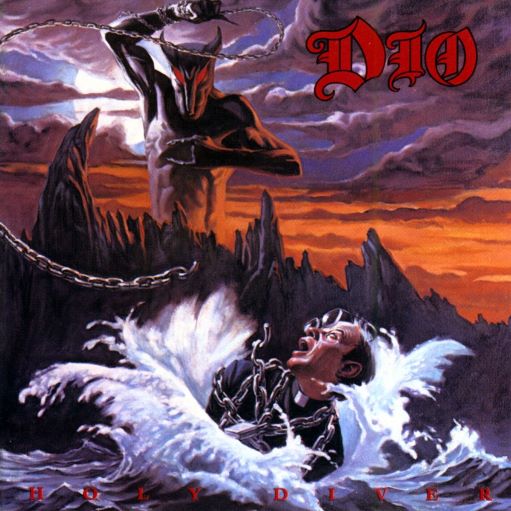
Dio – Holy Diver
Released May 25, 1983 via Warner Records
My Favorite Tracks – Holy Diver, Gypsy, Rainbow In The Dark
The debut effort from Ronnie James Dio’s newly-formed band was a big deal from the word go. Dio had made his mark with turns in Rainbow and Black Sabbath and was stepping out on his own to take control after arguments over live album mixes and such. Dio would secure the services of former bandmates from both groups – Jimmy Bain from Rainbow on bass and drummer Vinny Appice from Black Sabbath. Rounding out the group was a younger hand, guitarist Vivian Campbell.
Holy Diver entered a landscape in 1983 where heavy metal was growing to become a major force in the music world. Hair metal was well on its way to taking over the decade, thrash was emerging from either US coast and even the beginnings of extreme metal were showing up. The New Wave of British Heavy Metal had already launched its most successful bands and the foundation for power metal was laid down.
Dio would enter the landscape along those lines, with a melodic-driven, classic approach to metal. It wasn’t a massive departure from work done in Rainbow and Sabbath and it brought the older form of metal into the new age. The music would also offer elements of fantasy in theme and lyrics, something that stood a bit apart from the subject matter of hair metal or thrash.
While the album is a heavy metal monolith, it’s also an easy piece to get into at 9 tracks in 41 minutes. Let’s have at it.
Stand Up And Shout
It’s an up-tempo offering to open the proceedings. While the song’s main riff would be at home on a Scorpions album, the song is given an extra bit of kick by the rest of the band. The song offers a positive, uplifting message – it’s one of many motivating tunes that would come from Dio and became one of his calling cards. And Vivian Campbell offers the first of many electric solos he would perform in his time with the band.
Holy Diver
There is a bit of an intro here that serves a bit of an anticipation-builder for the album’s title track and its signature song. Then the band launches into a mid-tempo ass kicker while Ronnie sings about some messiah figure on another planet or some such shit.
There isn’t a lot I really need to say – Holy Diver is one of heavy metal’s best songs. This is the top of the mountain, in 1983 or any other year really. It is every bit the masterpiece it is made out to be.
Gypsy
A high-flying number with Vivian going off from the word go, the song goes on about that kind of bad girl you just can’t help getting tied up with. The song has been a bit under the radar compared to other Dio standards but it’s always been a favorite of mine.
Caught In The Middle
The pace keeps going with another song about conquering inner doubt and rising up. For all of the talk about negative theme and energy in heavy metal and music in general, Dio always provided a fair amount of “self-help” type of stuff that always got left out of those conversations. Songs like this were at the forefront of heavy metal’s motivating power.
Don’t Talk To Strangers
Often highlighted as a personal favorite by many, we get a slow-builder to change things up a bit. After a quieter first verse, the band launches back into the heaviness and pace. Vivian is really putting on a show here without any hint of wankery, it’s some very solid guitar work all over the song. Ronnie has said the song is about his distrust of people after his Sabbath experience but the track is really about not taking candy or rides from strangers, which we 80’s kids were brought up to avoid.
Straight Through The Heart
This stomping number turns the heaviness up to 11 and lives up to its title. Ronnie apparently wrote the song about the woeful love life of their recording engineer. Suffering always makes for the best art, even better when it’s someone else’s suffering. Learning the easy way is great.
Invisible
This haunting tune delves into the issue of feeling lost to the world. Even in dealing with the tough issues of confusion and trauma, Dio still manages to impart an uplifting conclusion to the proceedings. And it’s more brilliant shredding from Vivian, something not in short supply through the album.
Rainbow In The Dark
The album’s second single has become one of Dio’s signature anthems alongside the title track. It’s another song Ronnie wrote after his acrimonious split with Black Sabbath and the darkness of that time period led to one of his greatest triumphs. Everything on the track works like magic, even that synth line that stands out like a sore thumb.
Shame On The Night
We close the record with a slow burner that uses the day and night as symbolism for life and death, light and dark. Again Dio offers triumph over the evil and darkness. The music provides a bit of atmosphere to contrast from the general heavy attack but still also stomps its way through the track.
That wraps up Holy Diver and one of heavy metal’s finest moments. Dio would go on to establish a legacy nearly three decades long before his death in 2010. The band on the debut would not hold, led by the acrimonious departure of Vivian Campbell in 1986.
But nothing can diminish the legacy of Holy Diver. The album is a cornerstone in the foundation of heavy metal and its influence is felt to this day. The album got its first US platinum certification in 1989 and just recently received its second certification. And no matter the sales, it is always at the forefront of heavy metal discussion. When someone new to metal asks for a list of recommended albums to explore the genre, Holy Diver is always toward the top of that list.
Of course, before I get into the main event, rest in peace again to Ric Parnell. Parnell played Mick Shrimpton in the movie and was the drummer for the 1984 album as well as the 1992 effort Break Like The Wind. Parnell died just a few days ago at age 70.
In terms of movies about music, there honestly are not many that measure up to This Is Spinal Tap. The “mockumentary” was a battle to get funding for and film, and then was a slow-burner that edged its way to cult classic and then eventually immortal status. While there are a handful of music films that are held in the highest regard (The Last Waltz comes to mind), there are few, if any, that do for rock and metal what Spinal Tap did.
The movie is a laugh riot, but the jokes aren’t the kind of setup-punchline thing. Much of the movie was done improv style and the jokes are left in a deadpan form for whoever wants to pick them up. Anyone else saying some of the stuff in the movie would come off just plain dumb, but it’s the most brilliant comedy when delivered in the movie.
And of course the film’s greatest legacy is that it’s almost not really a parody. There are many tales of rock stars seeing the movie and not finding humor in it – Steven Tyler of Aerosmith and The Edge of U2 are a few who thought the movie was so spot on that it wasn’t funny. Many musicians have recalled their own “Spinal Tap” moments on tour, the fake band’s name is now a term for real life happenings. And even the idea of having a black album cover would come to fruition – while Spinal Tap’s Smell The Glove didn’t get traction in America, Metallica’s “Black Album” seven years later would be the best-selling album of the 1990’s. That probably has more to do with Metallica than with Spinal Tap, but the parody band were openly cited as inspiration for Metallica’s cover.
And that’s really the thing about Spinal Tap – they’re pretty much just another band from the era of rock and metal. They informed the scene as much as they provided commentary on it. Rob Reiner went to see Judas Priest live as part of his homework to make the movie. And tell me that you don’t see Iron Maiden all over Spinal Tap, they’re almost the same damn band. Spinal Tap provided legitimate influence to countless bands over the years, and every big band has their “Spinal Tap” story of some absurd event almost too silly to be real.
This Is Spinal Tap is a movie that has entertained many rock denizens in the 38 years since its release and it has also bore real influence even as what was originally a mock band. The movie just rolls from start to finish with a completely packed guest list and absurd gag after absurd gag. It entered the general pop culture lexicon in many avenues – Harry Shearer’s gig on The Simpsons led to a Spinal Tap episode, Fran Drescher reprised her role as Bobbi Fleckman on her hit 90’s sitcom The Nanny, the esteemed Mick Fleetwood actually risked life and limb to become a Spinal Tap drummer for a spell in the early 2000’s, and Christopher Guest has helmed a series of award-winning mockumentaries in the same style of Spinal Tap. This led to a huge mash-up in 2003 on A Mighty Wind, where Guest mockumentary regulars Eugene Levy and Catherine O’Hara joined the other Spinal Tap primary players and a host of other Hollywood talent in a folk revival mockup that garnered a similar reception to Spinal Tap.
There is no questioning the legacy This Is Spinal Tap has left on the rock landscape. To wrap up I want to recall three of the movie’s most famous scenes. This isn’t a list of “my favorites” per se, honestly the whole movie is my favorite. But these scenes are the ones that people go back to and that people who don’t even know Spinal Tap at least have heard of the references.
Hello Cleveland!
This scene is an absolute laugh factory – the band are getting ready to go on stage to a very energetic crowd in Cleveland and begin their journey from backstage. The only problem is that backstage to stage is a journey longer than one of Skyrim’s longest dungeons. The band get lost at multiple points and have to ask for directions from an employee, but even that doesn’t get them on stage. The band are lost in a broken down labyrinth.
This is one of the many scenes that have happened to countless musical acts in real life. I can’t locate the exact text now but the scene might have been inspired by a similar gaffe by Tom Petty. Even if not, rock stars and luminaries from every genre of music have their own Hello Cleveland! Stories.
These Go To 11
This scene doesn’t need much exposition – I’d imagine it’s the most famous line from the movie. Nigel is showing Marty an impressive guitar collection (the sustain!) when the Marshall head that goes to 11 is shown.
And it’s not just the concept, it’s also in the delivery – when Marty suggests that 10 could be made louder, Nigel simply chews his gum for a moment and then remarks “these go to 11.” Just amazing delivery.
This is the phrase that people know from the movie even if they don’t know the movie. It’s the signature line and it’s why we’re all here.
Stonehenge
It’s all there – the band break into their epic, brought out to revive flagging attendance numbers on tour. Everything is going great, then a Stonehenge monument falls from the sky that isn’t big enough to use as a footrest. The aftermath sees manager Ian Faith quit the band and a path to oblivion unfolds – that is, until Sex Farm hits the charts in Japan.
Stonehenge is everything that goes wrong with stage props, something that happens to bands all the time. But Stonehenge actually did happen to a real band, just in the opposite fashion – in 1983, Black Sabbath had to cancel several Canadian shows on their Born Again tour because their Stonehenge replica was too big to fit in venues. And the funniest part is that one didn’t influence the other – Spinal Tap had a draft version of their Stonehenge gag before Black Sabbath’s tour. It’s just one of rock’s freaky coincidences. Spinal Tap would twist the bit and do the “too big” version in 1992 at their Royal Albert Hall performance.
Any time I go back and watch the movie, it’s always the Stonehenge scene that has me on the edge of my seat. It’s the movie’s most pivotal moment and the biggest turning point for a band slowly flailing away on a tour that isn’t working. Everything before builds up to Stonehenge and everything after is a result of what happened. The whole scene, sadly not entirely represented in the clip, is really the point of the movie.
And there we have it – one of the greatest movies of all time and one of rock and metal’s most important moments. I’m sure I’ll have more to say about the film in the future, this is a well that there is plenty more to go down before hitting bottom.
I’ll have at a quick post today to discuss the unexpected but very welcome news that came down yesterday – Judas Priest will be among the inductees to the 2022 Class of the Rock N’ Roll Hall Of Fame.
The induction is kind of surprising. Priest were on a months-long fan ballot with other acts and did not place well in the results. The institution behind the Hall of Fame has always stated that the fan ballot is only one component of selection and so the group saw fit to grant Judas Priest induction.
In fact the group is being inducted in a different category from the typical “performers” one. Priest are being inducted via the Musical Excellence category. This is not a very big deal, despite some of the wankery being aired on social media about it. There are several different categories for the HoF so getting in by way of this one is not some huge issue.
With induction to the HoF comes the issue of who exactly gets in. In the case of Judas Priest, the following members will be inducted – current members Rob Halford, Ian Hill, Scott Travis and Glenn Tipton will be enshrined. Along with them, former members K.K. Downing, Les Binks and Dave Holland will also be inducted.
This does leave a few people out, of course. Original Priest singer Al Atkins won’t be inducted and I’m sure he’ll have something to say about it. Halford’s replacement in the 90’s Tim “Ripper” Owens also will not be enshrined, and I’m sure will be gracious as he often is about such things. There are a smattering of other members with some contributions but the Rock Hall generally just gets the classic-era names in for induction.
There are a few points of potential drama with a few of the names on the former members list. I won’t even get into one of them, I don’t know how that’s gonna play out but hey, they’re inducting him so I guess that’s decided. In the case of K.K. Downing there has been some past acrimony over his departure, but there’s no point in getting into all of that now. Early indications are that Downing is very happy about the induction and Rob Halford has already extended an invitation for Downing to be there so I’ll just play the part of the optimist and hope it all ends well.
But in the end drama is just drama, the point still stands – Judas Priest will be in the Rock N’ Roll Hall of Fame. I wasn’t really expecting to see the day, I’d honestly given up on the institution years ago. I’ve deliberately avoided writing posts about who I think are the biggest snubs and things like that – I would prefer to just not give a shit about the whole thing. But I will set all that aside to celebrate the very deserved induction of one of my favorite groups and one of heavy metal’s pioneering outfits. It is fully earned and finally realized, and may the world celebrate the glory of Judas Priest later this year at their induction to the Rock N’ Roll Hall of Fame.
The title has absolutely nothing to do with the post, but it’s time to look at another pile of lead singles for upcoming releases. There is more music coming out than I can keep up with but that’s a good problem to have.
Skid Row – The Gang’s All Here
Skid Row were promising new music last month and have delivered. This is the title track to the new album due out on October 14. It marks the band’s first full-length album in 16 years.
It was pretty anticipated to see how Skid Row would sound on record with former DragonForce singer ZP Theart on vocals – and well, that anticipation will continue because the band have jettisoned Theart and replaced him with Erik Gronwall. Apparently Gronwall made waves awhile back with a cover of the Skids classic 18 And Life and now all of a sudden he’s fronting the band.
The song is a nice tune, it’s a cut from the cloth hard rocker that does recall the band’s glory days. Gronwall is the fourth singer for the group since the departure of classic-era singer Sebastian Bach in the 90s. I’m as curious as anyone why the band decided to switch singers yet again but it might be a while before anyone gives detailed accounts to the music rags about whatever went down.
Without detailed information, the singer switch feels like an attempt to capitalize on the buzz generated by Gronwall’s cover song performance. Maybe the band heard him and thought he’d be a better fit, I don’t know. If only there were a suitable singer around who could live up to the past performances of Sebastian Bach…
But anyway, the coming fall promises a new full-length and we’ll see what the band can get up to with another entry in their revolving door of singers.
Hank Williams Jr. – .44 Special Blues
The venerable Hank Jr. is releasing a new album of blues cuts. Produced by Dan Auerbach of the Black Keys, Rich White Honky Blues is due for release on June 17.
Taking on blues standards is an interesting choice for Bocephus, but it’s not at all far removed from his own roots. The blues were a big influence on country and Jr. has been vocal about his appreciation for the blues in the past. Now he is offering up a full album of the blues and he certainly sounds like he knows his way around the genre.
IV and the Strange Band – Inbred
If Hank Jr. wasn’t enough, June 17 will see the debut release of his grandson Coleman’s band. Southern Circus is the first album from the next in line of the Williams family legacy. The son of renegade outlaw Hank III was preparing a fully self-released effort last year before reconsidering in the wake of the considerable buzz he generated. This new, fully produced effort represents a more polished first step forward.
Inbred is a song about the Fugate family of Kentucky. I’ll link the Wikipedia for anyone curious, though the title should give you a clue. The song is fine, it won’t set the world on fire or anything but I like the direction this seems to be going. It’s imperative for a Williams to go their own way and it sounds like Coleman and company will be doing their own thing. It has a polished southern rock/maybe “hipster” country feel to it and that’s fine by me. It’ll be very interesting to see how the musical path of IV unfolds. Even with going his own way, it is most likely to be his father’s fanbase that will line up early to see what Coleman has to offer.
Note – the group have released a newer single since I began this post, I decided to retain my original text.
Emma Ruth Rundle – Imbolc Dawn Atop Yns Wydrn. Ice Melts As The First Resplendent Rays Of Spring Pour Over The Horizon
Ok, that was a mouthful. This is a new track from my favorite artist in recent memory and is in advance of her new instrumental album EG2 – Dowsing Voice, releasing soon on Friday the 13th. The album is being released in physical form but its digital presence will be kept exclusively on Bandcamp, hence the unusual preview format.
This song, as with surely everything else on this instrumental (though with voice being used as an instrument) work, features the use of atmosphere and texture to create soundscapes. It is a different listening experience from the standard verse-chorus structure of standard songs but it’s musical direction I’ve been leaning more into in the past few years, probably with Emma being my shepherd to that. Emma conceived the album while in Wales in early 2020, just before the world broke apart. It’s also great timing for a release, even an unusual one, as Emma just performed at the Roadburn festival a few weeks prior and her performance was a hot topic of conversation from the fest.
Billy Howerdel – Poison Flowers
The A Perfect Circle guitarist will be releasing a solo album titled What Normal Was on June 10. The song is a nice example of gothic alt-rock or whatever it is, I’m not entirely sure. But it’s a pretty cool song and will command attention as Billy launches a solo tour through the same month as his album’s release.
Oni – Secrets
Newer metalcore brood Oni are preparing to release a new album Loathing Light on June 17. “Brood” may be a deceptive term as the band proper is comprised by a sole member, vocalist Jake Oni. Oni receives help in recording with longtime friend Mark Morton, guitarist of Lamb Of God. Morton’s bandmate Randy Blythe supplies guest vocals to Secrets, as does another unexpected guest, punk legend Iggy Pop. The track is a star-studded romp, we’ll see what the full album holds next month.
Septicflesh – Hierophant
The long-running Greek symphonic death metal outfit have prepared their eleventh album Modern Primitive for release on May 20. Septicflesh have become leaders of the symphonic element in death metal and from the sounds of Hierophant they will likely keep their momentum going with their new release.
Lamb Of God – Wake Up Dead
This new track from LoG is not a precursor to a new album or anything – it is a standalone release and a cover of Megadeth’s iconic song from 1986. Lamb Of God have been touring with Megadeth on the “Heavy Metal Tour of the Year” for a few years now (COVID-delayed, of course).
The band handles the song in true-to-the-original fashion, executing it with thrash precision rather than translating it into LoG’s groove-oriented approach. The band had a helping hand in the effort – Dave Mustaine joins in on vocals and guitar. It is a nice effort and also a placeholder for that new Megadeth album that Dave says is supposed to be out in July yet we haven’t heard anything new about in awhile, much less a teaser track.
Dylan Gers – Moon Rise
This single marks the debut from Dylan Gers, who is the son of Iron Maiden guitarist Janick Gers. The song is a minimalist piece that is not at all related to his father’s work. It’s a different sort of listen but something I can stand to hear more of, it’s not out of place with other things I’ve been getting into as I get on in years. There is no word about an album or anything else yet from the younger Gers.
Liam Gallagher – Better Days
I’ve already previewed one song from Liam’s upcoming May 27 album C’Mon You Know, but I figured I’d drop this third single from the record considering that we’re getting a double-dose of Liam on the 27th. Not only does the new studio album drop but also seeing release is a live 2020 set Down By The River Thames, which Liam and company recorded on a barge floating the river as a means of holding a concert during the COVID lockdown era. The event was filmed then released as a limited streaming event and will now be available on wax and digital.
That live set will feature Liam solo as well as Oasis tracks, though the bulk of the focus will be on Liam’s new studio effort. Better Days is an interesting tune that, to me, stands out more than the other preview tracks from the new record. The video is extremely well-done and so far this song appears to be a highlight from the new album. Liam is gearing up for a headlining set at the upcoming Knebworth festival, the site of Oasis’ great triumph almost 26 years prior (my thoughts on that set’s official release here). While he will revel in the glory days of Oasis, he now will also have plenty of his own songs to insert in the set as well.
That does it for this month’s edition of upcoming releases. Time keeps flying and so do the new songs and albums. Perhaps the next edition will finally feature a new Megadeth song, we will see.
I finished this post last Wednesday and got it all put together and scheduled yesterday, May 1. Just as I was about to head off to bed I checked my socials one last time and got unfortunate news very much related to my post today.
On May 1st, 2022, long-time drummer Ric Parnell passed away at the age of 70. Parnell was involved in a large variety of projects over his 50-plus year career, including Atomic Rooster and also being the drummer on the hit song Mickey by Toni Basil. But Parnell’s most well-known work would come as one of many to occupy the drum throne of British heavy metal legends Spinal Tap. Parnell played on the soundtrack I’m discussing today and also portrayed drummer Mick Shrimpton in the motion picture. Parnell would outlive his fictional counterpart nearly 40 years.
Condolences to the family and friends of Ric Parnell. Today I’ll do as I originally intended to, which is look at his most celebrated work.
I’m back after a bit of time off. I took some time to acclimate to a new work schedule. That’s pretty well sorted now and I’m ready to get back to business.
This week is the first time I’ll be offering up a movie soundtrack as the AOTW. Of course, this is a bit more than just a soundtrack. It’s not a compilation of songs with a few highlights and a lot of filler like most soundtracks. It’s a full-on offering of songs written for a movie and also performed by the cast. The band is fake but also became very, very real and are one of the rock and metal’s defining legacies despite being conceived to make fun of the scene.
There is none more black, and none more iconic
Spinal Tap – This Is Spinal Tap
Released March 2, 1984 via Polydor Records
My Favorite Tracks – Hell Hole, Stonehenge, Tonight I’m Gonna Rock You Tonight
It’s not totally unusual for a band to be contracted to record songs for a music-centric movie soundtrack. It is very unusual for the same actors in the movie to be the ones to also record the music. It worked in the case of Spinal Tap, who featured Michael McKean and Christopher Guest, who had already played together for several years and had conceived the Spinal Tap idea for a TV show pilot in the late 70’s. Harry Shearer, who had worked with McKean through the 70’s in another comedy group, joined in along with director Rob Reiner to give life to the Spinal Tap concept. The band was rounded out by some musicians – drummer Ric Parnell (again, RIP) and keyboardist David Kaff. Both Parnell and Kaff would assume roles in the movie as Mick Shrimpton and Viv Savage.
For simplicity and lore’s sake, I will be referring to the band members by their stage names in this discussion.
The original release of the This Is Spinal Tap soundtrack comprises 11 tracks (mostly) from the motion picture. A 2000 reissue offers a bonus track and is available on Spotify (I will not be covering the song today). A 2009 release called Back From The Dead does feature many of the songs in re-recorded form but should not be confused with the movie soundtrack.
Hell Hole
Opening the track is a song that was actually released as a single, complete with music video. Hell Hole is a great mid-tempo rock track that outlines the ups and downs of “making it,” then wishing for the simpler pleasures of being a pauper. The grass is always greener on the other side. The song features Nigel Tufnel handling the verse vocals while David St. Hubbins tackles the chorus.
Tonight I’m Gonna Rock You Tonight
The song that opens and closes the movie finds its spot as the second track of the record. It’s a splendid rocker that doesn’t seem like it has any business being as good as it is. The guitars, lyrics, keys and rhythm section are firing on all cylinders through this high-octane tune that gets both concert and film crowds going.
Heavy Duty
A proper heavy metal tune from Spinal Tap, this song goes hard and heavy and is all about the rock. It is totally one of those cliched “rock” songs which is so silly yet so good, something that serves the band and movie doubly well. They just want to make some eardrums bleed, and have accomplished the goal. It does seem to be pure coincidence that this Heavy Duty and Judas Priests’ song of the same name were both released in 1984. One probably couldn’t have taken from the other given the concurrent timelines and the obscurity of Spinal Tap pre-film. It’s certainly fitting but by no means is there any greater link.
Rock N’ Roll Creation
A track that feels NWOBHM-inspired or perhaps a “precursor to power metal” cut. It plays a role in the film when bassist Derek Smalls cannot release from his pod in time and has to hang out inside for most of the performance, only getting out when the others get back in at the end. The song is the genesis of rock and roll so of course it is cannon to me.
America
One song that did not make it into the movie, America is simply about the awe of a British band discovering the size and scope of America for the first time. The tune begins very slowly, perhaps betraying the actors’ future participation in another mockumentary as a folk outfit. As the song builds it suddenly shifts into a riff that 100% sounds borrowed from the first two Iron Maiden albums. Nothing says America like …, uh, anyway, on to the next song.
Cups And Cakes
This tune got a brief airing in the film on the radio that also put the band in the awkward spot of being in the “where are they now?” file. The song is utterly goofy and doesn’t really move the needle on the soundtrack but was a pivotal piece of the movie.
Big Bottom
One of the movie and by proxy album’s signature cuts, the song features both guitarists wielding bass guitars along with usual bassist Derek. It is probably the only time in recorded music history that guitar players actually sought to be bass players.
Big Bottom is a favorite of many from the movie and is a laugh riot through the praise of ample rear ends. It’s probably a pointed shot at the heaps of sleazy love songs populating the 1980’s but it’s a damn good time no matter what it is. The all-out bass assault with Viv’s keyboard embellishments just throw the whole track into overdrive. Big Bottom was the b-side to the Hell Hole single and, looking back, probably should have been the lead feature.
Sex Farm
I almost called Cups And Cakes the dumbest song on the album but I quickly held up because that isn’t true. Sex Farm is crude, rude and – well, pretty damn good. Not every good rock song needs to be a thesis statement or a pithy philosophical musing – some great rock songs are about the dumbest shit. The song that saw Spinal Tap rebound from a near-fatal end in the movie also lifts the soundtrack with its dumber than dogshit quips about sex and farms.
Stonehenge
While not “long” by any practical measurement, Stonehenge serves as Spinal Tap’s “epic” song. It tells a story and builds from a haunted intro into a full-out rock attack outlining the lives of those Britons who lived at ancient Stonehenge. It’s also one of the movie’s most memorable scenes, a topic I’ll save for a near-future post.
The song has elements of NWOBHM and what would come to be known as power metal. It builds from a quiet, haunting intro and launches into a melodic, rollicking tune that puts historical and fantasy elements on display. The song stands fine on its own but really can’t be separated from one of the movie’s signature events.
Gimme Some Money
This song is an offering from the band’s past before Spinal Tap was christened. The band performed as The Thamesmen in the apparent height of the British Invasion, as this song is absolutely cut from the same cloth as The Beatles, Rolling Stones and the whole 60’s British scene. It’s quite well-done, another one of their works that doesn’t feel like it has a right to be as good as it is. And of course it’s absolutely hilarious.
Also – The Thamesmen is a great name, someone should get that together if it hasn’t been done already.
(Listen To The) Flower People
The final song on the album is also the first offering from the properly-dubbed Spinal Tap, who jumped into the late-60’s psychedelia phase before charting a course for rock n roll. One one hand it’s not my favorite tune of the collection but on the other it’s a pretty well-done effort that does recall the music of the time (though not my most well-versed period of music, admittedly). This one does feel a little too on-the-nose humor-wise where the jokes in the movie and other parts of the soundtrack are allowed to land on their own. But again, still a nice song to round it all out.
This Is Spinal Tap stands on its own in the realm of movie soundtracks. Of course there are iconic soundtracks out there, they were huge especially in the 80’s. But to have the actual actors in the film record their own music and make it work and also fit in to the film is just an unbelievable feat.
The songs work in the movie, of course, but they also stand on their own. Though Spinal Tap’s legacy will always be the now legendary film, the songs have been talked about worldwide and covered by a who’s who of rock greats over the past 38 years. Spinal Tap themselves have toured and recorded again and again since and have become their own part of the institution of rock.
I’ll have a different post on Wednesday but on Friday I’ll do the obvious and discuss the movie This Is Spinal Tap in more detail. For all of the talk about rock and often the 80’s scene that I and others do, so much of it was informed by this off the wall and at the time obscure mockumentary that wound up taking on a life of its own and being its own influence on the life and times of 1980’s rock and metal. But in the wake of that discussion, the music of the film can’t and certainly shouldn’t be ignored.



 The Crooked Wanderer