Iron Maiden – Powerslave 40th Anniversary

Forty years ago today, Iron Maiden unleashed their fifth album upon the world. Nothing would be the same after this all-consuming affair.
Iron Maiden – Powerslave

Released September 3, 1984 via EMI Records

This is a re-review for me, I did cover this album about two years ago, long before I started doing song and album grades. I’ll leave the old one up as I have no problem with that post but I’ll be referencing this new one as I go forward.

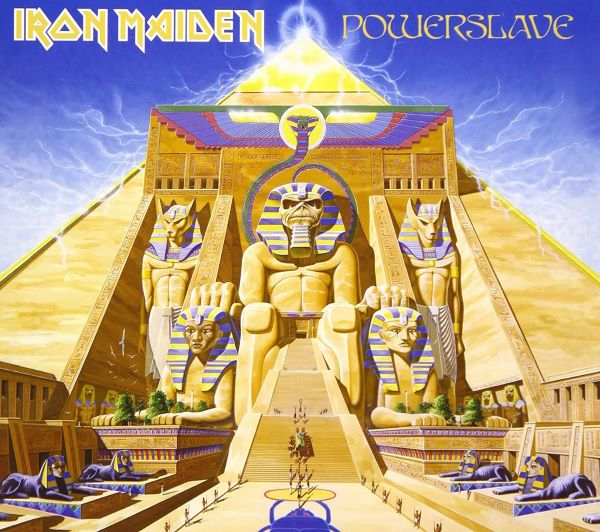
Iron Maiden convened in the Bahamas to record this effort. That must have been tough. The band was the classic line-up of the 1980’s – Steve Harris playing bass, Bruce Dickinson on the mic, Dave Murray and Adrian Smith on guitar, and Nicko McBrain on drums. Martin Birch was the producer, in the middle of his immortal run of Maiden albums. The massively iconic cover art was courtesy of Derek Riggs, also in the middle of his legendary run depicting Eddie.

Simple stuff today – eight songs with a total runtime of 51:12. Nothing exists in the way of bonus tracks besides the rare Castle Records reissue, that stuff is B-side material and is available on the singles and elsewhere.

A bit of context before I start – Powerslave came in at number 2 when I did the Iron Maiden album ranking awhile back. And for additional reference, the album cover also came in at number 2 when I ranked album covers a long time ago. So clearly we’re dealing with an album I hold in very high regard.

Aces High

The opener is one of Maiden’s most beloved songs. It is an intense, soaring tune that captures the essence of airplane combat, which is nice since the song is about the legendary Battle of Britain during World War II. While Maiden’s guitar work is often widely celebrated, this song features some of the best-known riffing around. This song is flawless and one of the best songs the band have recorded. Grade: S

2 Minutes To Midnight

Another energetic track, this time about the modern state of warmongering and arms dealing. I’m always a sucker for world-ending type stuff and this reference to the Atomic Clock and impending doom of nuclear destruction is spot on. As I’ve said several times in the past, this is my favorite Iron Maiden song so I think I can wrap this one up. Grade: S

Losfer Words (Big ‘Orra)

Up next is an instrumental – it was the fourth Maiden had done to that point and to date it is still the last one they’ve done. It’s a pretty brilliant song and it fits perfectly among the other tunes on the album. This wasn’t some experimental piece, it was Maiden being Maiden from opening note to close. Grade: A+

Flash Of The Blade

We have two songs back-to-back about sword-fighting. This first one features a young kid who plays with a wooden sword but then grows up and has to take up the real thing to avenge his family. And the music on this one is fantastic as well – with climbing riffs and Bruce especially soaring over even himself at points. Grade: A

The Duellists

This next sword-fighting piece was inspired by the movie of the same name, which was Ridley Scott’s first film as a director. It was set during Napoleon’s reign, which is a great backdrop for a story about people who want to kill each other. This song lets the music do most of the talking and is a bit more low-key than other stuff here, but it’s still a wonderful song and very much easily recognizable as Iron Maiden. Grade: A

Back In The Village

This one is a sequel to the song The Prisoner from The Number Of The Beast. It plays again in the land of the old TV show, The Village being the area where the prisoners were kept. This one sounds like the main character of the show is attacking the village or something, I’m not entirely sure. But again it all wraps itself up nicely as another great Maiden tune. Grade: A

Powerslave

The title track makes full use of the Egyptian theme on the cover art to weave the desperate tale of a pharaoh who is dying and cannot accept his mortality. The pharaoh is supposed to be a god and yet is dying just the same as any other person, it is quite the existential struggle for this soon to be corpse.

The song is absolutely magnificent and marks an evolution of the band’s running rhythms and approach to storytelling in songs. It would be hailed as a magnum opus epic – if it wasn’t for the very next track. Grade: S

Rime Of The Ancient Mariner

The final song on the album makes its presence felt both musically and time-wise – this one song takes up over 10% of the album’s runtime. At 13:45 it is was a ridiculously long track for 1984 and would stand as Iron Maiden’s longest song until 2015.

The song is obviously inspired by Samuel Taylor Coleridge’s famous poem and in fact follows the grim story pretty closely. A sailor is cursed for killing a bird, it’s the genesis of the idea of “an albatross around one’s neck.”

Musically, Maiden did not mess around here. The song features several distinct movements that capture the mood of the story as it goes along. It was a feat of arrangement uncommon in heavy metal at that time but a whole generation of younger musicians were paying attention and the power metal subgenre would become a playground for more classical arrangements later on.

In the end this stands as one of the top few songs in the Maiden catalog. It was a masterpiece of arrangement and execution, its lofty ambitions matched by what was presented. Grade: S

Powerslave was an absolute masterpiece from Iron Maiden. The album charted all over the world, reaching a high of number 2 in their native UK. It has been certified platinum in the US and Canada, as well as gold in the UK and several other territories.

Maiden would embark on the World Slavery tour in support of the album – the tour was the band’s longest to date, playing 189 shows in 331 days. While the tour was grueling, it also established Maiden as a prime player in heavy metal all across the world. The tour was also immortalized in the band’s first live album Live After Death a year later.

As for the album grade, well, it’s honestly a little tricky. I’ve only been using grades for a little while now and it does seem as if I’m about to do something I haven’t done yet, and honestly have very little intention to do outside of a select few albums. But this is one of those albums.

Album Grade: S

There is no doubt that Powerslave was what cemented Iron Maiden as metal legends. They’ve only expanded on their legacy since, quite the story in and of itself. But this album and tour reached the world over and developed the kind of die-hard fans that would follow the band anywhere, regardless of what the music industry thought of it. When people ask why Iron Maiden are so beloved, this album is honestly the best possible answer one could give.

For more details about my song and album grading, head here.

Questions, comments or concerns? Use the comment form below or head to my contact page.

For more of my ever-running coverage on Iron Maiden, check out the Band Index.
Dokken – Tooth And Nail

This week let’s go back to 1984 and head right into the fire – Dokken were on the ropes with their record company after a debut that failed to sell. They needed to get their name out there and move some records. This was the result.

Dokken – Tooth And Nail

Released September 14, 1984 via Elektra Records

Dokken had at least broken onto the scene by 1984 via US remix and re-release of their debut Breaking The Chains a year prior. The album did not perform to label expectations and Elektra weren’t all that into the concept of funding more Dokken music. But they were talked into ponying up for another record and the band convened in Hollywood to record their second effort.

Dokken’s line-up already had one change between albums. While mainman Don Dokken was still around, along with guitarist George Lynch and drummer Mick Brown, it was the bass position that needed a new hand. Juan Croucier took his bass and dance moves to Ratt, so Dokken filled the void with Jeff Pilson.

The album was produced by Tom Werman, up until the point that it wasn’t. Werman vacated the job after a nasty confrontation with George Lynch. Don Dokken wanted Michael Wagener from the beginning, so Wagener was brought in despite objections from the rest of the band. Roy Thomas Baker was also brought in to babysit the angry cocaine fiends. The actual stories of all the drama around this album are numerous and can be found in many books and interviews, the whole thing is just crazy and worth a deep dive.

Eventually the album got recorded and released, and we have a 10 track record running at a somewhat lean 38 minutes. There is a Rock Candy reisusse with a few bonus tracks but there’s not much else that I know of in the way of reissues, this album is generally one that you’re getting what you get.

Without Warning

Up first is an instrumental intro. It’s fairly brief at 1:34. Here Lynch is setting a tone more than anything, it’s not a firecracker guitar virtuoso thing. It works just fine to get the ears warmed up for the rest of the album. Grade: B+

Tooth And Nail

Up next is the title track and a total scorcher of a song. It outlines the exact mindset of the band through this time – desperate and ready to do everything to take a shot at the top. While Dokken would handle several of their songs in a more pop-oriented format, this one is a total callback to the more heavy metal-oriented debut album. Grade: A+

Just Got Lucky

And now for one of those more pop-leaning songs. This one has a pretty bright and melodic ring to it, though it still has a nice crunch. This ages-old tale of hooking up with the wrong person did modestly well on the Modern Rock chart as a single, but in the years since it has become one of the band’s signature songs. George Lynch filmed his solo for the music video on top of an active volcano in Hawaii. It was so active that he and the film crew were sent away by the parks department and the volcano erupted while they were flying off. Grade: A+

Heartless Heart

A straightforward rocker with some nice gang vocals and the usual guitar work. Again, Dokken retained a pretty nice heavy-rooted sound while they pursued more commercial accessibility. This sounds like death metal compared to some of the sap of the late-80’s glam and hair scene. Grade: A

Don’t Close Your Eyes

Lynch just plain goes ham here, almost maybe showing off stuff he might have used if he’d gotten the Ozzy gig. Very well done, nice and heavy song here. This wasn’t a single but it’s another essential parrt of the Dokken catalog. Grade: S

When Heaven Comes Down

The hits keep coming with another sharp, heavy song at just the perfect pace for headbanging along to. This album started off hot and hasn’t let up one moment. Grade: A+

Into The Fire

The rock keeps going here though Dokken do thrown in a bit more in the way of pop sensibilities here. It worked, as this was a decently performing single and has also been Dokken’s most-played live song. It’s exactly the right balance of rocking and catchy to draw people in. The pop as all hell third verse coming right out of the guitar solo says it all. Grade: A+

Bullets To Spare

Nothing dives off the path here – it’s another heavy, crisp song. Again with a pretty good headbanging pace to it. If this is the least heralded track from the album, then you have one hell of an album on your hands. Grade: A

Alone Again

And now it’s time for the ballad. That’s what the record label told Don when the album was underway – the ballad was becoming a mandatory inclusion as the 80’s rock world formed around this glam rock sound. So Don dusted off this old piece of a song he and Jeff Pilson had lying around and they recorded the ballad.

And it worked. Alone Again was the best-performing single, going to 64 on the Billboard Hot 100 and getting to 20 on the Top Rock Songs chart. It also works in the context of the album – this isn’t a saccharine mess, it’s a well-constructed song that still rocks even with its more somber tone and content. Grade: A

Turn On The Action

And we close out the album with one more hot rocker. It’s a nice, high-energy groove to leave off with. Nothing much more to say, the album keeps it up all the way through. Grade: A

Tooth And Nail was not the smash hit Dokken were looking for, but it did provide much-needed momentum to placate the record label and get their name out there more. The album got to number 49 on the Billboard 200 and would go gold in 1985 after steady sales. It would eventually get platinum after the band’s next few albums provided the commercial peak everyone was truly after. Dokken toured as opener for a range of acts through the year, before setting back into studio to record the follow-up that would see their fortunes shine even brighter.

After looking back at my song grades, it makes the album itself very easy to grade.

Album Grade: A+

This one is more than just a band who pushed themselves to record something worth listening to – this album helped define the sound of what 80’s rock could be and also would be. This was more melodic and catchy, but also retained a solid, heavy feel to it. Not many could handle that kind of balancing act and not many did, with some being on the heavy side of it and many others going for the quick hit off the pop ballad. But in 1984 Dokken helped establish would rock was going to do through the ensuing years.

The Cult – Spiritwalker

Today I’m gonna have a look at the debut single from The Cult, who would go on to become a force within rock music later in the ’80’s. But they got their start in earnest in 1984 with this initial single.

And, in order to fill up space, I also get to dive into the very confusing naming history of The Cult. There was initially a band that singer Ian Astbury was in called the Southern Death Cult. Astbury ended that band and then joined up with guitarist Billy Duffy and formed Death Cult. The Southern Death Cult and Death Cult are two distinct bands, though as we’re about to find out at least one song migrated over from one to the other. Death Cult would eventually change their name to The Cult, and they are the ones as we know them today from that one song they play in every strip club across the country. The band were originally joined by bassist Jamie Stewart and drummer Ray Mondo for their first album.

Spiritwalker was originally conceived in Astbury’s old Southern Death Cult. The band performed something called The War Song in 1981 with lyrics that would go on to be used in Spiritwalker. Then moving to Death Cult, the new band reworked everything and came up with Spiritwalker. The early version was much different musically, though finding any actual performances is very hard to do so I don’t have anything on hand to offer. While there was a Death Cult EP, it did not contain any version of this song.

So anyway, we now get to the name change to The Cult and plans for the first proper album. Spiritwalker as it is known today was released several months ahead of the album – the single was released in May of 1984, while the album Dreamtime came in August. Spiritwalker did not light the UK charts on fire, at least the mainstream chart – it only got to 77 there. But it did land on top of the Independent chart and got some early buzz going for the group ahead of their album release.

With all of that exposition, let’s talk about the actual goddamn song, huh? The first thing that comes off here is the guitar tone. Duffy’s tone is so bright here, it’s pretty unreal how he pulls off going that “high” in a relative sense yet also keeping it catchy. He goes unreal high in places where nothing else is going on, then rings it a bit in the background when vocals are up. Even when The Cult went more “mainstream rock” later in the ’80’s, Duffy kept his bright guitar tone through a fair few of the band’s signature songs. He was totally operating on his own plane of existence and has been through the band’s entire run.

I often in my reviews of stuff don’t talk about drums and bass much. Honestly I’m spoiled by a band like Van Halen who had one of the best rhythm sections in existence. But The Cult were not that far behind, both drums and bass accent exactly what the song needs here and add their own layer to the song without going virtuoso and detracting from the main show. Steward and Mondo deserve kudos for their performances, both on single and album, and The Cult would make full use of the rhythm section throughout their long and winding career.

Then there’s Ian Astbury. He gets lumped in a lot as a Jim Morrison clone, and also in the “Evil Elvis” category alongside Glenn Danzig. But here Ian goes both full-throated and a bit higher, mimicking Morrison far more than Elvis. His vocals in The Cult are often described as having a “shamanistic” quality, which I don’t know what that is supposed to mean but there are multiple spiritual aspects to Ian’s outlook and performance.

What this all adds up to is one hell of a song, and something in a bit of contrast to what we had in 1984. Pop was in a new wave era and rock went a bit lighter overall, though the seeds for something heavier were planted in the heavy metal realm. But The Cult were totally on their own path, this song being very loosely classified as “gothic rock” but truly being an entity that defied categorization, something the band would take pride in over the ensuing decades. This flies under the radar a bit in terms of the music of 1984, but The Cult did firmly put themselves on the rock map with Spiritwalker back then. And the future would give us a hell of a lot more of their twist on rock.

Exciter – Violence & Force

And we’re off – to the Great White North to revisit a glorious dose of speed metal.

Exciter – Violence & Force

Released February 1984 via Megaforce Records

Exciter formed in 1978 under the name Hell Razor, the same year Judas Priest released the song Exciter. The song would, not coincidentally, offer a template for a faster, more aggressive sound that would come to be known as speed metal. Exciter the band would rechristen themselves in 1980 and pursue the noisy, thrash-like aggressive metal.

Exciter’s debut album Heavy Metal Maniac came in 1983 after the band signed to Shrapnel Records. Not long after, Jonny Z of Megaforce would get Exciter’s contract and the band was set to offer their second album on that label.

Exciter rode as a three piece – Dan Beehler on drums and vocals, John Ricci on bass and Allan James Johnson on guitar. The album was produced by Carl Canedy, who was a member of The Rods and who also produced the Anthrax debut Fistful Of Metal. Jonny Z was along for a production credit as well.

The cover picture offers up a scene both sinister and goofy. A person decked out in leather and spikes is attempting to break through a door and presumably do bad things to a victim who is trying to keep the door shut. This same figure was on the debut album cover but this second album marked his final appearance. Some have tried linking

Violence & Force offers ten tracks at a 41:34 runtime. It has been reissued by different record labels over the years. Curiously, a 2004 reissue from Megaforce removed a song – Evil Sinner was struck from the record and this is what is found on streaming services. I have no information as to why the song was plucked from the album, though it did turn up as a bonus track on the reissue of the prior album. Also of some note – the reissues were made possible by fellow Canadian metal luminary Jeff Waters of Annihilator, who bought the rights to the Exciter catalog so Beehler and company could get new issues into circulation.

Oblivion

Up first is a noisy and very brief guitar intro. It’s not much of anything but it doesn’t really waste any time either so it isn’t a detraction of any real sort. Grade: B-

Violence & Force

The first song in earnest is the title track. This one is a ripping affair, slamming along at a breakneck pace through its run. The lyrics bring exactly what one would expect from a song with this title, while Beehler offers up a few ear-piercing screams in the chorus and there’s a wild, dissonant guitar solo as well. Great way to kick off the album. Grade: A

Scream In The Night

Another blast of speed and aggression here about the classic metal topic of stuff in the dark coming to get you. It’s intense and pounding all the way through, with the gang choruses used throughout the record coming in full effect. Grade: B

Pounding Metal

This one eases off the gas pedal just a bit but remains slamming and intense. It is a very basic metal track, as evidenced by the title being repeated about a million times. It does stick out but the song is still pretty good even with the psychotic repetition. Grade: C+

Evil Sinner

Here is the deleted track, again present on original versions but gone from reissues. This does maybe sound like it was recorded somewhere else, perhaps why it was pulled later on. There’s nothing maliciously blasphemous here, it’s just a song about some sort of evil tyrant ruining stuff as they do. Grade: B+

Destructor

This one goes all out on the speed and does show off how closely related speed and thrash metal are. A very solid offering. Grade: B+

Swords Of Darkness

Exciter lay off the pace by a literal hair here and throw in another dark fantasy tale of battle, death and destruction. None of these battles go well for people who aren’t dark and evil, by the way. Grade: B

Delivering To the Master

A fairly long one here at six minutes and it comes with a quiet, moody intro passage. This marches at a slower pace with pretty sick riffs as it relays someone presumably about to sell his soul. A nice change of pace here. Grade: B+

Saxons Of The Fire

This goes all out for sure. It’s a blistering track that venerates the ancient Saxons in battle. The limits of the albums’ production only enhance the atmosphere on this one, it is a barnburner that goes straight for the throat. Grade: A

War Is Hell

We close up shop with a song that goes back to a mid-pace setting and is also the longest track on the record. The punk and NWOBHM influences come straight through on the vocals while the main riff is a straight razor throughout. Grade: A-

Violence & Force was a landmark album for heavy metal, its cacophony of sound would inform thrash metal and later the extreme metal movement. Exciter would not become a “huge” band in the grand scheme of things but they would enjoy a bit of sales success for these early albums and also be cited as an influence from people all over the metal spectrum. The production was a bit lacking due to financial limitations but that would become an album highlight as opposed to a detriment.

Exciter would go on to tours with Anthrax, Mercyful Fate and Motörhead. They would subsequently begin shifting band members and pursuing a more melodic sound. Exciter broke up a few times over the years but have reformed under various line-ups, no one original member had a constant presence through the band’s full run.

This album offers up a fine slab of nasty, aggressive heavy metal. While it’s not technically challenging or “innovative” I suppose, it is a significant point in metal history. It is also, while sounding heavy like other offerings of the day, very much its own thing. Exciter didn’t sound like Metallica or Slayer nor did the reverse happen. Violence & Force is its own experience that won’t be found in anyone else’s recording catalog.

Album Grade: B+

Understanding the full scope of heavy metal requires getting under the hood. No doubt that Ride The Lightning was influential in 1984. But Exciter lie as a central cog in the development of heavy metal in the early 1980’s. It was ok to be fast and nasty, and also listenable alongside that.

Queensrÿche – Take Hold Of The Flame

It’s time to get back to the celebration of 1984, which will run to the end of this year to commemorate the 40th anniversary of this great music.

Today’s song comes from the debut album of Seattle metal outfit Queensrÿche. I covered the album last year before I realized I’d be doing this running 1984 deal, but I can pull the signature song and have a deeper look at it.

Take Hold Of The Flame was released as the second single from the album The Warning. It didn’t chart in the US and I don’t have any international chart information, but this was reportedly “big in Japan.” That does track, as Queensrÿche headed over there in short order and even recorded live stuff in Tokyo.

This is honestly a straightforward metal song from an album with a bit of embellishment on it, and from a band whose career could accurately be described as “out in left field.” But this is off and running riffs that are largely contained and pounding drums and bass. There’s a solo, of course, this one I believe credited to Chris DeGarmo, but nothing really wild or flashy going on with this song.

The star of the song is the band’s singer Geoff Tate. Even in an age with luminaries like Rob Halford, Bruce Dickinson, Ronnie James Dio and others providing a master class on heavy metal singing, Tate seemed to be from another planet on these early performances. He doesn’t necessarily show off here except for a small part at the very end, but his voice delivers these lyrics with full force.

Queensrÿche were really on some trippy stuff lyrically during their early run – AI robots, war, more AI robots, wives of prisoners and all sorts of other stuff that does somewhat involve AI robots. But on this song the group chose to hold off on predicting more of what 2024 would be like and provide a more relatable treatise on motivation and “grabbing the brass ring,” if you will. To some extent the song does dwell on those who did not get up and go get it, those lost who will fade from history. But overall the song is a memo to get off your ass and get it done, whatever “it” might be.

Take Hold Of The Flame became an early crowd favorite and Queensrÿche were happy to oblige – it remains the band’s fourth most-played song out live. This is counting the lineage of the band present today, Geoff Tate has played the song 214 times live while solo, good for sixth on his own list.

For Queensrÿche, this song was a part of a triumphant beginning that would launch one of the more unique careers in music. The band wouldn’t sound like this again but this early material is still widely hailed to this day.

Bathory (Album of the Week)

This week I go back once again to 1984 and this time it’s to dig up an artifact that marks the true beginning of heavy metal’s most infamous subgenre.

Bathory – self-titled

Released October 1984 via Tyfon Grammofon Records

The story of Bathory is a fairly simple one. The project was the mastermind of young Swede Thomas Forsberg, aka Quorthon. Quorthon’s father, Borje Forsberg aka Boss, owned the record label Tyfon Grammofon and Quorthon’s fledgling band would fill out songs on a compilation when a planned act dropped out. Those recordings generated a high degree of interest and Boss commissioned Bathory for a full-length debut album.

The work of Bathory would later fall under the sub-label Black Mark Productions, which Tyfon Grammofon is more commonly known as today.

Quorthon handled guitar and vocals on this release, he was joined by Stefan Larsson on drums and Rickard Bergman on bass. The lineup of Bathory would change often, with Quorthon being the only constant member and years down the line the only member.

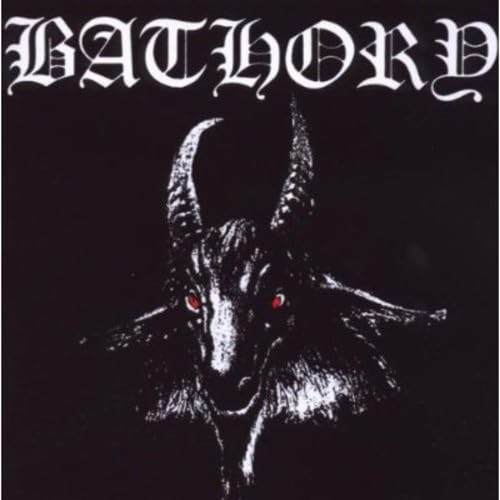
The album cover was fussed over a little bit, with a pentagram originally planned but the idea was scrapped in favor of the goat artwork. After the first pressings of the album, Quorthon found the yellow coloring of the goat an eyesore and the cover was changed to black and white for all subsquent pressings. The back cover also features an error due to supply issues. Quorthon found some kind of rub-off lettering in a font he wanted to use, but he ran out of the letter C, so the song Necromansy is spelled as I just typed it instead of “necromancy” as the dark art is typically known as.

The influence of Bathory was a huge question mark during the early years – Quorthon cited acts like Motorhead and GBH as his primary guides, while everyone on the planet Earth thought that the early Bathory recordings sounded much like Venom. Quorthon chafed at comparisons to Venom and even suggested that the two bands were completely different – he isn’t wrong, per se, but there is a definite vibe that’s similar to Venom in these early Bathory recordings. In this 1987 interview with Metal Forces, Quorthon did clarify that he thinks Venom’s Black Metal is a masterpiece and he goes further into what led him to make the music he did.

I’m going to handle this album differently than my usual format. Today I’ll offer up the tracklist and then give a summary of what we have here, I’m not going to jump into detail track by track like I usually do.

Storm Of Damnation (intro)

Hades

Reaper

Necromansy

Sacrifice

In Conspiracy With Satan

Armageddon

Raise The Dead

War

The Winds Of Mayhem (outro)

This album takes less time to listen to than it takes to get a Domino’s pizza – this one is in and out in 26:58, and 3:30 of that is the intro and outro.

The music on tap is rooted in thrash, but is very lo-fi production and a bit more “messy” than the polished offering thrash would mostly become. It bears some comparison to Slayer’s Show No Mercy with the “evil” imagery and creepy music, but even Slayer’s debut was refined compared to this. This is a ghastly, cavernous listening experience that isn’t for the faint of heart.

The concept of “under producing” might be strange but it’s also perhaps the most important part of this record. The lo-fi production turned off some listeners but brought others in, and some of those listeners would seek to emulate this “sloppy” work. It’s one direct link from this to the genre of black metal, and its infamous “second wave” which would show up in the late 1980’s and terrorize the world by the early ’90’s.

It’s actually a bit inaccurate to call this album and black metal two separate things – while black metal was influenced by Venom, Celtic Frost, Slayer and Mercyful Fate, none of those acts were playing the style of music. Bathory, on the other hand, offered up an early blueprint on what black metal could actually sound like. Songs like Sacrifice and Armageddon are not far removed from what the Norweigian scene would put on display when black metal truly got rolling. Nothing wrong with calling this the world’s first black metal album, though it’s a subgenre whose listeners like to argue about everything so the point could be debated.

For me personally this wasn’t a part of my collection until a lot later down the line, when the most infamous events of black metal’s early days had played out and Quorthon himself had moved on to other styles. But it is absolutely worth a visit to truly understand where the depths of extreme metal got their influence, and this album is the birth of black metal.

This album basically starts playing and bashes for its 27 minutes of existence, save the eerie intro and outro. If there is a standout track I find Raise The Dead to be it. This one peels the speed back just a touch and is a savage, noisy march about coming back from the grave. This is the song that does grab out a little bit and offers something perhaps “catchy.”

But this album is an all or nothing proposition as a whole. You’ll either like it or not. There is no range of dynamics to consider here or a few songs that leap out and others that are “less than.” It also makes grading a bit of a chore – honestly the album sounds like shit and could be given an F for that alone. It’s also the start of something that became massive within heavy metal and could be given an A or even an S for that factor.

The actual grade lies somewhere inbetween – for me personally I have listened to black metal for decades now so the sound is not an adverse factor – this is exactly what black metal is supposed to sound like, and it’s primarily because of this album that black metal sounds like that. This is worthwhile to listen to and is interesting on its own merits, not just because it’s a historical marker.

Album Grade: B+

Bathory’s first offering got the ball rolling on Quorthon’s own lengthy career and also the genre of black metal. The next few Bathory albums, including the classics Blood Fire Death and Under The Sign Of The Black Mark, would cement Bathory’s status as early extreme metal legends and draw a line to the start of Mayhem’s career, thus kicking off black metal in earnest. Quorthon would leave black metal behind after awhile, serving up several albums of more melodic fare that now classify as Viking metal and also experimenting from time to time. Bathory would run until 2004, while Quorthon died of heart issues.

Bathory did not run the usual course of a band – they rarely played live and gave up on that pursuit after a few years. Bathory was simultaneously world famous and totally obscure – not known to the larger world but hailed as legendary among the denizens of the metal underground. And this debut album was a fitting start to a heavy metal legacy.

For more on the grading scale I didn’t really use much this week, head here.

Questions, comments or concerns? Use the comment form below or head to my contact page.

Twisted Sister – The Price

This week’s song looks back to 1984 and was the third and final single from Twisted Sister’s landmark album Stay Hungry. I talked about the album to help lead off my celebration of 1984’s 40th anniversary. The song has its origins in the album prior, 1983’s You Can’t Stop Rock n’ Roll, as we’ll soon get into.

The Price did not have the same singles success that the other two songs from Stay Hungry did – it would get to 19 on the Top Rock Tracks chart and 24 on the long defunct Radio and Records chart, but it did not crack the Billboard 100, only hitting 8 on the Bubbling Under chart. It was a different style and theme to the prior singles, with We’re Not Gonna Take It and I Wanna Rock being balls-out rockers. The band cites a lack of a radio mix from producer Tom Werner as a factor, Werner was not given enough heads up to do up a radio edit of the song the same way he did for the two other singles. Not necessarily related but worth noting is that Dee Snider has been critical of Werner’s production (and Werner has fired back at Snider and all of his various critics).

On our hands today is a ballad, and one with more lofty concerns than the typical love song. It is an existential question of whether or not it is worth it to carry on, as the powerful chorus asks. This song doesn’t answer the question – it’s up to the listener to come to their own conclusions. There’s nothing over the moon about the song’s music but the basic approach fits this one very well.

Dee Snider was inspired to write this one while away in Europe recording the previous album. He relays the story in this 2016 interview with Carl Wiser on Songfacts. Dee and the band were holed up recording their album with not even money to make phone calls back home. Jay Jay French’s sister-in-law called to the band to check on them and Dee relayed that he was missing his family, the reply was “I guess that’s the price you have to pay.” Dee gave the phone to Jay Jay, then went into the bathroom and began working on the song.

The Price really does raise those kinds of questions, and well beyond the specific scope of if it was worth it for Twisted Sister to be pushing for their career. The grind can be a tough one, trying to figure out how to “make it” or even how to just get by in life. This song resonates, sometimes as encouragement and sometimes as a point of reflection, on that journey.

While The Price wasn’t a hit in the same way the other singles from Stay Hungry were, this one did become a fan favorite. It’s the band’s sixth most-played song live and Dee frequently played the show on his long-running House of Hair radio show, speaking highly of the track that many fans have listens to in order to help them pull through. Especially in tough times like these, it doesn’t hurt to have some encouragement.

Questions, comments or concerns? Use the comment form below or head to my contact page.

The Number One Songs of 1984 – Part One

It’s time to have a look at the songs that hit number one on the Billboard charts during 1984. It’s a pretty memorable selection overall so this will be fun to go through. There is a fair bit of trivia and whatnot to go through and it cuts through a fair cross section of music, while of course being mainly oriented toward pop.

There were twenty total number one songs so that makes it easy for me to divide this into two parts. Part two will arrive tomorrow.

Paul McCartney and Michael Jackson – Say Say Say

Up first is one of three holdovers from 1983. This song comes from Macca’s 1983 album Pipes Of Peace. The album itself wasn’t fawned over but this song was a massive hit, hanging out on the top of the chart for six weeks, two of those being in 1984. It of course doesn’t hurt that it had Michael Jackson on it, who had cemented himself as the King of Pop after the world-conquering run Thriller had been on.

Say Say Say is a pretty simple pop track, there isn’t a whole hell of a lot to it. I don’t find it all that interesting, though Jackson does add some spice to the song and is the worthwhile part of it. It honestly sounds more like a Jackson song that McCartney showed up on rather than the other way around. Nothing really wrong with it, but it was number one because of Michael and everyone knows it.

Yes – Owner Of A Lonely Heart

This next song from 1983 became the one and only chart topper for the progressive rock act. There’s a whole story behind this song but it’s too long and windy for here. Basically the band got back together with a few new members, one being Trevor Rabin, who brought this song with him. The band fussed over recording it for several months before finally nailing it down.

This is a really cool song that I remember fondly from back then. It has the fit of a nice synth rock track from the era, though it does incorporate some noisy zaniness as well. I’m not familiar with Yes’s initial era so I didn’t feel “burned” by their pop turn, hell I wasn’t even alive for most of their 70’s stuff. So I can enjoy this one with no reservations about the band’s changes. This one held down the top spot for two weeks.

Culture Club – Karma Chameleon

This is the final song from 1983 on the list and also the only number one US hit for the British pop merchants. This song was massive and sold millions of copies, both of single and album. Culture Club were a relatively brief phenomenon and Boy George’s tabloid presence long outlived the music itself, but this band sold records like hotcakes back in the day. I’m sure one thing helped the other there, of course.

This one is a fun, upbeat new wave number with just a small twinge of country in it. The music video is also fun, filled with vibrant colors that catch attention. It’s probably fun to watch the video while on certain drugs but I wouldn’t know. The song spent three weeks at number one though it was a cultural moment that hung around for quite awhile after its run at the top. I also can’t imagine what people a lot younger than me think of it, especially the video, but hey it was the 1980’s and this is what we did.

Van Halen – Jump

And now we’re on to one I’m very, very familiar with. Van Halen turned gears a bit for their 1984 album and Eddie used synth lines to full effect, including as a foundation for this song. The recipe was a successful one and Van Halen rode this to their one and only number one single.

Jump hung out on the top of the chart for five weeks. Only one other song did five weeks at number one in 1984 and one other did six weeks bleeding into 1985, both obviously will be covered tomorrow.

I personally love this song. Van Halen and specifically this album got me really into rock music at a young age so this is kind of where things really kicked off for me. It’s easily my favorite of the number one list, though there are plenty of other worthy songs to go over.

Kenny Loggins – Footloose

This is the first of two songs from the film soundtrack that hit number one. It hung out on top for three weeks as soundtracks took over the top spot for awhile in this period of the year.

I don’t have a ton to say about this one. I honestly was never into the movie and I have no affinity for it. I do like Kenny Loggins’ music though and this song is fine, I get why it caught on like it did.

Phil Collins – Against All Odds (Take A Look At Me Now)

Up next is a song from a different soundtrack, as Phil Collins cut a song for a film of the same name. The song was Phil’s first US number one hit, he would go on to have several more. This one did what seems to be a standard run of three weeks at the chart’s peak.

I only very, very vaguely recall the movie and I can only recall that I think it sucked. The song isn’t nearly that bad although it’s also maybe a bit meh. I’m not down on Phil Collins like a lot of people can be, I’m pretty sure he’s taken so much shit that it makes Nickelback hate look like child’s play. I even like some of Phil’s stuff, both with Genesis and his solo songs. But this one doesn’t quite move me the same way as other songs of his. It’s ok but not one I’d playlist or anything.

Lionel Richie – Hello

We get a brief respite from soundtrack songs as Lionel Richie jumped into the number one fray for two weeks with this slow jam. Richie was becoming quite the megastar during this time, by 1985 he’d be pretty well on top of the world and solidified himself as one of the best-selling artists of the 1980’s. He was all over the place back in the day and this was a time when there were only like three real TV channels, not the wall-to-wall coverage like we have today.

Hello is a quiet, soft ballad in the style Richie had taken up for his solo run. It was one of his biggest hits so obviously he got it right. He put together quite the concept piece for a video too, with full on acting and an actual story as opposed to just flashy images and clothing.

Deniece Williams – Let’s Hear It For The Boy

Back to the Footloose soundtrack here for the other number one hit from that record. This was Williams’ second of two number one hits and this one did two weeks on the top. Also of note are backing singers George Merrill and Shannon Rubicam, who would go on to form the writing and performing duo Boy Meets Girl. They would craft a pair of Whitney Houston’s number one hits a few years down the road.

Again not a whole lot to say here. It’s a fun, upbeat track and I remember this being on radio and TV all the time. A very easy, inoffensive song to play for most any occasion.

Cyndi Lauper – Time After Time

Up next is this pop ballad from Lauper, who found her first number one with this and kept the spot for two weeks. She would hit the top again but not for several years, though she had a lot of other hits that were not far off of the top. And she’s an artist that many people might not realize is as successful as she truly is, she’s had quite the career.

This is a song I do really like and one again I remember fondly from 40 years ago. It’s a nice ballad with some tempo and atmosphere to it and it’s a very sweet and affirming message. Always nice to hear this song.

Duran Duran – The Reflex

We’ll close out part one of the list with one of two songs to go number one for the iconic British new wave group. The song spent the customary two weeks on the chart before giving way to what became the single of the year. This was also part of a two-song “block” that prevented Bruce Springsteen from having a number one single, a feat the Boss hasn’t accomplished with work he has performed to this day.

The Reflex is a crazy ass song, in fact this is a dance remix that is different from what is on the studio album. This isn’t my favorite Duran Duran song but I don’t have anything bad to say about it, just not my cup of tea really.

That wraps up part one. Tomorrow I’ll kick things off straight away with the top song of 1984, a few other titanic cuts including Tina Turner’s massive comeback and Stevie Wonder’s best-charting song, and also what actually counts as the most successful charting song of 1984. Oh, and after nearly three years of writing this blog, I’ll finally get to talk about Wham! Looking forward to it.

For questions, comments or concerns, use the comment form below or head to my contact page.

Grave Digger – Heavy Metal Breakdown

When you have 22 albums in the course of a music career, you have to start somewhere with number 1. For German metal titans Grave Digger, that first album came in the hallowed metal year of 1984.

Grave Digger – Heavy Metal Breakdown

Released April 7, 1984 via Noise Records (European release)

Grave Digger formed in 1980 and spent a few years on the live circuit before stepping into recorded music. The band was comprised of Chris Boltendahl on vocals, Peter Masson on guitar, Willi Lackman on bass and Albert Eckardt on drums. Boltendahl remains as the lone original member of the band and even by 1984 the group had replaced a few members.

All music on Heavy Metal Breakdown is credited to Grave Digger as a collective, while all lyrics were credited to Boltendahl. (with two exceptions noted below) This was due to legal reasons, as the band only had the money to register one person with Germany’s publishing rights group. The album was produced by Grave Digger and Karl-Ulrich Walterbach, the head of Noise Records. Harris Johns engineered the album, he would also produce many of the essential Noise Records releases.

This album exists in several versions with different tracklists and sequencing. I will be covering the original European release as that’s the LP I have in my collection. The US version was released a bit later in the year and has an extra song and also omits a cover song. Several reissues of this album also exists with plenty of bonus tracks, but again I’m sticking with the original today.

Headbanging Man

The opener is a barn-burning speed metal outburst. Boltendahl establishes his trademark snarl on vocals right off the bat while the song bashes through in heavy as hell fashion. No deeper meaning to dig into here – this song is an ode to the now-established metalhead, the headbanging man. The song is quite simple but it’s also very nice and gets the ball rolling well. Grade: A-

Heavy Metal Breakdown

The title track does not veer too far off of the tone set in the opener. It’s another burst of fury paying homage to the headbanger. It’s easy to laugh at a lyric like “we come to shake your hands and legs as fast as we can do,” but the song rises above any simplicity and offers up a heavy metal triumph. Even in a career spanning 22 albums, this one stands out as the band’s signature song. Grade: A+

Back From The War

This one starts off with a very cool, ominous intro and first verse passage before kicking into a more thrashy passage that remains through the rest of the song. The song recounts the horrors of war, a tried and true subject within metal. It also has a very long fade-out at the end, which has next to nothing to do with anything, I just wanted to bring it up. Grade: B+

Yesterday

Grave Digger decided to switch things up here and offer up something that could be considered a ballad. The song writing here is credited to Beate Marquardt, who I am totally unfamiliar with. It’s not an outright, sap on sap 80’s ballad but it’s a bit of a curveball for the record. It has a few quiet passages in the beginning and middle, but does thrash it up a little bit for the song’s very few lyrics. This one is fine to listen to but also doesn’t really move me all that much. Grade: C

We Wanna Rock You

We are back to the main point of the album, which is headbanging. This is another meat and potatoes metal song about heavy metal. Sure it’s basic, but this is the kind of stuff kids lived for in the 1980’s. Another finely done slab of headbanging. Grade: A

Legion Of The Lost

There’s an acoustic intro here that transitions into a mournful first verse passage, then the speed metal comes back a few minutes in and takes us to the end. This song really goes for the throat and slams the heavy metal home. Grade: A

Tyrant

In shocking news, it’s another crisp headbanging track. Boltendahl gets some screams going here and this one is heavy and also showcasing dynamics. Groovy guitar solo in this one, too. Grade: A-

2000 Light Years From Home

On the original version of the album we get this cover of the 1967 Rolling Stones song. This cover does not resemble the original song in any way, shape or form – rather than implementing the psychedelia of the Stones song, Grave Digger pound their way through this one in the same fashion they’ve done the rest of this album.

The production here is pretty rough, this sounds like it was taken from a different session than the other songs. It is a decently done cover song and it’s interesting how Grave Digger twisted the song up to fit their sound, but this is really more of a trivia piece than anything. Grade: C+

Heart Attack

The closer gets going right away and goes all out, it’s an extra bit of speed on top and this is honestly an outright thrash song. It’s just the right kick in the ass to end the album with, even if the lyrics themselves have absolutely nothing to do with a heart attack. Grade: B+

Heavy Metal Breakdown was a loud and noisy debut for Grave Digger. Like most Noise Records albums, this one did not chart on release. Like many of the Noise releases, this one would spread around the tape traders and heavy metal parking lots of the day as Grave Digger slowly built their name. Separately, Grave Digger didn’t seem to chart at all until 2010, though I can’t totally verify that information.

And it would be quite awhile for Grave Digger to get their notoriety – the band scratched through the rest of the 80’s without any real breakthrough. They even shortened their name to Digger and tried to emulate the sounds of the day for a bit. The band then went on hiatus for several years, returning in the early 90’s with a sound somewhere between speed and power metal that Grave Digger would then run with for the ensuing decades.

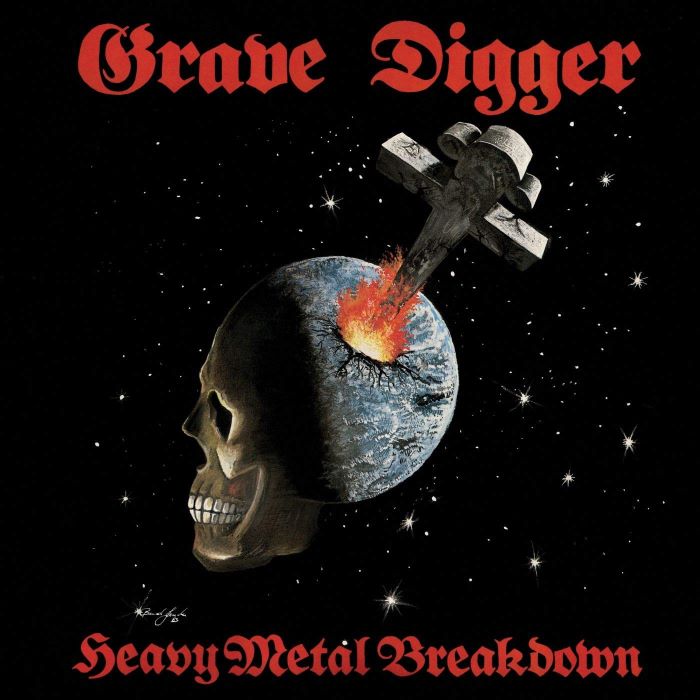
It was quite the long road for Grave Digger to get where they were going, but it started in grand fashion with the release of this killer debut album. The production was a tad rough around the edges but the album is still perfectly listenable, and there is no doubt this a heavy metal loving band.

Album Grade: A-

We have plenty of esteemed and celebrated heavy metal albums from 1984, and while Grave Digger never earned the profile of the likes of Maiden or Priest, this band still offered up a fine slab of metal to headbang along with. Germany is one of heavy metal’s most prolific nations and Grave Digger are without a doubt a highlight of that country’s pantheon.

To see the details of my grading system, head here.

For questions, comments or concerns, use the comment form below or head to my contact page.

Iron Maiden – 2 Minutes To Midnight

Let’s kick off a short run through songs from “The 4’s” and start with the feature year of my site this year, 1984. In shocking news, it’s a song from my favorite band and also just happens to be my favorite song from them.

1984 would be Iron Maiden’s banner year – with the release of Powerslave and the subsequent world tour that went on forever, Maiden were at the forefront of heavy metal during its boom period. The album would go on to pop platinum and gold awards around the world, and todays’ song hit number 11 on the UK charts as the lead single from the album.

And yes, before I go on, I have discussed this song a bit previously as part of the singles series I did. Oh well, gonna do it again.

2 Minutes To Midnight is a fast, hard hitting song that keeps it basic. It’s meat and potatoes metal, which Maiden execute well despite being known for their more epic fare. We do get a soaring chorus and a nice guitar solo section, but this tune written by Adrian Smith and Bruce Dickinson does generally plunge straight ahead.

The theme here is how the powers that be perpetuate a state of war to keep raking in the money from selling instruments of war. It was a common and corrupt practice through the 1980’s and hasn’t really gone away today. The rank and file people suffer while corporations and politicians feed at the trough, it’s a well-worn theme that hasn’t gotten any better over the past 40 years.

The song’s title is a reference to the Doomsday Clock, a symbolic device issued by a group of scientists to gauge how close civilization is to a global catastrophe. This classicly meant nuclear war but can also refer to other wild disasters and non-nuclear war threats. 2 minutes was the closest the clock had ever been to midnight, this was set in 1953 during the build-up of the Cold War. Iron Maiden used it as a symbol of world destruction to set with their song about warmongering, a fair pairing if there ever was one.

The only issue is that the Doomsday Clock has now moved closer than 2 minutes – in 2023 it was set to 90 seconds to midnight, and remains there as of mid-2024. We are setting records, baby!

2 Minutes To Midnight has been one of Maiden’s more recognizable tracks over the years. It’s not quite at the same level as stuff like The Trooper or Hallowed Be Thy Name but the song does qualify as a “greatest hit.” It has been played nearly 1,400 times live, good for 6th-most in the Maiden live pantheon.

The song’s main riff has been the subject of some funny speculation. The riff is a very generic one that’s easy to play and also can be found all throughout rock history. There’s no telling where it actually first came from – my rough guess is Ritchie Blackmore but I’m honestly not sure about that, it could go back even farther. But some astute listeners picked up on a 1980 song by British group White Spirit, fittingly called Midnight Chaser, with a guitar run that sounds suspiciously familiar to this song. I’ll post the song below so everyone can do their own comparisons if they wish.

In and of itself this isn’t a huge deal – one, this riff is very stock and I would hesitate to think it could even be copyrighted or whatever. Two, Iron Maiden have “borrowed” from more obscure British acts from time to time, usually with proper settlements in place (depending on who you ask).

But there is a hilarious coincidence here, and that revolves around White Spirit’s guitar player. He was none other than Janick Gers. Six years after the release of the Iron Maiden song, Janick would find himself in Iron Maiden, replacing Adrian Smith and remaining with the band even when Smith returned in 1999. So maybe, not really but it’s funny to say anyway, maybe Iron Maiden ripped off their future guitar player’s super generic riff. I don’t know.

As I said above, this is my favorite Iron Maiden song. Yes, I do mean of all their catalog. People do sometimes look at me weird when I tell them that – this one is usually held in high regard but not on the same degree as other songs. And some fans do feel it’s too basic. But it all struck the right chords with me, and I’ve always been a fan of “brink of nuclear disaster” kind of stuff so this checked that box. It was also featured in my favorite video game of all time, the often-mentioned Grand Theft Auto: Vice City, with how much I’ve played it I’ve easily heard this Maiden song more times than any other.

That’s about all I have to go over today. As part of my 1984 celebration and my perpetual Iron Maiden celebration, I will be giving Powerslave a second look and a proper grading on its 40th anniversary date of September 3rd. The day before will be the normal Album of the Week slot and I’ll have a Maiden double feature then – another Maiden album released on September 3rd will get a reassessment and grading on the 2nd. But we have two months to worry about all of that.