A bit of a quick one today to pay futher tribute to Tomas Lindberg. Today’s song is a cut from At The Gates’ debut album The Red In The Sky Is Ours, released in 1992.
Windows is the album’s fifth song. Nothing was released as a single, this was the band’s very early days and everyone was running on shoestring budgets. Band members have retroactively lamented the album’s production due to those financial constraints and having a producer that was not familiar with heavy metal. While I do agree that production here does leave something to be desired, it’s an album I can still get through and enjoy. Many of the underground metal albums of the early 90’s did not have the best in sonic technology.
The music of Windows was composed by guitarist Anders Björler. The lyrics were penned by vocalist Tomas Lindberg and are, at their simplest, about someone going insane. There is possibly more to it, as the song might be a eulogy for Per Yngve Ohlin, aka Dead, the singer of black metal band Mayhem until his suicide in 1991. Dead’s suicide brought a ton of attention to Mayhem and many were on hand for the wild and infamous ride that the second wave of black metal would go on during the early 1990’s.
I do not know if Lindberg was singing about Dead here, the lyrics do indicate it could be so, but I can’t readily find any actual sources corroborating this. It has been a widespread rumor for years and perhaps there’s some long lost interview with Lindberg that confirms this theory. But for the purposes of this brief post I’ll have to leave it as a loose thread.
Windows is a very heavy, crushing track that fits its disturbing subject matter. The song became an early favorite of fans and endured as one of the band’s signature tracks, even after the career and genre-defining Slaughter Of The Soul was released in 1995. Windows does have placements on a few live sets both audio and video, and is also a live bonus track on the band’s 1994 album Terminal Spirit Disease.
While we wait rather sadly for the final At The Gates album to feature Tomas Lindberg, it is nice to go back to the beginning and hear At The Gates crushing it right out of the, uh, gate. From very humble beginnings, At The Gates shaped the blueprint for metal that would come for decades afterward.
So obviously I’ve been gone for a bit. It was an unplanned “winter break” due to not much more than lack of motivation. I am looking to get back to posting and I’ll kick it off with this. I’ll switch up my format some with more posts about songs and less about albums as a way to get me back into the groove. It might take a bit for me to break back through but I’ll get there, someday.
Today I’m going back to the swamp of the early 1990’s and tackling what would be something of a breakthrough, in a roundabout way, for a long-running cult act. White Zombie had been at it since 1985 and had built a good underground reputation for themselves, but they were ready to take the next steps to mainstream success. They landed a major label deal with Geffen Records and recorded the album La Sexorcisto: Devil Music Volume One in 1992. The break would not be immediate – White Zombie toured their assess off with every metal band known to man and received a good bit of support from MTV. Their inclusion on the mega hit show Beavis and Butthead would help launch them into stardom, and the album would eventually sell two million copies as the band went white hot through the mid 1990’s.
Black Sunshine was the second single from the record, following Thunder Kiss ’65. The first single did nothing on the charts but would later catch on through MTV, while Black Sunshine did very modestly chart at 39 on the Mainstream Rock Chart (US). The band’s surge would see Thunder Kiss work its way up to 26 on the same chart about a year after the album’s release.
The song opens with a few car sound effects and a monstrous bass line that both anchors the song and takes center stage. We’re treated to a spoken word intro from punk legend Iggy Pop, who also appears in the video. The intro sets the table for the song’s protagonist, a Ford Mustang named Black Sunshine.
Once everyone kicks in we have a song that’s both groovy and menacing. It’s one heavy ass riff that runs along with the bass while Rob Zombie’s trademark snarl delivers a thesaurus full of lyrics that are loosely related to each other or anything else, but paint a picture of “badass car go fast.” This isn’t a song with a plot or narrative, it’s a vibe machine where everything supports the headbanging good time. Iggy Pop shows up again to deliver a spoken outro.
Everything blends together perfectly to deliver a fantastic listening experience. There are no unnecessary interludes or embellishments – everything here fits to create atmosphere and propel the song along.
Black Sunshine became a star on MTV as White Zombie crawled out of the underground and toward the top of the metal heap. Heavy metal in the early ’90’s was the loosely-gathered “alt-metal” collective of acts like Danzig and Type O Negative, and Pantera was moving to become metal’s most significant band as the acts of a decade prior were out of season. White Zombie found themselves enjoying mainstream success after many years in the underground. This would only last a few years, as Rob Zombie decided to end the band and launch his successful solo career.
When people look back on the raspy growls and groovy rhythms of White Zombie, there are few better examples than Black Sunshine. Their rise to the mainstream after years of obscurity provided a great soundtrack for the weird times of the early 1990’s.
Summer does not officially end in this hemisphere until September 22, still a hair over a month to go. But the unofficial summer season does end in the latter part of August when kids go back to school. I don’t have any kids so school time isn’t some massive issue to me, but it is a bit depressing when “true summer” is over as I live in a city with a ton of schools in it. Summer time is fairly peaceful around here with less traffic and snarls of people, but now we’re back into massive traffic and people being idiots about where they drive, park and everything else.
But summer isn’t actually over yet, so let’s pull out this Danzig single from 1992. This was the lead single from the album III: How The Gods Kill. The album did decently well in its time, hitting 24 on the Billboard 200. While Danzig had a bit of a run with success, that actually came a year later with the re-release of Mother. This year prior was not obscure by any means, Danzig was a fixture on MTV by this point and his stuff fit right in with the alternative metal thing going on at the time. But true sales success was another year off.
The first defining feature of the song is actually near silence for 40 seconds. If this comes up on a playlist set to shuffle, you might think the playback died or something, especially if you’re only half paying attention or listening on a more lo-fi bluetooth device. There is a bit of atmospheric noise going on but it’s totally minimal and not always detectable. But then John Christ comes in with a divebomb note on the guitar and the song proper kicks off.
And it’s clear that the song lives up to the title – this is hot, dark and dirty. The song does have a slower pace to it, which is perfect to let the winding riff conjure up demons and dust devils and shit like that, and the drums and bass hit with extra results. And it’s all brought together by the familiar bellow of Glenn Danzig, the “evil Elvis” of heavy metal.
There isn’t much to dissect here lyrically, this song is all vibes. In this 2022 interview with Revolver, Danzig recounts how the song was simply about his memories of summer as a teenager – running around, getting into trouble, not having anything noteworthy to do. I love a good concept album as much as the next nerd, but sometimes keeping it simple is the more effective approach and it works splendidly here.
The song was a huge part of the soundtrack to my own dirty black summers in 1992 and beyond, I was 15 at the time and I enjoyed the same vibes through my vacations from school. And even all these years later, 32 of them in fact, I still dial this song up when I want to feel some good (evil) vibes during the small, hot and far too short quieter time of year.
I switched gears for this week after finding out this album just had its 32nd anniversary (or birthday, whichever) over the weekend. It is a mixed bag for sure and the record marked the end of an era for the group as they continued drifting away from the golden years of the 1980’s.
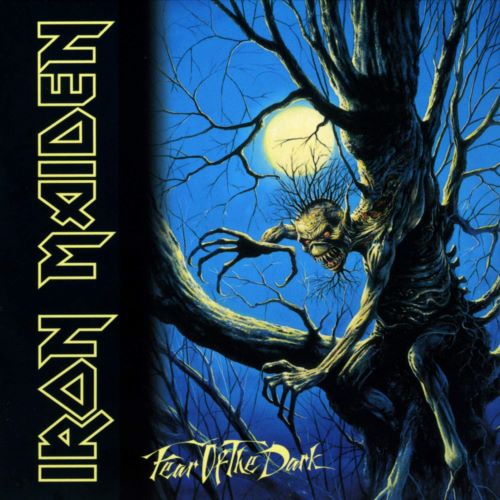
Iron Maiden – Fear Of The Dark
Released May 11, 1992 via EMI Records
Iron Maiden has entered the 1990’s with a retooled, stripped-down sound. The synth era of the late ’80’s was over and the band explored a meat and potatoes rock approach on No Prayer For The Dying. That album spawned the band’s only UK number one hit but is also widely held as one of the worst albums of the entire catalog. There was more variety on display here but the sounds and vibes weren’t terribly far off of this record’s predecessor.
The band’s line-up was the same as the album prior – Steve Harris as always on bass and band leading, Bruce Dickinson on vocals, Dave Murray and Janick Gers on guitar and Nicko McBrain on drums. Martin Birch helped Steve Harris produce, it marked Birch’s final involvement with Maiden as he would head into retirement. This was also Dickinson’s final album with the group until 2000, Bruce was off to his solo career about a year later.
This also marks the end of the line for Derek Riggs album covers – this one was done by Melyvn Grant, who is now the second-most credited artist for Maiden covers. And this one was a pretty good job, very nice and different depiction of Eddie.
This is one loaded album – it is 12 tracks at 57:58, marking Maiden’s first double album. As I recall from my Iron Maiden album ranking, this one did not place very well at all, landing at number 14 on my list. As I said then, this album has a lot of variety but also a lot of varied results, so let’s jump in and see what’s what.
Be Quick Or Be Dead
The opener also served as the lead single. It is a very fast and aggressive song, something a bit over the bar for Maiden. The intensity helps drive home the song’s message about how screwed up corporations and governments are, something that has only gotten worse 32 years on. This one is really good and certainly among the album’s keepers. Grade: B
From Here To Eternity
Another single and the conclusion of the long-running Charlotte saga. It’s a muscular hard rock affair that is fairly basic but I enjoy what it has on offer. It won’t set the world on fire but I don’t have an issue listening to it. Grade: C+
Afraid To Shoot Strangers
On now to a song that fits the Iron Maiden identity full and true. This haunting track starts quietly then builds into explosive action later and it features the movements and thoughtfulness typically expected from Maiden. The song examines the first Gulf War from the eyes of a young soldier who is sent to kill – it’s a new take on the classic “government starts the war and poor people fight it” trope found in music of all stripes. It could be said this is what Maiden used to sound like before the 1990’s shift, but I think it’s more accurate to say that this is what Maiden would sound like in their second “golden” era in the coming reunion years. An absolute whale of a song, very well done. Grade: A
Fear Is The Key
Up next is a song lyrically inspired by the death of Freddy Mercury to AIDS and the concept how how no one really “gave a shit” about the disease until celebrities started dying to it. The issues around HIV and AIDS were a massive shitshow in the 1980’s and early ’90’s for sure.
This song has some good hooks and riffs though it does feel a bit odd in structure. And the song’s last few minutes really throw a wrench into the works – I don’t know what’s going on but it reminds me of Spinal Tap playing Jazz Odyssey. Hilarious in the movie, not so hot on record. Overall this one doesn’t command my attention much, bit of a roller coaster. Grade: D+
Childhood’s End
Another bit of a fierce pounder here and a song that very much offers the sound of Maiden to come for the rest of the decade. Interesting use of drums here and everything comes off pretty sharp and well done. It’s a look at how the whims of politicians lead to children around the world caught up in war, famine and other shitty situations. While this song is one of the album’s secondary tracks, it does a pretty good job. Grade: B
Wasting Love
If you had “Iron Maiden will release a power ballad in 1992” on your bingo card way back when, well, you probably cashed in. I don’t know why Maiden would do a ballad or why they’d release one in 1992 when the ballad was persona non grata in the alt-music world. But none of that is really important because the song is pretty damn good. It’s a sad look at someone trying to end their loneliness through casual hook-ups and only finding more loneliness at the end of it all. This one was a curveball but curveballs are valid pitches to throw. Grade: B+
The Fugitive
Here’s one inspired by the old TV show, there were since movie remakes and whatever. Not a bad song but not radically interesting either, easy to listen to but also easy to forget. Grade: C
Chains Of Misery
It’s a song about the “devil on your shoulder” concept. It’s an outright sleazy glam track with gang vocals and the whole nine yards. It’s not a terrible song per se but it’s so out of place on an Iron Maiden record. This song is another curveball but the pitch doesn’t really land. It’s musically just good enough to not be a total trash affair. Grade: C-
The Apparition
Whether or not you like this song hinges on what you think of Bruce’s climbing vocals through the verses here. If you like them then you probably think this ghost tale is at least ok. I personally don’t like them much and it’s all the song does so I think it’s awful. One way to make a double album is to not make it and cut certain songs that don’t work – this would be one of them. Grade: D
Judas Be My Guide
This one’s about how everyone is basically “for sale,” in that everyone has a price and will eventually sell out to the high bidder. It’s of course tied to the biblical story of Judas, the betrayer of Jesus. It’s also an absolutely fantastic song. It’s short and a quick rock track but it works on every level. The Iron Maiden “butt rock” era could have been something else if more of the songs were like this. I and many others consider this to be one of the most underrated tracks of the Maiden catalog, this one is a true hidden gem. Grade: A+
Weekend Warrior
The Maiden butt rock era might have worked with more songs like the last one, unfortunately there were also tracks like this. It’s a song about football/soccer hooliganism, something Steve Harris is quite familiar with as a West Ham United fan. Whatever the topic, I don’t know what the hell is going on with this song – it’s so basic that it hurts and it goes nowhere. It’s very close to the worst Maiden song I’ve ever heard. Grade: F
Fear Of The Dark
The title track and album closer offers a very simple premise – it’s about being afraid of the dark, being paranoid about what might lurk in the shadows and corners that light doesn’t penetrate. It’s also the Maiden song from the 1990’s that has endured and earned the title of classic.
This song is a total Iron Maiden track through and through, with running riffs and quiet/loud dynamics and about anything you’d want out of a Maiden song. After slogging through an uneven album that has some massive question marks in creative choices, this song nails everything about Iron Maiden. Grade: A+
Although this era of Iron Maiden is lightly regarded, Fear Of The Dark was a bit of a success as the group pressed on in the wilderness of the 1990’s. The album charted at 12 in the US, 1 in the UK and claimed many other top 10 positions. It has been certified gold in 5 countries and has a platinum cert from Italy. It was, as of 2008, at least in the ballpark of a US gold certification as well, no known updates on that.
So what happens when you have a few really awesome songs, a handful of average tracks, and a few real stinkers? I guess, in the end things kind of average out and I can consider this an average album. It’s not average in that all of the songs are consistent and ok – it’s average because it’s great in a few spots and awful in a few others. But average is average when all is said and done.
Album Grade: C
This would be the end of an era for Iron Maiden – they would spend the balance of the decade with a new singer and song direction before restoring the glory years line-up in 1999 and being at the forefront of the new interest in traditional metal in the 2000’s. It is easy to dismiss these albums as a lost period, but there are songs certainly worth visiting on this one.
For an explanation of the grading scale, head here.
For questions, comments or concerns, either use the comment form below or head to my contact page.
For more of what I’ve posted about Iron Maiden, check out the band index.
This week I’m heading back to 1992 and digging up one of the most revered albums of the period.
Alice In Chains – Dirt
Released September 29, 1992 via Columbia Records
Alice In Chains were the first of the grunge bands to hit the scene in a big way in 1990. By 1992, the “Seattle sound” had taken over national airwaves and a new era of rock music was underway. This was the environment AiC found themselves in while recording their second album.
Dirt was recorded with the same line-up as Facelift – Layne Stayley on vocals, Jerry Cantrell on guitar and vocals, Mike Starr on bass and Sean Kinney on drums. The album was produced by Dave Jerden, also producer for Facelift.
This is one very dark record, with tales of drug abuse and mortality. While each big grunge act was set against a particular kind of rock that helped shape their sounds, Alice In Chains had heavy metal in their blood and were always a downcast lot. Layne Stayle’s personal demons also went a long way to informing the music of AiC, as several of the songs here form a mini-story of an addicted person crashing all the way.
Dirt comes in with a lofty 13 tracks at a runtime of 57:37. Some early pressings of the album had the track Down In A Hole as the 12th song, while most versions have it in the band’s preferred sequence at number 4. The album saw 5 single releases, all of which charted on the US Mainstream Rock charts and the UK Charts. Note that the band never actually charted on the Billboard Hot 100 until 2009, an odd fact that I wasn’t aware of until just now. This is at least what I could find while looking, it could possibly be incorrect information.
Them Bones
The album opens with a sick, heavy riff with Stayley reflecting on mortality over it. The song is a fatalistic look at how we’re all going to wind up a pile of bones, no matter what. The monstrous riff and Stayley occasionally yelling out suddenly add a creepy feel to the proceedings.
Grade: A
Dam That River
This one is heavy and more fast-paced, conventional rocker. The song was apparently written about a fight that Sean Kinney and Jerry Cantrell had – Kinney smashed a table over Cantrell’s head and the blood flow was such that “you couldn’t dam that river.” It’s kind of amazing that they kept together and also wrote a song about it. Grade: A-
Rain When I Die
This has a very nice, funky and creepy guitar running through it. The lyrics are a lament of a relationship not gone right and may have been composed based on experiences from both Stayley and Cantrell. The title “rain when I die” invokes various old cultural customs that it should rain when someone dies to cleanse everything still remaining. And yes, it did rain the day Layne Stayley died in 2002, which probably amounts to him having lived in Seattle where it rains all the time. Grade: A
Down In A Hole
This magnificent ballad that just drips in misery was crafted by Cantrell about his girlfriend at the time. I won’t get too heavy into it as I discussed this song in the past here. It is my favorite AiC song and one of my favorite songs of all time from anyone. Also, the name of the old series where I covered it was called S-Tier Songs, so the grade should be obvious. Grade: S
Sickman
This is one of several songs owing to drug addiction, which Layne Stayley would live in the grip of for the remainder of his life. Stayley asked Cantrell to write the sickest and darkest thing he could for this song, and the lyrics deal with someone who is totally aware they are messed up but are unable to fight their own thoughts and do anything about it. Grade: A-
Rooster
Up next is probably the most well-known song from the album. Cantrell wrote this about his father’s time in the Vietnam War. It is a harrowing tale of being stuck fighting a war no one wanted in the jungle of a hot, tropical land against a ruthless enemy. The song is fantastically done and maintains a tradition across generations of musicians speaking out about this war. Grade: A+
Junkhead
This one slows things down with a bit of a groovy doom-crawl. It brings the point home that it’s very tough to understand the mind of an addict, that many times it’s only another addict who can grasp what’s really going on with someone. The outsider doesn’t experience the euphoria of the high and escape from the despair of reality that the addict does. Grade: B+
Dirt
The music is another twisted mire and the subject matter is devastating – this is someone at the bottom who doesn’t want to exist anymore. It is a very deep and disturbing jaunt through the mind of someone who seems totally gone. Grade: A-
God Smack
This has a few running riffs that Jerry Cantrell would use to great effect in both AiC and his solo career. The song is about heroin, the term “god smack” refers to a heroin overdose. The music along with the willing descent of someone into addiction is like a dark circus trip. Grade: B+
Untitled (or ‘Iron Gland’)
This brief interlude was something Cantrell used to mess around with in rehearsal. It was mashed up in a small way with Black Sabbath’s Iron Man for a little fun. The few vocals here are provided by Tom Araya of Slayer. Grade: B
Hate To Feel
This is the first of two songs Layne Stayley wrote entirely on his own for Dirt. There are some interesting jumps from the quiet, buzzy verse to a noisy chorus. Here Stayley regrets even being able to feel – he knows he is an addict and is tired of the constant realization that he needs to get better, and is also sick of the judgment of outsiders who think he should “just stop,” as if it were that easy. Grade: A
Angry Chair
The other song composed by Stayley, this is a very, very dark and twisted song. This one is still about the grip of addiction, though it is couched in more abstract and metaphorical language. It is one wild ride and a very enjoyable cut. Grade: A+
Would?
The album’s closer is a tribute to Andrew Wood. He was the singer of Mother Love Bone and died of a heroin overdose in 1991. The song itself offers up a bit more bright atmosphere than the rest of the very dark record, though the lyrical fare is still an addict asking if he’s even alive or if he has already died and has left everyone behind. Grade: A+
Dirt would quickly become Alice In Chains’ magnum opus. The album hit the Billboard 200 at number 6. Its 30th anniversary reissue would re-enter the same chart at number 9 in 2022. The record has been certified five times platinum in the US.
The band toured behind this album, playing all manner of shows alongside both rock and metal acts. This would mark the practical end of touring for Alice In Chains, despite releasing one more album and a celebrated MTV Unplugged set, the group would not get out on the road much in this original incarnation. Mike Starr would exit the band in 1993, replaced by Mike Inez.
But that wouldn’t matter as Dirt cemented a legacy as one of the best albums of the 1990’s. The five singles were in constant rotation on radio and MTV for years after release and are still found out and about today. While grunge was considered a reaction movement to the rock music of the time, Alice In Chains were a bridge act that made it very easy for metalheads to enjoy. AiC perfectly complimented the other alternative metal of the time, bringing in a uniquely creative scene that has yet to be replicated since.
Album Grade: A+
Dirt is a stone cold classic. The real pain of Layne Stayley’s addiction was mined for the most haunting and memorable song material. Jerry Cantrell provided a guitar masterclass in writing compelling riffs that both grab attention and work for the song. The album is harrowing in that both Stayley and Starr would lose their lives to addictions in 2002 and 2011 respectively, but it does not detract from the gift we were given with this masterpiece of a record.
For an explanation of the grading scale, head here.
For questions, comments or concerns, use the comment for below or head to my contact page.
I was absent from here last week, had a minor injury that laid me up for a moment. All is well now and things should be routine from this point.
Also – this week I’m introducing a new aspect to this – I’ll grade each song as well as the album. Instead of reviewing by numbers I’ve chosen to use letter grades. This transition will take a little time to become a regular feature and I’ll do a quick post later this week to explain it more, but I decided to go with it starting today as I’ve been sitting on it for awhile now.
Today I’m going back to 1992 and looking at an album that saw Megadeth gain a great deal of mainstream success, though not quite as much as one member was hoping for.
Megadeth – Countdown To Extinction
Released July 14, 1992 via Capitol Records
Megadeth were hot off of their 1990 masterwork Rust In Peace, widely considered one of thrash metal’s finest hours. By 1992 the music scene was still reshuffling from the nuclear fallout of the summer of 1991 – while hair metal was the biggest casualty, thrash also suffered under the weight of grunge.
Thrash also suffered due to its biggest practitioner changing tack – concurrent with grunge was the arrival of Metallica’s “Black Album,” which abandoned the general structure of thrash and offered a more accessible version of heavy metal. Dave Mustaine’s former band saw the highest levels of success possible from this shift, and less than a year later a more accessible version of Megadeth was on offer.
The band accomplished something they had not managed before this point – they brought back every member from the prior album. Dave Mustaine would lead the band on guitars and vocals. Marty Friedman was the lead guitarist. Dave Ellefson provided bass and Nick Menza was the drummer. Songwriting was credited to Mustaine, with individual music and lyrics offered up by the other members and credited as such. The album was produced by Max Norman and Dave Mustaine.
This record features 11 songs at a time of 47:26. There are several re-issue versions available with a wealth of bonus material, today I’ll stick to the base album. Four songs were released as singles and were constant presences on MTV during the album cycle.
Skin o’ My Teeth
The opener shows that Megadeth didn’t sacrifice being heavy in the quest to be more accessible. This is a rolling, groovy beast of a song that quickly establishes itself as one of the album’s highlights. The song has its subject escape a number of near-death situations. It’s not entirely clear of this is a suicidal rampage or just bad luck and Mustaine has waffled on the answer to that over the years.
Whatever the case, this is one banger of a track and even while shifting direction, Megadeth kept their heaviness and guitar-focused attack in place. Grade: A+
Symphony Of Destruction
Up next is the album’s lead single and what has become Megadeth’s most widely recognized song. This one is super simple, with a riff that anyone can play and short, concise lyrics about how power corrupts and some world leaders send their people into chaos. It borders on being overly simple but still possesses the trademark Megadeth precision and Mustaine’s snarling delivery really enhances the track. Grade: A
Architecture Of Aggression
The song itself punches well but it also very straightforward, perhaps to its detriment. Its subject matter is that of the first Gulf War in 1991, and parts of CNN reporting on the first night of bombing are interspersed through the song. The song also offers the message that a nation’s leader is often credited for building their country, while the truth is that the country is often built upon the bones and blood of common people. Grade: B
Foreclosure Of A Dream
This one offers up a bit of thrash to it while also incorporating some acoustic runs alongside the more conventional electric passages. This one is concise but does offer up some movement to it, shaping up to be a more dynamic offering. The topic at hand is the end of the American Dream, as the 1980’s and early ’90’s saw erosion of the job base and farming sector of average US households. The dream was sold out for favorable deals with corporations, something that has only grown in scope 30 years later. This song does a great job of both delivering its message and making a heavy song accessible. Grade: A
Sweating Bullets
Up next is easily the most contentious song from this record. It does seem in some cases that whether or not someone likes the album hinges on what they think of this song.
It’s a song about insanity, Mustaine inserts several references to multiple personalities and schizophrenia here as well as overall metal health demise. Some of the song’s lines can be funny or cringe, depending on how someone takes them. While I wouldn’t suggest Dave Mustaine is mentally ill, he is clearly nuts so this probably wasn’t hard for him to write. The music is again suitably heavy and kept simple.
So what do I think? I personally love this song. Hell of a jam. Grade: A
This Was My Life
This is a song that keeps pretty strictly on the rails. Here Mustaine ruminates over the wreckage of an old affair he had and has apparently composed several songs about over the years. This song is fine but it does pale compared to a lot of the other stuff on this album. Just not nearly as much going on here. Grade: C+
Countdown To Extinction
Megadeth covered nuclear annihilation on their last album but here they take the title track and do something a bit different. The band focus on the extinction of species as well as the practice of “canned hunting,” where animals are kept in confined spaces and unscrupulous hunters pay big money to “hunt” them in close quarters. This is not Ted Nugent’s favorite song.
This tracks is very well done, a melodic and mid-paced tune with a socially conscious message very much in place with the atmosphere of the early ’90’s. Grade: A
High Speed Dirt
The pace kicks up a bit here as Megadeth offer up a song about skydiving, something they were very much into around this time and did on MTV’s Headbangers Ball in a memorable episode. There is a kicker, of course – the term “high speed dirt” means the diver is getting to the ground far faster than they’re supposed to, as in the parachute isn’t working. At some point there will be a splat. Grade: B+
Psychotron
This one is a plodder to a degree, another mid-paced marching riff kind of thing that Megadeth would use a lot over the next many years. The song is about the semi-obscure Marvel comics character Deathlok, a partial cyborg of some kind. The song is good though not really a standout. Grade: B-
Captive Honour
Up next is one very curious track. It is pretty well done musically, with the arrangement going a few different places and moving the song along more than the straightline approach on many others here. The subject matter is about the pretty awful conditions of US prisons, how some young punk who did something seriously wrong gets tossed into the can and becomes the “bitch of the block.”
The lyrical presentation here is a bit all over the place and does cast the song in a dimmer light for me. There’s rumination on the famous Stalin quote “one death is a tragedy, a million is a statistic” and then there’s a whole skit between judge and convict that seems more goofy than anything. About the time the phrase “man-pussy” is used is when I kind of check out on this one, though again the music is really good and it’s a very mixed bag. Grade: C
Ashes In Your Mouth
The album’s closer is the longest song and also the biggest throwback to prior Megadeth albums. This is a blistering jam that recalls some of the more complex passages of Rust In Peace, though also keeps the verses slimmer in keeping with this album’s presentation. It’s a pretty brutal track about the human condition and the need to inflict violence on one another for perceived transgressions, all the while never being satisfied with the hollow victory of revenge. This is a total smokeshow of a song and a fantastic entry in the Megadeth catalog. Grade: A+
Countdown To Extinction would do what Mustaine set out to – generate a wider audience for Megadeth. The album debuted at number 2 on the Billboard chart and has been certified 2 times platinum, both career highs for Megadeth. It may have alienated some of the old school metalheads, but by 1992 that contingent was pretty much alienated from all sides. The pick-up of new fans more than made up for any disgruntled old fans.
Someone else who might have been disgruntled was Dave Mustaine. While Megadeth was seeing more success than ever, they still paled in comparison to Metallica, who were at stratospheric heights by this time. I do recall some derision over this album only getting to number 2, when Metallica’s opus hit the top spot. I don’t know totally how Mustaine felt about it all, trying to track his thoughts over the years would be utter madness. But barely anyone in music through that decade touched what Metallica did, there shouldn’t be any shame in how Megadeth fared in these years. Mustaine would chase the elusive “radio single” for awhile after this.
I always enjoyed Countdown To Extinction. I think it has a lot of great songs on it and even the songs that aren’t all that hot are pretty decent listens. The change to more lean songs didn’t bother me, I already had my mind well blown by the music shift of 1991 and I was game for anything by this point.
I was happy to see Megadeth get their due and with a quality album that still ran heavy and with a strain of socially aware topics.
Album Grade: A
Countdown To Extinction is a fantastic cut of metal from the “alt-metal” years of the 1990’s. Megadeth fashioned songs that could reach out to a wider audience but also held up credibly well against the rest of the now legendary Megadeth catalog. The album’s singles were memorable cuts, the lyrical commentary was often more sophisticated that what was found across other metal albums, and Mustaine and Friedman were still able to include a fair bit of guitar theatrics. Great work all around.
Before I get into it, yes, you very likely have heard this song before, even if death metal never touches your ears. I’ll get there in a bit.
Today’s song is from Cannibal Corpse, who stand today as titans of the death metal scene. In fact they will release their 16th album, Chaos Horrific, in a few days on this coming Friday. But today’s song is not about that, as only two current members of the band were present back in 1992.
Hammer Smashed Face hails from the band’s third album Tomb Of The Mutilated. The album is noteworthy for the cover alone, it was one of the sickest things ever to sit on a record store shelf. It is present in the thumbnail to the video in all its gore and depravity right below.
This was the opening track to the album and was also the first time CC released a song as a single. The single release included two cover songs, one from death metal inventors Possessed and another from Black Sabbath in the Ian Gillian period. It was again released later as an EP with a few older Corpse tracks thrown on as well.
This song is totally brutal death metal, there’s no doubt about it. This is not the kind of stuff most people want to listen to. Even among people who do like heavy metal, this is another degree past tolerance. It is fast, bludgeoning and rough. Nothing beyond a few guitar notes get above the low end of the spectrum and even when they do, it is dissonant and discomforting.
But, it’s also kinda catchy. That intro riff and drum sequence stands out right away and it makes its way back into the song several times. It definitely grabs the ear. And, if people are like me and enjoy the sinister sounds of death metal, those dissonant guitars and slamming drums are a welcome presence.
I don’t suppose there’s much need for lyrical analysis. This song is literally about beating someone’s head off with a hammer. There isn’t much else to go over – all Cannibal Corpse songs are like miniature horror movies.
This song and third album would mark the end of work for the band’s original line-up – Chris Barnes on vocals, Bob Rusay and Jack Owen on guitar, Alex Webster on bass and Paul Mazurkiewicz on drums. Rusay would leave the band and the death metal scene altogether after this album. Barnes would be around for one more seminal album before a divorce that shook the death metal world and redefined Cannibal Corpse for the years to come. Jack Owen was in the group quite awhile longer, eventually departing in 2004. Alex and Paul remain as active and founding members.
So, let’s get to where you have probably heard this song before. Remember the Jim Carrey blockbuster Ace Ventura – Pet Detective?
If so, then you likely recall the scene where Jim as Ace walks into a club for a metal show. Ace is looking for someone named Greg to help him track down the whereabouts of the Miami Dolphins’ mascot, a live dolphin named Snowflake. Ace asks a headbanger if Greg is in, and takes the headbanging as a positive response. The band in the scene is Cannibal Corpse and the song they’re playing on stage is Hammer Smashed Face. I’ll post the clip below but I won’t place bets on it remaining up given YouTube’s AI-driven copyright hunt.
This movie placement was a bit of a coup for Cannibal Corpse, as Ace Ventura did big business and Jim Carrey became a huge star out of it. And while I can’t track specific sources to express the degree to which this happened, but Carrey either already was or did become a fan of Cannibal Corpse and death metal in general. It is something he has discussed in his numerous late night talk show apperances over the years but it’s not like I can remember which ones.
Hammer Smashed Face became a signature tune for Cannibal Corpse, helped along by unexpected movie success but also propelled by the band’s growing propensity to write songs with catchy hooks. Corpse would take this to the next level on their following album The Bleeding, crafting music and vocals that human ears could understand and accessing new scores of fans. Even through major line-up changes, Cannibal Corpse have continued to climb ranks and have reigned for awhile now as the top act in death metal. It is a legacy forged in brutal riffs and gory lyrics, and that legacy continues on this coming Friday.
This week’s song heads back to 1992 and the alt-rock scene to dig up some old treasure. While a lot of retrospectives like to paint the early ’90’s as mired in grunge, there was a fair bit of other stuff out there to check out, and Cracker gained early notice with their debut single.
Teen Angst (What The World Needs Now) did stand out from the crowd on MTV – it’s a bright, guitar-driven song with cheeky lyrics in a video clip that features nothing more than the band playing their instruments while dressed in silly gear while standing in a field.
Cracker were not necessarily “alt-rock” in the truest sense – their music incorporated elements of country and roots, and the band’s principal members David Lowery and Jonathan Hickman were very wary of any genre tags. But Teen Angst was certainly an alt-rock tune in the alt-rock era, and even with the band’s varying tastes and influences, the song got plenty of play on the airwaves.
Teen Angst has a pretty standard and familiar for-the-time musical bent. Its lyrics also don’t reinvent the wheel but are pretty sly and smart in their own way. The world may need this or that, but kicking back with a drink is probably the safe approach to it. And I don’t know how folk singers came to take the brunt of the chorus’ wrath, but it’s pretty funny stuff. And in the end it does what a lot of songs seek to do – pick up the lady.
Teen Angst would hit the top of the Billboard Modern Rock chart and get position 27 on the Mainstream Rock Tracks chart. It did not chart on the Billboard Hot 100, in fact Cracker had very little success on that chart, even with their most-known song from 1993, Low.
That makes for an interesting conversation about “one-hit wonder” status, which is typically measured by the Billboard Hot 100 and getting one song on it to the top 40. Cracker didn’t do that at all, so what does that really make them? The one-hit wonder thing is an odd conversation, for my money it doesn’t really apply to Cracker since I feel like Teen Angst was a decent success along with Low, though this kind of stuff is hard to arbitrate.
Cracker always have been a unique entity anyway – they had some degree of success with albums and singles through the early ’90’s but never truly had massive status there. Their music does go in several different directions and each album is a bit of a journey. Their main draw has always been on the live front, where they have been a viable touring act since their formation.
Teen Angst is a nice slice of life from back in 1992 – fits the scene very well while also standing out from it, but is also a great song to check out 31 years later. Some songs just work no matter what era they’re originally from.
This post was part of a series that I called S-Tier Songs. I later decided to abandon the series in favor of a simpler Song of the Week format. I am keeping these posts as I wrote them but removing the old page that linked to the list of S-Tier Songs, so that is why these posts might look a bit odd. Enjoy.
L7 – Shitlist
Today’s song hails from L7’s third album Bricks Are Heavy. The 1992 record was the band’s first involvement on a major label and was produced by Butch Vig, who a year earlier had produced Nirvana’s Nevermind which changed music forever. The album saw some grunge influence meet with L7’s already established hard ass alt/punk sound and was the group’s vanguard moment.
Shitlist was not a single for obvious reasons, though it was the B-side to Pretend We’re Dead, the band’s most popular single release. As the album and singles took hold through radio and MTV, this song got its fair share of notice. L7 were pretty hard ass as a whole, but Shitlist was another degree of that.
The song is pretty simple musically – it’s got some nasty distortion on a pounding riff and rhythm. The guitar adds some flair here and there, but this song is a vessel to communicate a message rather than provide an exercise in pentetonic scales. Donita Sparks delivers a vocal with a combination of snarl and disaffection to perfectly fit the nasty tone of the music.
Lyrically this is a blatantly obvious song – we’re pissed off, and there’s a list of those who did the foul deeds that led to this state. There’s maybe only 20 different words used in the lyrics but everything works so well to communicate the message – you’ve made my shitlist. It’s one of the first songs that comes up when people talk about “angry songs” or things like that, Shitlist has truly made its mark in that regard.
There are no real metrics to evaluate in terms of Shitlist’s success. The album Bricks Are Heavy was last certified at 327,000 copies sold in the year 2000. I’d wager that it’s moved a few more since then and maybe a re-certification would see it get past the gold threshold, but I can’t say for sure. The song didn’t get MTV play because, well, just look at the title.
But Shitlist did strike a chord with music-listening America in the early 1990’s. While the L7 singles like Pretend We’re Dead and Monster got video airplay, people in the know would make sure to tell you to get the damn album so you could hear Shitlist in all its glory. Word of mouth was still important in the pre-Internet days and that’s largely how a song with a controversial name like this would get out there.
Shitlist did get another boost from appearances in several movie soundtracks. The song was in quite a few movies, actually, though to be honest I’m not sure I want to go deep diving on some of those early ’90’s movies to recall the flicks more specifically. But Shitlist did land a very memorable part in one movie scene.
In the opening scene of 1994’s Natural Born Killers, the movie’s main couple Mickey and Mallory Knox are in a diner out in the middle of nowhere. A local patron starts putting moves on Mallory. Her response is to go to the jukebox and put on Shitlist, then beat the shit out of her harasser. Mickey joins in and the couple kill everyone in the diner, except for one they leave alive to report that Mickey and Mallory were responsible.
This is the scene, don’t count on it being upon YouTube for a long time.
The movie released just after L7 had released their next album Hungry For Stink. I don’t know if the movie scene had a huge impact on sales of that or Bricks Are Heavy, but the way that scene is still vividly recalled today, I’d guess that it had some influence.
L7 would continue on through the 1990’s but run out of steam by the turn of the millennium and call it quits in 2001. They would reconvene in 2014 and have been touring and releasing music since, with a renewed interest in a band that many felt didn’t quite get their full due in their first run.
Why is this an S-Tier song?
Shitlist is simple, heavy and powerful. Its message cuts true and is something every person on the planet can identify with, someone’s made our shitlists at some point in time, even the most zen of folks. L7 were known for bringing the nasty when they wanted to, and Shitlist was another extension of that. Its memorable tie to the scene in Natural Born Killers still resonates with viewers who may not have ever bought an L7 album in the ’90’s. This was not a band to mess with, and Shitlist was the calling card of that.
This week I’m taking a look at one of the breakout alt-rock albums of the early ’90’s. Soul Asylum had been a long-running independent band by 1992, but a massive single would propel them to the top of the board.
Soul Asylum – Grave Dancer’s Union
Released October 6, 1992 via Columbia Records
My Favorite Tracks – Without A Trace, April Fool, Black Gold
Soul Asylum found the stage for success when rock music turned on its head in the early 1990’s. What was alternative and independent was now mainstream, and Soul Asylum were gearing up their sixth album by this point. The band was experienced and ready to break out.
The lineup at this point had been stable for awhile but was going to experience a shift. Dave Pirner was the band’s frontman and rhythm guitarist, Dan Murphy provided lead guitar and Karl Mueller was on bass. Grant Young was the band’s drummer but issues cropped up during recording and Sterling Campbell was brought in to supplement the drumming. Each drummer played on roughly half of the album. Young would remain the band’s drummer for the tour but Campbell would take over before the next album.
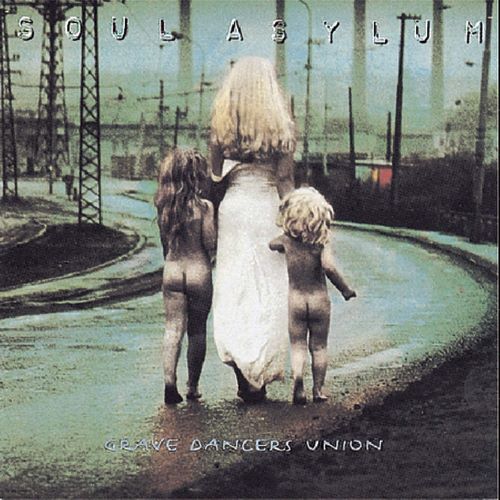
The album’s cover photo was a curious choice, it is a 1970 photograph by Czech artist Jan Saudek titled “Fate Descends Toward The River Leading Two Innocent Children.” Other Saudek photos have been used in cover art over the years, this being the most prominent one.
The album runs through 12 songs in fairly quick 44 minutes. There is a reissued version with live bonus tracks but I’ll be tackling the main release today.
Somebody To Shove
Opening with the album’s lead single and very nice song. It has a great hook and a nice concept about being frustrated with trying to fall in love. This was Soul Asylum’s introduction to the world at large and it worked well, as the song landed toward the top of the Alternative and Mainstream Rock charts.
Also of note – both this and the Black Gold music videos were directed by one Zack Snyder. Not sure if there are Snyder Cuts of these videos, I’d assume not.
Black Gold
The second single kept the ball rolling for this album until the train was ready to leave the station. Though a very sad song, the chorus keeps things squarely in the rock realm. The lyrics do offer a ton of room for interpretation, though it is generally given that the song is about the Persian Gulf War of 1991. For me the lyrics hit pretty hard, especially the parts about being in a small town, and as it turned out my ticket out of there was the military.
Runaway Train
Probably not a more fitting name for a song that would become the vehicle to smash success in music. The song itself is a forlorn ballad that Dave Pirner wrote about depression. The song also features a cameo – Booker T of the MGs provided keyboards.
This desperate single would climb to number 5 on the Billboard Hot 100 and was everywhere on release. It was aided in great part by its music video, which took a different tack and featured pictures of missing children. The video and missing kids were changed for each major territory, and in the US there were 3 versions of the video each with different missing children.
The video is credited with helping locate at least 26 of these missing kids. This doesn’t have the happy ending it might convey, as many of the missing kids were murder victims. And several of the featured children were never found.
While the truth behind the video’s children might be stark, the song Runaway Train was a huge leap for Soul Asylum. The single itself went gold in the US and won the Best Rock Song Grammy in 1994. Its success would also fuel sales of the album and this would wind up being a runaway hit.
Keep It Up
After the weight of the prior song, this is a more uplifting tune both in music and theme. On its own it’s not a song I’d be all that into, but it does serve a great place in the album’s sequencing to come just after Runaway Train. And in general it was a more uplifting alternative to the gloomy grunge of the day.
Homesick
Another sad song, this one is hauntingly quiet as the narrator longs for a place they’ve never actually been. Not a ton to say about this one but it’s pretty well done.
Get On Out
Again keeping with the sequencing of going sad/uplifting, this one hammers at the depression and bad thoughts. This is a pretty good one and very well written.
New World
Another sad and quiet one though this one is a bit more abstract in theme. It does have to do with being stuck in a small town but it gets into some other territory as well. Like most everything else on the album it works pretty well.
April Fool
As the album winds toward its last third we take a detour into massive riffs. April Fool is a great song that combines riffs that are near heavy metal with some silly lyrics to paint a picture of cool and hip. It’s a departure from the album’s norm and it’s a wonderful back-half gem, though we’re just getting started on that front.
Without A Trace
The late-half gems continue with this amazing song. This did actually get released as a single toward the end of the album’s life cycle. While many of the songs here are either sad or not, this one combines all sentiments and distills them into an essence greater than the sum of its parts.
Dave Pirner wrote the song about always being on the move to try and find something new or try and get away from the trappings of the old place. And the guitar hook on this is just spectacular. It’s like a ’90’s country song but put on rock steroids.
Growing Into You
This one is a pretty straightforward alt-rock slammer. It doesn’t quite hold up to the two preceding tunes but it’s a nice song worth the time.
99%
One more hidden gem before the album winds down. This is a sloppy, distorted mess, which is always right up my alley. It’s also a pretty accurate treatise on love and how it’s a 99% thing. Not much else to really say about it, just a nice, dirty love song.
The Sun Maid
The album closes on a quiet and very melancholy track. It’s a departure from the songs prior to it for sure. The song in and of itself is not bad by any means but I’ll admit I’m one of the people who aren’t’ all that into it. It just crashes the mood after all the rocking out that just happened. I know some people passionately defend this song and I’ve had arguments over it in the past, but I’m not gonna be swayed off my position after 30 years.
Grave Dancer’s Union was the album that put Soul Asylum on the map. It charted at number 11 in the US and held high spots in many European countries. It has at least two US platinum certifications and maybe even three, this information is a bit hard to nail down sometimes.
It would not be a long stay in the mainstream eye for Soul Asylum. Their next album would produce another hit single but the band would ease back into the independent scene after that. This was more their moment in the sun than a great arrival. Soul Asylum are still an active outfit today.
For me I very much enjoyed this album when it came out, even though at the time I was mostly exploring the extreme metal scene. These songs had the right amount of creativity, sadness and wit to stand out from others in the alt-rock crowd. This is decidedly a rock record but it certainly has shades of country to it. It was fantastically written and played, and it remains a staple of the ’90’s alt-rock era.



 The Crooked Wanderer