Today’s single is one of three from the 2003 Dance Of Death album. Technically one of the others is an EP as opposed to a single, but a three-song EP is pretty much just a single. I don’t have it anyway so this three-song single will have to do.
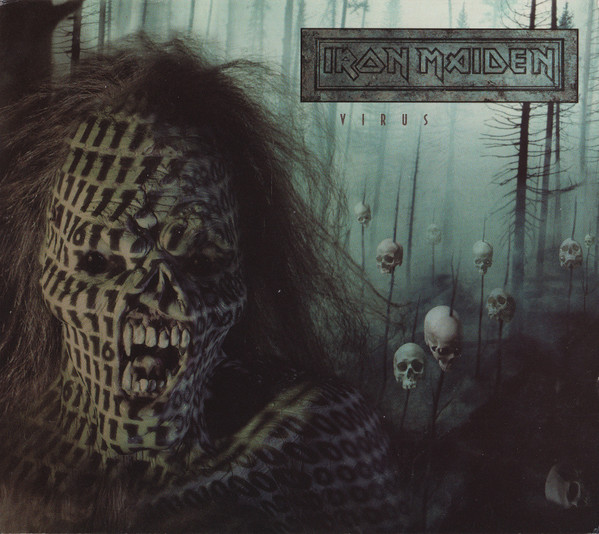
The cover art is simply a shot from the music video. The video itself is, uh …. we’ll get to it in a minute. This is kind of a cool cover even though it’s not the most creative design choice. It was a far more daring choice than the cover of the Dance Of Death album, which I won’t stop complaining about until I leave this mortal realm.
There are several versions of this one, I’ll be going over the European CD release. There is a Japanese CD with two extra B-sides which would be cool to have but of course those go for a bit of a premium. This was also put on on 7-inch vinyl and, of all things, a mini CD. There’s even a DVD issue as well.
Rainmaker
First things first, just behold this music video. That is certainly something. There’s a lot going on there and, well, I don’t know what any of it really is. It does create a striking image and also it’s kind of a pile of shit. I honestly can’t make up my mind all the way on it, sometimes I dig it and other times I want to turn my eyes away from it.
The song though is a pretty good cut from the album. It’s a bit “meat and potatoes” Iron Maiden fare but there’s nothing wrong with a simple and effective song. The guitars come off with a “ringtone” vibe that puts some people off but I was never concerned with it. Dave Murray handles the solo on this one.
Lyrically the song is about rain as a symbol for washing away the grit of the past and renewing one’s self. To be truthful it’s just Bruce singing about rain for nearly four minutes, it’s not that deep.
Dance Of Death – Orchestra Version
The first B-side is a super cool one, it is the title track from the album done with an orchestra. It isn’t radically different from the actual album recording, it is the full song just done with a bit more accompaniment than the original. It’s not a total re-imagining like some metal-meets-orchestra versions are.
The song is nothing short of amazing and the orchestra only enhances it. This song was a Janick Gers contribution, along with Steve Harris. Gers seems especially keen to take a title track and turn it into gold, he did so both on here and The Book Of Souls. This B-side is absolutely worth the price of admission to this single, which in fairness isn’t that hard to get a hold of.
More Tea Vicar
It’s a good thing the single is good and the first B-side is awesome, because this turd also exists. It’s another Maiden joke track, which by this point in their career they’d done plenty of. There’s another one on the first single for this album but again I don’t have it, maybe someday later I’ll get to spin prose about that “masterpiece.” But for today I can have a go at its spiritual sequel.
The song is a some odd jam session where Bruce makes what might be a half-assed attempt at rapping. The lyrics are nonsense, the song isn’t great and Bruce isn’t getting any calls to make a hip-hop record. I don’t mind joke tracks, Maiden have had a few funny ones over the years, but honestly this one just stinks the place up.
That wraps up this one and the presence of Dance Of Death for this initial run of the series. Just three left now and everyone gets a bit of a break from Iron Maiden (maybe) before I get into the live albums.
This week the offering is the debut full-length from Seattle’s metal institution. While the recording and process of releasing the record didn’t go the way the band wanted, in the end a worthy album was still delivered.
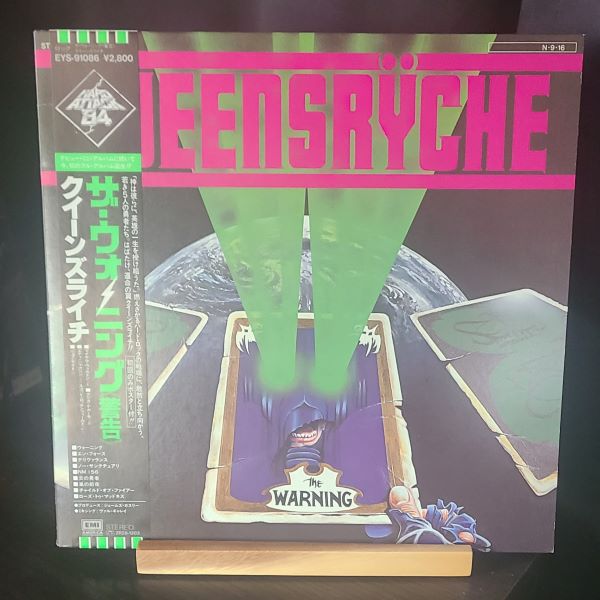
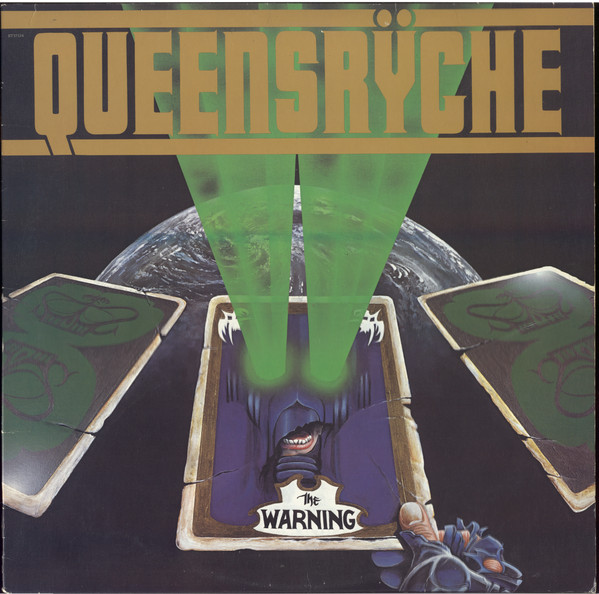
Queensrÿche – The Warning
Released September 7, 1984 via EMI Records
My Favorite Tracks – Take Hold Of The Flame, Roads To Madness, The Warning
Queensrÿche had landed a major label record deal off the strength of their self-titled demo, which was widely released as an EP and gained the band a fair bit of traction before playing a show. Now the group were armed and ready with their first full album and a new legacy was now underway.
The band’s line-up was the same as from the EP and would also remain the same for many years afterward. Geoff Tate handled vocals, while Chris DeGarmo and Michael Wilton were the guitarists. Eddie Jackson was on bass and Scott Rockenfield was the drummer. The album was produced by James Guthrie, well known for producing Pink Floyd.
It’s worth noting that the album didn’t quite measure up to what the band wanted. The recording process went over budget and EMI turned mixing over to a cheaper option, resulting in a mix that the band was not happy with. The track sequence was also not what the band wanted, it was changed while the group were out on tour without their input. This doesn’t really “affect” the album and there is no official re-done version that matched the band’s wishes but it’s album trivia worth having a look at.
There are 9 songs in 48 minutes on the original version of The Warning. Many of the songs here were inspired by George Orwell’s infamous novel 1984. The mythos of this album has its own feel, not quite a concept album but definitely an invented theme running throughout and certainly far beyond a pale copy and paste of the novel used to inspire.
The Warning
The opener and title track gets the pace set with a straightforward metal song. The song is pretty standard metal fare, though it’s also evident that Queensrÿche have some arrangement ideas that go beyond the usual stuff. The song has to do with a “child of centuries” who warns the world that time is about up. The simple chorus of “Warning” along with some nice riffs make for some good listening.
En Force
The first four minutes serve as another standard yet also excellent metal track, this time offering up the apparent leader or tyrant who is controlling things and some kind of quest to unseat them. A few bells work their way into the song’s intro, it seems Queensrÿche were keen to add to their music even very early on. The last minute of the song is a different sort of thing, with a quiet outro that seems to lament the tyrant’s iron grip on people.
Deliverance
This one might feel “simple” in comparison to what Queensrÿche would go on to create, but in all honesty this is a very well put together track especially for someone’s debut album. The band insert a few things into the song to freshen it up a bit. Also, the bass line on this one is very much worth a listen.
No Sanctuary
Here we have one that starts out as a ballad but then shifts over into a bit heavier fare, though still perhaps a ballad. It seems to be about someone looking to fight those in control, but the song’s sad backdrop indicates it might all be for naught. It’s a display that the band were not going to be a one-dimensional metal act.
NM 156
Up next is a more “upbeat” song, at least musically. This one works up into its very wordy chorus at a pretty quick pace. The song gets into 1984’s themes of thought control, though here it seems machines are tasked with executing citizens who aren’t in line. Queensrÿche were very into the concept of computers and machines running things, as evidenced from this track as well as Queen Of The Reich from the EP and Screaming In Digital on Rage For Order. As our current society becomes enveloped in AI, it seems perhaps Queensrÿche were prophetic.
Take Hold Of The Flame
The album’s second single has also become the standard-bearer for the record and the band’s most popular early song. In terms of tempo and arrangement it fits right in with everything else on the record. Geoff Tate does stand out on this one with his unreal voice, but otherwise the song doesn’t really “do” anything out of the ordinary.
Where this one does diverge is with its theme. The song is simply about going for it – many sit and waste away without taking a chance on something, so take hold of the flame and have at it. Stuff like a child of centuries or a human-terminating AI might be a bit opaque and far-off to really identify with (for now, anyway) but this song is universally applicable. Everyone can get it and a lot of people did. It is unsurprisingly the band’s fourth most-played live song according to setlist.fm.
Before The Storm
The metal spirit keeps up here on this one. The storm seems to reference a feared nuclear bomb scenario, though this is really only picked up from the words “atom split” in the second verse. This is a really good song that keeps its tempo up until the last minute, where again the band goes out on a different outro note which flows straight into the next song.
Child Of Fire
Heading towards the end with another barnburner of a song that keeps the pace up until a quiet interlude in the middle. This seems to be about some kind of malevolent conquering leader and a duel with a hero to settle the world’s fate once and for all. There’s a nice guitar solo at the end of the interlude before the song closes out the same way it came in.
Roads To Madness
The album closes with a whale of a song at nearly 10 minutes. The first half of the song is pretty standard fare, verse-chorus with nothing unusual going on. Then a quiet interlude hits for a bit, followed by a soaring end piece that takes the song to its conclusion. This is wonderfully arranged and played and is one that truly hints at what Queensrÿche would be getting up to on future releases.
This one is a bit tough to make out theme-wise, though it’s clear that someone is attempting to access some forbidden knowledge and they make their mortal exit as a result of their investigations. I probably never will know what the hell they’re talking about but I still absolutely love this song.
The Warning was a solid debut for Queensrÿche after the hype from their demo/EP. The album would not make huge moves on sales charts but did quietly earn a US gold record for half a million copies sold. Queensrÿche would open for Kiss, Iron Maiden, Dio and Accept while on tour for the record, offering their brand of metal to a variety of audiences.
This album is honesty pretty unique in the Queensrÿche catalog as it is a fairly standard metal record. The group would not remain long in this territory, choosing to explore different soundscapes on Rage For Order before crafting their magnum opus concept record Operation: Mindcrime. But here on the Warning we can hear their early sound, certainly with a bit of a Judas Priest vibe throughout but also a uniquely Queensrÿche offering. While the band would go on to some unique expressions in their creative prime, this first album should not be discounted, it is filled to the brim with quality heavy metal.
I do have an extra special version of this album, it’s a Japanese pressing in phenomenal condition. Have a gander at that below.
This week in the Iron Maiden singles series it’s on to the album Brave New World from 2000. It’s a big one for what are obvious reasons to most, for those unaware I’ll catch you up in a second. Note that I don’t currently have The Wicker Man in my collection, it was the first single from BNW and I’m only covering the stuff currently in my collection.
The big news? The line-up shuffle hit Iron Maiden for the next and perhaps last (?) time. Blaze Bayley was excused from the group and in his place returned the band’s iconic frontman Bruce Dickinson. It was a reunion that Maiden heads had been clamoring for basically since Bruce left the band and the Blaze stuff fell flat with a lot of the supporters. While Iron Maiden have been an exceptionally talented band in several areas, there’s little doubt that their calling card was the Human Air Raid Siren Bruce Dickinson, and now he was back home to stay.
But Bruce didn’t come alone. He had been joined on his past two excellent solo albums by former Maiden guitarist Adrian Smith, who left the band in 1990. Adrian’s return did not displace anyone – the band decided to retain a three guitar line-up of Smith, original gangster Dave Murray and Janick Gers, Smith’s replacement in 1990. The three guitar attack has worked well for Maiden and the band’s roster remains unchanged 24 years on from the reunion.
Maiden had truly gotten the band back together, had toured and then recorded, then were out to unleash their new creation on the world. Today’s single is a 12-inch record picture disc with the lead track and two live B-sides from the actual reunion tour. There are different covers for the various versions, though each version of the single does contain the same tracks (one missing from the 7-inch due to science). The cover art was done by Mark Wilkinson, who has done extensive work with Marillion and Judas Priest, and was also the artist behind the past few Maiden album covers.
Out Of The Silent Planet
The single draws its inspiration from the 1965 sci-fi film Forbidden Planet (starring Leslie Nielsen!). In that film an alien planet was found in ruins. It turns out that the beings had created machines that could simply produce whatever the people thought of. As it happens, one thing people thought of were horrible monsters and so the monsters were created and tore everything apart.
While the film is a highly rated classic, the song doesn’t get such lofty praise. It is very repetitive, even for Maiden, and in parts it’s kind of shrill. I don’t mind the song at all, it’s not something I skip when I play the album, but I wouldn’t call this a highlight of the catalog either. I like the story behind it and all that.
It was curious that this song got picked as a single when a song like Blood Brothers was sitting right there. It got a music video and everything, yet Maiden did not play it out a whole lot on a tour where they played songs from Brave New World heavily. But it wasn’t all that important in the end, Iron Maiden were back and everyone was happy.
Wasted Years
The first B-side is from a September 1999 concert in Milan, Italy. This was on the Ed Hunter tour which was Maiden’s big reunion shindig. None of this stuff was ever put on to one of the band’s many live albums so these B-sides are pretty cool to have. This Maiden classic is played a bit fast and loose, which honestly is kind of nice to hear. The essence of the song comes off just fine with this rendition.
Aces High
Same scenario as the prior B-side, though this song is from a set in Madrid, Spain on the same tour. Also a signature Maiden song, complete with Churchill’s speech for the intro. This one is also played very fast and loose, in fact it does nearly go off the rails a time or two. But the band keep it together and this one also works out pretty well in the end.
That does it for the first reunion single. This series is headed into the home stretch, four more after this and it’s all done. Again, I’ll revisit this series in a year or so when I’ve aqcuired more of the singles I don’t have right now. And after a two week or so break once this is done, I’ll kick off a look at the Maiden live albums, which will take to close to the end of the year to get through.
This week on the singles series is a big one. This is the first and only in my collection to feature Maiden’s singer from 1995 to 1999, Blaze Bayley. This one goes all sorts of different directions, in terms of triva and lore, as well as different versions and things like that.
Before I go into the single itself, I want to say that not having a lot of Blaze era stuff in my singles collection was not an outright conscious decision. No, I’m not a huge fan of the stuff Maiden did while Blaze was in the band, but there are songs I like, including others that were released as singles. In truth, these singles have always been a bit tough to come by, or at least have been since I’ve been collecting the singles in earnest. These aren’t usually the cheapest things around and that has been the biggest limiting factor on getting these into my collection. I do want all of the (obtainable) Maiden singles so the Blaze stuff will be a point of emphasis for me going forward.
On today’s single – this thing was released in a handful of formats with sometimes odd choices. My version is part one of a two CD set. I only have the first disc of the set, which I’ll detail when I get to the specific songs below. To be totally honest I find the two-part single thing kind of lame and I’m not in a hurry to pick up the second disc to this, which has (almost) the same title song and then two other B-sides also available elsewhere. But, this disc has that one (almost) same title song and two B-sides also available elsewhere, so whatever. The not cheap or easy to get vinyl version has two radically different B-sides, two tracks from the infamous Soundhouse Tapes EP, while another CD version collects a handful of other songs. I need a degree in Cdology to keep up with this crap.
Now into the real heart of the matter – this is, for purposes of my series, the introduction of Blaze Bayley. Blaze was the singer of British act Wolfsbane from 1984 until 1994, when he was essentially hand-chosen by Steve Harris to replace Bruce Dickinson in Iron Maiden. It was a strange and curious choice, one that many fans still question to this day. Again, I’m not the biggest fan of this period of Maiden but I’m also not out to shit on Blaze or just talk smack for cheap Internet points so I’ll keep to a somewhat more objective view of things here.
Virus
We have a very interesting case for a single release here, as this is the one and only Iron Maiden song that has truly never appeared on an album. While Sanctuary and Women In Uniform were non-album tracks, those two songs did appear on albums for certain territories. Virus is, in the truest sense of the word, a non-album track.
Virus was a new song recorded for the band’s first greatest hits set, 1996’s The Best Of The Beast. Maiden were probably overdue for a compilation by this point and the set was pretty well received. There are a few different versions of the comp, though all do feature Virus.
CD 1 of the single features an edit of Virus, which cuts out the 2 minute or so intro. I’d personally prefer to have the unedited track but I wanted these B-sides so I went with this. The intro is very long and weird and I know a lot of people don’t like it but I honestly kind of dig it. You’ll find that the posted video has the song in full.
When the song proper kicks in it actually starts sounding like Iron Maiden. Even then it goes into a bit of a different roll in the end, but it fits what’s going on. One of my criticisms of The X-Factor album is that it sounds very same-y in parts, here on Virus the band truly establish something that stands on its own.
Lyrically the subject could be taken a few different ways, all of which are relevant. There seems to be an admonition about the Internet, which was on a fast rise at the time of the single’s release. This is a warning that grift and corruption could increase as the landscape of information gathering and dissemination changes. Yep, nailed that one.
This could also be seen as a shot at the band’s critics and detractors. The song addresses the apathy and the need to lash out at anything, something which the band dealt with a lot of during this time period. Sure, the Internet in 1996 was absolutely nothing like today, but the same general kind of “hide behind a screen name and let loose cheap shots” thing was still in full effect. I also don’t know what parts the band members were taking as valid criticism or as shit-talking, I heard plenty of both during this time.
This honestly is one of my favorite tracks of the Blaze period. Each album offered up a few gems, but this song really stands out. It’s different enough to stand on its own but also still sounds a fair bit like my favorite band. It is odd and it does generate wildly different reactions, but I’m in Camp Virus on this one.
Doctor Doctor
Both B-sides on this single were already available as B-sides to the Lord Of The Flies single. Why the repackage them here is beyond me, though apparently the first run did not make the UK so maybe that’s why.
Doctor Doctor is a famous track from the fantastic rock act UFO. If for whatever reason you haven’t heard the original, you should probably pause reading, go rectify that, then come back. Make sure to come back. Anyway, Iron Maiden give a song they probably jammed out to a million times a run through here and they do a pretty good job of it. I’d say this is one of the better Maiden cover song performances across their catalog.
And for a bit more Maiden/Doctor Doctor trivia – Maiden plays the UFO song over the PA at live gigs just before they take the stage. If you’re out in the arena grabbing a beer or a shirt and hear Doctor Doctor hit the speakers, better get back in to your spot quick.
My Generation
The other B-side is also a cover, that’s probably obvious to most. This is one of The Who’s immortal hits and here Maiden have a crack at it. The cover is fine but it lacks that special something to put it over top. Not a bad performance but nothing here with any real urgency, this is a curiosity more than anything. Also it feels too long, they could have cut this off a bit earlier.
That wraps up the Virus single. The other CD has two B-sides that are very early cuts of Sanctuary and Wrathchild released on a compilation before the debut album was out. To be honest it’s more economical to get the full original compilation than to get the second CD of this single, though if I happen on a deal one day I might pull the trigger.
Since my collection is severely lacking in Blaze stuff, this will also be the point where we bid him farewell. Blaze’s Maiden run did not win over a lot of people, though this era does have its fans. Blaze has gone on to a very nice solo career and has just recently recovered from a very serious heart operation, so best wishes to him going forward. He has always seemed on good terms with his time in Iron Maiden and the band have respected his two albums probably more so than the two ’90’s albums preceding those.
But, with this time of the band now filed away, the next, longest and seemingly final form of Iron Maiden is to come, starting next week in the singles series.
This week it’s time to dig out the seminal second album from what would become thrash legends and another of the foundational albums of the “Big 4 of Thrash” movement.
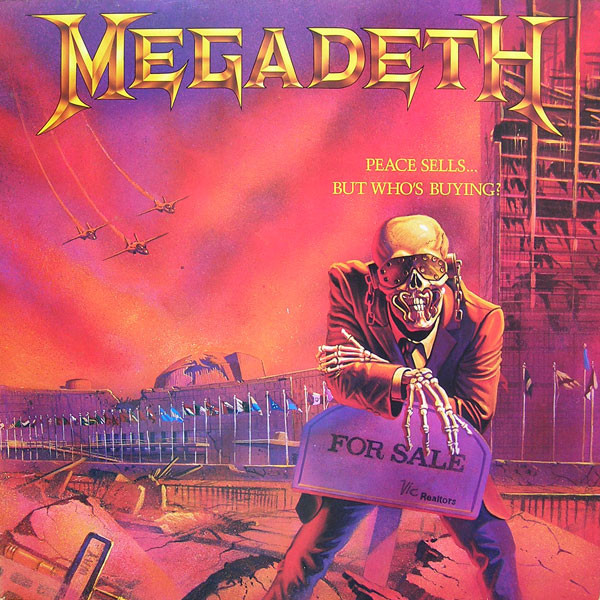
Megadeth – Peace Sells … But Who’s Buying?
Released September 19, 1986 via Capitol Records
My Favorite Tracks – Peace Sells, Devil’s Island, The Conjuring
Megadeth had released an essentially self-produce debut, Killing Is My Business, a year prior. The album did light sales but did put the world on notice that Metallica’s former guitar player was up and running with his new outfit. Major label Capitol Records came calling on Megadeth and signed the group to a deal while the follow-up album had already been mostly recorded and really only needed a remix.
Megadeth’s line-up was the same as it was for the prior record – Dave Mustaine on guitars and vocals, Chris Poland on guitar, Dave Ellefson on bass and Gar Samuelson on drums. This line-up stability would not hold for very long.
The cover art was done by Ed Repka and has been one of heavy metal’s most celebrated album covers. The distinct image of Megadeth’s mascot Vic Rattlehead on a For Sale sign outside a United Nations building that was destroyed in an apparent nuclear strike is one of heavy metal’s enduring images. It would lead to a lot of work for Repka and notoriety for Megadeth.
Today’s affair is a lean one at 8 songs and 36 minutes, though packed with songs that would come to define both Megadeth and thrash metal.
Wake Up Dead
The opener was issued as a single in the UK. The song kicks in straight away with monster riffing and a tale Mustaine spins of sneaking into his house, trying not to wake his lover because he fears she’ll kill him if he’s caught coming in late. This was apparently based off true events, Mustaine was living with one girl but in love with another, but was also homeless and needed the girl he was living with not to know he was messing around.
The lyrics are funny but rather brief, it is the guitar work that is the star of this song. Mustaine and Poland absolutely go off all over this song, both with electric solos and also some rhythm changes to keep the song fresh and moving along. It is absolute guitar wizardry on this album and it gets started right out of the gate.
The video for this song was directed by Penelope Spheeris, known for her work on the Decline Of Western Civilization series.
The Conjuring
The second track gets into the subject of evil – specifically performing occult rituals and summoning the Devil. It is another solid, breakneck thrash tune with a dash of sinister riffing thrown in to truly deliver its insidious message home.
The Conjuring was a song removed from the Megadeth setlist for many years, starting in 2001, due to the born-again Christian beliefs of Mustaine. Eventually in 2018 he was convinced to play the song again and it has been a fairly regular part of modern setlists.
Peace Sells
The sort-of title track is next and it offers up what has become one of Megadeth’s signature songs. The instantly memorable bass line opens the track, a snippet that would be used by MTV News for a very long time, and apparently without compensation. As the other instruments join it’s pretty clear this is going to be a song not to be forgotten.
The song famously rattles off a list of stereotypes about metalheads and Mustaine sarcastically retorts to each – “What do you mean I don’t pay my bills? Why do you think I’m broke?” being one of many snarling and honestly accurate observations. The song was meant by Mustaine to counter the negative perception of metalheads, showcasing that the group were far more intelligent than conventional wisdom let on.
Peace Sells hit gold as a single and has been carved in stone onto the list of greatest Megadeth songs. Even in the wake of future success for the band, Peace Sells might be the band’s most distinct and recognizable song.
Devil’s Island
The hard hitting thrash does not relent as this song slams through a haunting story about Devil’s Island, a former French prison in French Guiana in South America. The prison was infamous for ill treatment of inmates.
The song outlines the plight of a condemned prisoner who is eventually spared from execution, but must then face the reality that his life will be spent on Devil’s Island and the execution might have been a better option.
Good Mourning/Black Friday
This two-part song begins with an instrumental, then transitions into a savage account of a serial killer inspired by occult influences. Black Friday goes a pretty breakneck pace through the account of this butcher. The song has become a something of an unofficial theme for the day after Thanksgiving in the US, at least among metal fans.
Bad Omen
This one builds with an elaborate intro before launching into a more mid-paced version of the sound found elsewhere on the album. It’s another guitar wizard entry, with both leads and some of Mustaine’s god-level rhythm work. This song is also about the occult, this time a few people stumble into a satanic ceremony where the participants basically get what they asked for, of course it doesn’t end well.
I Ain’t Superstitious
Up next is a cover song, from what was originally a blues tune in the 1960’s penned by Willie Dixon and performed by Howlin’ Wolf. The song was famously covered by Jeff Beck, with Rod Stewart on vocals.
Megadeth’s version is suitably thrashed up for the record, it isn’t a stumbling block and the music perfectly fits the album. It also manages the great task of also not sounding like shit, something that can easily happen when metal bands decide to “spice up” non-metal songs. The Megadeth-isms work pretty well here and the song is an enjoyable listen.
My Last Words
The album closes with one last thrash barnburner and of course another guitar workout. This one goes all out as Mustaine relays a tale of people playing Russian roulette. The song perfectly matches the intensity that must be felt when playing one of the stupidest “games” ever invented. While the song stays on the rails much of the time, it does twist and turn a bit towards the end and the hard-hitting outro/chorus. It is perhaps one of thrash metal’s underrated tracks and one that Dave’s former bandmate Lars Ulrich cites as his favorite Megadeth song.
Peace Sells … But Who’s Buying? was a true moment of arrival for Megadeth. The album did not chart well initially but did see sales that would lead it to a US platinum as well as other international certifications. It was well-received critically on release and in years since has gone on to be considered one of the cornerstone albums of thrash metal. It joins Metallica’s Master Of Puppets, Slayer’s Reign In Blood and Anthrax’s Among The Living as the pillars of the Big 4 of Thrash.
The Megadeth line-up would not hold for long after the album’s release – both Chris Poland and Gar Samuelson were fired for excessive drug use just after touring for the record. Both Mustaine and Ellefson would remain and cycle through a few members before nailing down the band’s most stable line-up entering 1990.
For Megadeth it would mark only the first of many career achievements. While many bands only get to record one great album, Mustaine and company would do it again a few albums down the line with Rust In Peace, then they would achieve heights of commercial success next on Countdown To Extinction. Many acts would give up valuable body parts to record one thing as great as Peace Sells…, yet for Megadeth it was but one of several notches in the belt. The argument over Megadeth’s best moment can be contested, though this album is certainly in the conversation.
This week’s Maiden single is the second from the Fear Of The Dark album. And given the missing singles from my collection, this one will be a major exit point for the band, but I’ll get to that later on in the post.
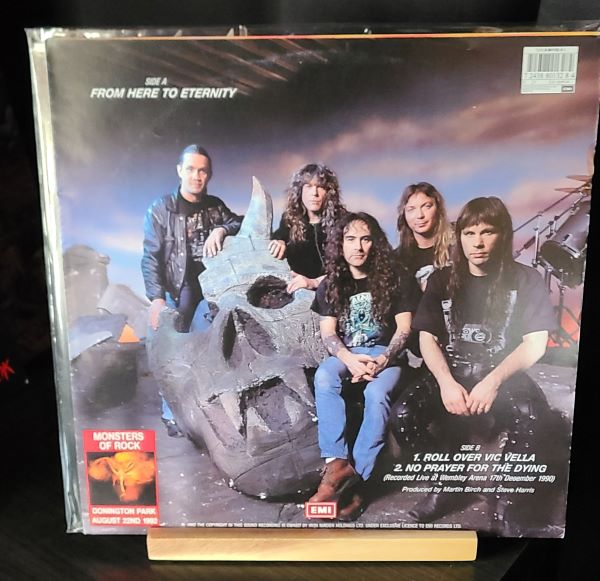
The cover sleeve lacks Eddie and is either a band shot from the video or Satan with a motorcycle and a bunch of people hanging out, which my version is. This was only the second time they’ve done a cover photo like that, though it does come up again here and there in the future. Note that there is a different cover for one of the many, many different versions of this single.
This one really has a lot of different variations and content across the differing formats. I have a 12-inch vinyl with the single and two B-sides. I would consider the 4-track CD single a great one to have as it holds a second special B-side, perhaps someday I’ll track that one down. There are also etched records and other vinyl variants with some different B-side content on them.
From Here To Eternity
The single is another hard rocking cut, it gives off a “biker” vibe which was not something you’d normally get with Iron Maiden. I do think it’s a case where Maiden succeeds in the hard rock arena. This one is simple and catchy, yet still sounds like Iron Maiden. They weren’t always “on” in the ’90’s but this is one example of them getting their new direction right.
The song is about a motorcycle ride, but not just any random one. This is the final ride of Maiden’s other character, Charlotte the Harlot. A lot of people are familiar with her song of the same name from the debut and also the sequel 22 Acacia Avenue from The Number Of The Beast. Not quite as known are Hooks In You from No Prayer For The Dying and this one, marking the final two chapters of Charlotte’s story.
And Charlotte goes out with a bang – she heads off into the sunset on the back of a motorcycle piloted by none other than heavy metal’s best friend, the devil himself, Satan. This doesn’t mark a “fall” for Charlotte as opposed to a match made in, uh, Hell I guess. The former resident of 22 Acacia Avenue heads off with her new lover into eternity.
At some future point I’ll have a post covering the Charlotte saga in its entirety.
Roll Over Vic Vella
This B-side is available across most versions of the single except for a few 7 inch pressings with a different cover instead. This song is a bit of a cover, obviously being Chuck Berry’s Roll Over Beethoven. The altered lyrics pay tribute to the band’s long-time roadie Vic Vella, and the spoken bits at the beginning and also interspersed through the song are a conversation between Vic and Steve Harris.
While this comes off like a cheap gimmick, as the band had been having a run of through the ’90’s singles, this one actually works pretty well. The song itself is pretty good, a pretty high octane rendering of the original that won’t win awards but also gets the job done. And it’s a nice tribute to a long-running crew member, it’s a pretty cool thing for the group to do.
No Prayer For The Dying
For the real treasure of this single, we get a live cut of the title track from the prior album. This was recorded at the Wembley Arena in London during December 1990. It’s a great sounding performance and was captured very well.
The great thing about this B-side? Unlike most other Maiden B-sides, this one is truly not available anywhere else. This is the only place to get it. The band with almost as many live albums as studio records did not issue an album of this tour and this song was not included on any of the three live albums that came out after Fear Of The Dark. This is a true rarity among B-sides and makes this single release very special.
And the CD version I mentioned earlier has another cut from the same album – Public Enema Number One, one of the better cuts from No Prayer… It makes that CD version very special.
There is one other single from Fear Of The Dark and also a few singles from the following live albums. However, I don’t have any of those and that means for the purposes of this series, it’s time to say farewell to Bruce Dickinson. Bruce would leave Maiden after the touring behind Fear… in order to dive fully into his solo career. There are indications that Bruce wasn’t happy in Maiden and Steve wasn’t always happy with Bruce, but a lot of that is secondhand information that I won’t go much into.
It would mark the band’s most drastic shift, only behind when Bruce first joined and gave Maiden a voice to match their musical ambition. Bruce would go on to a critically acclaimed yet not commercially glamorous solo career. For Iron Maiden, their story after Bruce can be told on the next single of this series. And while Bruce was gone for six years, in terms of this series he’s only gone for one single. Until then.
Welcome to now-regular Tuesday posting and the new home of my infant series Song of the Week. I’m sure the premise is easy to grasp – I’ll talk about a cool song each week. Sometimes the song will just be one I want to talk about for no other reason, other times the song might have some link with events, the day in question, or whatever. Today is more of the latter.
This is June 6th, which is a special day in the world of heavy metal. It is the International Day of Slayer, or International Slayer Day if you’re more concise. This was started in 2006 (6/6/6, heh heh heh) as a means to honor Slayer and also mock certain other entities. Slayer themselves called it a day in 2019, which maybe was a great time to quit a band when looking back in hindsight, but their legacy lives on and this is a day to pay respects to them.
Last year I dove into the thrash masterpiece Reign In Blood to honor the day, this year I’m going all the way back to 1983 and the debut album Show No Mercy to highlight a favorite of mine. This was Slayer’s debut which they put up the money to record. I’d say the gamble paid off after 36 years of heavy metal terror.
Die By The Sword is, much like the whole of the album, an immediate and sinister tune that’s a call to arms, but of course for the legions of the fella down under. (Satan, not Australians) Musically this is a fairly standard early thrash number, in fact maybe a bit more thrash than other songs on the debut. The verses move along at a more fast, speed metal pace while the brief chorus chugs along more in what would become familiar thrash territory. It’s a conventional song structure but the very short chorus makes its final reprise at the end a bit abrupt, though with Slayer abrupt is a household term.
Lyrically the song is full of fairly crude references to glorifying Satan and slaughtering, well, whoever; all of this was common fare among early Slayer songs. There is some actual, biblical basis for the song’s title and premise, as Jesus offered a paraphrased version of “live by the sword, die by the sword” in the Book of Matthew. Of course in the “ceremony of opposites” fashion of heavy metal, Slayer are talking up the concept as opposed to cautioning on it as Jesus did. And that concludes today’s Bible study.
Die By The Sword is a fan favorite from among the early Slayer catalog, it was the band’s 12th most-played song live and the highest placing among tracks from Show No Mercy, at least according to Setlist.fm. It makes many appearances on the several live materials released over the years and was one of the early songs played on night one of the band’s two-night finale in November 2019. While Slayer changed form well away from the sound of their early material, Die By The Sword was one that stuck around for the duration.
It’s time again for that silly little game where I take a handful of songs that have the same name but are not the same song. I’ll pit them against each other and see which one I like the best. Today’s works well because there are only three and I’ve only heard one of them and, as of the writing of this intro anyway, I don’t know who the winner will be but I have the same idea about that most of you reading probably do.
As with all of this series, this post should not be taken as a guide to all of the songs with this name. I just use a few websites to quickly run down things and decide if a particular one strikes my interest. Today I didn’t make it past A when I found this one that has a few talking points to it. There is no research on these things, I’m sure there are hundreds of songs called Against The Wind out there if someone really got to looking. These three are from well-known acts so I’ll run with them.
Bob Seger
I’ll lead off with the obvious choice. Against The Wind is the title track from Seger’s 1980 album and is one of his most popular songs. This was a single and did good business, peaking at number 5 on the Billboard Hot 100 and also gathering a number 6 in Canada. The single went US platinum and the namesake album sold over 5 million US copies. For some bonus trivia, Glenn Frey of the Eagles does backing vocals on the song.
On the topic of Seger and his hit songs, here’s a brief tale I told awhile back recalling his first ever number one hit.
Against The Wind has been one of Seger’s most influential songs, it had a special pull with the country artists of the 1990’s and beyond and also stretched out to many across all genres. It is a very nice song that checks a lot of boxes – sad but hopeful, polished yet personal. It’s one that seems primed to run off with the win today, but let’s at least check in on the other contenders.
Bonnie Tyler
A name familiar to many, Tyler had a few big hits in the 1980’s and was a star through Europe in the ’90’s. That is where today’s song is found, her Against The Wind is from the 1991 album Bitterblue. While it did not have US success, it did well in several nations on the Old Continent. This was also a single and put up modest results across several European singles charts.
This song is a prototypical soft rock ballad of the time. Bonnie has a great voice as always, though the song is not one I’d give a ton of repeat spins to. I don’t think it’s bad at all, it’s honestly a very nice song, just not one that moves the needle for me much at all. Bob Seger doesn’t have much competition here.
Stratovarius
While Bob Seger and Bonnie Tyler are well-known names to varying degrees, Stratovarius might not be quite as familiar to as many. But their pedigree is no less impressive – Stratovarius are one of the chief architects of the late 1990’s-early 2000’s power metal boom. While Stratovarius would become a keyboard-charged power metal stalwart, this song from 1995 sees them still in a transitional phase. This version of Against The Wind is from the band’s 1995 album Fourth Dimension and was released as the lone single for the record.
Now, I’ll talk all day about the influence Stratovarius had on the power metal movement, but one thing I’m honestly not is a Stratovarius fan. I never got into their stuff that much, I was much more drawn into Blind Guardian and Sonata Arctica when it comes to power metal. Startovarius is a more unabashed, full-on melodic power metal attack while the other bands listed have underpinnings in thrash and classic rock, respectively.
But my summary of Stratovarius tends to focus on their albums after Fourth Dimension. I honestly haven’t heard a note of this before I pushed play to write this piece. And well, I like this song quite a bit. It does sound firmly in the power metal vein, though not off in the sort of thing this and many other bands would get up to later. It’s fairly meat and potatoes and I dig this a fair bit.
Now, the question is – do I dig the Stratovarius song more than Bob Seger? While it’s closer than I first suspected, the answer is no. The winner of today’s silly little contest is Bob Seger. I don’t think that’s a real shock to anyone, though huge props to earlier-era Stratovarius for giving me something I may need to go back and check out.
That does it for this post and for the week. Have a great weekend and remember – the new Song of the Week series picks up on Tuesday next week. That is June 6, which as it turns out holds some significance in heavy metal. Until next week.
This week we are on to the album Fear Of The Dark. It would be Iron Maiden’s second in the 1990’s and it would mark a final album for a band member, at least for awhile. This stuff is the end of an era but Maiden went out swinging.
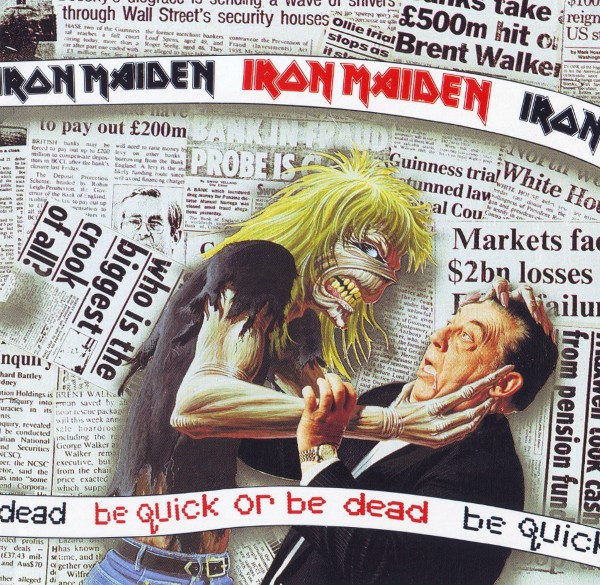
There are a pile of different versions of this release. I am holding a US CD copy that is almost “complete,” we’ll get to that later. The cover art was done by the band’s long time artist Derek Riggs, though it’s worth noting that he did not do the art to the full album’s cover and was soon on the way out. In fact, as far as I can tell, this is Derek’s last appearance in this singles series. Some of that is due to me not having a few live ones that come just after this, but for the purposes of this series it’s worth noting that Eddie’s iconic artist did his final work. There has been use of and involvement with Derek since then so I’ll correct this if I find I’m wrong down the line.
Not a whole lot else to say before I get into the music, but it is worth mentioning that the single did very well on the charts, getting to number 2 in the UK and charting in many other countries. While this period of Maiden is generally regarded as their weakest, they did have their biggest chart success during this time and also had strong album sales. Things are weird sometimes.
Be Quick Or Be Dead
The single is a tune penned by Bruce Dickinson and Janick Gers. It is based on a series of scandals and frauds that were all over the news at the time, mainly British and European stuff that I’m not terribly familiar with. But it’s all the same, we’ve always had our share of garbage like that in the US.
As for the song, this one is HEAVY. Sure, Iron Maiden are a metal band, we all know that. And yeah, they have heavy stuff, many parents couldn’t handle what they were hearing when Maiden made their rise in the ’80’s. But this song is just on another level heavy. It’s fast, ferocious and will absolutely rip your throat out. The band did more on the heavy side during the Blaze Bayley years but I’m sure they got up to a lot again that went like this.
While Fear Of The Dark will forever be known for its title track, this song is one of the highlights of an album that is a mixed bag of tunes but offers some quality cuts. This was always one of my favorites from the record and its vitality didn’t make the ensuing years any easier to digest.
Nodding Donkey Blues
The “all versions” B-side is just what the title suggests – Iron Maiden are playing the blues. This is an original composition that is credited to each band member, I suppose as a way to share the blame. The song is a laughable and crude one about picking up a hard luck woman. Obviously the song is a total joke and should be discussed in that context, this isn’t competing with Rime Of The Ancient Mariner for lyrical analysis. It’s one of those things that’s funny to hear the first time but any entertainment value wears off quickly. To borrow from the British, Maiden are having a wank here.
Space Station No. 5
It is again a Montrose cover, Maiden previously covered I’ve Got The Fire (two times even). This time, Maiden chug out a serviceable version of the song.
For the first two minutes, anyway.
After the first bit, Bruce goes into some extended sequence of gibberish on the mic. No telling what he’s up to there. Then there’s a solo and as the song picks up pace toward the end, Bruce decides to announce a horse race between gems like Wanker and Prick, as well as Metallica.
The bit itself is amusing but it’s not something that really elevates the song any. In and of itself I don’t really care, again Maiden have a trillion singles out and if they want to jack around here and there, that’s their business. It does kind of suck because Space Station No. 5 is one of my favorite Montrose songs, both from the band and from Sammy Hagar’s early solo career. I wouldn’t have minded a bit more reverence toward the original, but in the end it’s a pile of whatever.
On my US version of the single, this is the end of the line. But, on international editions and the 12-inch vinyl, there is yet another track to behold. I’ll go ahead and include it here since I don’t feel it’s worth the effort to post a new entry to this series if/when I do get the record.
Bayswater Ain’t A Bad Place To Be
On some versions this track is hidden and a part of Space Station No. 5. On most vinyl that I’m aware of, the song is actually on the A-side after the lead single. Here, Maiden again have a go at their manager Ron Smallwood. Janick plays a bluesy acoustic riff while Bruce imitates Ron ranting about various things. For eight minutes.
The premise here is funny but holy hell does this drag for way too long. This is the first time I’ve played the entire thing since the mid ’90’s and this might be the last time I play the whole track in my life.
I don’t have every single and I can’t recall some of what’s to come, but this collection is probably the worst pile of B-sides Maiden did in their career. They started having a wank and didn’t stop until the tape ran out. Thankfully we get something better next week – well, mostly.
That does it for this single and its lukewarm bonus offerings. Yes, that is a stock photo up top rather than the actual single from my collection – this CD is somewhere in with the roughly 800 other CDs I own and I’m not sure exactly where. I’m tired and want a nap and I’m gonna do that instead of looking for it. I’ll update this someday when I bother finding the disc.
It’s time for a new series. I do an album of the week so it’s obvious and fitting to also do a song of the week. It wasn’t something I originally planned on but after thinking about it a bit I figured why not? It provides a way to do some more quick content (this one will be a bit longer for various reasons) and it allows me to cover a pretty wide range of stuff the album of the week might not get to.
The Song of the Week will start running on Tuesdays next week and thereafter, this one is going live today because I wasn’t planning on starting it yet but the perfect subject for the first one fell into my lap. To the shock of no one I’m sure, the first Song of the Week entrant is from my favorite band.
Iron Maiden – Alexander The Great
Today’s song is the final track from Maiden’s 1986 album Somewhere In Time. It is a rolling epic that goes for 8 and a half minutes. The music fits the vibe of the synth-driven album pretty well but also firmly camps itself in “epic Maiden” territory with the signature galloping riffs and a few movements and changes to keep things from being stale. The song ventures a fair bit into some different moods through its run. And while I don’t think Maiden have ever fully “gone prog,” there’s a bit of stuff in here that at least borders on that territory.
The song’s theme is probably very easy to extract from the title – Alexander The Great was an ancient ruler who conquered a vast range of territory in 320-something BC. Alexander was a genius military commander who won many against the odds battles. His exploits were legendary and have been passed down to military commanders even today. His empire was insane for the time, though it quickly fell apart after his unexpected death.
One aspect of Iron Maiden’s appeal is how a fair number of fans know their history from Maiden songs. That might make a history teacher cringe, but it’s pretty well true. And this one is a great song for that – the lyrics really are a recounting of what he did, with a bit of flavor added in here and there.
The song was not released as a single though it’s held as a beloved and perhaps underrated part of the Maiden catalog. It also holds the same distinction 50 other Maiden songs do – it has not ever been played live on a stage…
This is the part where people who wish to avoid The Future Past tour spoilers should leave. I don’t really know why or how one would avoid such news, but I’ve seen people out there that don’t want the setlist spoiled for them, so here is your warning.
SPOILER ALERT
….
….
….
….
….
….
….
What I just typed above the spoiler portion is no longer true – as of May 28, 2023, Alexander The Great has joined the list of songs Iron Maiden have played live. It saw its live debut in Ljubljana, Slovenia. This was largely expected as of the announcement of the Future Past tour, since Somewhere In Time was going to be a focus of the tour along with Senjutsu. It’s widely speculated that Alexander The Great is the real reason for even giving SiT some stage time, though in fairness that album hasn’t gotten a ton of live love beyond Wasted Years anyway.
Alexander The Great was the holy grail of unplayed Iron Maiden live songs. It was the popular request of many fans, dating back to 1986 honestly. It’s difficult to think of what a new number one would be for that, I doubt there will be a true consensus pick out of the remaining unplayed songs.
This does alter a few posts I did back in October of 2022 – in two posts I ran down all of the songs Iron Maiden had not played live. That number went from 51 to 46 over the weekend, as four songs from Senjutsu also got a live debut. I’ve updated those posts to include the new information – head here for part one or over here for part two of that brief series.
That will do it for the debut of the Song of the Week series. This one had a bit extra with it, future posts won’t go this hard but one might pop up now and again. Look for future SotW posts each Tuesday from here on out.





 The Crooked Wanderer