The quick and easy posts continue this week as it’s that time of year for Spotify Wrapped.
I’ll add a quick bit of context before getting into mine – this year I used Spotify for two main purposes – small playlists of 6 or so songs when I go on bicycle rides (which is most every day) and to check out new releases. I figured my wrap-up would be distorted this year based on the small series of 30 minute playlists I constantly rotate through, but as it turns out I can say the results were fairly representative of my listening habits.
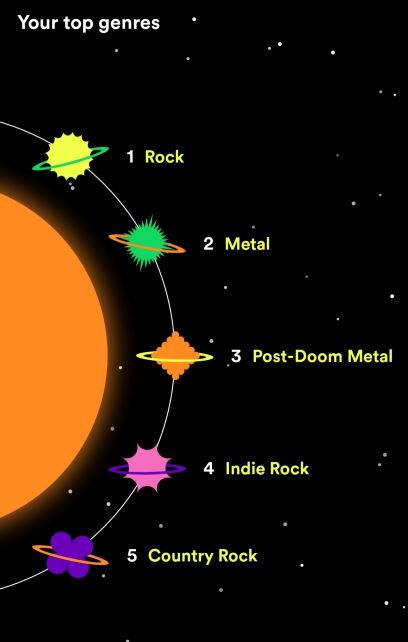
First up the is genres. Not a whole lot to get into here, besides whatever “post-doom metal” is. Music descriptors get awesome these days when everyone is trying to invent a new term for a sound that sets even somewhat apart from the rest. I’m also not entirely sure what they’re referring to with “country rock” but that’s a more understandable term.
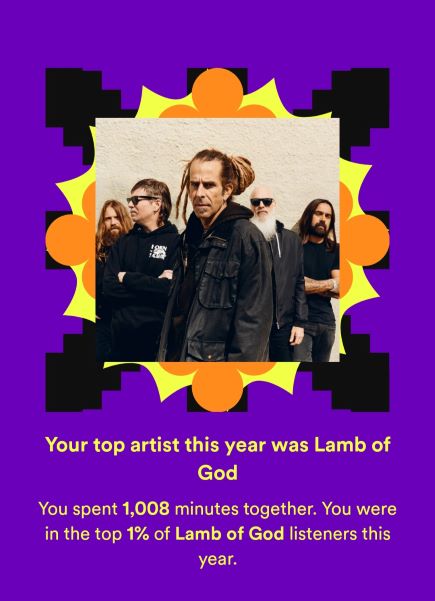
Now on top artist. Not really shocking to me – I have a handful of LoG songs in my playlists and then when Omens came out in early October I played the hell out of it. I’ve liked them for a long time but the new album really knocked me over and likely explains how they took my top artist crown this year.
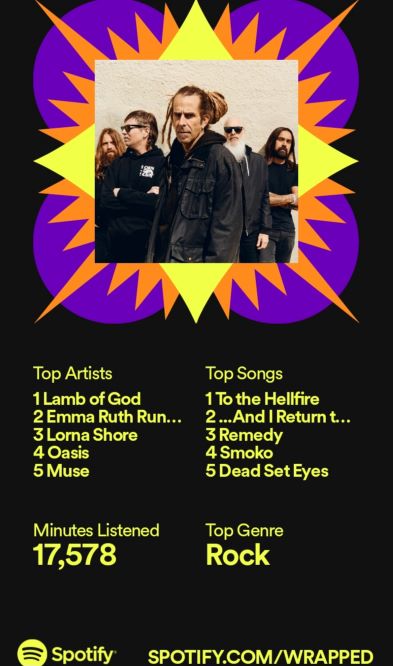
And here is the overall Wrapped sum-up. Kind of funny that my top played song in 2022 was the same one as from 2021. My only real “huh?” moment is Muse being in my top artist list – they put out a new album this year which didn’t really hit with me, though one song off of it is pretty awesome. I guess that one new song and whatever sprinkling of others I have in my playlists put them over the top. None of the others register any surprise to me all.
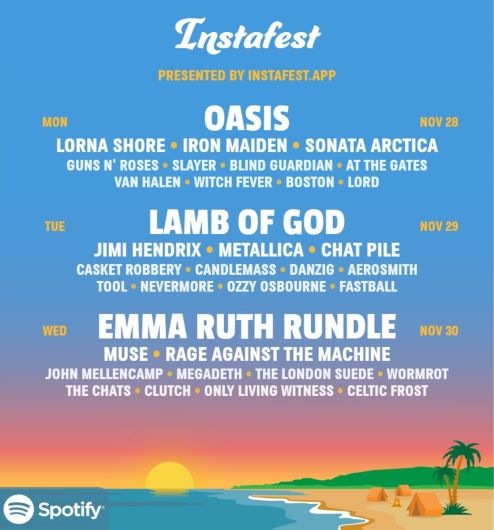
Here is one other little bonus that was going around in the past few days leading up to Wrapped – the Instafest lineup. It essentially takes your Spotify data and generates a three day festival based on what you’ve played. Here is mine.
I’m honestly pretty happy with mine. Now, I do love Oasis, but in no universe would I book Iron Maiden as an opening act for Oasis. I’m sure plenty of people would have my head for that. But beyond that, I would pay huge money to attend that fest. It lines up with what I like pretty nicely. The only oddball? I don’t know the artist “Lord” as listed on the festival bill. No clue who that is referring to and I’m not getting any easy answers on Spotify.
That covers my Spotify Wrapped for 2022 and also the bonus Instafest thing. As a preview for my end of year stuff, I’ll do my top albums of 2022 on December 12, in place of the regular Album of the Week feature. I’ll probably do a small Songs of the Year list too, maybe three or five, don’t know yet. On through the ass end of 2022.
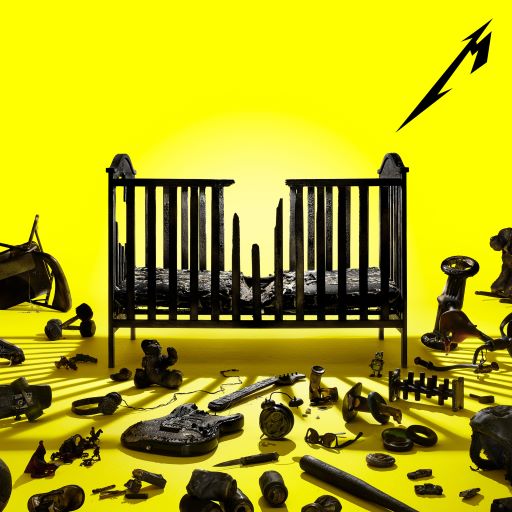
A quick post today to discuss the news of a new Metallica album as well as the newly released single.
On Monday, Metallica announced their 12th studio album would be called 72 Seasons and will release on April 14, 2023. In addition to the album, Metallica are planning a huge tour that involves playing two nights in each stop and a “no-repeat” set for each city. More details can be found in the post on the band’s official website.
Also on offer is the first single from 72 Seasons. Lux Æterna comes on offer with sound and video (the band did record a video for every song from their prior album Hardwired…To Self Destruct, curious if they’ll do the same here).
Lux Æterna is a good offering, I’ve enjoyed it so far. It’s brief and to the point and it “feels” like a 2022 Metallica song. It seems like maybe the band “found their pocket” with Hardwired… and are going to stay in that territory. For my money, it’s a wise decision. There is plenty of disagreement over the new track, but I’ve noted a fair share of positive reception for the new song as well.
Of course my main concern is with how the album as a whole plays. It’s 12 songs at 77 minutes long, not as long as Hardwired… but still a plenty long enough album. Seems to be the trend for a lot of “boomer rock” these days, including many of my favorite acts. We’ll see how the full-length pans out, especially with the hefty amount of songs.
I’m personally pretty stoked for this, the new song sounds good and Metallica seem to have a good sense of direction in the latter portion of their career. It’s still over four months until album release, so there’s plenty of time to speculate on exactly what we’re getting with 72 Seasons.
This week’s pick is a tour back to the mid 1990’s and an early sign of what would become an explosion of European power metal.
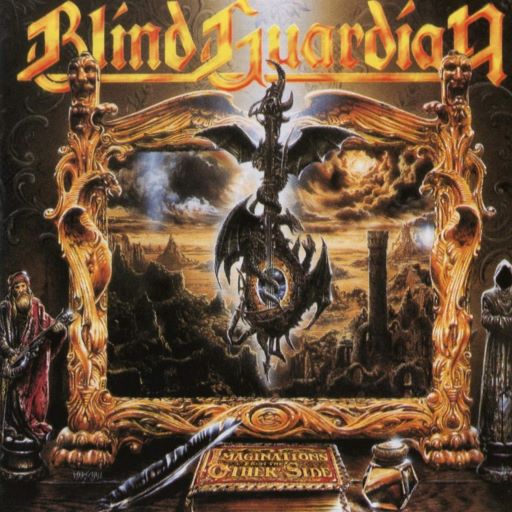
Blind Guardian – Imaginations From The Other Side
Released April 4, 1995 via Century Media Records and Virgin Records
My Favorite Tracks – Mordred’s Song, Imaginations From The Other Side, Bright Eyes
By 1995 Blind Guardian were gearing up for their fifth album release. The German group had started in speed metal and thrash territory but had been slowly morphing into a power metal outfit. Some of the hallmarks of their early sound would remain in their arsenal, setting their sound apart from the typical power metal fare that was on offer.
Blind Guardian were out to improve their sound on their next album and in doing so recruited producer Fleming Rasmussen to helm the effort. Rasmussen had come to prominence by producing Metallica’s second through fourth albums. The influence of an experienced producer, combined with the decision to only take the best parts of songs to the next step, set up Blind Guardian for a triumphant release.
Imaginations From The Other Side comprises nine tracks at a near-50 minute runtime. Two songs were released as singles – A Past And Future Secret, and Bright Eyes, marking the first single releases in Blind Guardian’s career.
Imaginations From The Other Side
The title track opens things and is an epic song that showcases both power metal leanings and the heavy-hitting instrumentation of the band’s early days. The song laments the loss of fantasy worlds as their magic power fades when one reaches adulthood. Many direct references are made to fictional institutions, such as The Wizard Of Oz, The Narnia series, The Lord Of The Rings, Peter Pan and many more.
I’m Alive
This fast-paced track recalls the earlier days of Blind Guardian and their speed metal attack. The song is based off of a book The Sunset Warrior by author Eric Van Lustbader. I’m unfamiliar with the book but the song is a great example of the band expanding their musical pallet while retaining their heavy metal feel.
A Past And Future Secret
A ballad that is one of two to center around the story of King Arthur. It is a haunting lament told from the viewpoint of the wizard Merlin, who prophecies that King Arthur will return to rule after his mortal death.
The Script For My Requiem
The pace comes back up for this twisted tale of a knight returning from the Crusades. The knight is haunted by the atrocities committed in the name of the holy and returns a broken shell of himself. It is one of many songs from the album to be a frequent staple in live sets.
Mordred’s Song
The second of two ballads about King Arthur, this track hits heavier than the first and would likely fall into power ballad territory. The song centers around its namesake Mordred, the illegitimate son of Arthur’s incestuous relationship. Mordred would come to wreak havoc on Camelot and eventually fight a battle with Arthur that would claim both.
The song does a fantastic job of painting the despair of Mordred’s life and the hollow feelings that would lead him to his history-altering course of action. The tragic tale could only end one way and this song provides the rationale for and perhaps even justification for Mordred’s brutal actions.
Born In A Mourning Hall
This scorcher of a tune mostly leaves behind the fantasy world and examines the real-world consequences of people living without any viable chance of moving upward in life. The struggle to live and cope with being a disposable tool of the higher class is a picture painted vividly on this song.
Bright Eyes
The next song is one that has become one of Blind Guardian’s signature offerings. It is another haunting tale of a young man abused and neglected who is now ready to wreak havoc on the world. While the song bears thematic similarities to Mordred’s Song, it was apparently based off of The Neverending Story but is mostly an original story spun by singer Hansi Kursh. The song is one of the band’s most played live and is a favorite of many Blind Guardian fans.
Another Holy War
This song could be seen as a companion to The Script For My Requiem, as it again involves the waging of holy war. It is told from the perspective of a messianic figure who will be crucified and kick off yet another religious war. It’s another song that preserves the thrash elements of the band’s early days.
And The Story Ends
The final track seems to pick up the story of Bright Eyes, though that is unconfirmed and there is speculation that this song might have something to do with The Wheel Of Time fantasy series. I tend to think it’s the first one, as there seems to be an occasional ongoing story told through various Blind Guardian songs over the years and a mirror is involved with them. The song still maintains a heavy feel but does slow things down at points to allow it and the somber album as a whole to settle in.
Imaginations From The Other Side would mark another notch in Blind Guardian’s belt. The band were already breaking through before this and would see their fortunes rise as power metal would become a resurgent genre in the latter half of the 90’s. Blind Guardian were among the standouts of the new wave of power metal groups and have remained a viable force in metal all this time.
Many of the songs from Imaginations… are staples of live sets to this day. Several tracks have been played a few hundred times in concert and the entire album was aired out as part of anniversary celebrations a few years ago.
I’m doing another album ranking today. This one wasn’t something I had planned but the gears started grinding on it when 80’s Metal Man did a post recently on one of the band’s albums. Cheers to him for that post and the inspiration to start thinking about this band’s albums.
It’s also a very, very easy album ranking – in the on-again, off-again course of the band’s history, they only had five proper studio albums and one EP that’s long enough to include. This isn’t a scholarly effort like that of ranking Iron Maiden or Saxon records, it doesn’t take a great deal of time or energy to rank the Celtic Frost albums.
For the purposes of this ranking I will include Morbid Tales as a full-length album. The US release was eight songs, which is essentially a full album anyway. I’m not normally a fan of including things that aren’t full-length releases on these rankings but in this case I think the length and the impact of the work are both warranted.
Celtic Frost were a unique entity in heavy metal – their work was along the lines of thrash, though so dirty that it’d help give birth to entire new subgenres. The band never stuck with one sound for very long and they would become a contributor to the emerging doom scene. Avant garde is a term often used to describe some of their music. There was always something more artistic to what Celtic Frost were doing, it was never just a day at the office.
Time to get down to business – ranking the six Celtic Frost albums.
6 – Cold Lake (1988)
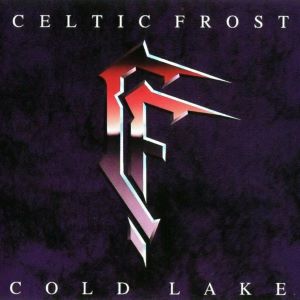
The bottom slot, somewhat unfortunately, goes to the album that 80sMetalMan did his retrospective on. Cold Lake is a very complicated album in the Celtic Frost pantheon, being one often viewed with scorn and contempt. Said contempt comes from none other than the band’s main man himself, Tom G. Warrior.
Celtic Frost were derided for going “glam” in this era, though honestly that was far more in pics and videos rather than the music. The tunes themselves are fairly straightforward sort-of thrashy numbers. There are a few false starts and missteps among these songs, which is why I rank it at the bottom. But, the album does have its highlights, like Cherry Orchards, and is far from the disasterpiece it was made out to be. While the album isn’t necessarily a credit to the grim presentation Celtic Frost have in their defining moments, it’s not the boogeyman it’s been made out to be either. And it seems plenty of people have warmed up to it in recent years.
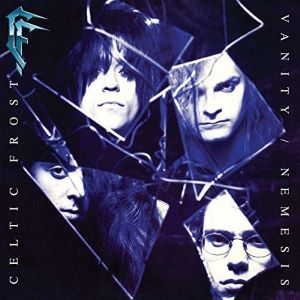
5 – Vanity/Nemesis (1990)
After Cold Lake and its disastrous reception, CF reconvened with founding bassist Martin Eric Ain and offered up this slab of thrashy, goth-rock inspired tunes. It was initially hailed as a “return to form,” but the truth is that it wasn’t really that. It was a different direction for the group, though in reality it isn’t that far removed from its immediate predecessor.
The songs here play out fine enough, but the album isn’t all that exciting. It’s one of those that, for me, is fine to listen to but also doesn’t really move the needle. While Celtic Frost were often a shape-shifting group in their time, this record didn’t necessarily shift into something terribly essential.
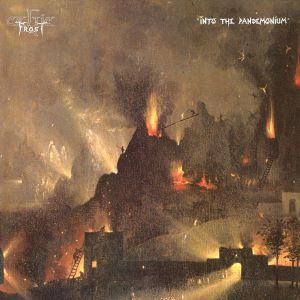
4 – Into The Pandemonium (1987)
Speaking of shape-shifting, Celtic Frost did it on this album and did it very well. This was a more refined approach to songwriting, leaving behind the rough and tumble nature of the early albums and investing more atmosphere into the proceedings. It still links to the early records but shifts its leanings to the doom and goth realms, areas where the band also had great influence. Songs like Inner Sanctum and Babylon Fell still offer that classic CF feel, though.
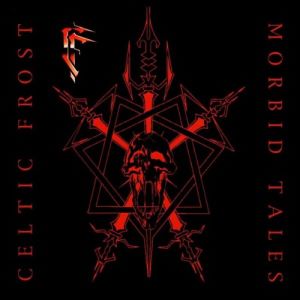
3 – Morbid Tales (1984)
CF’s debut effort was recorded less than a year after Warrior and Ain abandoned their Hellhammer project. This EP/album/what have you would go on to be massively influential in the metal world, and even beyond. Songs like Into The Crypt Of Rays and Procreation Of The Wicked have gone on to be covered by countless metal acts and are in rotation across “best of metal” playlists all over. This is a piece of metal history that is widely responsible for a lot of that godawful noise people are still listening to today.
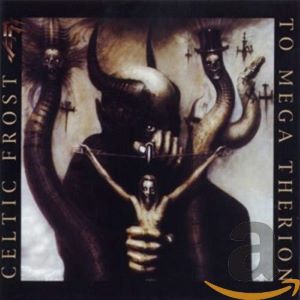
The first true proper full-length from Celtic Frost shares the influential lineage spawned by Morbid Tales. This album was a blueprint for death metal, black metal and doom metal. It is one of the most important releases to extreme metal as a whole, joining with Venom and Bathory in that regard. It’s really impossible to overstate the influence of this album.
And what an album it is. Songs like The Usurper and Circle Of The Tyrants are masterpieces. The entire album is a great marriage of savage noisemaking and creepy atmosphere. It’s weird to think what kind of place metal would be in without this offering.
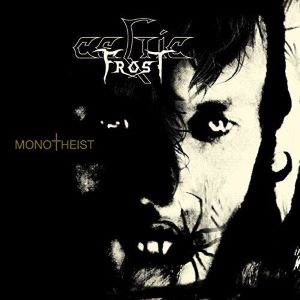
1 – Monotheist (2006)
With all that said, my favorite Celtic Frost album was their final one, released after a 16 year gap between albums. The return was highly anticipated and the resulting album delivered in a way that exceeded notions.
Monotheist sees CF lean heavily on the doom side of things and is a presentation even darker than their pioneering early works. Tom Warrior’s voice added qualities with age (not that he was that old, early 40’s at this point) – his delivery is very fitting for the music. And the riffs and arrangements found here are unrivaled. This was a majestic offering from the band, who looked poised to perhaps lead a charge for a new decade but split up again instead.
That does it for the Celtic Frost rankings and, sadly, this is certainly the final, definitive ranking. The band split up in 2008 due to seemingly perpetual tensions between Tom Warrior and Martin Eric Ain, and in 2017 Ain died at only 50 years old. Warrior has proposed a show or two comprised of former CF members purely as a tribute to Ain, but the book on Celtic Frost’s recording career is long closed.
Even with the long layoffs and a discography on the shorter end, Celtic Frost hold an undeniable legacy in the world of metal. They were one of the most important bands to the formation of the extreme metal scene and their influence is responsible for literal decades of music since.
I was putting together some info for a near-future Judas Priest post when I got to thinking about Rob Halford’s solo career. This seed also got planted a few weeks ago when a few of us were at a buddy’s house and he had one of the the Halford albums on.
So today I present a quick run through the non-Judas Priest albums of Rob Halford. He did quite a bit of stuff in his time away from his legendary outfit, and threw a few more solo efforts out there after returning to Priest in 2003.
Let’s go all the way back to 1993 and begin the look at Rob Halford’s solo offerings.
Fight – War Of Words (1993)
Halford came out swinging with his first non-Priest effort. Fight were a band of the times, in a thrash/groove pocket that slotted very well with the metal in rotation in 1993. Though Priest had done well to update their sound with Painkiller, Halford took his own leanings into even more of a current direction with Fight. Also note that Scott Travis double dips here – he was drumming with JP and also with Fight. Also notable is Russ Parrish on guitar, now more well-known as Satchel from Steel Panther.
Nailed To The Gun was a single from War Of Words and it was a great introduction to Halford’s post-Priest life. It got plenty of MTV play and the buzz set Halford and Fight up decently well out of the gate.
Fight – A Small Deadly Space (1995)
Fight’s second and last release didn’t quite hit the same way the debut did. It maybe lacked the dynamics of the first and was a bit stripped down or “grungy,” perhaps. It’s not horrible by any means but it kind of flopped and spelled the end of the project. I did see Fight live on this tour, it was my first Halford live experience of any kind. Between the Fight stuff and a small handful of Priest tunes thrown in it was a hell of a show.
2wo – Voyeurs (1998)
Halford’s next move would be into the industrial metal space, a form of music that was huge at the time and something he had long expressed a desire to do. This one-off project saw him team up with John 5, now known as Rob Zombie’s guitarist and the new guy in Motley Crue. The record was released on Trent Reznor’s record label, though this was not a collaboration between the artists.
2wo did not make waves at all, in fact the album was derided on release and the project scrapped pretty early on. It has gotten some more love in retrospect but remains more of a curiosity than anything in the distinguished career of Rob Halford. I always thought the album was a worthwhile listen but I can see why it didn’t really take off.
Note that while I’ve only posted the song, there is a fairly crazy video out there for I Am A Pig. It takes a bit of digging to find.
Halford – Resurrection (2000)
As the calendar flipped to a new everything in 2000, Halford returned to his metal roots and launched a new project. This time he would collaborate with producer Roy Z, who had lent great weight to Bruce Dickinson’s solo career.
This project would be very well-received and reinvigorate interest in Rob Halford and the more traditional strain of heavy metal. The band toured extensively, including opening for a reunited Iron Maiden, which really spiked interest in the “old sound” again. Bruce Dickinson also appears as a guest on the song The One You Love To Hate, making true a long-desired fantasy pairing in metal.
Halford – Crucible (2002)
Halford’s next move would be to get a bit heavier and actually move aside a bit from the “trad metal” leaning of the last record. This record accomplished its mission and kept the Halford train rolling, with the featured song Betrayal being an absolute barn burner.
This is the point where Halford reconnected with Judas Priest. It would be several more years before a new Halford solo offering.
Halford – Winter Songs (2009)
The third Halford solo outing would be a bit of a departure for heavy metal in general – while not explicitly stated as such, this is a Christmas album. There are a ton of old Christmas standards here, as well as a few originals penned by Halford and Roy Z.
While this isn’t my cup of tea, there also isn’t really anything wrong with it. It’s what you’d want, if what you wanted was a Rob Halford Christmas album. Halford would revisit the Christmas album in 2019 with Celestial, an album billed as a “friends and family” effort.
Halford – Made Of Metal (2010)
It would be a quick turnaround from the Christmas special to the next proper Halford release, which to date remains the final solo offering. This would return to the more traditional metal sound of the first album and serves as a respectable bookend to Halford’s solo catalog, if indeed nothing further materializes.
It’s unknown if there will be another Halford release outside the bounds of Judas Priest. Halford has expressed a desire to collaborate with some specific artists, among them Ihsahn from Emperor. It has yet to happen though, and it’s been all quiet on the Halford solo camp after some mess about label and catalog rights years ago that somehow saw Halford not have the rights to his own solo music for a time. I’m not even sure how that story ended or if it did, but it was kind of a mess.
Whatever may come, Rob Halford has led quite a career, both with his main gig and outside of it. He has displayed a clear willingness to pursue sounds outside of the box and has had some great moments, both within and outside of the bounds of strict heavy metal.
This week’s pick is a watershed moment in extreme metal. The album is hailed as a cornerstone of its sound and it casts a massive influence on the direction of heavy metal for generations to come.
At The Gates – Slaughter Of The Soul
Released November 5, 1995 via Earache Records
My Favorite Tracks – Slaughter Of The Soul, Blinded By Fear, Under A Serpent Sun
By 1995, At The Gates were part of an emerging Swedish death metal scene also including In Flames and Dark Tranquillity. Their music would carry the term “Gothenburg Sound” in reference to their home city, but would widely come to be termed melodic death metal.
For At The Gates, fortunes had been rising after the release of their third album, 1994’s Terminal Spirit Disease. The stage was set for a release that would capture international attention and make the band top players in the death metal game. As it turns out, even that bar was too low to describe what happened.
The distinctions between melodic death metal and, uh, “normal” death metal lie in guitar and vocal delivery. Death metal was built on buzzsaw guitars and deep, guttural vocals; while melodic death employed riffs bearing influence from the traditional heavy metal of the 1980’s and a higher register of vocals, rendering the output more comprehensible.
Our album today comprises 11 tracks from the original version, with a very lean runtime of 33 minutes. I’ll handle that before tackling the legacy of the record, which could pretty well fill a book.
The album kicks off with Blinded By Fear, an intense thrasher reflecting on the concept of death being the only release from fear. The template for the record is set here, with fast riffs and vocals leading into a brief yet intense solo section. There isn’t a lot of deviation from this formula for the record’s course.
The title track arrives next. Slaughter Of The Soul has become the signature anthem for At The Gates, encapsulating perfectly the sound on display. The song both rolls smoothly and stomps over everything in its path. Cold comes next and features a guest guitar solo from Andy LaRocque of King Diamond and Death fame.
The assault continues with Under A Serpent Sun, tacking the tried and true metal theme of the end of the world. The album’s first half (roughly) is wrapped up with the instrumental Into The Dead World.
It is a nice, quiet break from the otherwise relentless proceedings.
Things pick straight back up with Suicide Nation. This song deftly straddles the line between thrash and death. World Of Lies emphasizes the low end a bit more, while Unto Others goes back to the higher register and also picks up the pace a fair bit. The album rounds out with Nausea and Need, two songs that lay on the throttle and bring the album home. Everything wraps up with another instrumental, The Flames Of The End, which would come to be a more fitting title than it would initially communicate.
Slaughter Of The Soul captured the attention of the metal underground and thrust At The Gates into the limelight. The band toured extensively behind the record, especially in the United States. The saturation of the market would lay the seeds for metal’s next big movements in the early 2000’s.
While the album would go on to be hailed as a genre-defining classic, much of At The Gates’ celebration of that legacy would not come until much later. In 1996, only a year after Slaughter… was released, ATG called it quits. The members would float through various projects until 2008, when they would reunite for a tour. It would be 19 years between albums as no new recorded music saw the light of day until 2014.
One could be forgiven for thinking that At The Gates did release albums in that time between – hundreds, in fact – the influence of Slaughter Of The Soul is stamped all over American heavy metal of the early millennium. Strains of melodic death metal would pop up all over the US and also abroad, and it wasn’t hard to hear the influence of At The Gates in the music. Both death metal and melodic metalcore would be top-selling fare during the 2000’s and lead the pack in terms of exposure and discussion.
Perhaps the true beauty of Slaughter Of The Soul is that its groundbreaking sound wasn’t really new or innovative, or even groundbreaking. At The Gates had already laid that foundation with three prior albums, along with their peers In Flames and Dark Tranquillity. Slaughter… is a beautifully executed record that is a high mark for melodic death metal but also doesn’t really do anything other than distill what already was into a finer form. There isn’t much in the way of innovation – rather, it’s just the sound turned up to 11.
Today Slaughter Of The Soul remains as a staple of the heavy metal diet, in fact At The Gates have been playing the entire record live in recent shows. The album’s legacy is secure and has honestly only grown as the music it inspired became the law of the land in heavy metal.
This post was part of a series that I called S-Tier Songs. I later decided to abandon the series in favor of a simpler Song of the Week format. I am keeping these posts as I wrote them but removing the old page that linked to the list of S-Tier Songs, so that is why these posts might look a bit odd. Enjoy.
So I last left off with A Perfect Circle and their hit single Judith. The song was an attack on the deep faith Maynard James Keenan’s mother felt despite an injury that left her debilitated for nearly 30 years. It wasn’t the first time Keenan had used his mother’s malady as lyrical inspiration – the Tool song Jimmy from 1996’s Aenima was about his experiences being 11 years old after his mother’s injury.
And it wouldn’t be the last time Tool would visit with Judith for song inspiration. Judith died in 2003, and in 2006 Tool would release the 10,000 Days album. While the album title pays homage to Saturn’s 29 year long cycle of moons in orbit, two songs on the album serve as eulogy to Judith Marie.
Tool – 10,000 Days (Wings Pt. 2)
10,000 Days the song is preceded by Wings For Marie, a more intro-like song that sets the stage for the epic rollout to come. And while Wings For Marie is its own track, it’s very difficult to assess it in isolation, as it is clearly a companion to 10,000 Days.
The song 10,000 Days itself begins with a rolling, quiet intro that is clearly building to something and also features the sound of storms in it. The payoff will come, but this 11 minute long song isn’t in a hurry to get to its point.
As the bass and the storm rolls along, Maynard begins singing about the end of his mother’s mortal journey. He takes a shot at the hypocrites who surrounded her after her health issues, but then deliberately writes them off and focuses the rest of the song on Judith.
The lyrics accompany Judith as she ascends to Heaven. Rather than be a humble servant, Maynard says Judith should arrive at the gates proudly and demand her wings. She is truly “the light and the way they only read about” and is the main event at the pearly gates.
The song ends with a quiet reflection from Maynard offering further suggestion for what Judith should say as she enters the afterlife. Everything is a bit of a roller coaster in the 11-minute long surge of music and movements, but the quiet ending sums everything up perfectly.
The rest of the band is up to some real atmosphere generation on 10,000 Days. This isn’t a long song that just goes from point A to point B with a few riffs and fills – no, there are plenty of movements and changes to keep everything fresh and also flowing along with the varying intensity of the lyrics. Tool never was much of a straightforward band anyway, and they up the ante on this song with arrangements and progressions that stand apart from a lot of popular fare of the time.
10,000 Days was not released as a single. It was played live during the album’s tour cycle, but met with some resistance from a portion of fans. The popular cuts from the record were the singles like Jambi and The Pot, and in some instances people at concerts were screaming for those while the band was playing 10,000 Days.
The fan backlash, however strong it may have really been, coupled with the extremely personal nature of the song, led Maynard James Keenan to feel a bit burned by doing the song. He said this about it in a May 2022 interview with Loudwire:
“I think probably the stupidest thing I could have done on 10,000 Days was put myself out there as much as I did with the tracks ‘Wings for Marie (Part 1)’ and ‘10,000 Days (Wings Part 2),’ Keenan said in an interview to promote the album. “I’ll never make that mistake again. It just took too much out of me – too much emotionally, mentally, physically – all those manifestations. Those songs were exploited and misconstrued, people were flippant and dismissive. I won’t be doing that anymore. And technically, ‘Wings’ is very difficult to pull off. If any one of us is off, it falls apart and makes that thing tragic, and that’s not a good song for me to have fall apart. It’s just too personal.”
It is a shame that the song was shrugged off by some, but I know me and many others found it to be a masterwork. The majestic instrumentation along with the powerful lyrics that could only come from such a harrowing place were the perfect song combination. Tool no longer performs the song, though in part that might be due to a whole other album full of 10-minute long songs that eat up a fair chunk of a set list.
Why is this an S-Tier song?
10,000 Days is a triumphant movement, wrapping the emotionally-charged death of Maynard’s mother Judith into a masterful piece of music. It’s a movement that goes beyond our regular notions of music enjoyment and enters a kind of space reserved for the more transcendent of songs. It is a long build up for a payoff only paid if you have any amount of patience within you.
This is the type of song to be enjoyed over a course of time, and to be appreciated for the scope of what is being communicated. A “fan” looking for immediate payoff won’t be welcome here. This is for the more discerning ear, preconceived notions about Tool be damned.
It’s time to cap off Metallica week and that means it’s time for my album ranking. I’ll be going worst to first on the Metallica discography, sorting out the cream from the chaff (whatever that really means, I don’t know).
This ranking will include the ten full-length studio albums credited to Metallica. It will not include EP’s , singles, live albums with orchestras, live albums without orchestras, etc. It will also not include Lulu, the 2011 collaboration album with Lou Reed. That one is a bit tricky since it’s a full-length album that features the band in its entirety, but I’m going to go with the typical list that most people use. Also, Lulu is an abomination.
Let’s head into the waters here, I don’t think my list is radically unpredictable (mostly).
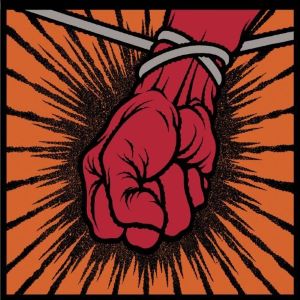
10 – St. Anger (2003)
This isn’t a hard call. I can find people in the wild who defend this album, but honestly I think it sounds bad and I have a hard time even listening to it. The production choices are beyond questionable, they’re flat out trash. And the songs are generally a mess. Finding a few diamonds in the shit doesn’t mean the album is redeemed in any way.
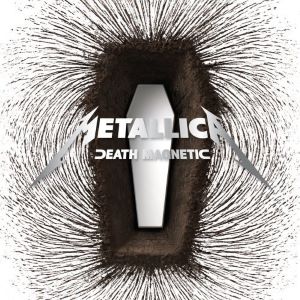
9 – Death Magnetic (2008)
This album is far, far better than its predecessor, but it’s still not all that great. The band did sound like they were trying again, but it also does sound like they are trying, rather than succeeding. And the album after this stands as proof that such is the case. There are a few nice songs on here, The Day That Never Comes stands out to me. But it’s not an album I feel like visiting much, or at all really.
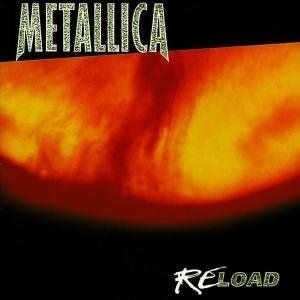
8 – Reload (1997)
Kind of a “second half” album to their 1996 effort, Reload is a groove-based, almost blues and country styled album. A departure for Metallica, sure, but a pretty decent sounding effort overall. I do think this lacks real heavy hitters but it’s a collection of songs that are fine enough to listen to. I’d cite The Memory Remains as my favorite.
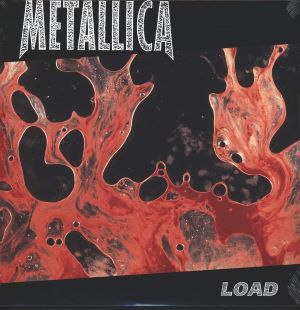
7 – Load (1996)
The band, not content with their 1991 reinvention, got haircuts and released some alt-metal. The world was abuzz about the physical and musical changes, but honestly they put out some stuff here that I really like. I think the first seven tracks are all bangers, that includes I think all of the singles. I like the last two songs as well – it’s the stuff inbetween that loses me a bit. If that were trimmed up some, I’d probably be ranking this one higher. I do truly think they wrote some really good songs here, regardless of what they were “supposed” to do.
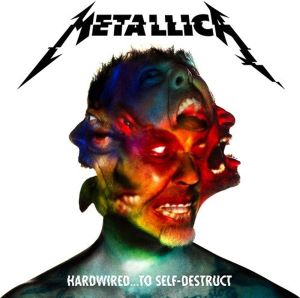
6 – Hardwired … To Self Destruct (2016)
If Death Magnetic was supposed to be a return to form, Hardwired truly was, at least in places. Several of the songs here are the kind of bangers not really heard since 1991, if not even earlier. There are some secondary tracks on this huge album, to be sure, but even some of those are pretty nice. This album did recapture the magic in some way and it was damn nice to hear. The title track and Spit Out The Bone are the best work Metallica have cranked out in a very long time.
5 – The Black Album (1991)
I’d almost be cheeky and rank this lower but that would be dishonest – while I’m not in love with the whole thing, there some damn great songs on here. Wherever I May Roam and Sad But True are stellar songs, a handful of others are very nice and a few are good without being great. There are some, mostly towards the end of the album, that I can’t quite get into, but overall this was a success, both in my book and in the sales book. Can’t really argue with it.
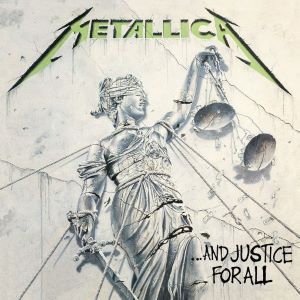
4 – …And Justice For All (1988)
The first album without Cliff Burton could have went any number of ways, but Metallica were able to alter their formula some without sacrificing the core of their sound. Harvester Of Sorrow always gets me going, and One is a masterpiece and one of the band’s most iconic songs. While it sounds odd production wise (and lacking in bass), it makes up for that with a batch of great songs.
And this was the album I talked about in much more detail back on Monday – post here.
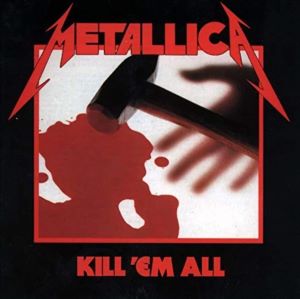
3 – Kill ‘Em All (1983)
The debut was a monster of a record – putting thrash on the map when the genre wasn’t a known quantity yet outside of local live scenes. This was very hard-hitting, fast and savage metal that pulled no punches and delivered a fist full of great songs. Not a weak note here and a still beloved collection of metal all these decades later.
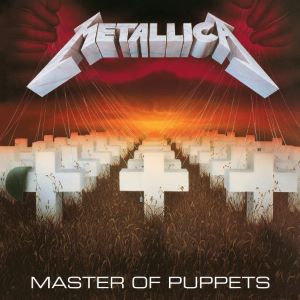
2 – Master Of Puppets (1986)
The band’s third album is often cited as a “perfect” metal record, and for good reason. All eight songs are total masterpieces and every note hits hard. The album is crisp, clear and totally devastating. It set the band on a path of superstardom not touched by any other thrash act.
I had this record as an Album of the Week awhile back, here is that post.
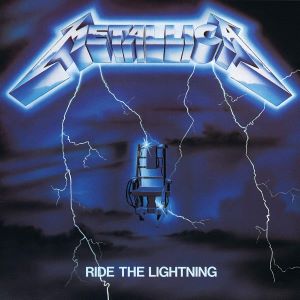
1 – Ride The Lightning (1984)
Metallica’s second effort still possessed a bit of the savage energy found on the debut, but the songwriting refinement here ramped things up exponentially. Some stuff still hits heavy, like For Whom The Bell Tolls and Creeping Death. And the band’s first ballad Fade To Black was a metal masterpiece. While some find fault with a few songs on the album, especially Escape, nothing on the record bothers me any. I’ve played this album thousands of times and I’ll likely play it thousands more before I push up daisies.
Ride The Lightning has been an Album of the Week in the past, here is that post.
That does it for the Metallica album ranking. I doubt this is a “final” ranking as I would expect at least one more album, but all that can be sorted out down the road. And while I’ve talked plenty about them this week, this will be far from the final time I discuss Metallica on here – they are a lynchpin in heavy metal as well as my own musical formation.
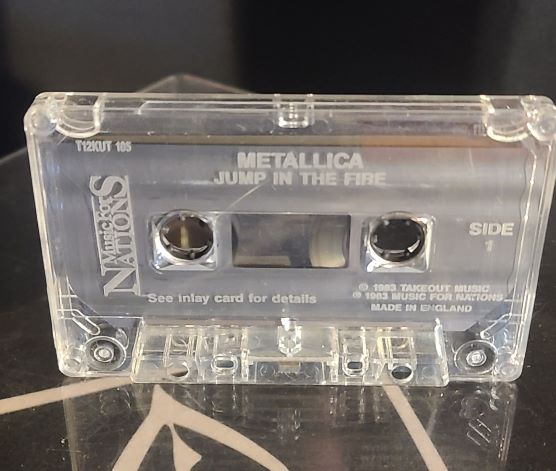
Today I’m going over the two Metallica singles I have in my collection, both on cassette. These are the early singles Creeping Death and Jump In The Fire. Both were released in Europe when Metallica was distributed by Music For Nations over there, I don’t think these singles ever got North America releases.
These are somewhat collectible, owing to them being Metallica releases. They aren’t all that rare and can be had without coughing up huge cash, at least for the cassettes. They do get price gouged a fair bit, but these aren’t worth a huge premium or anything.
Creeping Death
I’m going out of chronological order just because this one was sitting on top of the stack. First up is Creeping Death, from Ride The Lightning. It is absolutely one of my favorite Metallica songs. It’s one I’ll probably talk about in the future in more detail so I won’t get too much into it here, but it is a total beast of a song and is a staple in live sets, I believe it is their most played song. It really doesn’t get much better from Metallica.
The two B-sides are cover songs and are very iconic in Metallica lore. Up first is Am I Evil?, a song that has become an anthem for the originators, England’s own Diamond Head. While Diamond Head’s original did make some waves in the UK, they did not break international markets until Metallica’s cover.
The original is a fantastic tune and Metallica’s version is amazing. This might be the best cover song they ever did, and they’ve done quite a few. It was a boon to Diamond Head, who never broke huge but have had a respectable career.
The obscure picks for cover songs theme marches on with Blitzkrieg. This is a case of the song Blitzkrieg by the band Blitzkrieg. Sadly it was not also from the album Blitzkrieg, as it was a B-side to their debut single and they have never had a self-titled album.
This is also a well-executed cover and one that’s still a highlight of Metallica’s covers selection. Blitzkrieg the band have been on-again and off-again over the decades but were active as of 2019.
Jump In The Fire
The next single on the list is Jump In The Fire. This song is from the debut album Kill ‘Em All and the single was released in early 1984, roughly six months before Ride The Lightning hit shelves. This one has three tracks and repeats the program on both sides. I’ll still use A-side and B-side to denote things but I guess they aren’t technically correct terms here.
The A-side is a fantastic cut from the ferocious debut album. James Hetfield could wail back in the day and it’s on full display here. This is also one of Dave Mustaine’s contributions to the group (no shaking his immense influence).
The two B-sides promise live tracks in the form of Phantom Lord and Seek And Destroy, both also from the debut album. The thing is that both songs are fake live tracks – Metallica recorded alternate versions of the songs and added crowd noise to the recordings. Odd choice but I’m guessing capturing the band live during their first tours didn’t result in the best audio, so this was the chosen alternative. It’s fine from a curiosity standpoint but these B-sides clearly don’t push any real value.
That’s it for my Metallica cassette singles. Tomorrow I’ll wrap up Metallica week with my album ranking.
Yesterday I talked about two line-up changes from Metallica’s early days. Today I’ll get into the two remaining changes, both at the bass position. (Three if you ask Bob Rock, I guess…)
The first change came in 1986 and was born of tragedy – a bus accident claimed the life of Metallica’s legendary bassist.
Cliff Burton dies, succeeded by Jason Newsted
On September 27, 1986, Metallica’s tour bus crashed in Sweden. The cause is disputed – a point I’ll leave alone here. The result was the death of Cliff Burton at 24 years old.
Cliff’s death was an obvious shockwave through the Metallica camp, as well as the metal scene in general. Cliff was a massive force and contributor to the Metallica sound, his presence was going to be missed no matter what.
The band did decide to press on and after a huge audition process, chose Jason Newsted for the role. Newsted hailed from Arizona thrashers Flotsam And Jetsam, who had just been getting the ball rolling on their output. F&J would go on to have a nice career, but Newsted would find something far beyond nice in Metallica.
The lineup formed in 1987 would stay intact until 2001. In this period, Metallica would become one of the best-selling bands in the world. Their first effort with Newsted, …And Justice For All, would become their biggest seller to date. Then in 1991, their self-titled effort smashed records and stands as one of the best sellers of the 1990s.
Success would not necessarily be easy for Newsted. He wound up with just a few songwriting credits during his time in the band, which saw four full-length albums released. Jason was a total sparkplug when playing live, he was often cited as a highlight of the show for his energy and headbanging. The physical toll of that, coupled with another huge issue, led to him departing the band in 2001.
Jason Newsted quits, replaced by Robert Trujillo
When Jason Newsted announced his departure from Metallica, it wasn’t a quiet event. The band happened to have a film crew around them, shooting for a very drama-filled movie that became Some Kind Of Monster.
Newsted cited physical issues from touring, as well as discouragement from the band when he wished to do a side project. The discouragement came solely from James Hetfield, Newsted originally found the rest of the band and management keen on the idea.
Newsted would perform in a variety of bands over the years after Metallica – with that “side project” Echobrain, a tour with Ozzy Osbourne, as a member of Voivod and in a self-named band. Newsted disbanded that outfit sometime in 2014, citing the extreme expenses he was funding to take the band on tour. He has sporadically appeared in various capacities since, though not with a full time act.
For Metallica, they were between a rock and a hard place as they were working on their next album. With a lot of delays and drama found in plentiful supply on the Some Kind Of Monster film, the band’s producer Bob Rock filled in on bass for the album. It did at least come off as if Bob thought he was joining the band in a full capacity, though I don’t wish to speak for someone I’ve never met.
In any case, the audition process for a new bass player commenced, also documented on Some Kind Of Monster. The band chose Robert Trujillo, a career musician with an impressive resume spanning from Suicidal Tendencies to Black Label Society and Ozzy Osbourne (Newsted directly replaced Trujillo as Ozzy’s bassist, in fact).
Trujillo hit it off well with the established members of Metallica and was accepted fully into the band, something that never found his predecessor Jason. And it’s fair to say that Robert’s embrace into the group was the result of lessons learned from Newsted’s departure, James and Lars have said as much over the years. The band have released two albums with Trujillo and have toured extensively as the bearers of a now 40 year legacy as metal’s most successful band.
That about does it for the line-up changes in Metallica. There are other things that could be discussed, like fill-in guitarists when James has injured himself, the luminaries who auditioned for the bass role in 1986 and 2001, and the band’s idea to bring in John Bush as a vocalist and let James concentrate on guitar. But all of that is side stuff that can wait for another day. For today I’ll rest on the band’s present (and likely final) construction, ending with a final mention of Dave Mustaine simply because it’s not a Metallica discussion without Dave Mustaine.




 The Crooked Wanderer