A Quick Site Update

It’s the weekend and I wanted to take a minute to go over a few things that are or aren’t happening around here, plus an update or two on other stuff.

An Album A Day – or not

So as you may or may not have noticed, I have ended the “Album A Day” feature. Simply put, it was taking up too much of my time that could have been used on other posts instead. Being “behind” by a week was what really threw me off – I started getting mixed up on what should be where and after thinking about it a bit I said the hell with the whole thing.

Now, I do like the “mini album review” format and will probably use it here and there. It just won’t be every week to keep track of something that doesn’t need to be kept track of. It’s a nice way to briefly cover stuff when I don’t want to write a ton of words about it.

Album Of The Week – still going

Speaking of writing a ton of words, the Album Of The Week series will go on but will undergo some tweaking soon. (Tweaking as in changes, not tweaking as in what a lot of my fellow proud Missourians do)

First I’ll be changing up the title to simply state what the album is. No less than three times already in 2023 I’ve almost started posts for albums I’ve already done, therefore time to get rid of the old title format. I probably should have done it that way in the first place but whatever.

Also, I’ll be slowly working on how I present the actual posts. I want to trim them up a bit and also just talk more about the music itself. Some of the posts have gone too far into facts and figures or whatever and it’s kind of boring and it doesn’t really communicate anything. This change will be more gradual and worked in over the next little while. Beyond that, everything remains as is for the AOTW.

A new thing? Yep.

I have a new post format I’ve wanted to do honestly since I started this site in ’21, but for various reasons I just never got around to it. By the end of March I hope to have it going. It will be a new every Friday thing and will mostly consist of blurbs, news and notes sort of things. There are times where some dumb or crazy music headlines hit and it’d be nice to discuss them, but it’s also a waste to dedicate a whole post to them. And a post format like that allows for including whatever other kind of stuff might pop up. Should be going before April on this one.

Iron Maiden, Iron Maiden, Iron Maiden, Iron Maiden…

Clearly I talk about Iron Maiden a lot and no, that isn’t going to change. The singles series is in full swing now. I have one more on the way and that will make 30 to write about. I will be capping the initial run at that – it will keep the series running through the end of July, if I counted right. I’m starting to run into a wall on getting more, that wall is called $$$$$. As time goes on I’ll probably accumulate a few more and at some future point I might revive the series to flesh out the ones I got after this first run. The Blaze era is especially underrepresented on the list now and some of those are not horribly priced, but my wallet has suggested I keep money in it for the time being so I can get to the other stuff later.

After the singles run is over I’ll take on another 13-week long or so series, that being the live albums. And at some point I’ll also make a very ambitious and probably stupid run through their list of songs – no, not my top 20 favorites or whatever, but all 180. Might as well rank them, they’re all sitting right there. When I do that I’ll blitz those posts out more than once a week to get it over with and it won’t replace either the singles or live album series. I’ll just have a shit ton of Maiden going at once I guess.

One more Maiden post is on the horizon, and fairly soon – I’m long overdue for a ranking of their studio records. I had planned to do that as one of my very first posts when I started this blog, but of course as I was in the setting up stage of that, they went and dropped Senjutsu and thus screwed up my plans. Now the album is over a year old so I have a window of opportunity to strike before they announce their next 10 LP box set of an album.

I think that pretty well covers everything. I expect to be posting 4 or 5 times a week here soon, with all this other stuff as well as my revolving series of other occasional posts. Once I threw out the Album a Day thing I also got hit with being far busier at work than I had been in winter, so that kind of screwed me up a bit but things are rolling along smoothly now. I’ll end with a clip of something NOT Iron Maiden just to mix it up a bit.

Guns N Roses – Unplayed Songs Live

Awhile back I had a look at the songs that Iron Maiden have not played live. It was a fair run through a decent portion of their catalog and kind of a fun exercise to guess what might actually see the light of day on stage versus what almost certainly will never get played. The idea for it came from a Loudwire article, and the site has struck again with the “songs never played live” series. This time the subject is Guns N’ Roses, as the title of this post probably hinted at.

Now this will be a radically different post – GnR only have four songs never played live. I was a bit shocked by that information. While the band were relatively inactive for a long time and do only have what qualifies as four full-length studio releases plus some originals on an EP, four is a very surprising and low number. It means they have run through the vast majority of their catalog in a live setting.

It’s not surprising that all of Appetite For Destruction has been played live, they probably took care of that in the late ’80’s as their star was burning super hot. The GnR Lies EP also has a few original tracks and all have been played live at least a few times, including the mega-controversial song One In A Million. And if we fast forward to 2008’s Axl-led spectacle Chinese Democracy, we will find that those too have all been played live. As a note, this doesn’t count cover songs, so that one thing they released in the mid-90’s before they split isn’t on here.

Yes, in order to pinpoint the unplayed songs we need to visit 1991 and the infamous Use Your Illusion double albums. It is these two discs that all four of today’s songs hail from. It’s honestly more shocking to me that they only didn’t play four of these songs.

Way back when I started this site I did a pretty in-depth dive into the UYI albums. That saga began on this post for anyone interested in a far deeper dive than what I’ll get into today.

This post is pretty quick and simple. Four songs, let’s see what they are and whether or not Guns N’ Roses should throw them in a setlist someday.

Don’t Damn Me

This is the lone unplayed cut from Use Your Illusion I. It’s not a song I’m all that into. It isn’t horrible but there’s nothing special about it, at least to me. It would be “fine” in a live setting but also the band has a billion other songs that are way better so this would be taking up space. I could see them playing it one day just to knock it off the list.

Get In The Ring

This, like the rest of the list, is from Use Your Illusion II. And this one surprises me. This is a massive, swear-filled diss track aimed at the music media who Axl and company despised at the height of their fame, which was roughly 1989-1991. I suppose opinion is divided on this song as opinion is on everything, but I and plenly of other people always really liked this one and I’m honestly a bit floored that they haven’t played it out.

And don’t be fooled by the live crowd chanting in the song – Axl had a June 1991 crowd specifically chant “Get In The Ring” in order to record it and use on the album. This wasn’t done live even though crowd noise is involved.

It wouldn’t shock me at all if the band decided to give this one a go. I could see them maybe not doing Axl’s rant that names off a bunch of journalists and maybe that was one reason why they didn’t play it. But I’d say this one really ought to get some stage time.

Shotgun Blues

Another bit of a surprise and for me a total badass song. I always liked this one and I think it’d work great live. I don’t know what gives here and this is one they need to get into a setlist ASAP.

My World

The final song on UYI II is a total pile and I feel the exact opposite about it as I do about Shotgun Blues. I’d be mad if I heard this shit live, that could be mitigated if they were doing it for the sole purpose of totally clearing their unplayed queue. The better move would be to drop it from the album so it doesn’t count on this list anymore.

Well, that’s about it. Honestly not a lot here and that’s totally fine, I was feeling kind of lazy anyway. I have a feeling that GnR are the type to actually track this kind of stuff and they might throw down on these just to say they’ve played all of their originals live. Or maybe not, I don’t know. I wouldn’t be surprised. And since their ticket prices are well outside of my reach I don’t have to be worried about shelling out hundreds and being stuck hearing My World live.

The Number Of The Beast – The Iron Maiden Singles Series

Back into the Maiden singles and this time it’s the title track to the third album. We get the epic song and a live cut as a B-side.

The cover is again Eddie and the Devil, this time Eddie is holding the Beast’s severed head in hand. While there are other art pieces depicting the pair in later Maiden work, this is the end of the line for the “Eddie versus The Beast” series proper.

While the single had several pressings for different countries and was on both 7- and 12-inch formats, the content remains the same across all versions. Mine is a 12-inch European pressing.

The Number Of The Beast

We again have one of Iron Maiden’s most popular songs to go through. And right off the bat we have a bit of lore and a huge misunderstanding among the metal community – the spoken word intro is NOT delivered by famed actor Vincent Price. The band did want Price to recite the Bible verses, but Price was charging too much money so the Maiden camp passed and got actor Barry Clayton to do it instead.

After the spoken bit, the song proper opens with Bruce Dickinson going in full air raid siren mode. Then the verses roll through into the familiar chorus with the “bad number” 666 and all of that. The song is iconic both in Maiden’s lexicon and in heavy metal in general. I don’t know of a live setlist that doesn’t have this song in it.

The album and single would raise the ire of those engaged in the “Satanic Panic” of the 1980’s, with record burnings and sermons aplenty launched against Maiden. These protests did not have the desired effect, it only put Iron Maiden’s name out there more and helped the single get to number 18 on the UK charts. And the album would be a number one UK hit and gain platinum certification in many countries.

Remember Tomorrow

The B-side is a cut from the debut album, this time performed live with Bruce singing. The song was played in Padua, Italy in October of 1981 and was just three days after Bruce’s first gig with Maiden.

Remember Tomorrow is an interesting tune, a bit of a moody track that picks up later and gets into the signature Maiden riff and rhythm stuff. Hearing Bruce absolutely wail on it, actually dueling the guitar in pitch toward the end, is pretty impressive. This song did get a little bit of stage time in Dickinson’s first run with the group, mostly in the early 90’s before Bruce left, and also featured again in a some 2005 setlists. It’s a really cool live cut here that showcases Bruce very early in his first Maiden tenure.

This single would be the last Iron Maiden release for drummer Clive Burr. Different things have been said about his departure, though I wasn’t there so I don’t know what exactly happened. Burr would go on to drum for a number of other bands before suffering a multiple sclerosis diagnosis in the late 1990’s. Iron Maiden would play a role in fundraising for Burr’s medical needs and Burr’s cause was given a spotlight until his unfortunate death in 2013. Burr’s drumming style had a pretty massive influence on the heavy metal world. Burr’s replacement in Maiden, which we’ll obviously get to next week, would lead to a stable line-up that holds together for the next several singles.

Note – Remember Tomorrow starts at 4:49 in the following video, I use it as it’s from the band’s official channel and won’t get yanked.

The Iron Maiden Singles Series

Live! + One

Running Free

Sanctuary

Women In Uniform

Maiden Japan

Purgatory

Twilight Zone/Wrathchild

Run To The Hills

The Number Of The Beast (you are here)

Flight Of Icarus

The Trooper

2 Minutes To Midnight

Aces High

Run To The Hills (live)

Running Free (live)

Stranger In A Strange Land

Wasted Years

The Clairvoyant

Infinite Dreams

Bring Your Daughter … To the Slaughter

Holy Smoke

Be Quick Or Be Dead

From Here To Eternity

Virus

Out Of The Silent Planet

Rainmaker

Different World

The Reincarnation Of Benjamin Breeg

Empire Of The Clouds

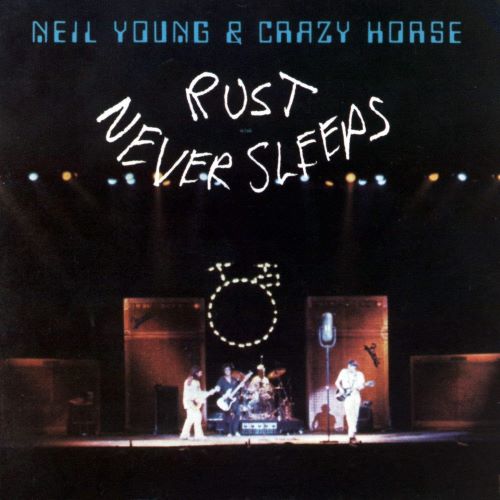
Neil Young – Rust Never Sleeps (Album of the Week)

This week’s pick goes back to the end of the 1970’s and a highlight record from one of the decade’s most outstanding artists. A tour comprising of split acoustic and electric sets fueled the idea to do the same on an album and the result would become one of the more iconic albums in a crowded discography already laden with immortal records and songs.

Neil Young and Crazy Horse – Rust Never Sleeps

Released June 22, 1979 via Reprise Records

My Favorite Tracks – Hey Hey, My My (Into The Black); Thrasher; Powderfinger

The story of Rust Never Sleeps is a bit of a long and winding one – many of the songs were collected from earlier points in Young’s career, a typical thing for a guy who has had multiple “lost” albums in the course of his history.

While Young had made waves with a folk and country-infused style, he had also veered off on other courses and was leaning hard into distorted guitars by the late ’70’s. He would marry both concepts with split-set performances on the tour dubbed Rust Never Sleeps in 1978, which would serve as the birthplace and even live studio for portions of the album.

As for the album and tour title’s name, that came courtesy of Devo singer Mark Mothersbaugh. Devo and Young were collaborating on a film project when they took time to enter a studio and work on the electric track Hey Hey, My My. Mothersbaugh threw the line “rust never sleeps” in the lyrics – it was the marketing slogan for Rust-Oleum.

Of the album’s nine songs, seven were initially recorded live and then overdubbed in studio later. An effort was made to remove crowd noise but that was not always possible with studio technology at the time. Two songs – Pocahontas and Sail Away – were not cut live and were studio recordings instead.

My My, Hey Hey (Out Of The Blue)

The album features different renditions of the same song, the opener done acoustically. The song was born of Young’s fear of becoming obsolete in music and also would shout out Sex Pistols frontman Johnny Rotten and liken his rise with the fall of the recently-departed Elvis Presley. This first version of the song also features the lyric “It’s better to burn out than to fade away,” which became one of Young’s most famous and widely-quoted lyrics. While used in a wide variety of places, it was a part of Kurt Cobain’s suicide note in 1994 and Young was greatly affected by that.

Thrasher

A masterfully done acoustic tune that sees Young rambling off on his own, away from society and its machinations. The song is actually about Young’s bitter relationship with his former bandmates in Crosby, Stills, Nash and Young. While Young and Stephen Stills were able to maintain a working relationship through the ’70’s, David Crosby and Graham Nash were on the other side of the fence and a lot of animosity came through various failings to record a new CSNY record. It’s interesting to note the actual genesis of the song of course, but even without that knowledge this is a fantastic tune.

Ride My Llama

A short tune, though far from to-the-point. Here Neil takes a trip with a guy from Mars and also rides a llama from Peru to Texarkana. Not sure what ideas or substances Young might have been engaged with here, but the song works pretty well in its fanciful outlook.

Pocahontas

Another highlight of the acoustic side of the record, Pocahontas sees Neil again approach the issue of European settlers massacring Native Americans. He had previously sung about that on his acclaimed track Cortez The Killer from 1975. Pocahontas is one of three songs from Rust Never Sleeps that were originally intended for the never-released Chrome Dreams album a few years prior.

Pocahontas is also a bit of a weird song, as Young goes from a muddled recount of the massacre, to living in the present day with Marlon Brando and the Astrodome. The song really showcases Young’s vocal abilities and creates an uplifting atmosphere despite the grave subject matter.

Sail Away

The acoustic portion of the album ends with this nice, light and airy tune that really isn’t about much more than getting away. It’s a nice, clam and smooth way to get the hell away from it all for a few minutes.

Powderfinger

It’s on to the electric songs now and another cut meant for the shelved Chrome Dreams record. Young tried doing something else with the song, namely giving it to Ronnie Van Zant of Lynyrd Skynyrd. Skynyrd never got around to recording the song before the 1977 plane crash that claimed the lives of Van Zant and others. Young would eventually retool Powderfinger for his own use here.

Powderfinger sees a young man forced to defend his home from an arriving gunboat. Thinking quickly, he decides to grab his own gun and fire on the ship, which would lead to his own death. The lyrics tell a pretty heart-wrenching tale that isn’t the conventional approach to a war or combat song.

Powderfinger is held in the highest regard – often considered one of Young’s best, and in 2014 Rolling Stone magazine ranked it as his best overall.

Welfare Mothers

The next track is a nice rock number but also a bit of a strange one – if we’re to take the song literally, then Neil is suggesting we head to the laundromat and pick up divorced, down on their luck mothers as they’re better lovers. There’s probably some kind of social commentary here that means one shouldn’t take this track literally but honestly no one really talks about this song much so the listeners are left to make their own guesses as to what’s up.

Sedan Delivery

The third song intended for Chrome Dreams appears in here electric and quite distorted form. It’s almost a punk or metal tune with its rendition here. The song could just be about some guy’s life or maybe about drugs of some kind, it’s not evident what’s going on here.

Hey Hey, My My (Into The Black)

The album closes with the electric version of the opener. They lyrics are altered slightly on this version but the song is essentially the same, just with Young and Crazy Horse bashing their way through this amped up version. It’s another of Young’s most famous tracks and has been covered by about half of all music artists in the decades since release.

Rust Never Sleeps was a massive artistic statement from Neil Young. He wove his own fears of being cast aside into the kind of riffs and noise that punk and other artists were making, and cranked out a set of immortal songs to stave off his obsolescence. And on the acoustic portion he worked within more familiar parameters to craft engaging songs that added to his legacy in the folk/country realm.

The album would reach number 8 on the Billboard Album Chart, the precursor to the Billboard 200. It charted well in many other countries as well. The album has a lone US platinum certification but that might be more of an issue with a record label’s lack of desire to re-certify albums than an accurate picture of sales figures.

A year later Young and Crazy Horse would release Live Rust, featuring both tracks from this album and other Young standards. It too would chart highly and also gain platinum certification. The somewhat unconventional Rust Never Sleeps approach paid huge dividends for Young, who was about to kick off a very strange and meandering period when the 1980’s hit.

At the end of the day, Rust Never Sleeps was a career high point for Neil Young and proof he could carry on even as he’d put some years behind him. He would strike gold again and again in the years since, both carrying on as he saw fit and also keeping his finger on the pulse of the music of the moment. The conversation over the best Neil Young album is a tough one considering both the size and scope of his total output, but Rust Never Sleeps is certainly a part of that conversation.

Nightwish – Ghost Love Score

This post was part of a series that I called S-Tier Songs. I later decided to abandon the series in favor of a simpler Song of the Week format. I am keeping these posts as I wrote them but removing the old page that linked to the list of S-Tier Songs, so that is why these posts might look a bit odd. Enjoy.

Today’s pick was not a single from its album but was picked out by fans as a highlight track right away. It has gone on to become one of the band’s most famous songs and its fame has grown, even in the midst of a major singer change in the band.

Nightwish – Ghost Love Score

Today’s song comes from the 2004 album Once. In a neat coincidence, I have previously covered Once as an Album of the Week. And after looking back at that post, it’s no surprise that I spent most of my words talking about this very song.

Ghost Love Score is a long, epic movement clocking in at over 10 minutes. It is not a simply-structured pop song with verse/chorus/repeat, rather it is a symphonic piece arranged in movements. It is in parts both progressive and classical, and bears the accompaniment of the London Philharmonic Orchestra. (That would be part of the album’s €250,000 budget) The song was composed by keyboardist and band leader Tuomos Holopainen, as per usual with Nightwish’s music.

The song is about someone looking back fondly on a past relationship. The pair are no longer together, yet the narrator still keeps a place in their heart for their former lover. This isn’t a story-song with a plot or anything like that, but the song does explore the range of emotions when looking back on lost love.

While the band and accompanying orchestra are in fine form on this run, the most-discussed aspect of this song is the performance of the singer. Original vocalist Tarja Turunen cut the studio version of the song and the live version presented above. Her performance on this song is majestic and otherworldly, though that could describe the vast majority of her singing over the years. Ghost Love Score is an operatic performance, which Turunen excels at. It is not an opera, but certainly the vocals are of that style.

Nightwish’s star was on the rise during the Once album cycle and Tarja Turunen became noted as one of the best singers in the world. Then, in a very unexpected twist, she was dismissed from Nightwish in 2005. In fact, she was fired just after the concert that the live footage above is taken from. While the drama surrounding the move is both long and not entirely clear, Nightwish was now without what many considered its star performer, and the one who made Ghost Love Score such an especially compelling song.

Turunen was replaced with Anette Olzon, a Swedish singer who had previously fronted rock act Alyson Avenue. The two albums Nightwish recorded with Olzon suited her more rock-oriented singing style and were well-received by most fans, while derided by others for not being Tarja’s work. It did stand out when Olzon performed some of the older material, as Olzon and Turunen had very different singing styles. While a lot of the discourse over these differences became toxic among fans, I don’t feel it’s wrong to point to the contrasts objectively while being respectful of Anette.

Olzon did perform Ghost Love Score live. Her renditions were well-executed and she approached the song in her style as opposed to trying to imitate Tarja, something only a select few singers on the planet can do. I wouldn’t pass judgment on Anette’s singing or make nasty remarks about her simply for not being able to mimic one of the best singers on the planet, but I’ll also admit that a song like Ghost Love Score didn’t hit exactly the same way without Tarja.

In 2012 while on a US tour, Nightwish entered another stage of drama and the result was the exit of Anette Olzon. The band already had an emergency replacement lined out – former After Forever singer Floor Jansen, another standout singer who also had been speculated as the pick to replace Tarja in 2007. Jansen stepped in to help finish the tour and then was promoted to the role of full-time singer soon after.

And this is where the story of Ghost Love Song takes another turn and the song truly propels itself into the heights of Internet fame. Nightwish performed at the 2013 edition of the famed Wacken Open Air festival in Germany. The show and some documentary footage were filmed for a release later in the year, packaged as Showtime, Storytime. Nightwish performed Ghost Love Score as part of their set and it was this performance that lit up YouTube and social media. The song became the primary fuel of the emerging “reaction” channel movement and everyone with access to a camera filmed their hot takes of Floor’s performance.

Floor Jansen was honestly the perfect singer for Nightwish – someone able to handle multiple styles yet also sing in the range and scope that Tarja previously offered. Her Wacken performance of Ghost Love Score was a complete home run and the song’s viral reaction would introduce Nightwish to new fans all over the world.

It isn’t a terribly common thing for a new singer to come in and knock an old song out of the park, but in the case of Nightwish and Floor Jansen that’s just what happened. Floor was able to fill Tarja’s shoes and even add her own element to the song, in a case of one of the best singers in the world tackling the work of one of the best singers in the world. Ghost Love Score still lives on today in scores of YouTube reaction videos, even if that format has grown beyond stale at this point. Hard to knock it when it brings a masterpiece such as this to the masses.

Why is this an S-tier song?

Ghost Love Score is a wonderfully composed epic that combines the realms of classical music, heavy metal and even film score in a way that suits many fans of all those areas. And its centerpiece is the performance of the singer, a song that has now featured a few of the world’s best vocal talents that have raised the bar of talent and performance in metal.

Run To The Hills – The Iron Maiden Singles Series

Today we hit a milestone mark in the Maiden singles series – we are now to the third album The Number Of The Beast and therefore Bruce Dickinson has joined the band as the replacement to Paul Di’Anno. This marks the start of the “golden era” for Maiden and the bulk of their epic releases fall in this time frame.

Run To The Hills features another stunning Derek Riggs cover piece depicting Eddie and The Beast in a fight. The cover was the same across different versions of the single, in fact this single has no differences among versions – everything is just different pressings for various countries. Art and content are the same through all. Mine is a 12-inch paper sleeve version. Also we’re on a run through several singles that are simply A-side and one B-side, it’ll be a little while before something with multiple B-sides pops up again.

Run To The Hills

On the feature side is one of Iron Maiden’s most iconic songs. Run To The Hills is a very popular tune, having been a part of many setlists over the years. I’d wager it’s one of their top 5, if not top 3, most well-known songs.

The song is about the plight of the Native Americans at the hands of the invading European-American forces. Such a song could come off as boneheaded or worse, but Maiden handled the subject matter with suitable degrees of both seriousness and accuracy. The first verse’s lyrics are from the perspective of a Cree native who is lamenting the invasion and slaughter, while the second verse is told from an American cavalryman’s perspective. Note that this verse shift happens before the chorus is delivered. The final verse pulls back into a distant perspective and harshly recounts the brutal nature of the actions against the Cree.

While the subject matter is grave, the song’s iconic chorus is simple and, at least musically, uplifting. For many the cry of “run to the hills, run for your lives” would be one of the first things heard from the lips of the new singer Bruce Dickinson. Iron Maiden was re-armed with a potent young singer, and here was the first taste of what would become heavy metal history. The “Human Air Raid Siren” was just getting started.

Again, this is one of Maiden’s most-played songs live and most recognizable on the airwaves. Some feel maybe it’s been played a bit too much but I personally don’t get enough of hearing it.

Total Eclipse

The B-side is an interesting case, as it was a song intended for the album but cut in favor of Gangland. The band have long expressed regret over the decision. Reissues of The Number Of The Beast have included this song, and last year’s vinyl only reissue actually did replace Gangland with Total Eclipse. While I’m personally fine with the other reissues that have all the songs, I can understand last year’s decision as they had to keep the album to one record to accommodate a (very awesome) double-LP live album press as well.

I’d say I agree that Total Eclipse is a better song than Gangland, but of course that makes this single that much better. The song is a doomsday track, one of many that Maiden would crank out over the decades. It has the sound and feel of the first few albums, but of course with Bruce wailing away on it. I’d say it’s one of the better original non-album cuts the band did.

That does it for this week’s single. Next week it’s on the iconic title track from the iconic album, and another point where we’ll say farewell to a member of the band. And there a few things sifting through the mail system on their way to me to expand the list a bit further, including at least one representation of the Blaze era.

The Iron Maiden Singles Series

Live! + One

Running Free

Sanctuary

Women In Uniform

Maiden Japan

Purgatory

Twilight Zone/Wrathchild

Run To The Hills (you are here)

The Number Of The Beast

Flight Of Icarus

The Trooper

2 Minutes To Midnight

Aces High

Run To The Hills (live)

Running Free (live)

Stranger In A Strange Land

Wasted Years

The Clairvoyant

Infinite Dreams

Bring Your Daughter … To the Slaughter

Holy Smoke

Be Quick Or Be Dead

From Here To Eternity

Virus

Out Of The Silent Planet

Rainmaker

Different World

The Reincarnation Of Benjamin Breeg

Empire Of The Clouds

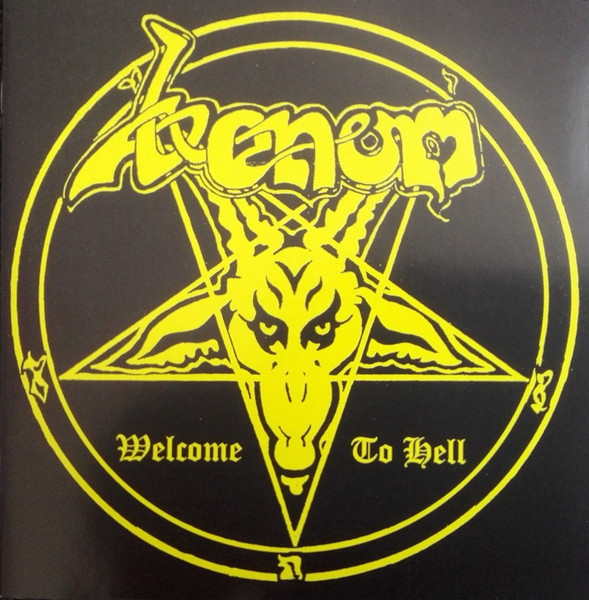
Venom – Welcome To Hell (Album of the Week)

Two weeks in a row for debut albums – this week it’s a first offering from a band that would cast a wide influence on what would come to be known as extreme metal. While much of early 1980’s England was in the midst of the New Wave of British Heavy Metal scene, one band would take noise, speed and Satan to a different level.

Venom – Welcome To Hell

Released December 1981 via Neat and Combat Records

My Favorite Tracks – In League With Satan, Live Like An Angel, Welcome To Hell

Venom was formed when the three core members eventually came together out of the ashes of other bands. Conrad Lant would handle bass and vocals, Jeff Dunn tackled guitar and Tony Bray sat on the drum throne. The three would choose stage names – Cronos, Mantas and Abaddon, and be more known by those names in the pre-Internet era. Much of this first album was composed of tunes that Cronos and Mantas each had worked up in some stage and brought to their new band’s sessions.

There were two other members of Venom early on, but both Alan Winston and Clive Archer would leave the group before the recording of the album.

Venom would record their early demos at Impulse Studios in the Newcastle area, where Cronos had a job and traded work for Venom’s studio time. They would land a record deal with Neat, a British label who also happened to own Impulse Studio. Venom recorded the album proper in a few days, and Neat released the record after a few more days and not much in the way of mixing and mastering. This raw, unpolished sound was not entirely intentional on the band’s part but would wind up being a key point of influence on the later black metal movement.

Venom would use overt Satanic imagery and lyrical fare as an attention getter, but would also fully commit to the gag in a way that pushed beyond the “quasi-satanism” of Black Sabbath and earlier acts. The band’s interest in Satanism and the occult would play into the Satanic Panic of the 1980’s and even later land the group a coveted spot on the PMRC’s Filthy Fifteen list. (I’ve covered the list in the past here).

Today’s album holds 11 tracks with a running time near 40 minutes. There won’t be much in the way of technical proficiency to discuss, but a lot of ripping through songs about evil and lust and the influence many would bear later on the metal scene.

Sons Of Satan

It’s fair to call this a collision of musical parts being played together at once as opposed to a cohesive song. The lyrics implore the righteous youth to abandon their path and join the satanic Venom legions. And perhaps against the odds, Venom would succeed in their dark recruiting mission.

Welcome To Hell

The title track is a much more put-together affair than the opener, though still swamped in the lo-fi buzz that would come to be a defining point of the band. The lyrics are a crude pounding through the glorification of Hell and the end of the world, with a spoken word portion of Psalm 23 from the Bible thrown in because why not.

Schizoid

While the title implies a mental disorder of some kind, the song is about a serial killer. It’s a pretty good song though it’s hard to ignore the awful drum sound here, certainly a case of something that would have sounded better with more work in the studio.

Mayhem With Mercy

A brief instrumental that isn’t of note itself. The Norwegian black metal band Mayhem would name themselves from this track and then go on to live in infamy in the 1990’s.

Poison

A nice song about a girl who entices the song’s narrator, though the girl is of course evil and all that. The lo-fi production works pretty well here. It is worth mentioning that hair metal act Poison did NOT name themselves after this track.

Live Like An Angel

A very nice song here that would be an early influence on thrash metal. This song would be bundled with In League With Satan for release as a double A-side single. This did illustrate that Venom’s primitive sound was down more to studio limitations than musical effort.

Witching Hour

All hell breaks loose on this, one of the most celebrated tracks from the album. So lo-fi it can almost hurt to listen to, but also a fantastic slab of sick heavy metal. It’s pretty easy to find a cover version of this song on any number of underground metal bands’ albums.

One Thousand Days In Sodom

Bit of a concept piece here, I guess, as Venom explores the sin and decay of the city of Sodom, as told in the Bible. It should be no shock that Venom’s recounting of the story does not align with Christian teachings. A very nice riff here and some pretty well-done songcraft. It is widely reported that the German thrash band Sodom named themselves from this song, though I can’t locate actual confirmation of that tidbit.

Angel Dust

In keeping with the lyrical themes that piss off the “moral majority,” we now have a song about drug use. Angel dust is the common street name for PCP, which is honestly a pretty messed up drug. While the song is clearly glorifying drug use, I don’t recall that the members of Venom were particularly taken with drugs, this is just another character piece.

In League With Satan

We are now at what is largely considered the highlight of the record. In keeping with actually doing everything that other bands were incorrectly accused of, the beginning features a backwards-recorded Satanic message. And the main lyrics of the song have the similar Satanic messages said normally. This is a very nice and evil sounding song that hypnotically marches through its dark message and generates the kind of sound that other metal bands would strive for.

Red Light Fever

The album closes with a savage rip through a song that is not about running red lights in traffic, but rather the seedy red light districts of infamy. While Cronos finds himself a good time gal, he realizes that she’s just doing her job and his moment of glory is just a moment.

Welcome To Hell was the start of a sound and scene that would not light up mainstream sales charts but would spread a wide influence across what would become new strains of heavy metal – not only ignoring the criticisms of theme and imagery, but embracing those themes. Venom’s second album Black Metal would give a name to the most infamous of these subgenres of extreme metal, and Venom’s honestly unintentional lo-fi sound would shape the early recordings of that movement.

Venom would gain notoriety for their sound and antics, but were outpaced by the movements of other metal bands. By the end of the 1980’s thrash metal was king and several versions of extreme metal were entering their prime years. Venom themselves would go through a series of line-up changes and dramas, though they are still active with Cronos being the sole original member and have released 15 studio albums with a variety of line-ups over the years.

Venom and Welcome To Hell are viewed in a positive light in terms of influence and legacy, though in the realm of sound they aren’t particularly noteworthy among critics. Yes, the album does sound like shit. Listening closely today it’s a bit of a slog to get through, though for me personally there are worthy songs under the layers of badly done studio work. But I imagine this was a different thing to hear in the early 80’s when the average listener didn’t have the context to understand recording techniques – this sounded pure evil.

At the end of the day, even if it sounds like a bad attempt at recording, the influence of Welcome To Hell far exceeds any technical limitations. For all of the finger wagging at heavy metal and its supposed immorality, Venom were actually providing that unironically. In the family tree of extreme metal, this is the trunk.

Twilight Zone and Wrathchild – The Iron Maiden Singles Series

It’s back into the Iron Maiden singles and today it’s time to bid farewell to the Paul Di’Anno era. We’ll do so in style, as we have what constitutes a “double A-side” single, including one of the most iconic songs from the early years.

As with a lot of Iron Maiden artwork, the cover is a great piece that also generated some controversy. A woman is holding the death tarot card while a ghostly visage of Eddie stands behind her. Some dull-witted people took it to mean that Eddie was stalking the woman and about to commit violence against her, while in fact Eddie in this art is dead and is in the room with his still-living lover. The picture on the side is signed to Charlotte from Eddie, so the attack angle was (probably) unwarranted.

There is another possible bit of trivia here, though it might be coincidence – the woman’s name is Charlotte, the famous subject of the song Charlotte The Harlot from the debut album. Charlotte would appear in a handful of other Maiden songs, with her saga apparently ending in a future entry of this singles series. Twilight Zone the song is not part of the Charlotte saga so I don’t know if this woman on the cover is the infamous Charlotte of the other songs, but maybe she is.

There are several pressings for this single in multiple formats but in the end the content is the same, same cover and same songs. Mine is a German pressing, probably easy to spot with the text in German on the back cover. And, in typical Maiden fashion, here is the official YouTube offering with both sides of the single in one convenient video.

Twilight Zone

The first A-side is a short but sweet tune that appeared on Killers … well, sort of. The US and Canada got Twilight Zone and Japan got it as a bonus track (they always do get bonus tracks), but the UK did not get this song on the album, so the single became another collectible.

The song packs a nice punch, it has a groovy riff and pounds along in typical early Maiden fashion, with Paul Di’Anno showcasing his vocal talents in a song that is lyrically wordy for being so short. The subject matter is in line with the cover art, as the narrator is dead and longing for his still-living lover.

And for one other little bit of trivia – Twilight Zone is Iron Maiden’s shortest song with lyrics. It beats out Invaders and Burning Ambition by a few seconds. I found this out in a YouTube comment so my source is totally unofficial, but it sounds right.

Wrathchild

The “other” A-side was an album track for all territories and is most likely the best-known song from the Killers album. This is Maiden firing on all cylinders and pounding through a tale of vengeance – a child was abandoned by his father, the child then grows up and seeks to find and end his deadbeat dad.

Wrathchild has been a staple of Maiden live sets. According to Setlist.fm the song is their 8th most played live. Even when factoring in a margin of error, I’m sure that’s an accurate figure.

The odd story of Wratchild being considered an A-side is really just a business decision. Steve Harris relayed that the band could not afford to cut a video for Twilight Zone and they already had live footage for Wrathchild filmed, so they deemed Wrathchild a “single” so that they could offer it up with video if needed.

The single did pretty decent as far as singles go, hitting number 31 in both the UK and US, as well as 27 on the French charts. The band were spreading their wings and getting to be a known quantity.

And, as stated in the start, this is the point in the series where we bid Paul Di’Anno farewell. His tenure in Iron Maiden was brief but includes two well-regarded albums. Di’Anno would go on to front a variety of projects over the years before health concerns limited his activities, though he is having another go at a small tour schedule this year. I’ve always enjoyed his Maiden run and the pretty unique sound he had coupled with the band’s then-strange blend of metal and punk.

That does mean we’re getting to the next era of the band and the glory years of Iron Maiden. But hey, that’s for next week.

The Iron Maiden Singles Series

Live! + One

Running Free

Sanctuary

Women In Uniform

Maiden Japan

Purgatory

Twilight Zone/Wrathchild (you are here)

Run To The Hills

The Number Of The Beast

Flight Of Icarus

The Trooper

2 Minutes To Midnight

Aces High

Run To The Hills (live)

Running Free (live)

Stranger In A Strange Land

Wasted Years

The Clairvoyant

Infinite Dreams

Bring Your Daughter … To The Slaughter

Holy Smoke

Be Quick Or Be Dead

From Here To Eternity

Virus

Out Of The Silent Planet

Rainmaker

Different World

The Reincarnation Of Benjamin Breeg

Empire Of The Clouds

Tales From The Stage – Kreator and Accept

Today I’m going back in the time machine to 2012. It seems odd to have to look so far back for what was just a recent year, but that’s what getting old and going through a series of crazy world events does, it puts a lot of distance to even the recent past.

2012 was kind of funny – it was the year the world was “supposed” to end, based on some idiot’s interpretation of the Mayan calendar. The calendar did not end, it just went to a new cycle. And, as we saw, the prediction was 8 years early.

Anyway, the point of this September evening was to convene to see two legends of German metal – Accept and Kreator. Accept were into their second album with “new” lead singer Mark Tornillo and Kreator were running a stable line-up and touring behind the 2012 album Phantom Antichrist.

This was quite a twin billing, both were bands I had never seen so this was a great way to get two off the bucket list at one time. The show was in Kansas City at a decent sized club called The Beaumont. I’d seen a few shows there but sadly the club closed at some point after this concert.

It’s also worth mentioning that this show was just two days after another trek to Arkansas for a concert. I’ll give that show, highlighted by St. Vitus, a post someday, but there were a lot more bands involved with that so I’ll save it for another time when I’m less lazy. It was a true “700 miles of metal” weekend.

So on to the night of German metal. The show was opened by Finnish death/doom outfit Swallow The Sun. I’m just gonna be real about it – I haven’t listened to Swallow The Sun much at all, couldn’t tell you if I like them or not, and I don’t remember a damn thing about their set that night. I’m guessing that I wasn’t moved given my lack of memory.

Accept was up next and yes I absolutely remember their set. Roughly half the set comprised songs from the (then) two albums fronted by Tornillo – Blood Of The Nations and Stalingrad. While some Accept fans could not accept (…) the departure of classic vocalist Udo Dirkschneider and his replacement with Tornillo, I have been one to love this newer era of Accept. Hearing the new songs aired out live was a fantastic experience.

Accept were phenomenal on that night, cutting through both new stuff and the classic era songs like Restless And Wild and Metal Heart. The set ended with the band’s most famous songs, Fast As A Shark and Balls To The Wall. It was an electric set, Mark and the band were totally on point all night. It rang truer than the huge stacks of amps lined up across the stage, which were totally not real and a bit comical, but it’s all good.

There is no good footage of the specific tour I saw, so here’s an actual pro-shot video from a release they did awhile later.

Kreator were up next. This was my first (and to date only) time seeing the legendary German thrashers, who have been one of my favorites for a long time. Their 2000’s resurgence was spectacular and I was very happy to be finally seeing the group live.

There is one thing about Kreator and live shows – I’m not sure that if, in the course of their now 40 year history that they are allowed to soundcheck before gigs. That might be putting it a bit too harshly, but the band does have a reputation for not caring all that much what they sound like on stage. They have done live albums that sound fine, but in a random bar in Kansas City they might not give as much of a shit about their sound.

I will say that yeah, they were loud and not “dialed in,” but I could still make out their songs fine. It wasn’t the worst sounding live show I’ve heard. There was no dissecting the finer points of their sound but hey, this is a loud thrash band and you might as well roll with it.

Kreator had a set that was focused on their most recent album Phantom Antichrist. The album was a good one, one of several in a row for the group and so it was nice to hear some cuts from it. Beyond that they jumped around to several points of their long career, playing everything from 1986’s Pleasure To Kill to 2009’s Hordes Of Chaos. It was a lot of title tracks and a look at several parts of their catalog. A few songs were bundled into two-part medleys, including the classics Endless Pain and Flag Of Hate. I’m not normally a medley guy but this worked out fine.

One funny part was toward the end of their set. They played The Patriarch, which is the instrumental intro to Violent Revolution. It’s one of my favorite Kreator songs (and albums), so I jumped up front to headbang along and shout some lyrics back. I’m usually pretty subdued during shows but I wanted to jam out for a little bit.

Holy shit, the people up front acted like I was going insane or something. It’s like these people had never been to a metal show before. These people, directly up front, acted like I was punching babies or something. I don’t know what was wrong with them, but I went ahead and rocked out to the song just the same. I don’t know their deal, I saw Testament in Kansas City a few years prior and that crowd was absolutely electric, but these people were sticks in the mud.

Anyway, Kreator got done with their not optimally mixed but still pretty good set and the night was over. I made it to the hotel and back home the next day without being apprehended for a moment of energy and headbanging. It was nice to see Kreator, but Accept was the true toast of the evening.

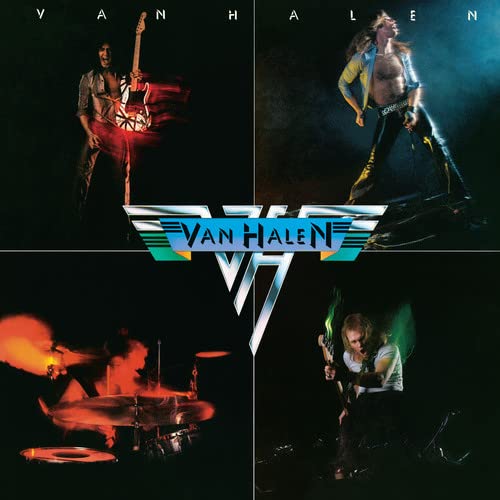
Van Halen (Album of the Week)

I had a few different options for this week, but then this past Friday I was enlightened to the fact that February 10th marked the 45th anniversary of what likely marks the greatest debut album ever presented. So to commemorate something that came out almost six months after I was born, I’ll divert my attention to this absolutely phenomenal slab of music.

Van Halen – self-titled

Released February 10, 1978 via Warner Bros.

My Favorite Tracks – Runnin’ With The Devil, Ain’t Talking About Love, Atomic Punk

The early Van Halen tale is worth a brief run-through here. The brothers Van Halen, along with original bassist Mark Stone would kick off the band, then David Lee Roth would join on vocals after the group were regularly renting his PA equipment. Stone was replaced with Michael Anthony, and the group began a slow ascent through the Los Angeles club circuit.

Gene Simmons loves his credit for discovering Van Halen, so here’s where his part of the story comes in. Simmons helped VH craft a demo, which did not draw attention or a record deal. Simmons was frustrated that no one in his circle saw the talent within Van Halen and went to tour with Kiss, leaving VH to find their own deal. People out on the LA scene began calling producer Ted Templeman, who had been wanting to get a guitar-centric band together, and the match made in Heaven would come to fruition. Templeman got the band signed to Warner Brothers, got them in the studio and banged out the album in a few weeks.

Time to go under the hood of this landmark record. It’s 11 songs though with a fairly brief 35 minute play time, but of course there’s a lot to discuss here.

Runnin’ With The Devil

I can save a bit of time off the bat as I’ve covered the opening track before in my S-Tier Songs series. It’s a fantastic, immortal rock track and one of the band’s best, even if the field of “their best” is very crowded.

Eruption

This brief instrumental would light the rock and music world on fire. Eddie’s use of two-handed tapping would revolutionize rock guitar for the next decade. The solo is a crazy shred fest that just wasn’t present in late 70’s rock music and it quickly became the piece that every aspiring guitarist looked to emulate.

You Really Got Me

This cover of the Kinks’ 1964 hit would serve as the first single from the record. It’s a Van Halen-ized version of the classic original and the VH cover would get wide airplay. Eddie wasn’t pleased with using the cover as the lead single but apparently there was a race on between Van Halen and the band Angel to get a cover version out so Warner Brothers rushed out the VH cover. The song fits the album just fine and is a very good cover track. Dave Davies of the Kinks would disagree with me but that’s kind of his thing.

Ain’t Talkin’ ‘Bout Love

This apostrophe-laden title catastrophe is also one of the band’s most celebrated songs. It was released as the album’s third single and was an instant classic. The riff is a signature rock standard and one of the areas where Van Halen could be accused of playing heavy metal. There’s also some electric sitar on the guitar solo because of course there is.

I’m The One

This is a very nice tune that really showcases in full the Van Halen sound – playing nearly off the rails with Alex and Michael holding down the rhythm fort, while David Lee Roth goes totally batshit on the mic.

Jamie’s Crying

Another highlight song, this has some fantastic riffs from Eddie as DLR spins the tale of Jamie, who got caught up trying to make a one-night stand into something more. Poor Jamie is caught in a bad spot, but at least we get a fantastic song out of it.

Atomic Punk

A very nice and heavy song about some kind of dystopian super villain or something. The song isn’t that deep or anything but it does have a bit of sci-fi cyberpunk feel to it. It’s another “brush” with heavy metal and it’s an outstanding work.

Feel Your Love Tonight

Thematically standard about trying to get with some gal, but a very revved up version of a more old-time rock song. The backing vocals from Eddie and Michael really hit here, though of course they’re present all over the album.

Little Dreamer

Here’s a song that feels like it’s a bridge between Van Halen and the rock that came prior. A very simple yet extremely effective riff and a well-done solo call to mind the rock heroes of the 70’s.

Ice Cream Man

A cover of an old blues standard from John Brim, the song had been around for ages but course had not yet had the Van Halen treatment. The band starts it off slow then kicks in with full instrumentation, making this yet another party rock tune. And of course the lyrical fare is alluding to certain, more adult activities. The song is well done and John Brim got a nice payday out of it too.

On Fire

The album ends with an exhibition, both of Eddie’s guitar playing and Roth’s full-fledged screams. Not that this album had any restraint anyway, but On Fire just goes off into another dimension. One of the band’s less heralded tracks but one that might deserve a bit more recognition.

Van Halen was a hit out of the gate and started the band on their track to superstar success. It would peak at number 19 on the Billboard 200. The record was platinum by October of 1978, and would go on to later diamond certification with over 10 million copies sold. It is virtually tied with 1984 as Van Halen’s best-selling album, though a lack of willingness on the record label’s part to re-certify does leave an incomplete picture.

The album retains its reputation as one of the greatest debut albums released. While to truly judge that would require an examination across many genres and eras, there is no doubt this was one of the most profound and electric debuts in music history.

And this goes far beyond just the scope of one album – this was the beginning of a new era in rock, one in which guitar would take center stage. This album set the table for the rock music of the 1980’s, which happened to be rock’s most commercially successful era. Van Halen was the shape of rock to come in the most excessive and loud decade of the 20th Century. Their own success would rival the biggest acts of music for their extraordinary run through a few decades, ultimately ended by the death of Eddie Van Halen in 2020.

Van Halen was the opening statement from a musical genius and the inspiration for millions to pick up guitars. The album was also the kick-off of a “party rock” trend that would run well through the next decade and usher in many good times and kill trillions of brain cells.