Album Of The Week – December 19, 2022

This week’s pick is the album that saw a change in style for a long-running band and a shift that would pay massive dividends. The band was on the verge of ending and instead launched one of rock’s most successful albums in the genre’s commercial peak.
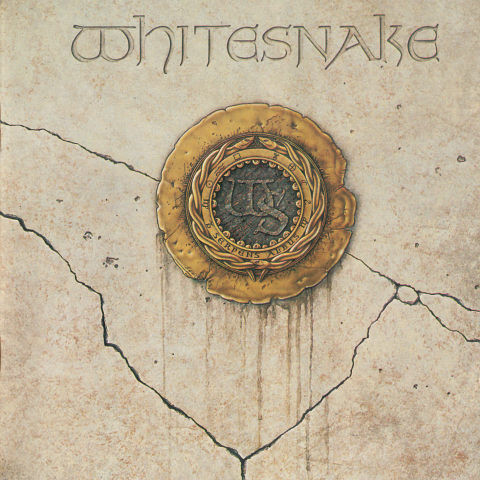
Whitesnake – self-titled

Released March 23, 1987 via EMI/Geffen Records

My Favorite Tracks – Still Of The Night, Crying In The Rain, Here I Go Again

The giant success of this record wouldn’t come without drama and turmoil. David Coverdale had been plunged into depression over Whitesnake’s prior lack of success and personal issues with his band. While guitarist John Sykes helped write the album, Sykes and the rest of the band were out before touring on the white hot record. The group that appeared in the mega-successful videos for this album was not the same group that made the album, save for Coverdale and Adrian Vandenburg’s involvement in recording Here I Go Again.

There are several different versions of this album – it was self-titled in North America and other places, while in Europe and Australia it was called 1987. Japan had yet another name for it and there are different track lists across the disparate versions. For simplicity’s sake I’ll cover the 9 track US version.

Crying In The Rain

The opener marks one of two songs redone from the 1982 Saints And Sinners album, both re-recorded songs would be hits. Originally a blues-based rocker, John Sykes reportedly despised blues music and turned it into a heavy metal riff fest. The lyrics are a depressing look inside Coverdale’s mind through a divorce, dude was down in the dumps a lot apparently. While the premise of crying in the rain seems silly, the song’s riffs and presentation keep it from slipping into parody.

Bad Boys

A standard fare, fast rocker about being a bad boy, a pretty common offering for 80’s rock. It’s a good offering for the “wild in the streets” theme that was ever-present back then.

Still Of The Night

The album’s lead single was a modest chart hit but would serve to generate interest in the album and was a very popular music video. This song is a fantastic composition with John Sykes going full on guitar god and the full album version of the song is a nice series of movements with the violins and build up back to the rocking at the end. The video was the first of three from the album to feature future Coverdale wife Tawney Kitaen, who would become one of music video’s most iconic performers for the videos.

Here I Go Again

The other re-recorded song from Whitesnake’s earlier days and one of the mega hits from this album, this is the most widely-known song from the Whitesnake discography. The song about venturing on one’s own has remained in cultural consciousness enough to be meme material these days. The video was a monster hit and features the late Tawney Kitaen’s most memorable video performance.

The song topped the Billboard Top 100 and was in constant MTV rotation. And yes, the album cut and single version are two different recordings with some differences, I’d personally take the album version.

Give Me All Your Love Tonight

Another single, this one didn’t quite crack the top 40. It’s an uptempo rocker about love, which in hair metal parlance means sex, as I’m sure everyone is aware. The single release is noteworthy as it features a redone guitar solo from Vivian Campbell, marking the only time he contributed music to Whitesnake material.

Is This Love

The album’s other massive hit single originated when Coverdale was trying to write a song for Tina Turner. David Geffen told Coverdale to keep it and here we are, with the track going to number two on the charts. The song couldn’t be any more elementary in its concept but again its presentation is fantastic and it’s one of time’s honored power ballads.

Children Of The Night

It’s another badass rocker about going out and getting in trouble. It’s a track worthy of partying and headbanging to.

Straight For The Heart

Getting toward the end of the album with this rocker about Coverdale going to get his girl. This song definitely jumps the hair metal shark a bit but it’s still a fun time.

Don’t Turn Away

The US album closes with a power ballad that keeps the rock going in full effect. It offers a nice inspirational message that hooking up with David Coverdale will cure whatever ails you.

Whitesnake was a monster success, launching the band from the brink of extinction to the toast of the town. The album would go on to eight US platinum certifications and would peak at number two on the Billboard 200, being blocked from the top spot by monster albums like The Joshua Tree, Whitney and Bad. It was a stunning reversal of fortunes for Coverdale, who was despondent after failing to break through significantly with his prior work. The rising tide of this album would lift other ships, most notably Slide It In, which went from a modest gold certification to multi-platinum.

While the album and singles did very well in traditional markets, Whitesnake’s videos were perhaps the most iconic part of this album cycle. The trio of videos featuring Tawney Kitaen were all over MTV. The band dressed the part of ’80’s rockers for their videos, something Coverdale admits was pandering to fashion. But hey – no arguing with the success of it. You were rockers in the 80’s, might as well go all in.

Whitesnake is an interesting band in that they found success almost all at once, with the self-titled album outshining the modest success that the US release of Slide It In had. The band’s music is a lynchpin of classic rock radio but it’s stuff from these two albums that comprises the entirety of those playlists. The old blues rock albums are well-regarded but also left to be discovered by the active seeker. Albums after the self-titled wouldn’t land quite the same way, though in retrospect 2003’s Good To Be Bad was a critical success and catalyst for a new era of Whitesnake.

But at the end of the day, it is this album that serves as Whitesnake’s defining legacy. The group shot out of a cannon and landed square in the rock/metal prime of the late 80’s and hit on a success not seen by all that many others. Leaving behind the blues-based rock and injecting a metal guitar hero’s sound into the mix lend to some staggering results, even if said guitar hero was booted from the group before touring behind the record.

My Top 10 Albums Of 2022

It’s that time of year for album lists. For me, things snapped into place pretty easy this year. I haven’t had to deliberate much on what should be here or what order it should go in.

Most of this stuff hasn’t really been discussed here, beyond a glimpse from one of my preview posts. I’ve only discussed two of these albums at length this year and a few weren’t mentioned at all. Covering new music is tough and requires a lot of time so it’s something I do very sparingly.

Last year I split this up and gave the album of the year its own post, this year I’m keeping it simple and doing everything at once. Let’s get to it and see where all this stuff ranks.

10: High Command – Eclipse Of The Dual Moons

This is some very nice dirty thrash that also pulls influence from a lot of ’80’s metal legends and also incorporates a fantasy story arc across its lyrics. It can be enjoyed on a surface level for its great music and can also be explored further for the story. Really great stuff here.

9: Witch Fever – Congregation

This is the debut full-length from a group billed as punk but playing a harsh version of doom, noise and grunge. The album takes aim at institutions of power, especially religion. It’s a great, pretty unique sound Witch Fever have going on here and hopefully there are great things to come for the English group.

8: Undeath – It’s Time … To Rise From The Grave

What’s old is new again, and this year old school death metal returned in a big way. That was thanks in large part to Undeath and their much-hyped second album. This album slots in nicely alongside the death metal classics of the early ’90’s and is a signpost for a new generation of death metal mayhem.

7: Lorna Shore – Pain Remains

This was one of the most anticipated releases of the year after the hype over To The Hellfire in 2021 went to a whole new level for deathcore. Lorna Shore delivered by avoiding the trap of trying to recreate what they did a year prior and mixing things up a bit. The ending Pain Remains trilogy of songs is some majestic stuff.

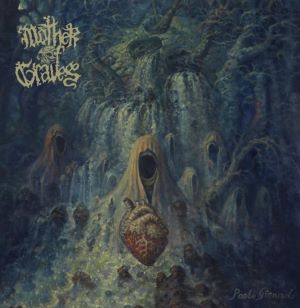
6: Mother Of Graves – Where The Shadows Adorn

It’s been awhile since I’ve heard some good death/doom, yet here it is in a new form from a newer group out of Indiana. This hits all the right notes and shows its influences while still very much being its own thing. A really great album that, in a way, kind of came out of nowhere.

5: Blind Guardian – The God Machine

The German power metal legends returned with their first proper studio album in seven years and they came back in a huge way. This album is very to the point and direct, no mucking around here. The band haven’t lost their touch and have re-explored some of the speed metal elements of their earlier career. This album is a true highlight of an already impressive catalog.

4: Chat Pile – God’s Country

Chat Pile had built a healthy amount of buzz over the past few years and delivered on that this year with their first full-length record. This sludge/noise offering is a disturbing listen that looks at the less savory side of life in Oklahoma and nails the perspective. The music and themes aren’t for everyone but those who get it, get it.

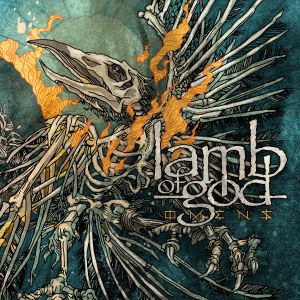
3: Lamb Of God – Omens

I was one of several who had thought Lamb Of God’s best days were behind them, I hadn’t been wowed by a release in quite awhile. All of that is out the window now – Omens is a sharp, stark return to form for the groove metal legends. This is an ass kicking from start to finish and I was totally blown away by it.

Omens is the only album from this list that I covered as an Album Of The Week, that post is here.

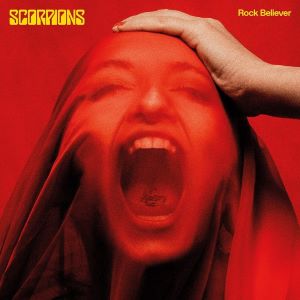
2: Scorpions – Rock Believer

Now, you want to talk being surprised and impressed by some old dogs? The Scorpions coming out in 2022 with this absolutely killer set of tunes was not something I saw happening. While they’ve had some moments in the past few decades, this band was long thought to be in their twilight. But no, they totally reinvigorated their sound and came out fresh despite being literally older than dirt. Klaus Meine sounds fantastic here and he’s older than a lot of old rock singers that have lost their voices. And the songs are some of the best they’ve done in a long, long time.

I did cover this album in more detail a bit after its release, here is that post.

Album Of The Year 2022

Cave In – Heavy Pendulum

The New England group known through the 2000’s for metalcore, post-rock and/or whatever you want to call it had been quiet through the 2010’s and suffered the loss of bassist Caleb Scofield in a car accident in 2018. The band reconvened with Converge bassist Nate Newton handling those duties and recorded their return album through the course of the pandemic.

Cave In’s return was nothing short of a massive success. Heavy Pendulum visits all points of Cave In’s past and works with a variety of sounds to shape concepts in the 2020’s. It’s a monster of an album at 71 minutes but everything here works, especially the epic album closer Wavering Angel. The bag of riffs on this album is of insane size and visits about every kind of rock and metal you can think of.

That wraps it up for the 2022 stuff. I did more last year but I think just doing the album list is fine enough. Only a few weeks until it’s time to stary worrying about what 2023’s top albums will be.

A Story And A Song – 3 AM

Today’s song and story come from a recent holiday drive. The song is 3 AM, one of the hit singles from the debut Matchbox Twenty album Yourself Or Someone Like You. In an odd bit of trivia, the song did not chart on the Billboard Hot 100 only because it was not released as a physical single in the US. But the song did very well and the album was a super smash hit.

Matchbox Twenty were a pretty important band at the time. While I think their proper classification is alternative rock, the term “post-grunge” is used a lot when talking about them. This was the shape of rock after grunge flamed out in the middle part of the 1990’s.

The story goes back to Thanksgiving Day, which was was back like two weeks ago here in the US. We were driving back from a Thanksgiving dinner in a car with me, my girlfriend, her sister and her sister’s kid (my girlfriend’s niece).

We were coming from a fairly remote part of southwest Missouri back to the one city in the region that we live in. Finding something on the radio on forlorn highway roads is always a chore. These areas are known for having country, talk radio or religious programming on the dial. And of course, FM stations tune in and out very easily out in these rural areas.

At one point a rock station came on and the song in question was playing. After a bit, my girlfriend’s sister asked her daughter what she thought of the song. Her response?

“It’s fine. It sounds like country music.”

It was a pretty funny observation to the rest of us in the car, who have all been plenty exposed to country music. But after a second I realized how telling of a statement it was from a 13 year old kid who probably isn’t up on the history of country music.

The point is obviously about the state of modern country music – is this where it’s at? Someone not alive in Matchbox Twenty’s heyday thinks that their stuff is representative of a different genre of music?

Country music takes a lot of hits these days. The bro-country phenomenon of the past several years was awful. There has been a long-running battle between the entrenched machine of the Nashville industry and artists wanting more creative freedom. Country also takes a lot of flak for representing “older” values as well as a slant towards conservative politics and a lot of the worse things associated with those, both fairly and unfairly.

But when someone on first listen to an old alt-rock song thinks it sounds like your genre? I think it speaks volumes about the genre. Granted, I’m not very up on country these days and if I do pay attention, it’s to more independent artists who aren’t part of the Music Row network. I don’t really know what’s playing on mainstream country radio these days. But from the bits and pieces I’ve picked up, it’s not a far leap to suggest that today’s country is yesterday’s alt-rock. That’s not an absolute statement, of course, but it’s probably fair.

There are probably a lot of larger issues about country music that warrant discussion but that’s not really what this post is about. It was just a funny comment that made me think “Wow, is that what country has come to?” And there may not be as much to it as I’m speculating, but I’d say there’s something to it.

I could wrap up by posting Rob Thomas’ actual biggest hit, but I won’t do that to myself or anyone else. Instead let’s bow out with a bit of country.

Alice In Chains – Down In A Hole

This post was part of a series that I called S-Tier Songs. I later decided to abandon the series in favor of a simpler Song of the Week format. I am keeping these posts as I wrote them but removing the old page that linked to the list of S-Tier Songs, so that is why these posts might look a bit odd. Enjoy.

Today’s offering is one of the finest moments of the grunge movement. Even with being “grunge,” it is a suiting power ballad that evokes sadness and despair in a way not a lot of artists can touch.

Alice In Chains – Down In A Hole

Our song today hails from the album Dirt, the 1992 masterpiece of the Seattle-led grunge period. The album sold millions and was ever-present on radio and video airwaves. It qualifies as “classic rock” today and is still in rotation far and wide.

Down In A Hole was the fifth and final single from the album. It was released as a single almost a full year after the album arrived. The single sold over a million copies and charted in several countries. On Spotify it is the third-most streamed song from Dirt, behind only the mega-hits Rooster and Would?

The song begins very softly, almost in a way that departs the hard-edged album it is from. But it remains within the Alice In Chains lexicon, with suitably melancholy guitar work from Jerry Cantrell and the sheer power of the vocals of Layne Stayley, with harmonies provided by Cantrell. The singing has always been a highlight of AIC and both Stayley and Cantrell shine especially bright on this song.

The lyrical content of a song called Down In A Hole is, of course, pretty downtrodden. Though not from the doom genre per se, this could easily be considered a doom song thematically. It sounds like someone in the grip of utter despair and hopelessness. Every line is awash in depression and soul-crushing anguish. Lines like “See my heart, I decorate it like a grave” and “You don’t understand who they thought I was supposed to be, look at me now I’m a man who won’t let himself be” are jewels in this crown of misery.

Jerry Cantrell, the song’s sole writer, shed some light on the song’s origins in the liner notes to the band’s 1999 box set Music Bank. He states that the song was written about his girlfriend at the time and the realities of a long-term relationship and how they clash with being in a band. While there are plenty of songs about that and about life on the road in general, I don’t know how he got Down In A Hole out of that. But hey, I’m glad he did.

Down In A Hole has been a staple of the Alice In Chains setlist, with one major caveat to that – they did not often perform the song when Layne Stayley was alive. It was not a regular part of the setlist on the band’s tours in the early 90’s, and the group did not tour much after that due to Stayley’s health issues. A vast majority of Down In The Hole performances are from the band’s modern incarnation with William Duvall at the vocal helm.

One notable exception was the 1996 MTV Unplugged performance. This did feature Layne and the song worked very well in the unplugged setting. Alice In Chains were always a proficient acoustic act anyway, so having this version of the song is a massive plus.

Why is this an S-Tier song?

Down In A Hole is both beautiful and soul-crushing. It communicates absolute sadness but in a very majestic way. It showcases the main strengths of Alice In Chains, those being the voice of Layne Stayley and the musicianship and songwriting of Jerry Cantrell. It is an amazing work that got huge airplay despite being such a depressing affair.

2022 Spotify Wrapped

The quick and easy posts continue this week as it’s that time of year for Spotify Wrapped.

I’ll add a quick bit of context before getting into mine – this year I used Spotify for two main purposes – small playlists of 6 or so songs when I go on bicycle rides (which is most every day) and to check out new releases. I figured my wrap-up would be distorted this year based on the small series of 30 minute playlists I constantly rotate through, but as it turns out I can say the results were fairly representative of my listening habits.

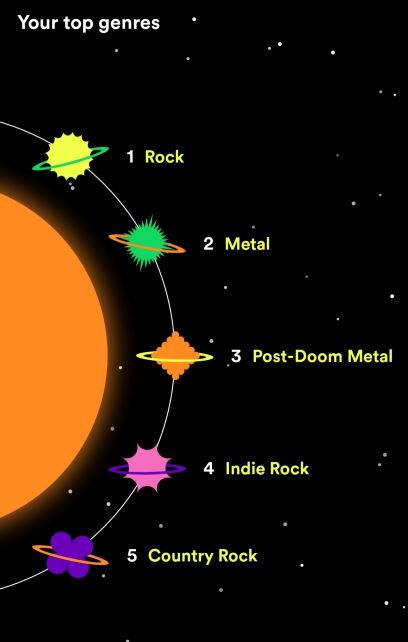
First up the is genres. Not a whole lot to get into here, besides whatever “post-doom metal” is. Music descriptors get awesome these days when everyone is trying to invent a new term for a sound that sets even somewhat apart from the rest. I’m also not entirely sure what they’re referring to with “country rock” but that’s a more understandable term.

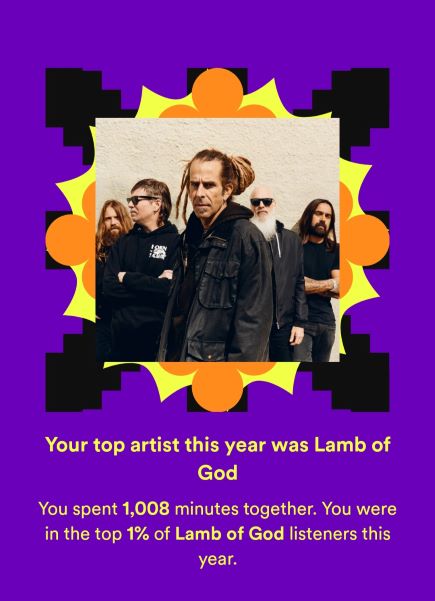
Now on top artist. Not really shocking to me – I have a handful of LoG songs in my playlists and then when Omens came out in early October I played the hell out of it. I’ve liked them for a long time but the new album really knocked me over and likely explains how they took my top artist crown this year.

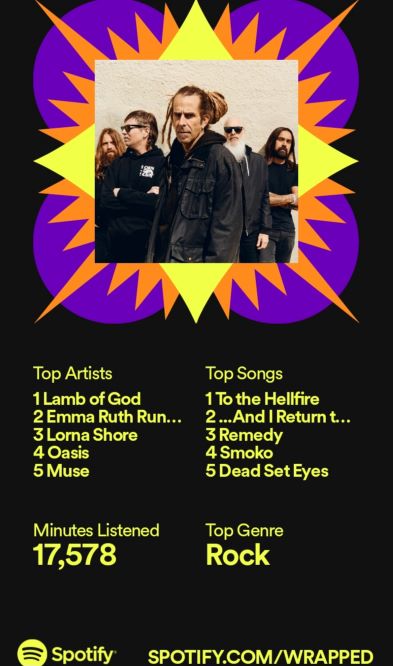
And here is the overall Wrapped sum-up. Kind of funny that my top played song in 2022 was the same one as from 2021. My only real “huh?” moment is Muse being in my top artist list – they put out a new album this year which didn’t really hit with me, though one song off of it is pretty awesome. I guess that one new song and whatever sprinkling of others I have in my playlists put them over the top. None of the others register any surprise to me all.

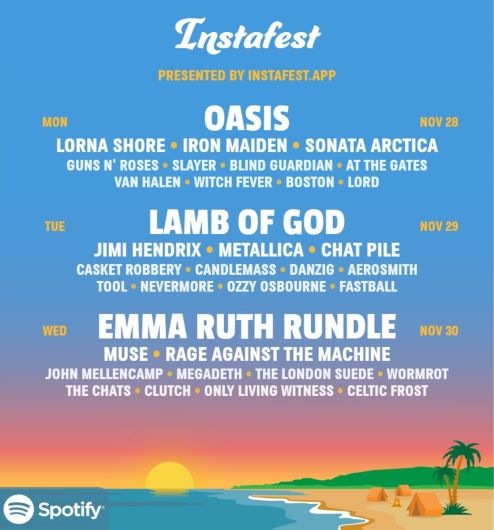
Here is one other little bonus that was going around in the past few days leading up to Wrapped – the Instafest lineup. It essentially takes your Spotify data and generates a three day festival based on what you’ve played. Here is mine.

I’m honestly pretty happy with mine. Now, I do love Oasis, but in no universe would I book Iron Maiden as an opening act for Oasis. I’m sure plenty of people would have my head for that. But beyond that, I would pay huge money to attend that fest. It lines up with what I like pretty nicely. The only oddball? I don’t know the artist “Lord” as listed on the festival bill. No clue who that is referring to and I’m not getting any easy answers on Spotify.

That covers my Spotify Wrapped for 2022 and also the bonus Instafest thing. As a preview for my end of year stuff, I’ll do my top albums of 2022 on December 12, in place of the regular Album of the Week feature. I’ll probably do a small Songs of the Year list too, maybe three or five, don’t know yet. On through the ass end of 2022.

Album Of The Week – November 21, 2022

This week’s pick is a monumental album from 1985. It saw an established artist break through record label politics and define his sound on his own terms, and kicked off a run of success that would form the creative peak of his career.

John Mellencamp – Scarecrow

Released August 5, 1985 via Riva Records

My Favorite Tracks – Rain On The Scarecrow, Minutes To Memories, Small Town

John Mellencamp had been at war with music executives seemingly from the start of his career. What to record and release was one battle, what to call himself was another. His label had insisted on the “Cougar” moniker for whatever reason and had tried to shoehorn him in as a Neil Diamond-like act.

As chart success came, Mellencamp was able to pivot to doing his own thing, and Scarecrow marks the beginning of a run that would contribute greatly to a series of music movements perhaps best described as alt-country. While the start of alt-country and its associated subgenres is a topic of unsettled discussion, it’s clear that Mellencamp made a huge imprint on everything.

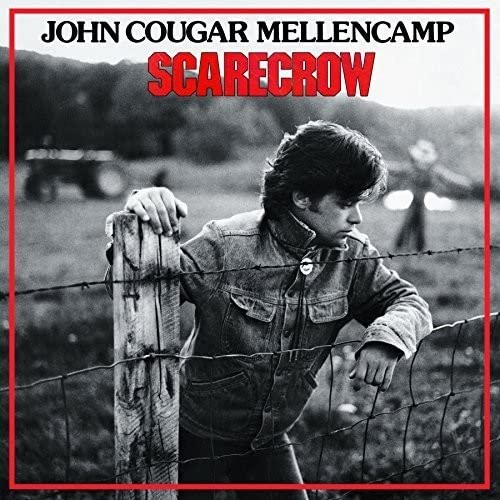
While “Cougar” would still sit on the album’s cover, this was a John Mellencamp album. The useless nickname would take a few more records to disappear, but Mellencamp had truly and finally arrived with what was technically his eighth record.

Today I’ll run down the original version of the album, comprising eleven songs. There are various reissues and bonus tracks available, including a super deluxe set that was just released a few weeks prior.

Rain On The Scarecrow

The opener gets straight to the point – this haunting tale speaks about the loss of small-scale farming, a massive issue in the 1980’s. Single-plot farmers were caught in loan and insurance issues that caused many to lose their land, stock and equipment. In what can’t be a coincidence, decades later much of US agriculture is owned by a few mega corporations.

While mournful, Rain On The Scarecrow is also heavy. It is hard rock and even bordering on heavy metal in its stark delivery. It was an attention-getter on airwaves in 1985 and, while the battle for farmland seems to have been a losing one, did bring the issue to the attention of a far wider audience.

A brief traditional song Grandma’s Theme appears next.

Small Town

One of the album’s three Top-10 hits, Small Town has been a staple of rock radio since its release. The song is a simple and pleasant look at life in rural America, this time simply recounting the experience as opposed to fighting off a corporate oppressor. Mellencamp’s experience of growing up in small town Indiana is translated nationwide for anyone in a small town. While there would be a huge melancholy vibe in a lot of Mellencamp’s music, this song leaves that behind to simply extol the virtues of a simpler life.

Minutes To Memories

Though not a single, this song about an older man advising on the fleeting nature of time and life has been featured on greatest hits packages and in live setlists. The topic can be unsettling to think about but the song is presented in a motivating, upbeat way. Might as well toughen up and grind it out, one day it will all be memories.

Lonely Ol’ Night

A very simple tune that recalls Mellencamp’s earlier hits, this track joins Small Town as the best-charting singles from the record. This song leaves behind the look at society and instead focuses on a few lonely people who inevitably cure their loneliness together.

The Face Of The Nation

The rocking, upbeat music belies the harrowing lyrical fare. This is a recount of the pain and suffering seen around and how everything is changing into something not very good. For its dire message it is a very snappy tune.

Justice And Independence ’85

Another bright rocker that personifies the title concepts as well as that of Nation. Again the lyrics aren’t quite as peppy as the tune, as Nation stumbles in his life to the dismay of his parents Justice and Independence. The song does close out on an uplifting note.

Between A Laugh And A Tear

One of what would become many Mellencamp songs about how life can be crappy and weigh you down, and the struggle to get through it all. The ultimate message is inspirational and the music is a bit of a preview of what Mellencamp would sound like on future albums.

Rumbleseat

Another Top 40 single, this is yet another snappy rocker that is examining a hard life and the attempt to move on from it. It’s another great presentation of grinding through the crap and failure to move on to a better tomorrow.

You’ve Got To Stand For Something

The Heartland rock is in full effect here with the song’s title communicating its simple yet important message. This song title would be a country hit for Aaron Tippin several years later but the two songs are not otherwise related.

R.O.C.K. In The U.S.A. (A Salute To 60’s Rock)

The album closes with another Top 10 hit, this time a homage to the rock Mellencamp grew up with and what the band played a ton of before recording this album. While this diverges greatly from the album’s pretty grim themes, the song is an obvious crowd pleaser and another of many Mellencamp tunes that still see regular airplay.

Scarecrow was a huge success for John Mellencamp. Besides the well-received singles, the album peaked at number 2 on the Billboard 200, sitting only behind the Miami Vice soundtrack. Scarecrow has gone on to 5 times platinum in the US and also has several Australian platinum awards.

More than anything, this marked where Mellencamp truly set out on his own as a songwriter and began shaping his true musical legacy. The blueprint laid for “alt-country” here would be expanded upon on his next release and the pair of albums would go on to forge a great deal of what are considered his greatest songs. It’s hard for the record label to argue with you when you bust the singles and album charts with music on your own terms.

Tool – 10,000 Days (Wings Pt 2)

This post was part of a series that I called S-Tier Songs. I later decided to abandon the series in favor of a simpler Song of the Week format. I am keeping these posts as I wrote them but removing the old page that linked to the list of S-Tier Songs, so that is why these posts might look a bit odd. Enjoy.

So I last left off with A Perfect Circle and their hit single Judith. The song was an attack on the deep faith Maynard James Keenan’s mother felt despite an injury that left her debilitated for nearly 30 years. It wasn’t the first time Keenan had used his mother’s malady as lyrical inspiration – the Tool song Jimmy from 1996’s Aenima was about his experiences being 11 years old after his mother’s injury.

And it wouldn’t be the last time Tool would visit with Judith for song inspiration. Judith died in 2003, and in 2006 Tool would release the 10,000 Days album. While the album title pays homage to Saturn’s 29 year long cycle of moons in orbit, two songs on the album serve as eulogy to Judith Marie.

Tool – 10,000 Days (Wings Pt. 2)

10,000 Days the song is preceded by Wings For Marie, a more intro-like song that sets the stage for the epic rollout to come. And while Wings For Marie is its own track, it’s very difficult to assess it in isolation, as it is clearly a companion to 10,000 Days.

The song 10,000 Days itself begins with a rolling, quiet intro that is clearly building to something and also features the sound of storms in it. The payoff will come, but this 11 minute long song isn’t in a hurry to get to its point.

As the bass and the storm rolls along, Maynard begins singing about the end of his mother’s mortal journey. He takes a shot at the hypocrites who surrounded her after her health issues, but then deliberately writes them off and focuses the rest of the song on Judith.

The lyrics accompany Judith as she ascends to Heaven. Rather than be a humble servant, Maynard says Judith should arrive at the gates proudly and demand her wings. She is truly “the light and the way they only read about” and is the main event at the pearly gates.

The song ends with a quiet reflection from Maynard offering further suggestion for what Judith should say as she enters the afterlife. Everything is a bit of a roller coaster in the 11-minute long surge of music and movements, but the quiet ending sums everything up perfectly.

The rest of the band is up to some real atmosphere generation on 10,000 Days. This isn’t a long song that just goes from point A to point B with a few riffs and fills – no, there are plenty of movements and changes to keep everything fresh and also flowing along with the varying intensity of the lyrics. Tool never was much of a straightforward band anyway, and they up the ante on this song with arrangements and progressions that stand apart from a lot of popular fare of the time.

10,000 Days was not released as a single. It was played live during the album’s tour cycle, but met with some resistance from a portion of fans. The popular cuts from the record were the singles like Jambi and The Pot, and in some instances people at concerts were screaming for those while the band was playing 10,000 Days.

The fan backlash, however strong it may have really been, coupled with the extremely personal nature of the song, led Maynard James Keenan to feel a bit burned by doing the song. He said this about it in a May 2022 interview with Loudwire:

“I think probably the stupidest thing I could have done on 10,000 Days was put myself out there as much as I did with the tracks ‘Wings for Marie (Part 1)’ and ‘10,000 Days (Wings Part 2),’ Keenan said in an interview to promote the album. “I’ll never make that mistake again. It just took too much out of me – too much emotionally, mentally, physically – all those manifestations. Those songs were exploited and misconstrued, people were flippant and dismissive. I won’t be doing that anymore. And technically, ‘Wings’ is very difficult to pull off. If any one of us is off, it falls apart and makes that thing tragic, and that’s not a good song for me to have fall apart. It’s just too personal.”

It is a shame that the song was shrugged off by some, but I know me and many others found it to be a masterwork. The majestic instrumentation along with the powerful lyrics that could only come from such a harrowing place were the perfect song combination. Tool no longer performs the song, though in part that might be due to a whole other album full of 10-minute long songs that eat up a fair chunk of a set list.

Why is this an S-Tier song?

10,000 Days is a triumphant movement, wrapping the emotionally-charged death of Maynard’s mother Judith into a masterful piece of music. It’s a movement that goes beyond our regular notions of music enjoyment and enters a kind of space reserved for the more transcendent of songs. It is a long build up for a payoff only paid if you have any amount of patience within you.

This is the type of song to be enjoyed over a course of time, and to be appreciated for the scope of what is being communicated. A “fan” looking for immediate payoff won’t be welcome here. This is for the more discerning ear, preconceived notions about Tool be damned.

Album Of The Week – November 7, 2022

This week’s pick is one of rock’s greatest albums. The songs married the sounds of the time with the band’s already-established formula and created a whirlwind that marks one of the most successful periods in the group’s career. It would also be the last offering from this phase of the band for many years.

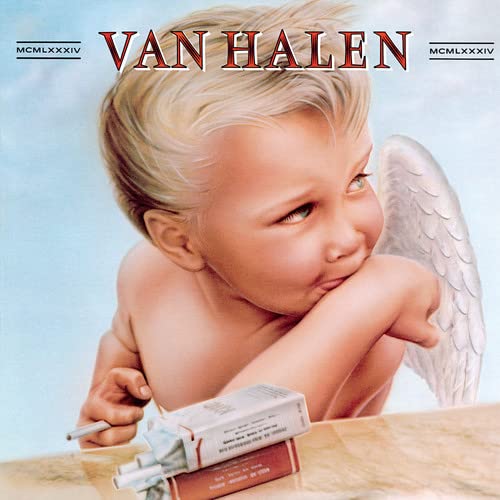
Van Halen – 1984

Released January 9, 1984 via Warner Bros. Records

My Favorite Tracks – Hot For Teacher, Panama, I’ll Wait

The lead-up to 1984 was a bit contentious for Van Halen. The band had rushed out Diver Down and Eddie Van Halen was prevented from his desired use of synthesizers. In 1983 he sequestered himself in his new home studio and used a synthesizer for the whole year, in defiance of the wishes of David Lee Roth and the record label.

The results weren’t to be argued, though. The slate of songs Eddie came up with worked, both within the band’s sound and as an update to their offerings. This album was chock full of hits and several of the songs would become iconic pieces of Van Halen’s catalog.

It is a rather short album in some respects – 8 songs with a total time of 33 minutes. But there is a lot to talk about, given the legendary nature and success of these songs.

1984

Keeping things even more concise is the first track, a minute long instrumental that only features synthesizer. That’s about all there is to it.

Jump

The proper lead track is likely Van Halen’s most recognized song. Jump features the keyboard front and center, with Eddie’s guitar taking complimentary role. Roth originally based the lyrics around footage of someone contemplating suicide from a tall building, but later reworked them to fashion a more inspiring message.

Jump is Van Halen’s biggest single, being their only number one entry on the Billboard Hot 100. Jump has been ever-present in society in the 38 years since its release.

Panama

Eddie put up the keyboard here and offered a more conventional Van Halen track. The song sounds like the prototypical Van Halen party track but is actually about David Lee Roth’s race car. It’s all the same, really, and this is another widely celebrated song. Panama was a top 20 single and is another VH tune that’s never more than a stone’s throw away. It’s also a very nice bridge to the earlier material.

Top Jimmy

Another guitar-focused track, this upbeat song is a tribute to a gigging band Roth used to catch at a club in Hollywood. Many rock songs have been written about the rise and fall of music stars, but this song simply shines light on a group that went out and played, without the shitty ending.

Drop Dead Legs

Nothing much to get into here – it’s a groovy, Eddie-on-the-guitar tune whose lyrical content is blatantly obvious. Nothing wrong with short and to the point.

Hot For Teacher

The band’s final single from the DLR era is a thing to behold. Alex Van Halen rumbles in with an intense double-bass drum solo intro, then Eddie joins in with some crazy fretwork to kick off this massive rock tune.

The song is, again, simple in premise – guy’s got the hots for his teacher. It has been a common deal since school has been a thing. The song is electric and takes everything to 11. While the single didn’t’ crack the US Top 40, the MTV video was a sensation and saw massive airplay.

I’ll Wait

Another single, this song goes back to the keyboard-heavy approach of Jump. It’s a bit of a slower tune and the synth being at the forefront works well.

An outside collaborator was brought in to help with the lyrics – Michael McDonald, he of the Doobie Brothers and sundry other projects, helped Roth along with the words. McDonald was not credited on certain versions of the release initially, for reasons not made clear.

I’ll Wait matched Panama’s success on the US Billboard singles chart, hitting position 13.

Girl Gone Bad

Heading toward album’s end with a song that showcases a bit of a cleaner guitar tone from Eddie, something a bit brighter that might be a preview of Van Halen to come. There are also words sung about a girl gone bad, which is literally all there is to say about the song’s lyrical theme.

House Of Pain

The album closes on a very old-time VH sounding tune with a very heavy, driving riff. It’s about rough sex, or about not enough rough sex, or not about rough sex, or maybe all of the above – all is possible within the David Lee Roth multiverse.

1984 was a smash success for Van Halen. The album sold well out of the gate, hitting gold just a bit after release. It is in a virtual tie with the debut album as Van Halen’s best-selling record, both being over 10 million and diamond certified in the US. 1984 is often at or very near the top of many VH album rankings and is cited as one of the best albums of the 1980’s.

It’s worth noting that the “synth” arguments about the album are pretty overblown. It’s two whole songs, three if you count the intro. It wasn’t the first time VH used synth either, so the fuss probably comes down to the success of Jump as a single. It might have been different to hear Eddie base a song off of keys rather than guitar, but it gets boring when artists do the same thing over and over again, and Eddie Van Halen wasn’t going to be that kind of artist.

The band would tour behind the album and then long-running tensions would see David Lee Roth exit Van Halen to pursue a solo career. Van Halen would regroup with Sammy Hagar and enter a musically different yet commercially fantastic era.

Roth’s exit was a foregone conclusion, as fans would find out mostly in retrospect. Roth and Eddie Van Halen butted head creatively, with Roth not fond of the synth-based direction Eddie wanted to take. 1984 seems to be Eddie’s response to that. Roth was also presented with opportunities that later didn’t pan out, so heading out on his own was a fairly logical choice.

However things afterward went down, there is no argument that 1984 was a pinnacle album for Van Halen. It was a more cohesive effort that offered up quality work even in secondary tracks, something other early-era albums could sometimes lack. It captured the attention of the world at large and made Van Halen one of rock’s biggest names in an era where rock was king.

A Salute To Mick Mars

A very quick post today, I booted what I had originally planned in order to address this.

Just a few days ago, it was officially announced that Mick Mars would no longer tour with Motley Crüe. Mick is still a member of the band, but due to his long-running health issues, he is bowing out of the planned 2023 world tour and future speculated touring activities, which include a possible Las Vegas residency.

This news is not sudden – the rumor mill was churning for awhile that Mick would step aside as the touring guitarist, and his replacement was already named. And last night that news came to official light – John 5, a long time collaborator with Rob Zombie and with a resume that includes David Lee Roth and other luminaries, will be assuming the mantle of Crüe guitarist.

Mick joined the group very early on after Nikki Sixx and Tommy Lee had something going. Mick was a few years older than the rest, hell the dude is 71 now (at least). He has been the sole guitar player for the band in all their existence – while both Vince Neil and John Corabi have contributed on the instrument, the guitar in Crüe is purely a Mick Mars experience. Mick is one of the band’s two constant members, along with Nikki.

Mick’s retirement is well-earned. His guitar work set the stage for what would become a pioneering act in 1980’s metal. And even when certain albums didn’t offer the best we thought the group had, we often fell back to “at least Mick is going off on this stuff.” On their most filler of filler tracks, there was still Mick giving it his all and making his playing the highlight of the song.

Mick has fought a decades-long battle with Ankylosing spondylitis, a serious condition that affects the spine. While this issue is the cause of Mick’s retirement today, it was also the catalyst for the band’s reunion of the original line-up in the early 2000’s. It’s no secret that certain members of the band don’t get along with each other, but “doing it for Mick” got everyone on the same page enough to get out rocking again in the way the fans wanted.

And don’t forget this point – the four members of the band decided to tour on four separate busses when they got back together. While one part of that might have been to mitigate the tension between people, one other reason for it was so Mick could have access to the care he needed.

It is a sad day that Mick can’t continue on. But he is still with us, and hopefully life away from the road will afford him the care and comfort to live in a satisfying way. It’s been an honor to have Motley Crüe around all these years, and Mick is a huge part of what made the music work. And maybe there will be some new studio music that Mick can contribute to that will give some new Crüe memories for the faithful.

Thanks for everything, and may your days be filled with peace.

Xero – Oh Baby!

Today’s single is a curiosity from the early 1980’s. This is a band that never wound up recording a proper album. They released one single, featured here today, as well as a handful of songs on compilation albums. A retrospective CD would come many years later, long after the band called it quits.

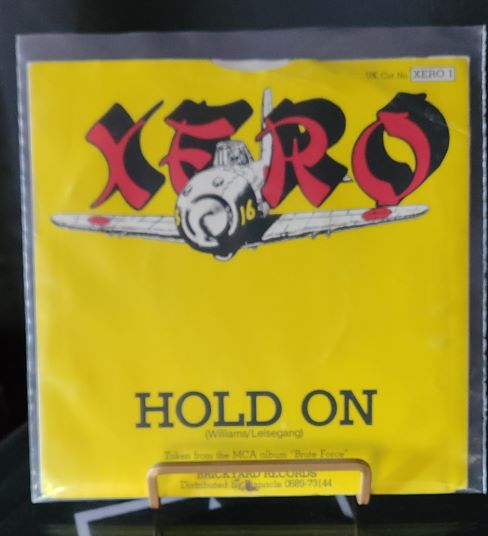
There are a number of ways to market a single for an emerging band. In the early 80’s, one such way would be to feature a guest spot from a famous rock star. It would appear from the cover that Xero have that part nailed down.

But, appearances are deceiving. Yes, Bruce Dickinson of Iron Maiden does have a vocal track on this single. But Bruce never sang for Xero, he did not drop by the studio and lend his vocal talents to the band.

Here’s what happened, this rather obscure tale is sourced through the Discogs page for Xero as hard info is hard to come by. The common thread between Bruce Dickinson and Xero is a band called Shots. Bruce sang for them for a bit before joining Samson in 1979. Shots recorded a few songs with Bruce, one of them being the track Lone Wolf.

At one point in Shots before they broke up, guitarist Billy Liesegang joined. It does not appear that Liesegang was in the group at the same time as Dickinson, but I can’t confirm one way or the other. Shots would break up and Liesegang formed Xero.

As Xero were preparing the release of their lone single, it would appear that the band’s manager was the one who had the idea to take the Shots recording and tack it on to the Xero single. I can’t source this definitively, but I have seen it mentioned at the Bruce Dickinson Wellbeing Network, an archive of Bruce-related news and releases. This concept that it was the manager’s idea also comes up in discussion, but again, a super hard and fast source is tough to come by. It doesn’t appear to have been Billy Liesegang’s idea, that much seems clear.

Whatever the case, Xero released the single with Lone Wolf on it. It apparently didn’t take long for Iron Maiden management to come calling in regards to the unauthorized use of Bruce Dickinson’s vocals. The track was replaced with a different song in subsequent pressings of the single.

So, with all that commotion out of the way, let’s get into the songs themselves. Bear in mind that these are not hosted by any official source and, as is often the case with YouTube, these clips may vanish without warning.

Oh Baby!

The lead single is a melodic rock affair with, uh, not the greatest production but good enough to hear what’s going on. The song seems a bit “light” given that the group have a New Wave of British Heavy Metal billing, and it’s especially light when compared to the B-side. I think the song is fine, I don’t at all mind listening to it. The single apparently moved a few copies back in the day but I don’t have solid information on that, just Internet anecdotes.

Hold On

On to the B-side and a very nice track. This is more along the lines of what I expected when I first checked this single out. It is a very straightforward song with a nice solo passage and I, like many, think maybe they should have led the single with this instead of Oh Baby. This song did appear on a comp record called Brute Force so maybe that’s why they didn’t release it as the A-side.

Lone Wolf

Here we have what is not really the band Xero, but the band Shots instead. This was one of a few tracks that Shots recorded with Bruce Dickinson and it was illicitly used on this single (again, an apparent management decision and not the band’s).

The song is pretty cool but it does stand out a bit from the other two recordings, this one is clearly a bit older than the other two songs. One can be forgiven for not thinking that Bruce is singing on this, but recall that he was still a teenager when he recorded this and hadn’t fully fleshed his voice out, something he’d do more of in Samson. After a few listens I can find him in there a bit, it’s interesting to hear him on an old recording so young.

So that’s the tale of Xero and their big single release, something that would be derailed by a pesky thing called performance rights or something like that. I don’t know what caused Xero to not get around to a full-length or to break up, again, info on them is super hard to come by and almost all of it revolves around the Bruce stuff.

Given the difficult nature of putting all this together with very few good sources, if anyone out there reads this and has any true, factual source material about this release I’d be happy to be pointed to it so I can make sure my stuff is accurate. I’m not really expecting much since few concrete leads turned up in my searches, but hey, never hurts to ask.