It is Thanksgiving here in the United States and today I’d like to give thanks for having a few days off of my damn job and also for this new Megadeth song to dig into.
I Don’t Care was thrust upon the world a few weeks back on November 14th. Thanks to the aforementioned job, I am just now getting to making a post about it. The song hails from the self-titled album due to arrive on January 23rd, 2026. This is slated to be the final Megadeth record.
This song is the upcoming album’s second single and this one caused quite a stir when it hit. The song is a snarling, punk-based track that recalls the early influences of thrash while still very much being a 2025 Megadeth song. It is an interesting combination of styles, with the punk-rooted ethos combining with the clinical precision that typically defines Megadeth. The production strays clearly on the side of Megadeth’s typical sound, which might detract a bit from the punk edge but I do think it works well enough for a Megapunk song 40 years into the band’s career. And, regardless of the song’s tone and style, we do get a fair few guitar solos even in this fairly brief jaunt that just touches 3 minutes.
The lyrics here are extremely simple, it’s basically just a chorus of “I don’t care” about various things as well as a short, quietly almost-rapped verse that says quite a few bad things about someone. While the target of Dave Mustaine’s diatribe is unknown, many speculate that it might be a prominent ex-member of Megadeth. I don’t know and I’ll leave it at that until or unless more information becomes known later.
This song caused a fair bit of chatter when it was released. Some enjoyed it and others found things to dislike, whether it was the Megadeth style clashing with the more raw punk theme or the lyrics that aren’t the most mature that Mustaine has ever offered up. I personally enjoyed the song, I don’t have a problem with the slight stylistic departure from typical Megadeth. While the band’s stock in trade has usually been clockwork precision and massive amounts of guitar solos, I think it’s fair for Dave and company to branch out a bit, especially this far in and on the swansong album.
I also very much don’t care if the lyrics aren’t profound existential statements. While I enjoy plenty of metal that does have a more intellectual sheen to it and Megadeth has been a band to offer that up at times, I am also quite fine with heavy riffs and caveman bullshit coming out of someone’s mouth. A song called I Don’t Care doesn’t need to usher in a philosophical thesis, it’s allowed to be dumb. This to me isn’t so bad that it needs to be sneered upon, it’s simply fitting a theme and some songs can be fun and dumb.
I am on board the I Don’t Care train, and I’m looking forward to this album’s arrival in the dead of winter early next year. And even if I wasn’t, I am quite sure that Dave doesn’t care.
Special report time this week, as we got a few pieces of huge news a few days back. The first of which that I’ll cover today involves the impending end of thrash titans Megadeth.
Last week, Megadeth posted a countdown to something on their website. The countdown was only a few days long, it was not some super weeks-long saga. Most people figured the announcement would have to do with a new album, which Dave Mustaine has talked about recording over the past year. Others thought it might have to do with the seminal Rust In Peace record, which was referenced in the countdown announcement and is nearly 35 years old.
But the announcement, that came on August 14th, was far more significant than just a new album. Such an album was indeed announced and is tentatively slated to release in early 2026. The band also announced they would head out on a world tour in ’26.
None of that is shocking or even outside the realm of routine. But the notice that this album and tour would be Megadeth’s last was definitely not anticipated. A video from Megadeth’s mascot Vic Rattlehead announced the album as being the band’s last and Dave Mustaine also released a statement confirming that Megadeth were engaging in a farewell tour. The details of the tour are not prepared yet and it is expected to last a few years.
I was a bit taken aback at the announcement. I honestly wasn’t expecting Dave Mustaine to pull the plug or even entertain the concept anytime soon. But, he is currently 63 years old and has had a share of health battles. He could be 65 or 66 years old by the time this farewell tour wraps up, so it does make some sense when reflecting upon it. Of course it’s also useless for me to speculate on it, as the decision is clearly in the hands of Dave Mustaine and I don’t know a thing about any of it.
This news generated some buzz, obviously, and not all of it was good. One aspect people didn’t like was the use of AI in the Vic Rattlehead video. I do think AI sucks but I also don’t have the same sharply ideological stance against it that many do. There is nothing I can do to halt its spread, as much as it sucks that it’s forcing its way into the art world. But it’s not a massive part of this topic and is very much a conversation for another time.
The other cynical part of this farewell announcement is obvious to any music fan who has been around long enough to see “farewell” tours, and then see the same bands show up again a few years on. We have no way of knowing if Megadeth will “honor” this farewell statement, or if Dave will change his mind mid-stream and keep things running to some degree. It’s especially a point of thought when a band only has rough plans for a years-long world tour instead of a solid list of farewell dates already planned.
The only thing we can really do is wait and see. I really have no reason not to take Dave Mustaine at face value here. Sure, Dave has said a LOT over the years and running him down is one of the heavy metal Internet’s favorite hobbies. But I’ll give him the benefit of the doubt and assume that this plan holds and Megadeth truly is bowing out in a few years’ time. The truth is that it really doesn’t matter to me that much even if he doesn’t stick to it. My life will go on whether or not Megadeth retires in a bit or if they press on in some form.
Megadeth has been a vitally important band to my musical fandom. Rust In Peace was THE album that cemented my interest in heavy metal and sent me on a quest to find faster and heavier music, a quest that still rolls on to this day. All of the real and perceived negative stuff surrounding Dave and Megadeth pales in comparison to how significant Megadeth has been to me.
So I will do the only thing there is to do – wait, check out the new album and see if Megadeth truly are done. I may take in a show on the upcoming tour, that will remain to be seen. I’ve only seen Megadeth once and that was as an opener for Iron Maiden in 2013. The set was excellent but I would like to take in a full Megadeth show so I’ll keep an eye on upcoming tour dates.
If the end is near for Megadeth, then I salute them for the contributions to this fine form of music over the decades and thank them for everything. And if it isn’t the end, I salute them for the contributions to this fine form of music and thank them for everything. And that’s about all I can really say on it.
Two of thrash’s “Big Four” had already debuted before 1984. Right at the start of ’84, the third would make their presence known and also help give this newer genre its name.
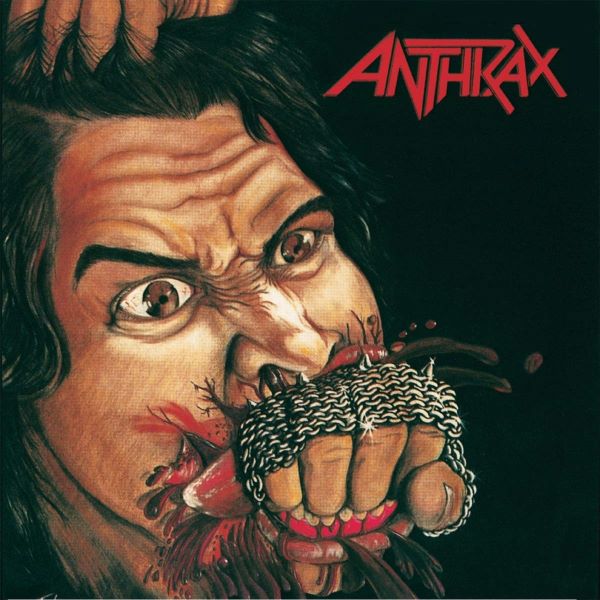
Anthrax – Fistful Of Metal
Released January 6, 1984 via Megaforce Records
Anthrax had started off in 1981 in New York, with Scott Ian and Dan Lilker forming the group. I’ll skip the Spinal Tap-worthy list of members who came and went through the first few years. The lineup for this album would feature Scott Ian on guitar along with Dan Spitz, Dan Lilker on bass, Neil Turbin on vocals and Charlie Benante on drums.
Fistful Of Metal was recorded in Ithica, New York; with Carl Canedy producing. Songwriting was credited based on member contributions, with Turbin having a huge role in shaping the material. Former Anthrax guitarist Greg Walls has said he contributed parts to various songs and was left uncredited – this was just one piece of the Anthrax band drama file folder, which needs its own warehouse to store at this point.
The album artwork was done by Kent Joshpe, a friend of Spitz’s. Joshpe had already designed the band’s logo so he was also commissioned for the interesting cover art, featuring a guy being smacked with a fistful of metal. The album art was actually banned in Germany for a time, though that ban is no longer in effect.
This album features ten songs at a thrash-tastic 35 minute runtime. There are various editions and reissues from over the years, I’m sticking with the original because tracking all the various incarnations of this album is a fool’s errand.
Deathrider
First song from the first album and jump straight into one of the best songs Anthrax have recorded in their 40+ year long career. If I had to suggest one song to someone to explain what thrash sounded like, it would probably be this one. This is all pounding and speed, straight ahead with zero bullshit. There’s probably a reason Neil Turbin named his later band after this song. Grade: S
Metal Thrashing Mad
Up next is another pounding, as relentless as the first. It’s a song about racing that sits in the standard thrash template, though Turbin executes some vocals not typically associated with thrash. That would be par for the course on this album.
This song is also where the term “thrash metal” came from, the phrase was sprung by legendary journalist Malcom Dome in the pages of Kerrang! Magazine while discussing this song. Grade: A+
I’m Eighteen
Easy enough here – Anthrax covered the classic Alice Cooper song. It’s fine, they did a good job on it. I don’t consider it essential or anything but there’s nothing wrong with it. Grade: B-
Panic
This one kicks up the speed a notch and lays an all out assault. This is Anthrax’s version of a “being on the road” song, which is a fair bit different from those of Bob Seger and Bon Jovi. The road was a long grind for those others, the road is literally beating your ass in this song. Grade: A+
Subjugator
It’s another amped up thrash track about fighting. It seems as though whoever is in the way is who is getting the beating. Also it seems Anthrax’s weapon of choice in the fight is Dan Spitz’s guitar, as he wields it here for plenty of solo action. Grade: A
Soldiers Of Metal
We’re fighting again, this time we are banded together to fight for metal. Can’t get through an ’80’s metal album without fighting for metal at some point. This is a pretty standard song but solid. Grade: B
Death From Above
Another straightforward song, this time about planes and bombing and all that. Grade: B+
Anthrax
I had sorta forgot that Anthrax had their own self-named song. It’s a pretty ripping one too, though it’s hard to tell if this actually about contracting the disease anthrax or just general mayhem. Cool stuff though. Grade: A-
Across The River
A quick instrumental here, but this one absolutely shreds and could have been fleshed out into a full song. No harm, though – still totally worthwhile. Grade: A-
Howling Furies
The last track is a bit of a horror story, being caught by some pretty nasty people or things that want to cut you up. I do wonder if this isn’t, at least in part, based off of The Warriors movie as both the Furies and “come out and play” are part of the song. I’m not sure but I’d wager a guess that it’s so. Grade: A-
Fistful Of Metal hit the streets on release – though it did not chart it was a big mover in the emerging metal scene. Anthrax themselves would tour behind the release, then endure several lineup changes before prepping the next album. Dan Lilker was fired and Neil Turbin quit, as Scott Ian and Charlie Benante became the driving forces behind Anthrax’s songwriting. The new incarnation of Anthrax would go on to a handful of gold-selling records and buzz throughout the scene, solidifying their place among thrash’s “Big Four” and somewhat leaving the first album behind.
But this album is more than deserving of its own praise. While it might not sound “original” among the decades of thrash offerings in this day and age, it had very little to be compared against in 1984. This was a nice, curbstomping record more than worth the time to visit with, even if other Anthrax albums overshadow this one.
Album Grade: A
At the end of the day, nothing to do but crank this up, start some shit and recall the good times of 40 years past.
And we’re off – to the Great White North to revisit a glorious dose of speed metal.
Exciter – Violence & Force
Released February 1984 via Megaforce Records
Exciter formed in 1978 under the name Hell Razor, the same year Judas Priest released the song Exciter. The song would, not coincidentally, offer a template for a faster, more aggressive sound that would come to be known as speed metal. Exciter the band would rechristen themselves in 1980 and pursue the noisy, thrash-like aggressive metal.
Exciter’s debut album Heavy Metal Maniac came in 1983 after the band signed to Shrapnel Records. Not long after, Jonny Z of Megaforce would get Exciter’s contract and the band was set to offer their second album on that label.
Exciter rode as a three piece – Dan Beehler on drums and vocals, John Ricci on bass and Allan James Johnson on guitar. The album was produced by Carl Canedy, who was a member of The Rods and who also produced the Anthrax debut Fistful Of Metal. Jonny Z was along for a production credit as well.
The cover picture offers up a scene both sinister and goofy. A person decked out in leather and spikes is attempting to break through a door and presumably do bad things to a victim who is trying to keep the door shut. This same figure was on the debut album cover but this second album marked his final appearance. Some have tried linking
Violence & Force offers ten tracks at a 41:34 runtime. It has been reissued by different record labels over the years. Curiously, a 2004 reissue from Megaforce removed a song – Evil Sinner was struck from the record and this is what is found on streaming services. I have no information as to why the song was plucked from the album, though it did turn up as a bonus track on the reissue of the prior album. Also of some note – the reissues were made possible by fellow Canadian metal luminary Jeff Waters of Annihilator, who bought the rights to the Exciter catalog so Beehler and company could get new issues into circulation.
Oblivion
Up first is a noisy and very brief guitar intro. It’s not much of anything but it doesn’t really waste any time either so it isn’t a detraction of any real sort. Grade: B-
Violence & Force
The first song in earnest is the title track. This one is a ripping affair, slamming along at a breakneck pace through its run. The lyrics bring exactly what one would expect from a song with this title, while Beehler offers up a few ear-piercing screams in the chorus and there’s a wild, dissonant guitar solo as well. Great way to kick off the album. Grade: A
Scream In The Night
Another blast of speed and aggression here about the classic metal topic of stuff in the dark coming to get you. It’s intense and pounding all the way through, with the gang choruses used throughout the record coming in full effect. Grade: B
Pounding Metal
This one eases off the gas pedal just a bit but remains slamming and intense. It is a very basic metal track, as evidenced by the title being repeated about a million times. It does stick out but the song is still pretty good even with the psychotic repetition. Grade: C+
Evil Sinner
Here is the deleted track, again present on original versions but gone from reissues. This does maybe sound like it was recorded somewhere else, perhaps why it was pulled later on. There’s nothing maliciously blasphemous here, it’s just a song about some sort of evil tyrant ruining stuff as they do. Grade: B+
Destructor
This one goes all out on the speed and does show off how closely related speed and thrash metal are. A very solid offering. Grade: B+
Swords Of Darkness
Exciter lay off the pace by a literal hair here and throw in another dark fantasy tale of battle, death and destruction. None of these battles go well for people who aren’t dark and evil, by the way. Grade: B
Delivering To the Master
A fairly long one here at six minutes and it comes with a quiet, moody intro passage. This marches at a slower pace with pretty sick riffs as it relays someone presumably about to sell his soul. A nice change of pace here. Grade: B+
Saxons Of The Fire
This goes all out for sure. It’s a blistering track that venerates the ancient Saxons in battle. The limits of the albums’ production only enhance the atmosphere on this one, it is a barnburner that goes straight for the throat. Grade: A
War Is Hell
We close up shop with a song that goes back to a mid-pace setting and is also the longest track on the record. The punk and NWOBHM influences come straight through on the vocals while the main riff is a straight razor throughout. Grade: A-
Violence & Force was a landmark album for heavy metal, its cacophony of sound would inform thrash metal and later the extreme metal movement. Exciter would not become a “huge” band in the grand scheme of things but they would enjoy a bit of sales success for these early albums and also be cited as an influence from people all over the metal spectrum. The production was a bit lacking due to financial limitations but that would become an album highlight as opposed to a detriment.
Exciter would go on to tours with Anthrax, Mercyful Fate and Motörhead. They would subsequently begin shifting band members and pursuing a more melodic sound. Exciter broke up a few times over the years but have reformed under various line-ups, no one original member had a constant presence through the band’s full run.
This album offers up a fine slab of nasty, aggressive heavy metal. While it’s not technically challenging or “innovative” I suppose, it is a significant point in metal history. It is also, while sounding heavy like other offerings of the day, very much its own thing. Exciter didn’t sound like Metallica or Slayer nor did the reverse happen. Violence & Force is its own experience that won’t be found in anyone else’s recording catalog.
Album Grade: B+
Understanding the full scope of heavy metal requires getting under the hood. No doubt that Ride The Lightning was influential in 1984. But Exciter lie as a central cog in the development of heavy metal in the early 1980’s. It was ok to be fast and nasty, and also listenable alongside that.
Once again I’m going back to 1984. This time it’s to explore a debut album that would prove massively influential to the coming extreme metal movement.
Celtic Frost – Morbid Tales
Released November 1984 via Enigma and Metal Blade Records (US)
Celtic Frost was formed in Switzerland in 1984, out of the ashes of Hellhammer. That band had been intentionally lo-fi in sound and had generated some nasty reviews from parts of the heavy metal press, to a degree that the negative reputation would follow Celtic Frost through their first few albums.
Celtic Frost was formed by guitarist and vocalist Thomas Gabriel Fischer, credited to the stage name Tom G. Warrior; and bassist Martin Erich Stricker, who went by the stage name Martin Eric Ain. While Tom Warrior would go by his real name and pseudonym interchangeably, Ain used his stage name strictly through the course of his life. Drums for this recording were provided by Stephen Priestly, who would later join the group fully during the ill-fated Cold Lake period.
Morbid Tales was initially released as a six song EP in the European market by Noise Records, who financed and helped produce the recording. In the US two songs were added and the album was licensed to Enigma and Metal Blade Records. I will be covering the US version today. A few reissue versions with bonus tracks and the Emperor’s Return EP are available.
Note that on streaming and on certain reissues, the intro to the first song is a separate track called Human. This was originally part of the first proper song Into The Crypts Of Rays.
Into The Crypts Of Rays
The opener is a straightforward, pummeling thrash tune that sounds suitably primitive but also a fair bit developed. This isn’t the woeful noise of Hellhammer, there is clearly something more here right from the drop. While CF were significantly influential on black metal, there’s also something here as an early template for death metal.
The song is a bio piece on Gilles de Rais, a French baron who was an ally of Joan of Arc. The baron was also implicated in and convicted of murdering 140 people, mainly children. The truth of de Rais’ guilt has been in question since his execution in 1440, but his supposed bloody deeds have been fodder for metal songs for the past few decades. This may have been the first one but I am not able to say that with certainty.
Whatever the case, this song introduces Celtic Frost to the world with a swift kick in the ass. Grade: A+
Visions Of Mortality
This one opens as a mid-paced effort, showing off the true haunting and sinister atmosphere Celtic Frost would conjure up throughout their career. It jumps into a thrash movement at one point and bears early indications that this band would offer up more in the way of song arrangement than simply playing loud riffs. A nice musical setting for a dark tale of someone seeking to become immortal through whatever means necessary. Grade: A
Dethroned Emperor
A very sick and twisted riff for this one, total caveman stuff here as CF run down the tale of a ruler who is removed from his throne by force. Even with the primitive feel, there are bits of arrangement and atmosphere thrown in. Grade: A-
Morbid Tales
This one kind of rocks out a bit in the intro before the song proper offers up a very early slice of what could be called black metal. The morbid tale in question is a battle between sorcerers or demons or something, it’s like a Dungeons and Dragons adventure laid out in lyrics. But yes, the foundation upon which one of the world’s most controversial subgenres was built can be found right here. Grade: A
Procreation (Of The Wicked)
Nothing too complicated here, but this riff is just impossibly savage and also catchy. The tale offered up here is one of how people are basically cruel and evil and there isn’t much to be done about it. There’s also a brief demonic utterance at the end to drive it all home. This song is just impossibly brutal and hypnotic. Grade: S
Return To The Eve
This is a fanciful tale of someone who longs to be in a recurring dream they have but the person is often rudely interrupted by reality, which becomes its own nightmare. A pretty simple tune but there are bits of atmosphere building in here with a spoken word passage and other small embellishments. Grade: B+
Danse Macabre
This goes off the beaten path and conjures up an eerie interlude. It is a creepy, horror movie passage vibe with no true discernible lyrics, just a few phrases echoed out in distorted fashion. The bit is well done but I do think it overstays its welcome at 3:52. But the album isn’t that long anyway so it’s not eating a ton of time either way. Grade: C+
Nocturnal Fear
The album closes with a balls-out thrasher that screams Venom. It’s another twisted tale with demon’s names and stuff like that in it, I don’t know what it’s talking about any more than Tom G. Warrior did when he wrote it. But it’s a total burner of a song. Grade: A
Morbid Tales was not just a debut offering from Celtic Frost, it was an album upon which the future of extreme metal would be based on. No need to offer up chart information here because there isn’t any – CF doesn’t seem to have any chart placements at all until their final album in 2006.
But rest assured this album got around on to the turntables of willing subjects the world over, and within five years there was both a death metal scene and the early strains of the infamous black metal movement were taking shape. Scores of artists from the extreme metal pantheon credit Celtic Frost and this album with being the first early guide into the true depths of sound. This band would join Bathory and Mercyful Fate as the 1984 pioneers of extreme metal, coupled of course with the earlier influence of Venom.
When I ranked the Celtic Frost albums some time ago, I had this slotted in at number three. As my grades here indicate, I am very high on this one so just imagine what I think of the other two above it. There is no doubt that this is an essential piece of heavy metal history.
Album Grade: A
Celtic Frost would have many peaks and valleys over their winding, on and off again career. But this album helped kick off a revolution within heavy metal that has kept generations of headbangers in business.
For an explanation of my grading scale, head here.
For questions, comments or concerns, use the comment form below or head to my contact page.
My posting schedule is still all messed up – though the things that happen are minor in significance, things do keep happening and they keep pushing me back. I will again pivot and adjust and get things on track.
This week I’m going to pull out the “EASY” button. Slayer did not release an album proper in 1984, but they did release two distinct records – an EP and a live set. Today I’ll discuss the EP, which is very short but a significant marker in Slayer’s development.
Slayer – Haunting The Chapel
Released June 1984 via Metal Blade Records
Slayer’s debut record Show No Mercy was a huge success for upstart label Metal Blade, so label head Brian Slagel quickly commissioned an EP from his hot new act. The members of Slayer – Tom Araya on vocals and bass, Kerry King and Jeff Hanneman on guitar, and Dave Lombardo on drums – were brought to a North Hollywood studio with Slagel himself turning the knobs on the production console.
The studio would have a negative effect on sound initially but also provide a hell of a positive. The studio did not have carpeting, which meant that drums slid everywhere when Dave Lombardo tried to play them. He had to resort to having the band’s roadie help out by holding the drums. This roadie was Gene Hoglan, widely known today as one of heavy metal’s greatest drummers after stints with Dark Angel, Death, Testament, Strapping Young Lad and many others. Hoglan also helped Lombardo set up the latter’s first double kick drum and helped him along with how to play it. All these years later both drummers are considered the top of the pack, but forty years ago it was them trying to figure out how to hold a kit together in a shitty studio.
Since this is just an EP there’s room for another funny Gene Hoglan story – Gene recounted in this 2006 interview with Decibel Magazine about Slayer that when he joined up to be the band’s roadie, he thought he was only going to be working the lights. He didn’t know he was also supposed to help schlep gear in and out and set up the stage show. The band gave Hoglan his walking papers a bit later, and he would join Dark Angel not long after.
Also involved in the EP’s production was Bill Metoyer, who held the engineering role on Show No Mercy. Metoyer recounts in the same Decibel interview that he was Catholic but for whatever reason had no problems with the lyrics on the debut album. But when he heard Tom Araya belting out the first lyrics to the EP, which were “The Holy Cross, symbol of lies, intimates the lives of Christians born, he quipped that he would be going to Hell for it. Metoyer seemed to take it in stride and is still very much among the non-Hell dwelling living today, having served as producer to a massive list of metal albums since then.
With those amusing stories out of the way, let’s get to the topic at hand. The original version of Haunting The Chapel was three songs, the first three in order here. The fourth song was added later on in a reissue capacity, I will include it here today because it’s not a ton of ground to cover. The total runtime with the added song is 16:55, I hope you all didn’t have anywhere important to be.
Chemical Warfare
Up first is a track with a fairly hefty six minutes. Slayer here shift gears some from the “general chaos and evil” of their debut album and head decidedly into a thrash direction. And this song is thrash, 100% through. It does retain that cavernous, evil Slayer feel but this is pure thrash. There are a few changes in structure to keep the fairly long track moving along.
This is a wicked song with its lyrical depiction of being hit with chemical weapons, a terrible way to die or be wounded. Anyone who thinks Kerry King or Jeff Hanneman couldn’t play solos should listen to this song – they were both quite capable of playing. The song is great and is an early Slayer classic. Grade: A
Captor Of Sin
This one calls back to the evil ways of Show No Mercy, though still retaining a thrash underpinning to it. It’s a wild ride as the son of Satan comes to Earth and takes over, vanquishing everything in its path. The bad guys win this one. Grade: B+
Haunting The Chapel
The title track is another Satanic romp through holy victims. It’s another dissonant, thrash-filled journey on the Dark Lord’s conquest of the mortal realm. It doesn’t offer a whole ton of dynamics but it’s still a quality Slayer track. Grade: B
Aggressive Perfector
This final song, a bonus on reissue versions of the EP, was originally released on the third volume of the Metal Massacre series. This was the first Slayer song ever released, pre-dating the debut album. It does stand out with a bit less production than the other three songs but this is not a rudimentary throw-away track – it’s a very good early offering from the group. Grade: B
Haunting The Chapel did not perform on charts but it was a solid release that kept Slayer’s name in the forefront as the thrash scene unfolded in the mid-’80s. Even today with the band’s work (apparently) done, the EP stands as a fan favorite for its marked transition between the first two albums. The first two songs remained live favorites through Slayer’s entire career and the EP is still sought after 40 years later.
Album Grade: B+
This was a well-done EP that offered up fresh material, it was not by any means a throw-away effort just to make a buck. It was a smart way to help out both upstart band and record label, both of whom became central to heavy metal in the years since.
I was absent from here last week, had a minor injury that laid me up for a moment. All is well now and things should be routine from this point.
Also – this week I’m introducing a new aspect to this – I’ll grade each song as well as the album. Instead of reviewing by numbers I’ve chosen to use letter grades. This transition will take a little time to become a regular feature and I’ll do a quick post later this week to explain it more, but I decided to go with it starting today as I’ve been sitting on it for awhile now.
Today I’m going back to 1992 and looking at an album that saw Megadeth gain a great deal of mainstream success, though not quite as much as one member was hoping for.
Megadeth – Countdown To Extinction
Released July 14, 1992 via Capitol Records
Megadeth were hot off of their 1990 masterwork Rust In Peace, widely considered one of thrash metal’s finest hours. By 1992 the music scene was still reshuffling from the nuclear fallout of the summer of 1991 – while hair metal was the biggest casualty, thrash also suffered under the weight of grunge.
Thrash also suffered due to its biggest practitioner changing tack – concurrent with grunge was the arrival of Metallica’s “Black Album,” which abandoned the general structure of thrash and offered a more accessible version of heavy metal. Dave Mustaine’s former band saw the highest levels of success possible from this shift, and less than a year later a more accessible version of Megadeth was on offer.
The band accomplished something they had not managed before this point – they brought back every member from the prior album. Dave Mustaine would lead the band on guitars and vocals. Marty Friedman was the lead guitarist. Dave Ellefson provided bass and Nick Menza was the drummer. Songwriting was credited to Mustaine, with individual music and lyrics offered up by the other members and credited as such. The album was produced by Max Norman and Dave Mustaine.
This record features 11 songs at a time of 47:26. There are several re-issue versions available with a wealth of bonus material, today I’ll stick to the base album. Four songs were released as singles and were constant presences on MTV during the album cycle.
Skin o’ My Teeth
The opener shows that Megadeth didn’t sacrifice being heavy in the quest to be more accessible. This is a rolling, groovy beast of a song that quickly establishes itself as one of the album’s highlights. The song has its subject escape a number of near-death situations. It’s not entirely clear of this is a suicidal rampage or just bad luck and Mustaine has waffled on the answer to that over the years.
Whatever the case, this is one banger of a track and even while shifting direction, Megadeth kept their heaviness and guitar-focused attack in place. Grade: A+
Symphony Of Destruction
Up next is the album’s lead single and what has become Megadeth’s most widely recognized song. This one is super simple, with a riff that anyone can play and short, concise lyrics about how power corrupts and some world leaders send their people into chaos. It borders on being overly simple but still possesses the trademark Megadeth precision and Mustaine’s snarling delivery really enhances the track. Grade: A
Architecture Of Aggression
The song itself punches well but it also very straightforward, perhaps to its detriment. Its subject matter is that of the first Gulf War in 1991, and parts of CNN reporting on the first night of bombing are interspersed through the song. The song also offers the message that a nation’s leader is often credited for building their country, while the truth is that the country is often built upon the bones and blood of common people. Grade: B
Foreclosure Of A Dream
This one offers up a bit of thrash to it while also incorporating some acoustic runs alongside the more conventional electric passages. This one is concise but does offer up some movement to it, shaping up to be a more dynamic offering. The topic at hand is the end of the American Dream, as the 1980’s and early ’90’s saw erosion of the job base and farming sector of average US households. The dream was sold out for favorable deals with corporations, something that has only grown in scope 30 years later. This song does a great job of both delivering its message and making a heavy song accessible. Grade: A
Sweating Bullets
Up next is easily the most contentious song from this record. It does seem in some cases that whether or not someone likes the album hinges on what they think of this song.
It’s a song about insanity, Mustaine inserts several references to multiple personalities and schizophrenia here as well as overall metal health demise. Some of the song’s lines can be funny or cringe, depending on how someone takes them. While I wouldn’t suggest Dave Mustaine is mentally ill, he is clearly nuts so this probably wasn’t hard for him to write. The music is again suitably heavy and kept simple.
So what do I think? I personally love this song. Hell of a jam. Grade: A
This Was My Life
This is a song that keeps pretty strictly on the rails. Here Mustaine ruminates over the wreckage of an old affair he had and has apparently composed several songs about over the years. This song is fine but it does pale compared to a lot of the other stuff on this album. Just not nearly as much going on here. Grade: C+
Countdown To Extinction
Megadeth covered nuclear annihilation on their last album but here they take the title track and do something a bit different. The band focus on the extinction of species as well as the practice of “canned hunting,” where animals are kept in confined spaces and unscrupulous hunters pay big money to “hunt” them in close quarters. This is not Ted Nugent’s favorite song.
This tracks is very well done, a melodic and mid-paced tune with a socially conscious message very much in place with the atmosphere of the early ’90’s. Grade: A
High Speed Dirt
The pace kicks up a bit here as Megadeth offer up a song about skydiving, something they were very much into around this time and did on MTV’s Headbangers Ball in a memorable episode. There is a kicker, of course – the term “high speed dirt” means the diver is getting to the ground far faster than they’re supposed to, as in the parachute isn’t working. At some point there will be a splat. Grade: B+
Psychotron
This one is a plodder to a degree, another mid-paced marching riff kind of thing that Megadeth would use a lot over the next many years. The song is about the semi-obscure Marvel comics character Deathlok, a partial cyborg of some kind. The song is good though not really a standout. Grade: B-
Captive Honour
Up next is one very curious track. It is pretty well done musically, with the arrangement going a few different places and moving the song along more than the straightline approach on many others here. The subject matter is about the pretty awful conditions of US prisons, how some young punk who did something seriously wrong gets tossed into the can and becomes the “bitch of the block.”
The lyrical presentation here is a bit all over the place and does cast the song in a dimmer light for me. There’s rumination on the famous Stalin quote “one death is a tragedy, a million is a statistic” and then there’s a whole skit between judge and convict that seems more goofy than anything. About the time the phrase “man-pussy” is used is when I kind of check out on this one, though again the music is really good and it’s a very mixed bag. Grade: C
Ashes In Your Mouth
The album’s closer is the longest song and also the biggest throwback to prior Megadeth albums. This is a blistering jam that recalls some of the more complex passages of Rust In Peace, though also keeps the verses slimmer in keeping with this album’s presentation. It’s a pretty brutal track about the human condition and the need to inflict violence on one another for perceived transgressions, all the while never being satisfied with the hollow victory of revenge. This is a total smokeshow of a song and a fantastic entry in the Megadeth catalog. Grade: A+
Countdown To Extinction would do what Mustaine set out to – generate a wider audience for Megadeth. The album debuted at number 2 on the Billboard chart and has been certified 2 times platinum, both career highs for Megadeth. It may have alienated some of the old school metalheads, but by 1992 that contingent was pretty much alienated from all sides. The pick-up of new fans more than made up for any disgruntled old fans.
Someone else who might have been disgruntled was Dave Mustaine. While Megadeth was seeing more success than ever, they still paled in comparison to Metallica, who were at stratospheric heights by this time. I do recall some derision over this album only getting to number 2, when Metallica’s opus hit the top spot. I don’t know totally how Mustaine felt about it all, trying to track his thoughts over the years would be utter madness. But barely anyone in music through that decade touched what Metallica did, there shouldn’t be any shame in how Megadeth fared in these years. Mustaine would chase the elusive “radio single” for awhile after this.
I always enjoyed Countdown To Extinction. I think it has a lot of great songs on it and even the songs that aren’t all that hot are pretty decent listens. The change to more lean songs didn’t bother me, I already had my mind well blown by the music shift of 1991 and I was game for anything by this point.
I was happy to see Megadeth get their due and with a quality album that still ran heavy and with a strain of socially aware topics.
Album Grade: A
Countdown To Extinction is a fantastic cut of metal from the “alt-metal” years of the 1990’s. Megadeth fashioned songs that could reach out to a wider audience but also held up credibly well against the rest of the now legendary Megadeth catalog. The album’s singles were memorable cuts, the lyrical commentary was often more sophisticated that what was found across other metal albums, and Mustaine and Friedman were still able to include a fair bit of guitar theatrics. Great work all around.
For today I’m gonna continue extolling the virtues of the music of 1984. In this case I have long since covered the album in question and I’ve also talked about the song a bit when I covered the cassette singles I have. But today I’m gonna go more in-depth on one of my favorite Metallica songs, which just so happens to be from that hallowed year of 1984.
Creeping Death was the only actual single released to market from the album Ride The Lightning. Two other songs, For Whom The Bell Tolls and Fade To Black, were released as promo copies to radio. While today we talk about Ride The Lightning in terms of an album that has sold roughly seven million copies in the US alone, bear in mind a lot of those sales came during the band’s world-conquering run for their 1991 Black album. The album didn’t go gold until 1987, while today’s single only has a gold certification from Australia for 35,000 copies sold. What happened in 1984, while vital to the band’s reputation and success, was a far cry from what happened when they became literally the biggest band of the 1990’s.
So let’s peel back all the layers of Metallica’s legacy and get to the core of Creeping Death – this song is an epic thrash masterpiece that centers around the plagues of Egypt as told by the Holy Bible. The verses that tell this story are in the Book of Exodus, which will become especially ironic in a moment. I don’t have the specific verses on hand but I consider it a spectacular passage from the Bible and I don’t even subscribe to the religion. It’s a goldmine for heavy metal references, only surpassed by the concluding Book of Revelations.
The short version of the biblical story is this – the Hebrew people were kept as slaves in Egypt for several hundred years. Their god finally grew tired of it and appointed Moses as his prophet to lead them out of their hardship. The Egyptian pharaoh did not release the Hebrews, so their god delivered ten plagues as reprisal. After this, the Hebrews were freed and began their forty year exodus to the promised land of Israel.
Metallica’s song picks up at the tenth and final plague, which was awfully heinous. A destroyer was sent to kill the first born son of every Egyptian family. Hebrew families were instructed to paint lamb’s blood on their doors so that the Destroyer would “pass over” their dwellings, this is the origin of the Jewish Passover holiday.
The song is unique in that it tells the story from the perspective of the Destroyer. Usually this story is recounted in the terms of Moses and his people led out of Egypt, or the Pharaoh and his dumb decisions during and after the plagues that led to he and his forces being drowned in the Red Sea. But we are dwelling in thrash metal here and we get to the heart of the matter – sometimes things are brutal.
Metallica does a masterful job of telling this story. The verses are interspersed with specific passages outlining the plight of the Hebrews and the coming storm the Egyptians faced, while the chorus outlines the role of the Destroyer and the devastation he is about to bring to Egypt. It’s honestly pretty clear and concise, nothing is really left to interpretation here even though the whole premise of the story is widely open to interpretation.
And the music only serves to further the brutal nature of the plagues. This is an absolute thrash magnum opus, being a massive serving of riffs and pummeling despite its length of 6:36. There is a bit of an intro before the meat of the song kicks in and the riffs keep slamming in consistent fashion through both verses and chorus. And of course we get a wild solo from Kirk Hammett before the most famous part of the song kicks in.
After the solo, the song breaks down into a chunky bridge that has become central to the Metallica experience. James Hetfield shouts “Die by my hand, I creep across the land, killing first-born man” as gang vocals shout “Die!” behind him. This part is often extended for several minutes live to encourage crowd participation and is one of the most compelling moments in live music.
As for how the song came about, that story comes in two parts. It was Kirk Hammett who originally came up with the signature bridge riff when he was just 16 years old, which puts this early thrash riff in 1978. He would introduce it to the band he was in prior to Metallica, who was ironically the pioneering thrash act Exodus. Exodus messed around with a demo called Die By My Hand but it went unused, then Kirk brought it to Metallica when he joined in 1983. Kirk outlined this story to Louder.com in a 2014 interview.
Metallica would fill out the song as they were writing for Ride The Lightning. While sources are locked behind unaccesible interviews, the band got the idea for the song from the old Charlton Heston movie The Ten Commandments. It was Cliff Burton who coined the “creeping death” idea from the movie, and then the band was off to the races to flesh out the song.
Creeping Death has reigned as one of Metallica’s dearest signature songs, even in a career filled with many examples of prime material. It ranks as the band’s second most-played song live, just behind Master Of Puppets. The song has been widely covered by acts like Stone Sour, Drowning Pool and Bullet For My Valentine. It has also made the cut on to classic rock radio despite not getting a ton of airplay originally.
It was dark days in Egypt when the Destroyer visited destruction upon the populace of Egypt, but it was absolute heavy metal glory when Metallica recorded a song about it a few thousand years later. For all of the arguing about Metallica these days, there is no arguing their undisputed mastery of the genre they were central to the creation of forty years ago, and Creeping Death is a pinnacle example of that.
Before I even get started, yes I was working on this post before last week’s news of the two reunion shows.
Slayer compiled a run of eleven studio albums in their 37 year long career* and have been one of heavy metal’s most prominent acts through that time. Finally today I offer up my ranking of their studio efforts.
Slayer is an interesting case in album rankings – often when I do a ranking there are one or two albums at least that I think are awful and not even worth listening to. In Slayer’s case I actually had to play a few albums to decide the bottom of the list, as everything from their tenure has merit. They don’t have, in my view, an album that should be thrown in the trash. But they still have some that are better than others, and in cases way better, so doing a ranking isn’t all that tough.
This will comprise Slayer’s full-length studio albums. It won’t include EP’s like Haunting The Chapel or the covers album Undisputed Attitude. Even with last week’s news that Slayer are reuniting for a couple of festival shows after a five-year retirement, I do still figure that this ranking will be final as I’m not expecting new studio material. My guess is that Slayer is not getting back into full-time activity and are simply doing a few shows as they previously said they might. But I could be wrong and they might screw around and cut another record someday, hell if I know.
I have covered a handful of these in detail before, I’ll leave links to those posts when applicable. That’s about all there is to go over, let’s have at it.
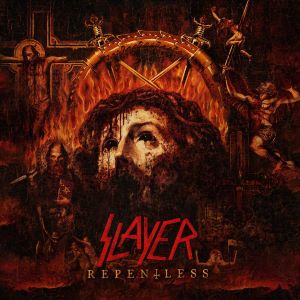
11 – Repentless (2015)
The bottom of the barrel here is the final album from Slayer. This was recorded and released after the death of guitarist Jeff Hanneman in 2013. Gary Holt, who had been filling in on tour for Hanneman since 2011, would play guitar but not contribute writing-wise.
This album is fine – it’s a no-frills, heavy metal attack that gets to where it needs to go. It is missing something, that probably being Jeff Hanneman. It doesn’t have much dynamic flair to it and doesn’t really stand out to me. I’m more than happy to play the album but I’m not really thinking much about it when the last song heads out.
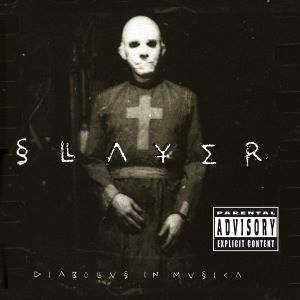
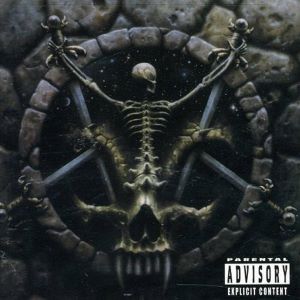
10 – Diabolus In Musica (1998)
Slayer chose here to “fit in” to the times, which at this time was nü-metal. This record doesn’t lack for groove or chunky, downtuned riffs. It does retain the “Slayer sound” and isn’t some radical departure, but it does stand out as maybe Slayer’s left field moment in their catalog. There are nice moments on here like Stain Of Mind, but the production is honestly a bit undercooked and the album feels very samey.
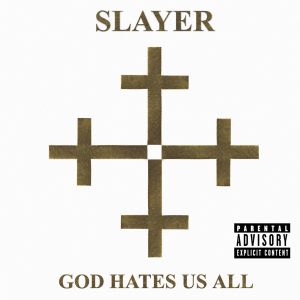
9 – God Hates Us All (2001)
Infamously released on September 11, 2001, this album saw something of a return to form for Slayer. This one is straightforward and brutal, leaving behind the groove tendencies of is predecessor. This one still though lacks real memorable spots that define the band’s greater works. Probably most memorable is the line from New Faith, where Tom Araya screams “I keep the Bible in a pool of blood so that none of its lies can affect me!” Pretty crazy stuff there.
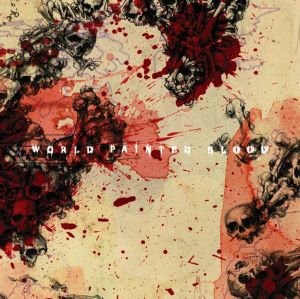
8 – World Painted Blood (2009)
This marked the final album with Slayer’s original line-up, Dave Lombardo would leave and Jeff Hanneman fell ill and died after this. This album is a mixed bag but it’s full of songs that work well and get the job done. Stuff like Hate Worldwide and Unit 731 hits hard and leaves an impression. The band sound cohesive and maybe with a bit more bite than normal on this one.
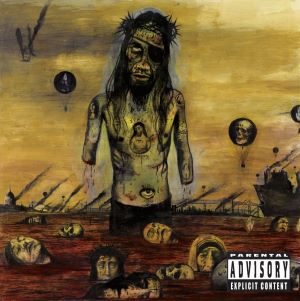
7 – Christ Illusion (2006)
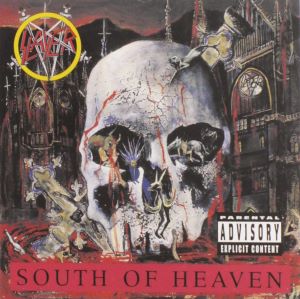
This marked the return of Dave Lombardo to recording for the first time since 1990. This one is a pretty special album, it really calls back to classic records like South Of Heaven and Seasons In The Abyss. It’s a lean and polished affair here, songs like Jihad and Skeleton Christ were great to hear after several years of Slayer being “in the wilderness,” relatively speaking. Massive return to form.
6 – Divine Intervention (1994)
Slayer entered this record with their first line-up change, replacing Dave Lombardo with Paul Bostaph. The results were pretty killer – the album could be called static but it still packs a hell of a punch. 213 is a haunting near-ballad about Jeffery Dahmer, and songs like Dittohead and Fictional Reality hit out at issues in the real world. It was a great way to get over the hump of losing a dynamic band member.
Slayer had just offered up one of thrash’s most unbelievable albums two years prior. Rather than try to record that again, they took the wise step of slowing things down and operating at a different tempo than before. While the departure from speed alienated a few fans, many more were drawn to the expanded dynamics found here. Mandatory Suicide is an absolute banger about the horrors of warfare and Silent Scream still thrashes even at a bit slower pace. Whoever tuned out on this album truly missed out.
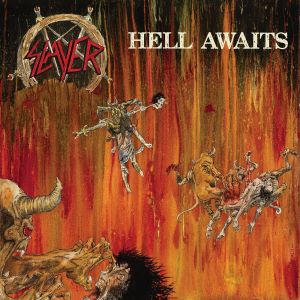
4 – Hell Awaits (1985)
The second album took what worked on the first and tweaked the formula a tad, injecting more Mercyful Fate influence and also leaning more toward the thrash that Slayer would become famous for. This one is pretty lean and killer, with awesome songs like At Dawn They Sleep and Praise Of Death jumping out of the speakers.
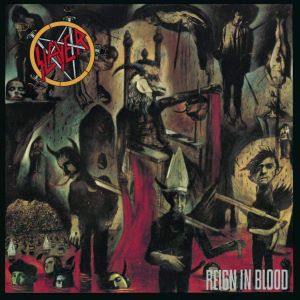
3 – Reign In Blood (1986)
It is the seminal thrashsterpiece that is still spoken of in reverent tones 38 years later. This was a nuclear warhead dropped on the metal soundscape in 1986, played with such speed and ferocity that many people couldn’t comprehend what they were hearing. It is the landmark by which all after has been judged.
It is a fantastic album, bookended by a pair of more dynamic tracks in Angel Of Death and Raining Blood that really show the band in top form. And everything in the middle is a total beating, which is a compliment but also the reason this one ranks at number 3. I just honestly don’t always want my ass whipped, and this album does exactly that. I love it, but damn, lay off a bit, bro.
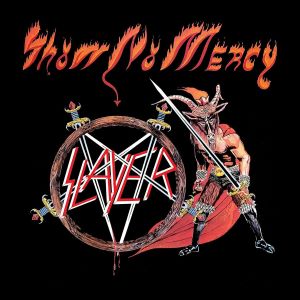
The debut was quite a piece of work – not even quite thrash, though it still gets that label. It’s a mashup of the band’s early influences, those being NWOBHM and the early extreme metal, like Venom and Mercyful Fate. It’s so Satanic that it hurts – in a hokey way, not an actual ominous, evil way. But songs like Die By The Sword and The Antichrist are still 100 percent killer and this one will always hold a special place in my black, cold heart. By 1992 I had all of Slayer’s albums and this one was the one I kept coming back to time and time again, well except for one.
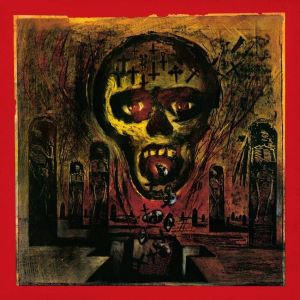
Up at the top is the album that Slayer ran into a new decade on. By then, people were used to the band’s new lower-tempo sound, though the faster pace got brought out in spots, such as the opener War Ensemble and the later Temptation. This one is just great from front to back, the militant crunch of the riffs work alongside Tom Araya barking about social ills or various evils. The ending title track is a total masterpiece and this album wins the crown here today.
That does it for the Slayer album ranking. Maybe this is the last time I’ll need to rank Slayer albums, or maybe there’s one more down the road, hard telling. Feel free to share your own top Slayer picks and other ranking stuff below.
This week I’ll leave 1984 alone and explore other waters. We can politely ignore the fact that I’m going to the other massive year in my musical fandom, the apocalyptic soundscape of 1991. And few soundscapes were more world-ending than that of Brazil’s metal madmen and their extreme thrash masterpiece.
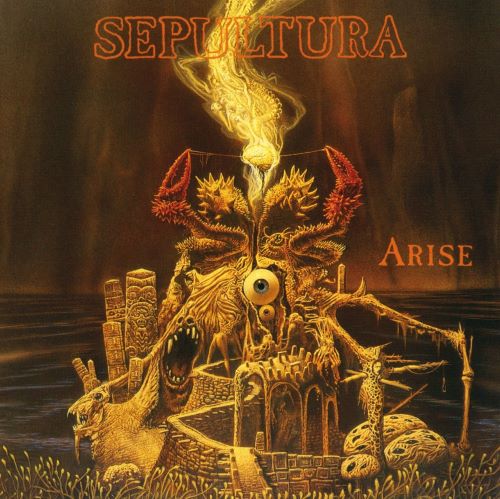
Sepultura – Arise
Released March 25, 1991 via Roadrunner Records
My Favorite Tracks – Dead Embryonic Cells, Arise, Infected Voice
By 1991, Sepultura were through a few demos and two full-length efforts, and their profile was on the rise all through the world. As heavy metal was moving into more extreme directions, Sepultura were in prime position for their “thrash plus” metal to have an even bigger impact, which it certainly would.
Arise was recorded at Morrisound Studios in Tampa, Florida during 1990 and ’91. It was produced by the band as well as Morrisound mastermind Scott Burns, who had a massive impact on the early 1990’s metal scene. Burns cranked out a host of extreme metal’s finest albums out of the Morrisound hotbed, and this one was one of the crowning achievements from that period.
Sepultura’s line-up was the same as it had been through their full-length recording history – Max Cavalera was on guitars and vocals, his brother Igor Cavalera was the drummer, Andreas Kisser was the lead guitarist and Paulo Jr. was credited as the band’s bassist. In a twist, Paulo Jr. did not actually play bass on the albums, it was Andreas Kisser who actually recorded the bass parts. This was the final album for that arrangement, Paulo did begin recording bass on the follow-up Chaos A.D.
Today’s album features 9 songs in 42 minutes, a tad more bulky than a lot of peers at the time. A few re-issues and other editions exist with bonus tracks, they can be worth seeking out as they have a supremely excellent cover of Motörhead’s Orgasmatron.
Arise
The title track opens as many songs here do, with a creepy industrial-tinged intro. The setup is brief as the band slams in with riffs coated in their sick guitar tone, simple yet amazingly effective at hooking the listener in to this maelstrom of instrument bashing.
Arise may come off as an uplifting thing on surface level, but this song is about the war between religions, politics and other ways people define themselves as “better” and how it is killing the world. We only “arise” after the obliteration of mankind, under a pale grey sky – this is the end of it all, not a self-help track.
This was released as a single and got a music video, featuring the band playing in a desert. A few poked fun since the scene mimicked Slayer’s Seasons In The Abyss video. MTV was not a fan of the video in the US, not airing it due to a figure of Jesus hung on a cross and in a gas mask.
Dead Embryonic Cells
Another brief, crazy industrial sequence opens into another absolute scorcher of a thrash track. A sick rhythm riff slices through while Andreas offers up some trippy leads over everything. The song is about how people are born into a world already up shit creek. This is not simply a straight up thrash number, either – this song goes through several movements and changes, all the while retaining its core and brutal aura. My personal favorite of the entire Sepultura catalog.
Desperate Cry
This gets a nice, brief acoustic opening segment before launching into its doom-thrash main bit. It’s a tortured song (go figure) about someone facing their dying moments. The acoustic bit pops up again briefly in the middle, before more electric chugging commences to headbang out to the end.
Murder
This is a pretty straight ahead track in terms of thrashtality. The song is a grim look at Brazil’s prison system and their very, very bad track record in dealing with inmates. The topic is grotesquely disturbing and continues to this day, as I understand it.
Subtraction
On to another song that is like a thrash homing missile, this one takes off and doesn’t stop until it hits the target. There is a fair amount of “chug” and groove in this one too, showcasing that Sepultura would be a massive influence on 90’s metal to come. The song is about how a person loses their individuality through the pursuit of money and glory – subtraction of personality, as Max howls in the chorus.
Altered State
Here we get a howling wind start and some South American tribal drums to kick things off. This would be a new addition for Sepultura but would be far from the last – this drumming style would permeate Chaos A.D. The song’s title was taken from a movie of the same name and is about human experimentation on brains, fun stuff.
Under Siege (Regnum Irae)
A small bit of a stylistic departure here as the song moves quite slowly, but the doom-thrash thing fits the album well. Parts of the lyrics are transcribed from the controversial The Last Temptation Of Christ, and the song is about how people are generally born into or forced into their religion of “choice,” rather than freely picking it. In the hands of lesser bands this concept could have fallen apart pretty quick, but Sepultura show they are quite capable of working with different lyrical and musical concepts here.
Meaningless Movements
It’s back to full on thrash here, though still tempered a bit in pace. The song is another study in religion and the effects it can have on personality, essentially warping someone and especially casting out anyone with a dissenting view.
Infected Voice
The album’s closer is a true testament to Sepultura’s sheer thrash insanity, this song goes harder than hard. The running joke has been that the song is about Max Cavalera’s actual voice, which would get confused with a rabid grizzly bear before it was compared to another singer. But the song is actually about the fear of growing up, essentially, having to make tough decisions and all of that. It’s actually the most pragmatic song on an album full of deep and dark themes.
Just as music was shifting rapidly in 1991, Sepultura would truly announce their presence with Arise. The album would chart in at least six countries, no super high positions but a truly international showing. It would gain a silver certification in the UK as well as gold in Indonesia. By 1993 the album had shifted one million worldwide units, just as their true mainstream arrival in Chaos A.D. Would launch.
Arise is also critically hailed by many as Sepultura’s finest hour. The reviews from the metal press have been glowing, both on release and in the 33 years since. It makes many metal “best of” lists. The critical acclaim at the time helped vault Sepultura into widespread coverage just as heavy metal was again mutating into many other forms. The band’s influence on the mainsteam of 90’s metal can be heard in both the “groove thrash” and alt-metal to come and even in the nü-metal that would comprise the latter half of the decade. And Sepultura were kingpins of the extreme metal movement, being vastly influential to death metal and most any form of the world’s darkest arts.
I would personally hear this album for the first time in the late summer of 1991, just as I entered my freshman year of high school. A dude in front of me in algebra class knew I liked metal and asked if I’d heard this yet. I had not, so I borrowed his walkman for a minute and checked this out. I was totally blown away. I had been into the “big four” by this point but hearing this was a total ass kicker. Thank you Shane, wherever you are, for introducing me to this and shaping my musical journey, as well as probably truly rotting my young brain.



 The Crooked Wanderer