Emperor – Thus Spake The Nightspirit

This post was part of a series that I called S-Tier Songs. I later decided to abandon the series in favor of a simpler Song of the Week format. I am keeping these posts as I wrote them but removing the old page that linked to the list of S-Tier Songs. This final post in the series explains my decision to change up how I do it so I’ll leave the introductory stuff. Enjoy.

And now, a word about the series as a whole. I didn’t really think about it much when I started my new series last month, but honestly the Song of the Week thing sort of makes this S-Tier songs deal a bit obsolete. Or at least I feel like I’m running too much common ground between the two, it feels like this series doesn’t serve much of its own purpose with the new one going.

So, with this 25th entry, I’ll be putting S-Tier songs on ice. I’m not going to wipe it out or anything, I’m just going to stop doing them. I may find an occasion to start this up again the in future, who knows? But for the time being this will be the final entry in the series. Just too much here I can do already anyway with Song of the Week.

For the last one for awhile, or perhaps forever, I’m going back to one of black metal’s greatest moments, a song that helped establish black metal as something more than lo-fi noise a bunch of insane idiots were making.

Emperor – Thus Spake The Nightspirit

Today’s song is from Emperor’s second proper album Anthems To The Welkin At Dusk, released in 1997. The album took a bit to record, due in part to bassist Samoth’s conviction and sentence for arsons committed alongside the more infamous names in black metal during 1992.

At any rate, Emperor finally got back on the music train and their new push would help push black metal in new artistic directions. This wasn’t just noisy slop – there was true instrumentation, arrangement and above all else, majesty.

Thus Spake The Nightspirit is the album’s third track and guitarist/vocalist Ihsahn is credited as the song’s sole writer. The song jumps pretty well right in to some fast-moving black metal for its first few minutes. There are a few orchestral flourishes to round out the proceedings. The last few minutes shift gears into a slower, more atmospheric passage and that’s how the song closes out.

Lyrically the song is a call to power and to the night. The institution of religion, never a friend of black metal, is called out in cryptic phrases like “liars in thorns” and “the broken seal,” the latter most likely referring to the Book of Revelations. The final passage begs the “nightspirit” to “embrace my soul,” perhaps one giving themselves totally to the dark, or maybe a more abstract meaning not entirely clear to an outsider listening.

The song’s title does bring to mind a work from famed philosopher Friedrich Nietzsche – Thus Spoke Zarathustra. Metal bands have a long history of pilfering Nietzsche’s book titles and sayings for song and album titles, often without context. Perhaps there is a connection between the song and the book, but honestly I’m not well read on Nietzsche so I’m not qualified to discuss it.

Thus Spake The Nightspirit has become a standard for Emperor. It has been a part of many live sets since release and stands as the band’s fourth most-played song, though in fairness it’s worth considering the band have very few live shows compared to many other acts. The song was one of two chosen to highlight the band’s reunion sets and those albums’ retail release in the late 2000’s. In fact, I discussed that single quite awhile ago here.

Why is this an S-tier song?

Thus Spake The Nightspirit is a majestic and triumphant work of art that transcended a lot of what was on the surface for black metal in the mid-1990’s. Emperor was one of a handful of black metal bands who showcased the musical potential of the genre and sent it into orbit as extreme metal’s primary interest of the late 1990’s. Still today the song remains an integral part of Emperor’s brief yet massively influential catalog.

Well, that will just about do it for this series, or at least its first run. While it was fun to do, it’s kind of outmoded by the Song of the Week feature now and it’s time let this thing sit for a while. Perhaps it will return and the tome of great songs will add new entries to the list at some point down the road.

Rainmaker – The Iron Maiden Singles Series

Today’s single is one of three from the 2003 Dance Of Death album. Technically one of the others is an EP as opposed to a single, but a three-song EP is pretty much just a single. I don’t have it anyway so this three-song single will have to do.

The cover art is simply a shot from the music video. The video itself is, uh …. we’ll get to it in a minute. This is kind of a cool cover even though it’s not the most creative design choice. It was a far more daring choice than the cover of the Dance Of Death album, which I won’t stop complaining about until I leave this mortal realm.

There are several versions of this one, I’ll be going over the European CD release. There is a Japanese CD with two extra B-sides which would be cool to have but of course those go for a bit of a premium. This was also put on on 7-inch vinyl and, of all things, a mini CD. There’s even a DVD issue as well.

Rainmaker

First things first, just behold this music video. That is certainly something. There’s a lot going on there and, well, I don’t know what any of it really is. It does create a striking image and also it’s kind of a pile of shit. I honestly can’t make up my mind all the way on it, sometimes I dig it and other times I want to turn my eyes away from it.

The song though is a pretty good cut from the album. It’s a bit “meat and potatoes” Iron Maiden fare but there’s nothing wrong with a simple and effective song. The guitars come off with a “ringtone” vibe that puts some people off but I was never concerned with it. Dave Murray handles the solo on this one.

Lyrically the song is about rain as a symbol for washing away the grit of the past and renewing one’s self. To be truthful it’s just Bruce singing about rain for nearly four minutes, it’s not that deep.

Dance Of Death – Orchestra Version

The first B-side is a super cool one, it is the title track from the album done with an orchestra. It isn’t radically different from the actual album recording, it is the full song just done with a bit more accompaniment than the original. It’s not a total re-imagining like some metal-meets-orchestra versions are.

The song is nothing short of amazing and the orchestra only enhances it. This song was a Janick Gers contribution, along with Steve Harris. Gers seems especially keen to take a title track and turn it into gold, he did so both on here and The Book Of Souls. This B-side is absolutely worth the price of admission to this single, which in fairness isn’t that hard to get a hold of.

More Tea Vicar

It’s a good thing the single is good and the first B-side is awesome, because this turd also exists. It’s another Maiden joke track, which by this point in their career they’d done plenty of. There’s another one on the first single for this album but again I don’t have it, maybe someday later I’ll get to spin prose about that “masterpiece.” But for today I can have a go at its spiritual sequel.

The song is a some odd jam session where Bruce makes what might be a half-assed attempt at rapping. The lyrics are nonsense, the song isn’t great and Bruce isn’t getting any calls to make a hip-hop record. I don’t mind joke tracks, Maiden have had a few funny ones over the years, but honestly this one just stinks the place up.

That wraps up this one and the presence of Dance Of Death for this initial run of the series. Just three left now and everyone gets a bit of a break from Iron Maiden (maybe) before I get into the live albums.

The Iron Maiden Singles Series

Live! + One

Running Free

Sanctuary

Women In Uniform

Maiden Japan

Purgatory

Twilight Zone/Wrathchild

Run To The Hills

The Number Of The Beast

Flight Of Icarus

The Trooper

2 Minutes To Midnight

Aces High

Run To The Hills (live)

Running Free (live)

Stranger In A Strange Land

Wasted Years

The Clairvoyant

Infinite Dreams

Bring Your Daughter … To The Slaughter

Holy Smoke

Be Quick Or Be Dead

From Here To Eternity

Virus

Out Of The Silent Planet

Rainmaker (you are here)

Different World

The Reincarnation Of Benjamin Breeg

Empire Of The Clouds

Muse – Uprising (Song of the Week)

This week’s song is the biggest single hit from the British stadium rock outfit. This is easily Muse’s most recognizable song, if by chance a person reading hasn’t heard it, just watch a sporting event or go out in public somewhere – odds are you’ll hear it at some point.

Uprising was the lead single from the 2009 album The Resistance. The album is a bit of a “space rock opera” that overall is a fair tip of the hat to Queen. Much of the album was influenced by George Orwell’s novel 1984, a sentence I just typed yesterday for the Album of the Week. The Resistance would become Muse’s best-performing album and Uprising their best-moving single.

Uprising is nothing complex at all, in fact it follows the “keep it simple, stupid” formula very well. It’s an effective rhythm with a keyboard line thrown in and some handclaps and a bit of riffing here and there. That’s really all there is to it, yet it all feels and sound pretty expertly crafted. Muse had been on an “electro-stadium rock” path for awhile and Uprising feels like the culmination of those efforts.

Lyrically the song does go several shades deeper, it tackles the issue of governments and corporate powers controlling things and using misinformation, fear and paranoia to keep the general populace misinformed and in line. The song urges the rank and file citizen to recognize the charade and take power back. Something certainly born of both world events and the 1984 novel, though in both it would seem the powers that be won’t be swayed by popular rebellion.

As society has become more bitterly political and polarized over the years, Uprising has become an anthem for those that feel oppressed. The odd part of it all is that apparently everyone feels oppressed. I’ll refrain from going too hard into the political stuff but it would stand to reason that persecution and oppression are not visiting every person in the world. And not every dissenting viewpoint equals oppression, though in today’s political and social discourse it’s clear that many feel that way. As a note, Muse frontman Matt Bellamy disavowed the song’s use by right wing groups in the 2010’s.

While Uprising does offer bridges to these deeper, sometimes troubling and usually frustrating lines of thought, at its core it is really just a simple stadium anthem. It works extremely well over the PA at a sporting event and it catchy enough to easily earworm its way into someone’s head. No shock that this became a hit single.

Uprising did a tap-dance all over international charts, hitting singles charts in 20 countries and landing top 10’s in 7 of those, including their native UK. The song hit number 37 on the US Billboard Hot 100, marking Muse’s highest performance on that chart and in some technical sense actually garnering them “one hit wonder” status. It sold over 2 million in the US and has a host of gold and platinum certifications in 10 other countries.

But Uprising’s US fortunes can’t be summed up by just the pop chart. At the time Billboard also ran an Alternative Airplay chart and Uprising did an absolute number on that one. The song spent 17 weeks at number 1 and 52 weeks total on the chart, which at the time based on chart rules forced the song off for a week. Then it re-entered the chart the very next week. The 17 weeks at number 1 is good for fourth all time in the history of the chart, and one of the songs above it is also a Muse song.

Uprising was Muse’s call to power and also their apex in the mainstream music scene. The group has gone on to record and tour the world several times over, but their simple act of rebellion has continued to ring out across speakers everywhere. Perhaps a deeper message was lost, but the beat is pretty infectious.

Queensrÿche – The Warning (Album of the Week)

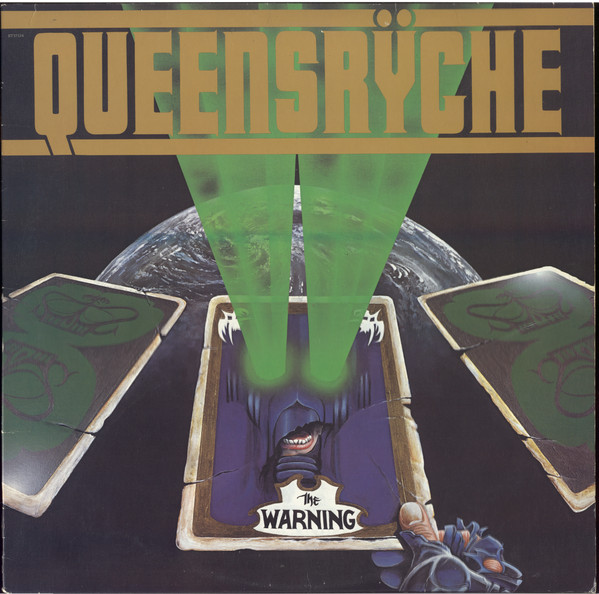
This week the offering is the debut full-length from Seattle’s metal institution. While the recording and process of releasing the record didn’t go the way the band wanted, in the end a worthy album was still delivered.

Queensrÿche – The Warning

Released September 7, 1984 via EMI Records

My Favorite Tracks – Take Hold Of The Flame, Roads To Madness, The Warning

Queensrÿche had landed a major label record deal off the strength of their self-titled demo, which was widely released as an EP and gained the band a fair bit of traction before playing a show. Now the group were armed and ready with their first full album and a new legacy was now underway.

The band’s line-up was the same as from the EP and would also remain the same for many years afterward. Geoff Tate handled vocals, while Chris DeGarmo and Michael Wilton were the guitarists. Eddie Jackson was on bass and Scott Rockenfield was the drummer. The album was produced by James Guthrie, well known for producing Pink Floyd.

It’s worth noting that the album didn’t quite measure up to what the band wanted. The recording process went over budget and EMI turned mixing over to a cheaper option, resulting in a mix that the band was not happy with. The track sequence was also not what the band wanted, it was changed while the group were out on tour without their input. This doesn’t really “affect” the album and there is no official re-done version that matched the band’s wishes but it’s album trivia worth having a look at.

There are 9 songs in 48 minutes on the original version of The Warning. Many of the songs here were inspired by George Orwell’s infamous novel 1984. The mythos of this album has its own feel, not quite a concept album but definitely an invented theme running throughout and certainly far beyond a pale copy and paste of the novel used to inspire.

The Warning

The opener and title track gets the pace set with a straightforward metal song. The song is pretty standard metal fare, though it’s also evident that Queensrÿche have some arrangement ideas that go beyond the usual stuff. The song has to do with a “child of centuries” who warns the world that time is about up. The simple chorus of “Warning” along with some nice riffs make for some good listening.

En Force

The first four minutes serve as another standard yet also excellent metal track, this time offering up the apparent leader or tyrant who is controlling things and some kind of quest to unseat them. A few bells work their way into the song’s intro, it seems Queensrÿche were keen to add to their music even very early on. The last minute of the song is a different sort of thing, with a quiet outro that seems to lament the tyrant’s iron grip on people.

Deliverance

This one might feel “simple” in comparison to what Queensrÿche would go on to create, but in all honesty this is a very well put together track especially for someone’s debut album. The band insert a few things into the song to freshen it up a bit. Also, the bass line on this one is very much worth a listen.

No Sanctuary

Here we have one that starts out as a ballad but then shifts over into a bit heavier fare, though still perhaps a ballad. It seems to be about someone looking to fight those in control, but the song’s sad backdrop indicates it might all be for naught. It’s a display that the band were not going to be a one-dimensional metal act.

NM 156

Up next is a more “upbeat” song, at least musically. This one works up into its very wordy chorus at a pretty quick pace. The song gets into 1984’s themes of thought control, though here it seems machines are tasked with executing citizens who aren’t in line. Queensrÿche were very into the concept of computers and machines running things, as evidenced from this track as well as Queen Of The Reich from the EP and Screaming In Digital on Rage For Order. As our current society becomes enveloped in AI, it seems perhaps Queensrÿche were prophetic.

Take Hold Of The Flame

The album’s second single has also become the standard-bearer for the record and the band’s most popular early song. In terms of tempo and arrangement it fits right in with everything else on the record. Geoff Tate does stand out on this one with his unreal voice, but otherwise the song doesn’t really “do” anything out of the ordinary.

Where this one does diverge is with its theme. The song is simply about going for it – many sit and waste away without taking a chance on something, so take hold of the flame and have at it. Stuff like a child of centuries or a human-terminating AI might be a bit opaque and far-off to really identify with (for now, anyway) but this song is universally applicable. Everyone can get it and a lot of people did. It is unsurprisingly the band’s fourth most-played live song according to setlist.fm.

Before The Storm

The metal spirit keeps up here on this one. The storm seems to reference a feared nuclear bomb scenario, though this is really only picked up from the words “atom split” in the second verse. This is a really good song that keeps its tempo up until the last minute, where again the band goes out on a different outro note which flows straight into the next song.

Child Of Fire

Heading towards the end with another barnburner of a song that keeps the pace up until a quiet interlude in the middle. This seems to be about some kind of malevolent conquering leader and a duel with a hero to settle the world’s fate once and for all. There’s a nice guitar solo at the end of the interlude before the song closes out the same way it came in.

Roads To Madness

The album closes with a whale of a song at nearly 10 minutes. The first half of the song is pretty standard fare, verse-chorus with nothing unusual going on. Then a quiet interlude hits for a bit, followed by a soaring end piece that takes the song to its conclusion. This is wonderfully arranged and played and is one that truly hints at what Queensrÿche would be getting up to on future releases.

This one is a bit tough to make out theme-wise, though it’s clear that someone is attempting to access some forbidden knowledge and they make their mortal exit as a result of their investigations. I probably never will know what the hell they’re talking about but I still absolutely love this song.

The Warning was a solid debut for Queensrÿche after the hype from their demo/EP. The album would not make huge moves on sales charts but did quietly earn a US gold record for half a million copies sold. Queensrÿche would open for Kiss, Iron Maiden, Dio and Accept while on tour for the record, offering their brand of metal to a variety of audiences.

This album is honesty pretty unique in the Queensrÿche catalog as it is a fairly standard metal record. The group would not remain long in this territory, choosing to explore different soundscapes on Rage For Order before crafting their magnum opus concept record Operation: Mindcrime. But here on the Warning we can hear their early sound, certainly with a bit of a Judas Priest vibe throughout but also a uniquely Queensrÿche offering. While the band would go on to some unique expressions in their creative prime, this first album should not be discounted, it is filled to the brim with quality heavy metal.

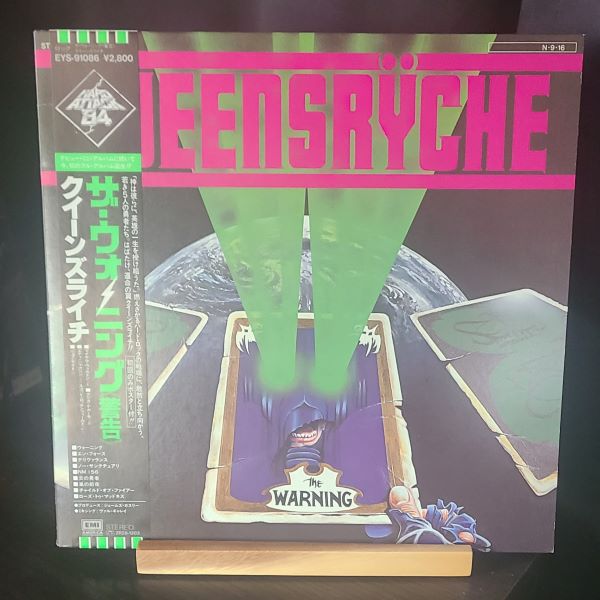
I do have an extra special version of this album, it’s a Japanese pressing in phenomenal condition. Have a gander at that below.

Out Of The Silent Planet – The Iron Maiden Singles Series

This week in the Iron Maiden singles series it’s on to the album Brave New World from 2000. It’s a big one for what are obvious reasons to most, for those unaware I’ll catch you up in a second. Note that I don’t currently have The Wicker Man in my collection, it was the first single from BNW and I’m only covering the stuff currently in my collection.

The big news? The line-up shuffle hit Iron Maiden for the next and perhaps last (?) time. Blaze Bayley was excused from the group and in his place returned the band’s iconic frontman Bruce Dickinson. It was a reunion that Maiden heads had been clamoring for basically since Bruce left the band and the Blaze stuff fell flat with a lot of the supporters. While Iron Maiden have been an exceptionally talented band in several areas, there’s little doubt that their calling card was the Human Air Raid Siren Bruce Dickinson, and now he was back home to stay.

But Bruce didn’t come alone. He had been joined on his past two excellent solo albums by former Maiden guitarist Adrian Smith, who left the band in 1990. Adrian’s return did not displace anyone – the band decided to retain a three guitar line-up of Smith, original gangster Dave Murray and Janick Gers, Smith’s replacement in 1990. The three guitar attack has worked well for Maiden and the band’s roster remains unchanged 24 years on from the reunion.

Maiden had truly gotten the band back together, had toured and then recorded, then were out to unleash their new creation on the world. Today’s single is a 12-inch record picture disc with the lead track and two live B-sides from the actual reunion tour. There are different covers for the various versions, though each version of the single does contain the same tracks (one missing from the 7-inch due to science). The cover art was done by Mark Wilkinson, who has done extensive work with Marillion and Judas Priest, and was also the artist behind the past few Maiden album covers.

Out Of The Silent Planet

The single draws its inspiration from the 1965 sci-fi film Forbidden Planet (starring Leslie Nielsen!). In that film an alien planet was found in ruins. It turns out that the beings had created machines that could simply produce whatever the people thought of. As it happens, one thing people thought of were horrible monsters and so the monsters were created and tore everything apart.

While the film is a highly rated classic, the song doesn’t get such lofty praise. It is very repetitive, even for Maiden, and in parts it’s kind of shrill. I don’t mind the song at all, it’s not something I skip when I play the album, but I wouldn’t call this a highlight of the catalog either. I like the story behind it and all that.

It was curious that this song got picked as a single when a song like Blood Brothers was sitting right there. It got a music video and everything, yet Maiden did not play it out a whole lot on a tour where they played songs from Brave New World heavily. But it wasn’t all that important in the end, Iron Maiden were back and everyone was happy.

Wasted Years

The first B-side is from a September 1999 concert in Milan, Italy. This was on the Ed Hunter tour which was Maiden’s big reunion shindig. None of this stuff was ever put on to one of the band’s many live albums so these B-sides are pretty cool to have. This Maiden classic is played a bit fast and loose, which honestly is kind of nice to hear. The essence of the song comes off just fine with this rendition.

Aces High

Same scenario as the prior B-side, though this song is from a set in Madrid, Spain on the same tour. Also a signature Maiden song, complete with Churchill’s speech for the intro. This one is also played very fast and loose, in fact it does nearly go off the rails a time or two. But the band keep it together and this one also works out pretty well in the end.

That does it for the first reunion single. This series is headed into the home stretch, four more after this and it’s all done. Again, I’ll revisit this series in a year or so when I’ve aqcuired more of the singles I don’t have right now. And after a two week or so break once this is done, I’ll kick off a look at the Maiden live albums, which will take to close to the end of the year to get through.

The Iron Maiden Singles Series

Live! + One

Running Free

Sanctuary

Women In Uniform

Maiden Japan

Purgatory

Twilight Zone/Wrathchild

Run To The Hills

The Number Of The Beast

Flight Of Icarus

The Trooper

2 Minutes To Midnight

Aces High

Run To The Hills (live)

Running Free (live)

Stranger In A Strange Land

Wasted Years

The Clairvoyant

Infinite Dreams

Bring Your Daughter … To The Slaughter

Holy Smoke

Be Quick Or Be Dead

From Here To Eternity

Virus

Out Of The Silent Planet (you are here)

Rainmaker

Different World

The Reincarnation Of Benjamin Breeg

Empire Of The Clouds

AC/DC – Thunderstruck (Song of the Week)

Before I start, I’ll address the missing Album of the Week yesterday. Simply put I ran out of time and there won’t be one this week. I had a bit of a temporary change to my work schedule this week that will result in a nice, long weekend for me this coming weekend, but I was too dumb/lazy to plan beforehand and didn’t get my intended AotW finished. I’ll just let the absence roll and pick things up again next week.

I’ve also punted today’s planned Song of the Week to next week as it has similar inspiration in theme to the AotW so it works nice to keep the two together, despite being two very different artists. But that means I can pick whatever in the hell I want for this week.

And today I’m going with a signature track from a band I haven’t talked about much at all to date on this site. AC/DC are one of rock’s biggest and boldest acts, and today I’m going with the lead track from their 1990 Razor’s Edge record that was a bit of a comeback for the group from Down Under. I don’t actually know if you’re supposed to capitalize Down Under but I did it anyway.

Thunderstruck was both the lead single and lead track from the full-length record and was a blatantly obvious choice for both such honors. The calling card of the song is the guitar that opens the proceedings. It is something Angus Young was messing around with and he and brother Malcom decided to run with it. Over time the song took shape around the brothers’ guitar work.

And there is no mistaking what is about to happen when that riff hits. It can’t be confused with anything else, at least that I know of. The song itself is a basic but banging rock track, in keeping with AC/DC’s long legacy of crafting that exact fare. The results on Thunderstruck work on a level beyond the general niceties of rock music, this song absolutely goes to 11.

Typically I like to get at least a little into a song’s meaning. But, this is an AC/DC song, that’s pretty much what it means. No hidden philosophy or sly digs at the establishment in here, just thunder and looking for women and having a good time.

Thunderstruck did reasonably well for itself on release, charting in a host of countries. In the US it landed on the Mainstream Rock Chart at number 5 and instantly became a staple of rock radio and it still sits in heavy rotation to this day. Somehow the song did not seem to even chart on the Billboard Hot 100, no issue in and of itself but there is a curious case about AC/DC and their performance on that particular chart, but I’ll save that topic for another time. It is odd that this of all of their songs didn’t break on that chart.

The album Razor’s Edge did massive business, going 5 times platinum in the US and also selling gobs in other countries. AC/DC had been flagging a bit in the late ’80’s, the prior effort Blow Up Your Video was perhaps not a critical success or fan favorite, though it did start the band back on a good sales track. But Razor’s Edge totally demolished sales figures and put AC/DC back on top of the rock mountain, and Thunderstruck was a huge part of that success.

Thunderstruck has remained a staple of AC/DC’s venerated live set since it release 33 years ago. I don’t have sources for this claim, but several websites report that the song has been a part of every concert since release. That does sound right, I don’t know why AC/DC wouldn’t play it. It ranks toward the top of many fan and journalist polls of the best AC/DC songs and is simply beloved by a lot of the fanbase as well as rock fans in general.

There’s not much more to say here. AC/DC truly caught lightning in a bottle with Thunderstruck.

The Burn Pile – Remembering The CD-R

For those of us at a certain age, the blank tape is a fond reminder of how we “shared” music in the distant past. You could make a mixtape if you wanted, or you could copy entire albums onto tapes. Often you could get two albums on one tape, one on each side, and be truly ready to jam out.

The cassette tape went away (thankfully, as far as I’m concerned) and the CD came along. That would slowly be phased out by digital files and then streaming services. Those two totally fulfilled and made obsolete the concept of “sharing” music – just tell someone to look up a song or album, send a link to it over a text message. It’s light years beyond the blank tape shuffle of the 1980’s.

But there was another medium for sharing music that ran concurrently with the rise of the MP3. The CD itself offered up a writable disc and by 2000, most PC’s had CD-R drives in them. Copying an album to CD was a process that didn’t take a lot of time and was super reliable, only very rarely going wrong compared the potential headaches of the cassette.

I do remember “burning” a CD in 1997 or thereabout. It took several hours and the CD wound up not working right in spots. A few years later allowed the technology to catch up and become more practical for the typical home user. Just as the idea of keeping digital music on computer hard drives was becoming a reality, it was very easy for someone to burn a CD and play it at home, in a car, or wherever.

I would take to burning CDs in the early 2000’s and wound up generating quite a pile of stuff. A lot of mine came from a friend who worked in radio at the time and was getting promo stuff from record labels. Some labels were already sending promos via digital distribution, but others sent physical CDs and I would copy a lot of those. Otherwise I was borrowing stuff out of friends’ collections and making sure I had my copy of that, allowing me to concentrate my purchases in focused areas.

My horde of CD-Rs, first time I’ve had them out in eons

The CD-R was a currency of music but it also didn’t quite take off the same way tapes did in the ’80’s. This was because the digital music revolution was happening at the same time. The time and material needed to burn a CD, while nothing that would set someone back a lot, was more than the simple act of ripping it straight to the hard drive. For more die-hard music fans like myself who are album-oriented listeners or who enjoy long mixes spanning a lot of songs, the CD was an ideal format. But for the more casual fan who is generally just into songs, simply having them on a hard drive was good enough. And with the advent of smartphones, even needing a PC was eventually phased out.

I would join the digital age somewhere around 2008, scoring my first iPod. This would naturally phase out the concept of burning CDs for me. Over the years I have occasionally made a copy of something for someone else but the days of buying spindles of blank discs were long over. And now with streaming I almost don’t even use my digital collection now, though it does have its uses from time to time and isn’t something I’m ready to part with yet. It’s not like it’s doing anything other than taking up disk space that I’m not using anyway.

What really inspired me to write this was me going through stuff and still having my two containers of burned CDs laying around. I haven’t even gone through them in over 10 years, they haven’t served a purpose for me at all. It’s finally time to send these relics of the past to the recycling center. I do have to remove them all from the paper sleeves I keep them in, but that would take all of 15 minutes if my lazy ass would get to actually doing it.

As I go through these I’ll probably check to make sure I’ve ripped everything I want to my PC. It’s probably not a big deal, some stuff I burned is stuff I now own, and many of the promos I had access to didn’t really excite me in the end. I might throw one or two on to see what I think now, but I’m not gonna spend a ton of time with it. I’m also curious if any of these degraded over time, the conventional wisdom on writable CDs is that they might not hold up over many years. But I’m not going to conduct a survey of the total pile I have.

The CD-R doesn’t really come with the nostalgia factor that the blank tape does. The CD thing was a practical matter that was no fuss, there was no need to time things right like would often happen with tapes. Just set your burn list and let it go, get out the sharpie and there you have something to listen to. People do still fiddle with CD-Rs, in some cases it’s to play music in cars and in others it can be to make and send mixes out. The full arrival of the digital age has ended the practical use of CD-Rs for most, but there are still holdouts out there, just like there are still people using blank cassettes. I won’t be joining them, for me the age of the CD-R has come and gone. But for several years it was a great tool to expose myself to way more music.

Virus – The Iron Maiden Singles Series

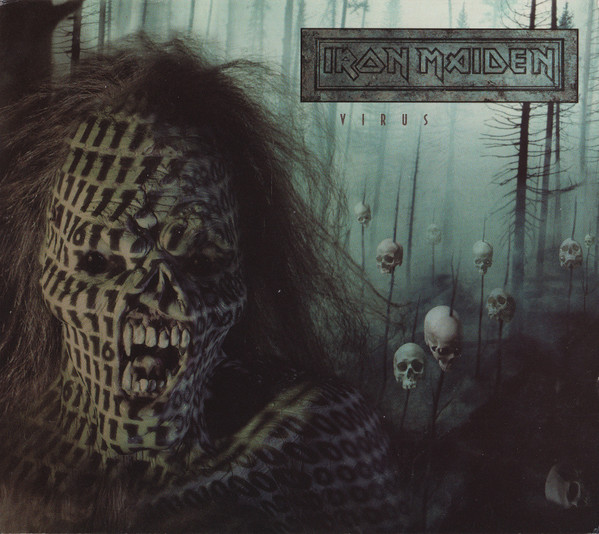
This week on the singles series is a big one. This is the first and only in my collection to feature Maiden’s singer from 1995 to 1999, Blaze Bayley. This one goes all sorts of different directions, in terms of triva and lore, as well as different versions and things like that.

Before I go into the single itself, I want to say that not having a lot of Blaze era stuff in my singles collection was not an outright conscious decision. No, I’m not a huge fan of the stuff Maiden did while Blaze was in the band, but there are songs I like, including others that were released as singles. In truth, these singles have always been a bit tough to come by, or at least have been since I’ve been collecting the singles in earnest. These aren’t usually the cheapest things around and that has been the biggest limiting factor on getting these into my collection. I do want all of the (obtainable) Maiden singles so the Blaze stuff will be a point of emphasis for me going forward.

On today’s single – this thing was released in a handful of formats with sometimes odd choices. My version is part one of a two CD set. I only have the first disc of the set, which I’ll detail when I get to the specific songs below. To be totally honest I find the two-part single thing kind of lame and I’m not in a hurry to pick up the second disc to this, which has (almost) the same title song and then two other B-sides also available elsewhere. But, this disc has that one (almost) same title song and two B-sides also available elsewhere, so whatever. The not cheap or easy to get vinyl version has two radically different B-sides, two tracks from the infamous Soundhouse Tapes EP, while another CD version collects a handful of other songs. I need a degree in Cdology to keep up with this crap.

Now into the real heart of the matter – this is, for purposes of my series, the introduction of Blaze Bayley. Blaze was the singer of British act Wolfsbane from 1984 until 1994, when he was essentially hand-chosen by Steve Harris to replace Bruce Dickinson in Iron Maiden. It was a strange and curious choice, one that many fans still question to this day. Again, I’m not the biggest fan of this period of Maiden but I’m also not out to shit on Blaze or just talk smack for cheap Internet points so I’ll keep to a somewhat more objective view of things here.

Virus

We have a very interesting case for a single release here, as this is the one and only Iron Maiden song that has truly never appeared on an album. While Sanctuary and Women In Uniform were non-album tracks, those two songs did appear on albums for certain territories. Virus is, in the truest sense of the word, a non-album track.

Virus was a new song recorded for the band’s first greatest hits set, 1996’s The Best Of The Beast. Maiden were probably overdue for a compilation by this point and the set was pretty well received. There are a few different versions of the comp, though all do feature Virus.

CD 1 of the single features an edit of Virus, which cuts out the 2 minute or so intro. I’d personally prefer to have the unedited track but I wanted these B-sides so I went with this. The intro is very long and weird and I know a lot of people don’t like it but I honestly kind of dig it. You’ll find that the posted video has the song in full.

When the song proper kicks in it actually starts sounding like Iron Maiden. Even then it goes into a bit of a different roll in the end, but it fits what’s going on. One of my criticisms of The X-Factor album is that it sounds very same-y in parts, here on Virus the band truly establish something that stands on its own.

Lyrically the subject could be taken a few different ways, all of which are relevant. There seems to be an admonition about the Internet, which was on a fast rise at the time of the single’s release. This is a warning that grift and corruption could increase as the landscape of information gathering and dissemination changes. Yep, nailed that one.

This could also be seen as a shot at the band’s critics and detractors. The song addresses the apathy and the need to lash out at anything, something which the band dealt with a lot of during this time period. Sure, the Internet in 1996 was absolutely nothing like today, but the same general kind of “hide behind a screen name and let loose cheap shots” thing was still in full effect. I also don’t know what parts the band members were taking as valid criticism or as shit-talking, I heard plenty of both during this time.

This honestly is one of my favorite tracks of the Blaze period. Each album offered up a few gems, but this song really stands out. It’s different enough to stand on its own but also still sounds a fair bit like my favorite band. It is odd and it does generate wildly different reactions, but I’m in Camp Virus on this one.

Doctor Doctor

Both B-sides on this single were already available as B-sides to the Lord Of The Flies single. Why the repackage them here is beyond me, though apparently the first run did not make the UK so maybe that’s why.

Doctor Doctor is a famous track from the fantastic rock act UFO. If for whatever reason you haven’t heard the original, you should probably pause reading, go rectify that, then come back. Make sure to come back. Anyway, Iron Maiden give a song they probably jammed out to a million times a run through here and they do a pretty good job of it. I’d say this is one of the better Maiden cover song performances across their catalog.

And for a bit more Maiden/Doctor Doctor trivia – Maiden plays the UFO song over the PA at live gigs just before they take the stage. If you’re out in the arena grabbing a beer or a shirt and hear Doctor Doctor hit the speakers, better get back in to your spot quick.

My Generation

The other B-side is also a cover, that’s probably obvious to most. This is one of The Who’s immortal hits and here Maiden have a crack at it. The cover is fine but it lacks that special something to put it over top. Not a bad performance but nothing here with any real urgency, this is a curiosity more than anything. Also it feels too long, they could have cut this off a bit earlier.

That wraps up the Virus single. The other CD has two B-sides that are very early cuts of Sanctuary and Wrathchild released on a compilation before the debut album was out. To be honest it’s more economical to get the full original compilation than to get the second CD of this single, though if I happen on a deal one day I might pull the trigger.

Since my collection is severely lacking in Blaze stuff, this will also be the point where we bid him farewell. Blaze’s Maiden run did not win over a lot of people, though this era does have its fans. Blaze has gone on to a very nice solo career and has just recently recovered from a very serious heart operation, so best wishes to him going forward. He has always seemed on good terms with his time in Iron Maiden and the band have respected his two albums probably more so than the two ’90’s albums preceding those.

But, with this time of the band now filed away, the next, longest and seemingly final form of Iron Maiden is to come, starting next week in the singles series.

The Iron Maiden Singles Series

Live! + One

Running Free

Sanctuary

Women In Uniform

Maiden Japan

Purgatory

Twilight Zone/Wrathchild

Run To The Hills

The Number Of The Beast

Flight Of Icarus

The Trooper

2 Minutes To Midnight

Aces High

Run To The Hills (live)

Running Free (live)

Stranger In A Strange Land

Wasted Years

The Clairvoyant

Infinite Dreams

Bring Your Daughter … To The Slaughter

Holy Smoke

Be Quick Or Be Dead

From Here To Eternity

Virus (you are here)

Out Of The Silent Planet

Rainmaker

Different World

The Reincarnation Of Benjamin Breeg

Empire Of The Clouds

Cracker – Teen Angst (Song of the Week)

This week’s song heads back to 1992 and the alt-rock scene to dig up some old treasure. While a lot of retrospectives like to paint the early ’90’s as mired in grunge, there was a fair bit of other stuff out there to check out, and Cracker gained early notice with their debut single.

Teen Angst (What The World Needs Now) did stand out from the crowd on MTV – it’s a bright, guitar-driven song with cheeky lyrics in a video clip that features nothing more than the band playing their instruments while dressed in silly gear while standing in a field.

Cracker were not necessarily “alt-rock” in the truest sense – their music incorporated elements of country and roots, and the band’s principal members David Lowery and Jonathan Hickman were very wary of any genre tags. But Teen Angst was certainly an alt-rock tune in the alt-rock era, and even with the band’s varying tastes and influences, the song got plenty of play on the airwaves.

Teen Angst has a pretty standard and familiar for-the-time musical bent. Its lyrics also don’t reinvent the wheel but are pretty sly and smart in their own way. The world may need this or that, but kicking back with a drink is probably the safe approach to it. And I don’t know how folk singers came to take the brunt of the chorus’ wrath, but it’s pretty funny stuff. And in the end it does what a lot of songs seek to do – pick up the lady.

Teen Angst would hit the top of the Billboard Modern Rock chart and get position 27 on the Mainstream Rock Tracks chart. It did not chart on the Billboard Hot 100, in fact Cracker had very little success on that chart, even with their most-known song from 1993, Low.

That makes for an interesting conversation about “one-hit wonder” status, which is typically measured by the Billboard Hot 100 and getting one song on it to the top 40. Cracker didn’t do that at all, so what does that really make them? The one-hit wonder thing is an odd conversation, for my money it doesn’t really apply to Cracker since I feel like Teen Angst was a decent success along with Low, though this kind of stuff is hard to arbitrate.

Cracker always have been a unique entity anyway – they had some degree of success with albums and singles through the early ’90’s but never truly had massive status there. Their music does go in several different directions and each album is a bit of a journey. Their main draw has always been on the live front, where they have been a viable touring act since their formation.

Teen Angst is a nice slice of life from back in 1992 – fits the scene very well while also standing out from it, but is also a great song to check out 31 years later. Some songs just work no matter what era they’re originally from.

Megadeth – Peace Sells … But Who’s Buying? (Album of the Week)

This week it’s time to dig out the seminal second album from what would become thrash legends and another of the foundational albums of the “Big 4 of Thrash” movement.

Megadeth – Peace Sells … But Who’s Buying?

Released September 19, 1986 via Capitol Records

My Favorite Tracks – Peace Sells, Devil’s Island, The Conjuring

Megadeth had released an essentially self-produce debut, Killing Is My Business, a year prior. The album did light sales but did put the world on notice that Metallica’s former guitar player was up and running with his new outfit. Major label Capitol Records came calling on Megadeth and signed the group to a deal while the follow-up album had already been mostly recorded and really only needed a remix.

Megadeth’s line-up was the same as it was for the prior record – Dave Mustaine on guitars and vocals, Chris Poland on guitar, Dave Ellefson on bass and Gar Samuelson on drums. This line-up stability would not hold for very long.

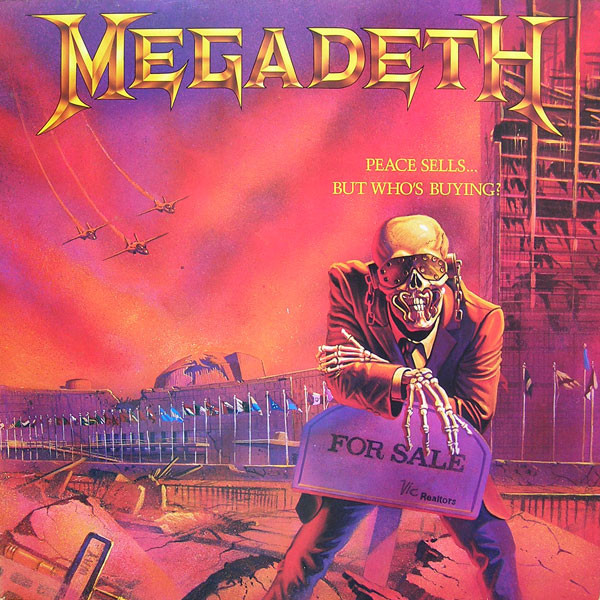
The cover art was done by Ed Repka and has been one of heavy metal’s most celebrated album covers. The distinct image of Megadeth’s mascot Vic Rattlehead on a For Sale sign outside a United Nations building that was destroyed in an apparent nuclear strike is one of heavy metal’s enduring images. It would lead to a lot of work for Repka and notoriety for Megadeth.

Today’s affair is a lean one at 8 songs and 36 minutes, though packed with songs that would come to define both Megadeth and thrash metal.

Wake Up Dead

The opener was issued as a single in the UK. The song kicks in straight away with monster riffing and a tale Mustaine spins of sneaking into his house, trying not to wake his lover because he fears she’ll kill him if he’s caught coming in late. This was apparently based off true events, Mustaine was living with one girl but in love with another, but was also homeless and needed the girl he was living with not to know he was messing around.

The lyrics are funny but rather brief, it is the guitar work that is the star of this song. Mustaine and Poland absolutely go off all over this song, both with electric solos and also some rhythm changes to keep the song fresh and moving along. It is absolute guitar wizardry on this album and it gets started right out of the gate.

The video for this song was directed by Penelope Spheeris, known for her work on the Decline Of Western Civilization series.

The Conjuring

The second track gets into the subject of evil – specifically performing occult rituals and summoning the Devil. It is another solid, breakneck thrash tune with a dash of sinister riffing thrown in to truly deliver its insidious message home.

The Conjuring was a song removed from the Megadeth setlist for many years, starting in 2001, due to the born-again Christian beliefs of Mustaine. Eventually in 2018 he was convinced to play the song again and it has been a fairly regular part of modern setlists.

Peace Sells

The sort-of title track is next and it offers up what has become one of Megadeth’s signature songs. The instantly memorable bass line opens the track, a snippet that would be used by MTV News for a very long time, and apparently without compensation. As the other instruments join it’s pretty clear this is going to be a song not to be forgotten.

The song famously rattles off a list of stereotypes about metalheads and Mustaine sarcastically retorts to each – “What do you mean I don’t pay my bills? Why do you think I’m broke?” being one of many snarling and honestly accurate observations. The song was meant by Mustaine to counter the negative perception of metalheads, showcasing that the group were far more intelligent than conventional wisdom let on.

Peace Sells hit gold as a single and has been carved in stone onto the list of greatest Megadeth songs. Even in the wake of future success for the band, Peace Sells might be the band’s most distinct and recognizable song.

Devil’s Island

The hard hitting thrash does not relent as this song slams through a haunting story about Devil’s Island, a former French prison in French Guiana in South America. The prison was infamous for ill treatment of inmates.

The song outlines the plight of a condemned prisoner who is eventually spared from execution, but must then face the reality that his life will be spent on Devil’s Island and the execution might have been a better option.

Good Mourning/Black Friday

This two-part song begins with an instrumental, then transitions into a savage account of a serial killer inspired by occult influences. Black Friday goes a pretty breakneck pace through the account of this butcher. The song has become a something of an unofficial theme for the day after Thanksgiving in the US, at least among metal fans.

Bad Omen

This one builds with an elaborate intro before launching into a more mid-paced version of the sound found elsewhere on the album. It’s another guitar wizard entry, with both leads and some of Mustaine’s god-level rhythm work. This song is also about the occult, this time a few people stumble into a satanic ceremony where the participants basically get what they asked for, of course it doesn’t end well.

I Ain’t Superstitious

Up next is a cover song, from what was originally a blues tune in the 1960’s penned by Willie Dixon and performed by Howlin’ Wolf. The song was famously covered by Jeff Beck, with Rod Stewart on vocals.

Megadeth’s version is suitably thrashed up for the record, it isn’t a stumbling block and the music perfectly fits the album. It also manages the great task of also not sounding like shit, something that can easily happen when metal bands decide to “spice up” non-metal songs. The Megadeth-isms work pretty well here and the song is an enjoyable listen.

My Last Words

The album closes with one last thrash barnburner and of course another guitar workout. This one goes all out as Mustaine relays a tale of people playing Russian roulette. The song perfectly matches the intensity that must be felt when playing one of the stupidest “games” ever invented. While the song stays on the rails much of the time, it does twist and turn a bit towards the end and the hard-hitting outro/chorus. It is perhaps one of thrash metal’s underrated tracks and one that Dave’s former bandmate Lars Ulrich cites as his favorite Megadeth song.

Peace Sells … But Who’s Buying? was a true moment of arrival for Megadeth. The album did not chart well initially but did see sales that would lead it to a US platinum as well as other international certifications. It was well-received critically on release and in years since has gone on to be considered one of the cornerstone albums of thrash metal. It joins Metallica’s Master Of Puppets, Slayer’s Reign In Blood and Anthrax’s Among The Living as the pillars of the Big 4 of Thrash.

The Megadeth line-up would not hold for long after the album’s release – both Chris Poland and Gar Samuelson were fired for excessive drug use just after touring for the record. Both Mustaine and Ellefson would remain and cycle through a few members before nailing down the band’s most stable line-up entering 1990.

For Megadeth it would mark only the first of many career achievements. While many bands only get to record one great album, Mustaine and company would do it again a few albums down the line with Rust In Peace, then they would achieve heights of commercial success next on Countdown To Extinction. Many acts would give up valuable body parts to record one thing as great as Peace Sells…, yet for Megadeth it was but one of several notches in the belt. The argument over Megadeth’s best moment can be contested, though this album is certainly in the conversation.