Kreator – Endless Pain (Album of the Week)

Going back to the mid-80’s to visit with a cornerstone of the German thrash scene and the debut of one of metal’s most prolific acts. This week will also showcase a new feature – me not using a shitload of words.
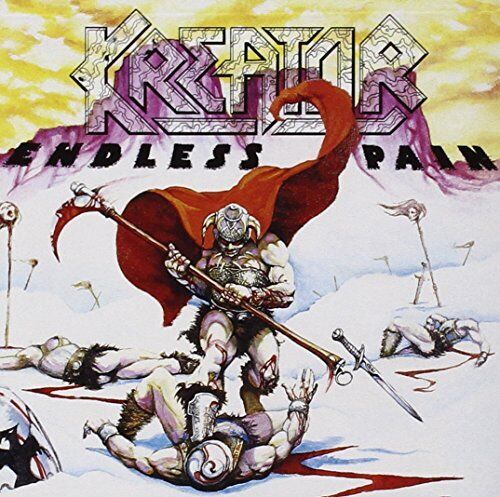
Kreator – Endless Pain

Released October 11, 1985 via Noise Records

My Favorite Tracks – Endless Pain, Flag Of Hate, Total Death

Kreator formed in 1982, known by the names Metal Militia, Tyrant and Tormentor before finally settling on Kreator. The band was staffed by guitarist/vocalist Mille Petrozza, bassist Rob Fioretti and drummer/singer Jürgen Reil, aka Ventor. Both Mille and Ventor remain the nucleus of Kreator to this day.

Noise Records was an upstart metal record label in Europe that was just off the ground and running by 1985. The label signed Kreator and Endless Pain was recorded in just ten days. Noise would become a hotbed of European heavy metal and Kreator would rise to be a signature act for Noise.

Endless Pain was a primitive and cruel-sounding record, a thrash album coupled with the early extreme metal noise fathered by the likes of Venom, Celtic Frost, Bathory and Mercyful Fate. This was raw, aggressive and evil – it was not cultivated for a greater pop audience, rather it was metal made by and for the growing masses who were pushing for heavier and heavier music in the wake of thrash’s arrival.

Given the album’s savage and simple construction, as well as no real need to visit the lyrical themes of each song in isolation, I’ll skip a lot of steps today and simply list the tracks, then discuss a few highlights.

There is one other thing to note here – while Mille has been the voice of Kreator for the bulk of existence, on this album Mille and Ventor split vocal duties. Mille does vocals on songs 2, 4, 6, 8 and 10 while Ventor handles the odd-numbered stuff.

Endless Pain

Total Death

Storm Of The Beast

Tormentor

Son Of Evil

Flag Of Hate

Cry War

Bonebreaker

Living In Fear

Dying Victims

This album is a buzzsaw, with lo-fi production and a savage approach to both instruments and lyrics. There is a similar cadence to many of the songs, it is in some ways an embryonic version of what Kreator would become. It doesn’t offer much in the way of variety – either you like this album or you don’t, there isn’t a lot of “track 5 is cool but 6 I can skip.” It’s an all or nothing deal.

While this could be called “underdeveloped” by some, Endless Pain is hailed as a classic just the way it is. Thrash as a whole was moving toward major label deals and high-end production values around this time in the US, while in Germany it was a far more raw offering that kept the underground and “dangerous” feeling alive – while Satanic Panic parents where wailing about hair metal, this kind of stuff was also around.

For me this album is the perfect balance of listenable production and the raw sound many metal bands were looking for, or were perhaps stuck with due to budget constraints. No this production won’t win any industry awards, but the music is clear and listenable. I have heard and even liked a fair number of awfully produced albums in my years, but Endless Pain was never one that upset me. It walks the line very well and its lo-fi atmosphere enhances the record.

And this noise would bear influence – just as Kreator and their countrymen Sodom and Destruction were keeping thrash lo-fi and running along the same lines as Venom and the like, a new group of musicians influenced by all of this would lay the groundwork for death metal and black metal. By the time 1990 rolled around, heavy metal had mutated quite a bit from how it entered the 1980’s.

A few of the songs from Endless Pain have become Kreator staples – the title track and Flag Of Hate are the signature tunes from the record, and Tormentor also sees a fair bit of play to this day. This raw set was not forgotten as Kreator refined their sound through the ensuing years, rather it was celebrated as the savage beginning of a new metal legend.

Endless Pain kicked off the nearly 40-year career of the band that became legends of thrash, German and worldwide. While US thrash was creeping up sales charts and was just about to explode in mainstream popularity, Kreator and their peers offered up a new, raw approach that would help steer several other metal subgenre offshoots in the years since. Kreator have refined and reinvented themselves over the decades but at times it seems their first notes still ring the loudest.

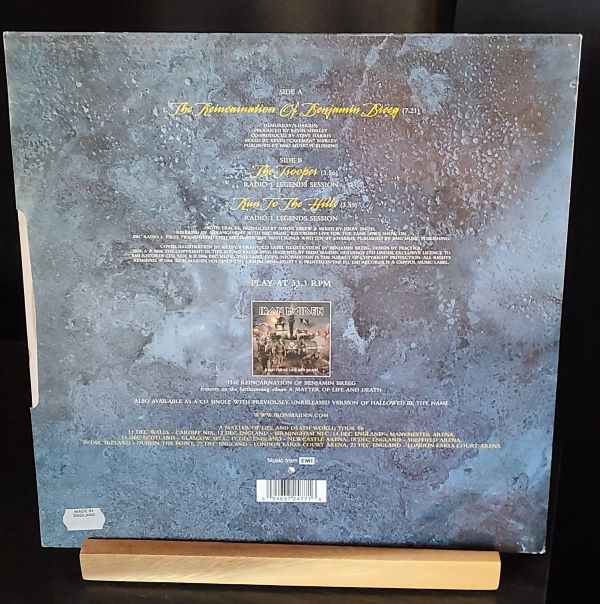
The Reincarnation Of Benjamin Breeg – The Iron Maiden Singles Series

We are almost done with the single series, but there are two doozies lined up to close things out. Next week’s is … well, next week is next week. Today we have a special song that got a bit of an Internet mystery marketing campaign behind it before its 2006 release.

This single, like most “modern era” ones, was available in a few different versions. This is an oddity in record collecting as far as I’m concerned because I have a 10-inch vinyl. The song itself was too long for 7-inch so instead of throwing in on a 12-inch, they put out this oddity of vinyl physics. While 10-inch vinyl is cool from the standpoint of having something different, it’s also a horrible pain in the ass for storage. I have like, three 10-inch records in my collection and they’re just in with their bigger brothers, at risk of damage but I’m not setting aside a new area for three stupid records. But outside of the storage issues, it’s kind of a cool format since it’s not a common thing.

The cover art was done by Melvyn Grant, one of Eddie’s more prominent artists over the years. The cover features Eddie taking a pickaxe to the grave of one Benjamin Breeg, who we’ll get to in just a second. There are shades of Live After Death here, the art isn’t the same but it certainly evokes that memorable cover.

And honestly, this is the best Eddie art in the reunion era. Maybe I’m forgetting something, and this doesn’t include the really great t-shirt designs, but cover wise this is pretty much it. It’s reminiscent of the classic era stuff but still is distinct from the Derek Riggs line with the whole grave thing.

This single came with a very curious line of hype, though the hype was cryptic. A website sprung up for a Benjamin Breeg in 2006, with posts from a cousin of this Breeg fellow. The cousin was out of find more information about his mysterious relative. It became clear early on that the site was a marketing tool for the single when the cousin’s second post mentioned that the band were releasing a song about Benjamin, but the cryptic updates would continue.

Benjamin Breeg was born on September 3, 1939 – this was the date that Allied nations declared war on Germany in the kick-off to World War II. Breeg was orphaned some years later and developed a series of horrible nightmares that would plague him for the rest of his life. He painted the stuff he saw in his nightmares and later he wrote books about paranormal activity. He disappeared in 1978 with no leads as to what happened.

Breeg’s cousin makes a series of posts updating on the quest to find Benjamin’s fate. A person contacts the cousin and arranges a meet-up on August 14, 2006, coincidentally the same date as the single’s release. No further updates were posted and the site was eventually shut down, though the Web Archive does have a version still viewable.

In the second to last post, the cousin relays finally being able to see one of Benjamin’s paintings. I’ll just link to the site here if you want to look at the painting, but for those looking to save time, of course the painting features Eddie.

Nothing was ever revealed further about Benjamin Breeg and the connection to Eddie. It leaves several questions – was Eddie simply a figment of Breeg’s nightmares and then came to life when Breeg disappeared, around the same time Eddie was originally conceived? Was Eddie actually Breeg in an undead form? Did the cousin meet Eddie and also get dispatched? Or did the cousin actually meet Benjamin himself, rumored by some to still be alive? We’ll never know, though the first line of questioning seems the most logical in terms of impact to Eddie’s unknown origin story. Maybe one day the band will commission someone to tell the full tale of Edward the Head, which now must include Benjamin Breeg in some form.

This was a clever way to generate buzz around the band and their new album. The single was received warmly as was the entire album, still often rated as the best or one of the best from the reunion years in consensus opinion. While it was a bit disappointing there was no real “closure” to the Breeg saga, the whole thing was a very cool deal to experience when it was running in ’06.

All that was fun but there’s an actual song to talk about.

The Reincarnation Of Benjamin Breeg

The song opens up with a nice intro that definitely gives off some vibes from old Maiden days, especially the “synth era” of the band. The vocals kick in with a quiet piece before the song builds into the pretty loud main riff that will back the balance of the track.

This one, like many from AMOLAD, was very well done. The music hits hard and has the “epic Maiden song” feel and Bruce is on point with the singing, as always. Lyrically the song is pretty vague. Divorced from the website story about Breeg, there really isn’t anything to go on to glean the meaning of this one. Someone needs saved and the world kind of sucks, that’s about it. With the background of Breeg the song’s words get a bit more clear but it’s still not an open book.

The single did reasonably well on European charts, landing a few number one spots and placing on several others. Maiden’s glory days were behind them by this point but the reunion era was bearing real fruit and at this time proving itself to be more than a flash in the pan.

Also – I have a t-shirt of this song with the cover on the front the “here lies a man about whom little is known” grave inscription on the back. Sadly the shirt now has an armpit hole in it, which just means I’ll have a hole in the pit when I still wear it.

The B-sides

No need to get too detailed here – both B-sides are “live in studio” sessions from BBC Radio One. It’s the same session that the B-sides from the Different World single are from, and one of them, The Trooper, is the exact same song. Here we also get Run To The Hills. These Radio One B-sides are available across all AMOLAD single configurations so they’re easy to get. Very worthwhile stuff.

That’s about all for the saga of Benjamin Breeg and Eddie. I don’t have any of the singles from The Final Frontier, they are not the easiest to come across. So that means next week is the finale of the Iron Maiden singles series. But don’t fret, we’re going out on an absolute whopper.

The Iron Maiden Singles Series

Live! + One

Running Free

Sanctuary

Women In Uniform

Maiden Japan

Purgatory

Twilight Zone/Wrathchild

Run To The Hills

The Number Of The Beast

Flight Of Icarus

The Trooper

2 Minutes To Midnight

Aces High

Run To The Hills (live)

Running Free (live)

Stranger In A Strange Land

Wasted Years

The Clairvoyant

Infinite Dreams

Bring Your Daughter … To The Slaughter

Holy Smoke

Be Quick Or Be Dead

From Here To Eternity

Virus

Out Of The Silent Planet

Rainmaker

Different World

The Reincarnation Of Benjamin Breeg (you are here)

Empire Of The Clouds

Mr. Mister – Broken Wings (Song of the Week)

I’m going back to the wonderful world of 80’s pop rock for this week’s song pick. Mr. Mister had a brief but successful career and this was one of two mega hits for the group. It was an age where synthesizers and technology were all over music, and Mr. Mister did not squander the opportunity to create something out of it.

Mr. Mister was the brainchild of Richard Page and Steve George, who had a project called Pages in the late ’70’s that didn’t gain much traction. The pair spent the next few years as session musicians for a number of pop luminaries, then formed Mr. Mister to give it another go on their own. They were joined again by their friend John Lang, who did not play in the band but provided lyrics. This time they’d garner a lot more notice.

Broken Wings hails from the group’s second album, Welcome To The Real World, released in late November 1985. While Broken Wings was released as a lead single a few months prior, it would gain hold of the top of the charts in December ’85, and the next single Kyrie would do the same.

Today’s song is a pretty simple one – musically it’s a pop rock thing, perhaps even new wave to some degree, I don’t know. It is electronic based with a lot of delays on the guitars, synth stuff and electronic drums going on. It’s not an “organic” rock song, which personally is fine by me, I’m up for something different once in awhile.

Lyrically the song is pretty easy to grasp – like, get up and fly. It does have a bit of depth to it, this isn’t some vapid pop experience. There’s a longing for a relationship and better times in the song, then the chorus with its motivational “fly again” is a pretty uplifting thing. The song does keep a pretty melancholy tone through it, which is probably why I like it.

There is an interesting quirk lyrically – the line from the chorus “Take these broken wings and learn to fly” is identical to one found in a Beatles song, Blackbird. This was not meant as an homage to the Beatles – rather, lyricist John Lang had read the 1912 book Broken Wings by Kahil Gibran and used that as inspiration. It was described as a totally unintentional aping of Paul McCartney’s lyrics. I don’t recall any controversy over it, but also I was 8 at the time so I probably wouldn’t have noticed, they didn’t air music news during episodes of G.I. Joe.

Mr. Mister scored big with their twin number one singles, but success wouldn’t linger for long. Their next album did not move a lot of copies and their 1990 album Pull was recorded but didn’t interest the label and the band broke up. That album wound up being released a whopping 20 years later. Mr. Mister did not reunite at all, though the members have collaborated on various other projects in the years since.

Broken Wings has remained on airwaves in many forms since its release, through movies and TV, as well as video games. In fact, the inspiration for this post was me hearing the song on my latest playthrough of Grand Theft Auto: Vice City, where Broken Wings takes up residence with several other pretty damn good songs on the soft rock station Emotion. After the heavy metal pounding of V-Rock, Emotion is probably my next-favorite station on the game.

This song holds up pretty well far outside of the shine of the 1980’s. Of course, that’s just my opinion. But I think Mr. Mister landed a pretty damn good tune with this hit.

For my two parter on the music of Grand Theft Auto: Vice City, check out the links below

Part 1 – The Music of Vice City

Part 2 – V Rock

Monster Magnet – Power Trip (Album of the Week)

Time to head back to 1998 and revisit what wound up being a breakout album for one of stoner rock’s foundational acts. It doesn’t actually require any mind-altering substances to enjoy this whale of an album, but it doesn’t hurt either.

Monster Magnet – Powertrip

Released June 16, 1998 via A&M Records

My Favorite Tracks – Power Trip, Space Lord, See You In Hell

Monster Magnet had a good run up to 1998, being an early herald of stoner rock and getting a bit of notice from their single Negasonic Teenage Warhead off their prior album Dopes To Infinity. The early “stoner” scene got a lot of bad press for being associated with what was considered a dangerous drug at the time, now a few decades later that all seems silly.

While hailing from New Jersey, the influence for Powertrip would come from the crown jewel of the Nevada desert. Singer/guitarist and main songwriter Dave Wyndorf took up residence outside Las Vegas for 21 days and wrote a song each day after spending the night on the Vegas Strip. This 1998 interview from the Las Vegas Sun provides more info on Wyndorf’s Vegas excursion and the background for the album.

Today’s album is a long one, with 13 tracks clocking in at an hour. Bonus tracks on different editions do exist but there is plenty to talk about here already.

Crop Circle

A bit of a trippy intro leads into a bright and heavy jaunt through a very strange set of experiences. I don’t know what the hell this song is about but I’m sure drugs are involved. Comprehension is not necessary as the song is excellent and sets the table nicely for the album. There is a badass guitar solo on this one too.

Powertrip

The title track was issued as a single and is probably the second best-known track. It uses the “quiet opening/sudden shift into heavy” dynamic that several songs here employ. This one is a pretty standard hard rock track and it works brilliantly in its simplicity. The chorus’ opening line “I’m never gonna work another day in my life” sums up the song well – this is about hitting it big, perhaps in the Vegas casinos, and not having to grind it out in the work force. It’s pretty well the true American Dream now, as prosperity through wage earning has become elusive and the choices are jackpot or destitution.

Space Lord

This is the song everyone knows Monster Magnet for. It has a similar vibe to Powertrip, with a quiet build into a very loud chorus, though this song keeps the throttle down a bit. The chorus of “space lord, mother mother” was changed from its original version, I’ll let everyone guess what the first draft might have said. A few recordings of the original version are out on various compilations released years after this album.

Space Lord is about exactly what the title would imply – a crazy cosmic tyrant comes to Earth and gets psycho. It’s a cool space rock vibe with ample drugs and base urges to sleaze it up. The single would hit number 3 on the Mainstream Rock chart. The pretty crazy music video has its own place in music trivia – it was the very first video played on MTV’s new show Total Request Live in 1998. Too bad TRL didn’t keep up that kind of energy.

Temple Of Your Dreams

Up next is pretty cool and trippy song. This stays at a constant and medium pace as it goes through this weird, time-travelling and psychedelic hook up song. The chorus is wordy and a bit mysterious at points but works out to be really cool. This one was also released as a single and got to 25 on the Mainstream Rock chart.

Bummer

This one is pretty long and heads on quite a journey, but starts on familiar ground. This is a hard and rather savage admonition of someone. Wyndorf states in this 1998 interview with Beermeolides.com that the song was inspired by his experiences in the US South and the women who are concerned with image and virtue, but not really.

Later on the song heads off onto a trippy interlude where Wyndorf goes into a whole other speel. Then the song comes back and rounds off its original message one more time. It took me a bit with this one but I got to where I dig it.

Baby Götterdämerung

This one is quiet and atmospheric. It is weird, but that’s the norm here. There’s a reference to the semi-obscure Marvel Comic villain MODOK, which threw me for a loop when I first heard it. This song doesn’t entirely move me, though I’ll give points for effort and doing something different.

19 Witches

It’s back to the boogie, this time with a total rockabilly riff. This one is a fun trip to the swamps, both musically and lyrically. In the 1998 Las Vegas Sun interview, Wyndorf discusses the song’s origins – he penned it after being basically a captive of some hardcore Louisiana goth girls for a few days. At least he made it out and we got this really cool song from it.

3rd Eye Landslide

This is a monster rock tune full of grit and attitude. It gets pretty dirty, both implicitly and explicitly. There’s not much room here to dig beneath the surface, everything is out in the open here and this sounds like Wyndorf’s statement song.

See You In Hell

This track scores big with me with its creepy keyboards and absolutely twisted tale. Wyndorf, in the previously mentioned Beerandmelodies.com interview, relays that he heard an old hippie talking about a crazy experience and based this song off what he heard. He took this to some pretty twisted places, this is like a drug-fueled horror movie in song. This one is a total winner.

Tractor

This one is a re-recorded song, it was originally on the band’s self-titled debut EP in 1990. It’s a short and fun song about drugs, not much more to get into.

Atomic Clock

Heading towards the close, this one keeps things mostly slow and simple. It might be too simple but it’s an ok song, just doesn’t build to a whole lot like the other songs. Not too sure what’s going on here, but there are nukes at the end and I’m all about nukes.

Goliath And The Vampires

This is an instrumental. It’s a vibe song and it’s pretty cool to check out.

Your Lies Become You

The final track is a trippy ballad, sounds like something that could have been in a Tarantino movie. It’s not a song I’m really into, I don’t mind listening to it for the overall atmosphere but it’s not one I give a lot of spins to.

Powertrip would be Monster Magnet’s peak of success. The album charted in several countries and found itself at the top of the US Billboard Heatseekers chart. A gold certification would come in January 1999. Space Lord was a hit and was played all over the place, and can still be heard today. It and other songs were used in a variety of films and still get picked up for TV shows and video games decades later.

This was a magnificent album for its time. It might be a bit long and could dump a few tracks, but the songs that are worthwhile are plentiful and they’re home runs. Rock had totally transformed by ’98, the alt-rock revolution was complete and the old school styles of rock were almost forgotten. Wyndorf and Monster Magnet brought back the attitude, the vibes and the sounds of years past in a cosmic orgy and put the good stuff back on the map.

Different World – The Iron Maiden Singles Series

The Iron Maiden singles series is now truly headed to the home stretch. Today marks one of two from the epic album A Matter Of Life And Death. I have both from this release, stands to reason as the album is one of my favorites.

I am also, once again and thankfully for the last time this series, out of order. Today’s single was the second from the album. It doesn’t make a huge difference, though next week’s does have quite a pre-release story behind it.

But for today I’ll tackle the second single since that’s how Discogs presented the list to me. This one has a handful of versions and honestly each on has different stuff on it. I have the US CD and it has 2 of the band’s best tracks recorded for a BBC Radio One session.

Since it’s Iron Maiden I’ll talk about the cover – it’s a shot of Eddie holding the Earth. It’s fine, by all means, but it’s pretty nondescript for Iron Maiden art. The still was pulled from the computer animated music video for the song we’ll get into in a minute.

Different World

The feature song was the opening track from the AMOLAD album. It is a fairly bare-bones track that hangs a bit lower in the register as a whole, a bit of contrast to the higher tones Maiden had been messing with in the early reunion years.

There was intent on the lower register thing, especially from Bruce Dickinson – the song is, in part a tribute to Thin Lizzy and Bruce did his singing a few steps off from his usual air raid siren stuff as homage to Phil Lynott.

I’ll admit this song doesn’t do too awful much for me. It’s ok but certainly not their best. If this were on a different album I might think a bit more of it, but being on AMOLAD this song kind of pales compared to the near buffet of masterpieces the rest of the album has. I’m even a bit shocked that they released this one as a single, when heavyweight songs like The Longest Day or For The Greater Good Of God were lurking as potential singles. The latter one might be long for a single, but Maiden do whatever they want anyway so I don’t see the problem.

There are two music videos for the song. The main one is a computer animated thing that shows Bruce stealing a vial of something, then he gets chased around by some machines for awhile. Eventually Eddie comes along and holds the world in his hands. The video looks fairly dated today and maybe it even was back then but it’s fairly impressive to put that kind of animation together for a music video on a song that wasn’t going to be a mega-hit. The second music video is simply a clip of the band playing the song in studio, bits of that video are seen in the animated one.

Hallowed Be Thy Name

Both B-sides come from a live in studio performance at the BBC Radio One in September 2005. First up is Iron Maiden’s magnum opus, the song hailed by many as their greatest work. This rendition sounds really good, everything sounds studio clear but it’s also obvious the band are playing it live. This version doesn’t go quite as fast as some live cuts of the song do, this one was kept at a more even pace. I’ve always enjoyed the “balls out” live versions but this one is a really good cut.

Hallowed Be Thy Name was a prior feature of my S-Tier songs series, that post can be found here.

The Trooper

This is the same deal as Hallowed Be Thy Name and from the same session. This also sounds good and does retain a bit more of a live feel, it still sounds clear but is rough in the parts that The Trooper is on stage. If you’re unsure about this version of The Trooper you have a week to think about it, as the very same song is a B-side to the other single.

That does it for this single, not a triumph of a lead single but some pretty nice B-sides. Next week there will be quite a story behind what was the lead single from AMOLAD. And yes, this series is nearing its bedtime.

The Iron Maiden Singles Series

Live! + One

Running Free

Sanctuary

Women In Uniform

Maiden Japan

Purgatory

Twilight Zone/Wrathchild

Run To The Hills

The Number Of The Beast

Flight Of Icarus

The Trooper

2 Minutes To Midnight

Aces High

Run To The Hills (live)

Running Free (live)

Stranger In A Strange Land

Wasted Years

The Clairvoyant

Infinite Dreams

Bring Your Daughter … To The Slaughter

Holy Smoke

Be Quick Or Be Dead

From Here To Eternity

Virus

Out Of The Silent Planet

Rainmaker

Different World (you are here)

The Reincarnation Of Benjamin Breeg

Empire Of The Clouds

Motörhead – Killed By Death (Song of the Week)

My schedule is off because mid-week holidays are kind of a pain. But with all the Happy Birthday America stuff out of the way I can get to the Song of the Week a day late. And since it’s not the 4th of July now I’ll skip the patriotic stuff and go with some Motörhead.

Killed By Death is one of a handful of new songs recorded for the compilation album No Remorse in 1984. This one was chosen as a single, though it didn’t perform terribly well. It would cement itself as one of Motörhead’s most-beloved tracks as time went on despite its lack of commercial appeal.

The Motörhead line-up was a four piece set at the time, with Lemmy obviously in his place as bassist and singer. Phil Campbell and Michael “Würzel” Burston were the guitarists and Pete Gill was on drums.

Killed By Death is a prototypical Motörhead anthem, loaded with noise and sleaze. Lemmy oozes attitude (and makes references to his junk being a lizard and snake) and is a no-good son of a bitch to deal with up until he is “killed by death.” The song’s premise is simple and the execution is sound, as was usual for Motörhead. The song is silly in respects but brings enough sonic firepower to be taken seriously, also a general summation of Motörhead as a whole.

The song got a music video which was banned from MTV for excessive violence. The video is pretty goofy, with Lemmy riding a motorcycle through a wall in the beginning, but winds up being a bit of an ’80’s action scene with the band running from some kind of SWAT team sort of guys. Lemmy gets shot and then is put in the electric chair. His funeral is held and the scene spends a minute or so foreshadowing that Lemmy will ride his motorcycle out of his grave, which is exactly what happens.

Killed By Death didn’t light the singles charts on fire, something Lemmy seemed bothered by. But the song worked its way into the Motörhead setlists and stayed there, finishing out at number 4 in terms of the band’s most-played songs with over 1,200 noted live appearances. It wasn’t a commercial darling but it was well accepted by Motörhead fans.

While Lemmy is an immortal name in rock and metal lore, sadly he would be killed by death, or more specifically cancer, in 2015. But the legacy of Lemmy and Motörhead live on in heavy metal infamy, and Killed By Death was a large part of that legacy.

Dust (Album of the Week)

It’s hidden gem time this week, I’m digging up an old rock album that had some banging tunes but didn’t quite get the love it should have gotten, at least until the band’s members went on to other things.

Dust – self-titled

Released January 1971 via Kama Sutra Records

My Favorite Tracks – Often Shadows Felt, From A Dry Camel, Love Me Hard

Dust was formed in New York in 1969. Richie Wise was the band’s guitarist and frontman, while Kenny Aaronson provided bass and Marc Bell the drums. The band’s manager was Kenny Kerner, who also wrote many of the lyrics and produced the band’s albums along with Aaronson. Many of these names probably sound familiar, I’ll cover their post-Dust exploits after going over the album.

Dust were signed to Kama Sutra Records, a smaller California label who had its initial run from 1964 through 1976. It is perhaps most notable as the early home of the Charlie Daniels Band, though as we’ll see later both an executive from Kama Sutra and a member of Dust would play a huge part in rock history.

Today’s album is a lean one with 7 songs at 36 minutes, and one song taking up nearly 10 minutes of that time. Let’s head into one of the early “lost” albums of American rock and heavy metal.

Stone Woman

The opener is a very interesting track, a fairly fast psychedelic rocker with some steel guitar provided by Aaronson on top of everything. The song kind of feels like it could go off the rails but it holds together with Bell’s drumming and Wise’s electric guitar and singing about hooking up with a nice sounding gal.

Chasin’ Ladies

While the intro might lead someone to think they are listening to Mississippi Queen by Mountain, they are in fact listening to Chasin’ Ladies by Dust. While certainly inspired by Leslie West, Dust do take the track into their own territory. There is a lot of worthy guitar to take in on this tale of a man and a woman apparently splitting up and the man wishing to go find his next hook up.

Goin’ Easy

This one has a blues feel to it though the twang in the beginning does push it for a second into country. This doesn’t have a whole hell of a lot to it but it’s a decent song to check out as Wise laments the loss of a lady friend.

Love Me Hard

This one really picks things back up and gets itself into early heavy metal grounds with its riffing and drum-bashing. The song’s subject is looking for a new woman to “love him hard” after he discovers his current lady is loving other people hard. There’s a bit of an interlude where the band lays up for a moment before building back into the pounding. It’s a pretty remarkable bit of arrangement on this and other songs here from a group of teenagers who were just getting started.

From A Dry Camel

Get comfortable because we’re gonna be here for the next 9 minutes and 49 seconds. This is quite the turn, going for a dark psychedelic groove that wouldn’t be out of place on a Black Sabbath record. The song goes slow for a few minutes while it delivers its lyrical message, then it hits a very nice jam passage that’s a few minutes long and goes some really crazy places. The verses then reprise again before closing out with a bang in the final minute.

Oh, and that lyrical message? If your woman “dries up,” just hop on a camel and ride somewhere. Yeah, that’s about it.

Often Shadows Felt

This one gives off a “High Plains Drifter” or desert vibe, very gritty and sad sounding stuff to trudge through a hot and shitty landscape with. Despite the song’s more “quiet” nature, there’s a hell of a lot going on both with Aaronson’s bass and Bell’s drumming. This one comes out to a very nice track with its sweet, sad vibes.

Loose Goose

The final song is an instrumental. It’s a “rockabilly on steroids” sort of thing that could start a mosh pit.

Dust would release without any chart positions, notable sales figures or a lot of fanfare. The band would make their mark as a live draw through the Midwest US during 1971. They would record their second and final album Hard Attack and release it in 1972. After failing to gain momentum that year, Richie Wise chose to go into production and Dust would split up.

Richie Wise along with band manager Kenny Kerner were noted for their production skills by Kama Sutra exec Neil Bogart. Bogart got both into studios to kick off their production careers in earnest. Bogart wound up starting Casablanca records, and Wise and Kerner were the knob-turners for the first two Kiss albums. Wise retired from production several years ago and Kerner died in 2014.

Kenny Aaronson would go on to develop a resume that would require a book to print. He spent time with Rick Derringer and Joan Jett for awhile. He would also do stints with Bob Dylan, Billy Idol, Hall and Oates, and many others. He was part of the New York Dolls’ final line-up and was also involved with The Yardbirds in the past decade.

The name Marc Bell may not ring a bell (…), but the name Marky Ramone should. Bell/Ramone did two stints with the legendary punk outfit, playing on 10 albums and at over 1,700 live shows until The Ramones’ dissolution in 1996. Bell has since kept buys with podcasts and radio hosting, guest drumming spots and interviews.

Dust remained an obscure group, though as interest in rock and heavy metal developed through the US in the 1970s, their two albums became sought after by die-hard collectors. The albums were pretty scarce until 2013 when they were re-issued as a two-in-one package.

Dust would wind up with a legacy as one of America’s first heavy metal acts, though they didn’t get their due back in their time. Each member turned out no worse for the wear, going on to storied careers in music, and eventually the music of Dust would get out to more ears in the world once the true history of metal began being traced beyond its obvious English roots. Both Dust albums are easily worth a visit to hear some excellent rock and metal from way back when.

Emperor – Thus Spake The Nightspirit

This post was part of a series that I called S-Tier Songs. I later decided to abandon the series in favor of a simpler Song of the Week format. I am keeping these posts as I wrote them but removing the old page that linked to the list of S-Tier Songs. This final post in the series explains my decision to change up how I do it so I’ll leave the introductory stuff. Enjoy.

And now, a word about the series as a whole. I didn’t really think about it much when I started my new series last month, but honestly the Song of the Week thing sort of makes this S-Tier songs deal a bit obsolete. Or at least I feel like I’m running too much common ground between the two, it feels like this series doesn’t serve much of its own purpose with the new one going.

So, with this 25th entry, I’ll be putting S-Tier songs on ice. I’m not going to wipe it out or anything, I’m just going to stop doing them. I may find an occasion to start this up again the in future, who knows? But for the time being this will be the final entry in the series. Just too much here I can do already anyway with Song of the Week.

For the last one for awhile, or perhaps forever, I’m going back to one of black metal’s greatest moments, a song that helped establish black metal as something more than lo-fi noise a bunch of insane idiots were making.

Emperor – Thus Spake The Nightspirit

Today’s song is from Emperor’s second proper album Anthems To The Welkin At Dusk, released in 1997. The album took a bit to record, due in part to bassist Samoth’s conviction and sentence for arsons committed alongside the more infamous names in black metal during 1992.

At any rate, Emperor finally got back on the music train and their new push would help push black metal in new artistic directions. This wasn’t just noisy slop – there was true instrumentation, arrangement and above all else, majesty.

Thus Spake The Nightspirit is the album’s third track and guitarist/vocalist Ihsahn is credited as the song’s sole writer. The song jumps pretty well right in to some fast-moving black metal for its first few minutes. There are a few orchestral flourishes to round out the proceedings. The last few minutes shift gears into a slower, more atmospheric passage and that’s how the song closes out.

Lyrically the song is a call to power and to the night. The institution of religion, never a friend of black metal, is called out in cryptic phrases like “liars in thorns” and “the broken seal,” the latter most likely referring to the Book of Revelations. The final passage begs the “nightspirit” to “embrace my soul,” perhaps one giving themselves totally to the dark, or maybe a more abstract meaning not entirely clear to an outsider listening.

The song’s title does bring to mind a work from famed philosopher Friedrich Nietzsche – Thus Spoke Zarathustra. Metal bands have a long history of pilfering Nietzsche’s book titles and sayings for song and album titles, often without context. Perhaps there is a connection between the song and the book, but honestly I’m not well read on Nietzsche so I’m not qualified to discuss it.

Thus Spake The Nightspirit has become a standard for Emperor. It has been a part of many live sets since release and stands as the band’s fourth most-played song, though in fairness it’s worth considering the band have very few live shows compared to many other acts. The song was one of two chosen to highlight the band’s reunion sets and those albums’ retail release in the late 2000’s. In fact, I discussed that single quite awhile ago here.

Why is this an S-tier song?

Thus Spake The Nightspirit is a majestic and triumphant work of art that transcended a lot of what was on the surface for black metal in the mid-1990’s. Emperor was one of a handful of black metal bands who showcased the musical potential of the genre and sent it into orbit as extreme metal’s primary interest of the late 1990’s. Still today the song remains an integral part of Emperor’s brief yet massively influential catalog.

Well, that will just about do it for this series, or at least its first run. While it was fun to do, it’s kind of outmoded by the Song of the Week feature now and it’s time let this thing sit for a while. Perhaps it will return and the tome of great songs will add new entries to the list at some point down the road.

Rainmaker – The Iron Maiden Singles Series

Today’s single is one of three from the 2003 Dance Of Death album. Technically one of the others is an EP as opposed to a single, but a three-song EP is pretty much just a single. I don’t have it anyway so this three-song single will have to do.

The cover art is simply a shot from the music video. The video itself is, uh …. we’ll get to it in a minute. This is kind of a cool cover even though it’s not the most creative design choice. It was a far more daring choice than the cover of the Dance Of Death album, which I won’t stop complaining about until I leave this mortal realm.

There are several versions of this one, I’ll be going over the European CD release. There is a Japanese CD with two extra B-sides which would be cool to have but of course those go for a bit of a premium. This was also put on on 7-inch vinyl and, of all things, a mini CD. There’s even a DVD issue as well.

Rainmaker

First things first, just behold this music video. That is certainly something. There’s a lot going on there and, well, I don’t know what any of it really is. It does create a striking image and also it’s kind of a pile of shit. I honestly can’t make up my mind all the way on it, sometimes I dig it and other times I want to turn my eyes away from it.

The song though is a pretty good cut from the album. It’s a bit “meat and potatoes” Iron Maiden fare but there’s nothing wrong with a simple and effective song. The guitars come off with a “ringtone” vibe that puts some people off but I was never concerned with it. Dave Murray handles the solo on this one.

Lyrically the song is about rain as a symbol for washing away the grit of the past and renewing one’s self. To be truthful it’s just Bruce singing about rain for nearly four minutes, it’s not that deep.

Dance Of Death – Orchestra Version

The first B-side is a super cool one, it is the title track from the album done with an orchestra. It isn’t radically different from the actual album recording, it is the full song just done with a bit more accompaniment than the original. It’s not a total re-imagining like some metal-meets-orchestra versions are.

The song is nothing short of amazing and the orchestra only enhances it. This song was a Janick Gers contribution, along with Steve Harris. Gers seems especially keen to take a title track and turn it into gold, he did so both on here and The Book Of Souls. This B-side is absolutely worth the price of admission to this single, which in fairness isn’t that hard to get a hold of.

More Tea Vicar

It’s a good thing the single is good and the first B-side is awesome, because this turd also exists. It’s another Maiden joke track, which by this point in their career they’d done plenty of. There’s another one on the first single for this album but again I don’t have it, maybe someday later I’ll get to spin prose about that “masterpiece.” But for today I can have a go at its spiritual sequel.

The song is a some odd jam session where Bruce makes what might be a half-assed attempt at rapping. The lyrics are nonsense, the song isn’t great and Bruce isn’t getting any calls to make a hip-hop record. I don’t mind joke tracks, Maiden have had a few funny ones over the years, but honestly this one just stinks the place up.

That wraps up this one and the presence of Dance Of Death for this initial run of the series. Just three left now and everyone gets a bit of a break from Iron Maiden (maybe) before I get into the live albums.

The Iron Maiden Singles Series

Live! + One

Running Free

Sanctuary

Women In Uniform

Maiden Japan

Purgatory

Twilight Zone/Wrathchild

Run To The Hills

The Number Of The Beast

Flight Of Icarus

The Trooper

2 Minutes To Midnight

Aces High

Run To The Hills (live)

Running Free (live)

Stranger In A Strange Land

Wasted Years

The Clairvoyant

Infinite Dreams

Bring Your Daughter … To The Slaughter

Holy Smoke

Be Quick Or Be Dead

From Here To Eternity

Virus

Out Of The Silent Planet

Rainmaker (you are here)

Different World

The Reincarnation Of Benjamin Breeg

Empire Of The Clouds

Muse – Uprising (Song of the Week)

This week’s song is the biggest single hit from the British stadium rock outfit. This is easily Muse’s most recognizable song, if by chance a person reading hasn’t heard it, just watch a sporting event or go out in public somewhere – odds are you’ll hear it at some point.

Uprising was the lead single from the 2009 album The Resistance. The album is a bit of a “space rock opera” that overall is a fair tip of the hat to Queen. Much of the album was influenced by George Orwell’s novel 1984, a sentence I just typed yesterday for the Album of the Week. The Resistance would become Muse’s best-performing album and Uprising their best-moving single.

Uprising is nothing complex at all, in fact it follows the “keep it simple, stupid” formula very well. It’s an effective rhythm with a keyboard line thrown in and some handclaps and a bit of riffing here and there. That’s really all there is to it, yet it all feels and sound pretty expertly crafted. Muse had been on an “electro-stadium rock” path for awhile and Uprising feels like the culmination of those efforts.

Lyrically the song does go several shades deeper, it tackles the issue of governments and corporate powers controlling things and using misinformation, fear and paranoia to keep the general populace misinformed and in line. The song urges the rank and file citizen to recognize the charade and take power back. Something certainly born of both world events and the 1984 novel, though in both it would seem the powers that be won’t be swayed by popular rebellion.

As society has become more bitterly political and polarized over the years, Uprising has become an anthem for those that feel oppressed. The odd part of it all is that apparently everyone feels oppressed. I’ll refrain from going too hard into the political stuff but it would stand to reason that persecution and oppression are not visiting every person in the world. And not every dissenting viewpoint equals oppression, though in today’s political and social discourse it’s clear that many feel that way. As a note, Muse frontman Matt Bellamy disavowed the song’s use by right wing groups in the 2010’s.

While Uprising does offer bridges to these deeper, sometimes troubling and usually frustrating lines of thought, at its core it is really just a simple stadium anthem. It works extremely well over the PA at a sporting event and it catchy enough to easily earworm its way into someone’s head. No shock that this became a hit single.

Uprising did a tap-dance all over international charts, hitting singles charts in 20 countries and landing top 10’s in 7 of those, including their native UK. The song hit number 37 on the US Billboard Hot 100, marking Muse’s highest performance on that chart and in some technical sense actually garnering them “one hit wonder” status. It sold over 2 million in the US and has a host of gold and platinum certifications in 10 other countries.

But Uprising’s US fortunes can’t be summed up by just the pop chart. At the time Billboard also ran an Alternative Airplay chart and Uprising did an absolute number on that one. The song spent 17 weeks at number 1 and 52 weeks total on the chart, which at the time based on chart rules forced the song off for a week. Then it re-entered the chart the very next week. The 17 weeks at number 1 is good for fourth all time in the history of the chart, and one of the songs above it is also a Muse song.

Uprising was Muse’s call to power and also their apex in the mainstream music scene. The group has gone on to record and tour the world several times over, but their simple act of rebellion has continued to ring out across speakers everywhere. Perhaps a deeper message was lost, but the beat is pretty infectious.