Bathory (Album of the Week)

This week I go back once again to 1984 and this time it’s to dig up an artifact that marks the true beginning of heavy metal’s most infamous subgenre.
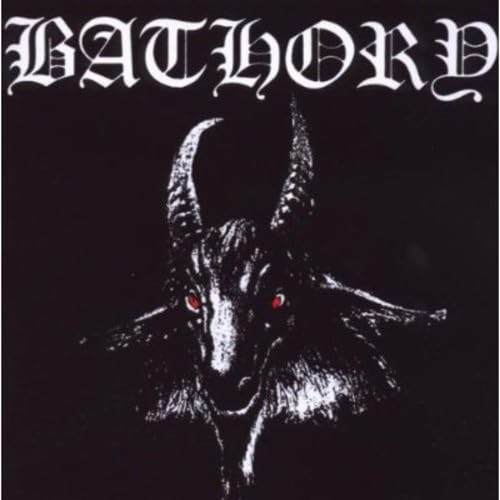
Bathory – self-titled

Released October 1984 via Tyfon Grammofon Records

The story of Bathory is a fairly simple one. The project was the mastermind of young Swede Thomas Forsberg, aka Quorthon. Quorthon’s father, Borje Forsberg aka Boss, owned the record label Tyfon Grammofon and Quorthon’s fledgling band would fill out songs on a compilation when a planned act dropped out. Those recordings generated a high degree of interest and Boss commissioned Bathory for a full-length debut album.

The work of Bathory would later fall under the sub-label Black Mark Productions, which Tyfon Grammofon is more commonly known as today.

Quorthon handled guitar and vocals on this release, he was joined by Stefan Larsson on drums and Rickard Bergman on bass. The lineup of Bathory would change often, with Quorthon being the only constant member and years down the line the only member.

The album cover was fussed over a little bit, with a pentagram originally planned but the idea was scrapped in favor of the goat artwork. After the first pressings of the album, Quorthon found the yellow coloring of the goat an eyesore and the cover was changed to black and white for all subsquent pressings. The back cover also features an error due to supply issues. Quorthon found some kind of rub-off lettering in a font he wanted to use, but he ran out of the letter C, so the song Necromansy is spelled as I just typed it instead of “necromancy” as the dark art is typically known as.

The influence of Bathory was a huge question mark during the early years – Quorthon cited acts like Motorhead and GBH as his primary guides, while everyone on the planet Earth thought that the early Bathory recordings sounded much like Venom. Quorthon chafed at comparisons to Venom and even suggested that the two bands were completely different – he isn’t wrong, per se, but there is a definite vibe that’s similar to Venom in these early Bathory recordings. In this 1987 interview with Metal Forces, Quorthon did clarify that he thinks Venom’s Black Metal is a masterpiece and he goes further into what led him to make the music he did.

I’m going to handle this album differently than my usual format. Today I’ll offer up the tracklist and then give a summary of what we have here, I’m not going to jump into detail track by track like I usually do.

Storm Of Damnation (intro)

Hades

Reaper

Necromansy

Sacrifice

In Conspiracy With Satan

Armageddon

Raise The Dead

War

The Winds Of Mayhem (outro)

This album takes less time to listen to than it takes to get a Domino’s pizza – this one is in and out in 26:58, and 3:30 of that is the intro and outro.

The music on tap is rooted in thrash, but is very lo-fi production and a bit more “messy” than the polished offering thrash would mostly become. It bears some comparison to Slayer’s Show No Mercy with the “evil” imagery and creepy music, but even Slayer’s debut was refined compared to this. This is a ghastly, cavernous listening experience that isn’t for the faint of heart.

The concept of “under producing” might be strange but it’s also perhaps the most important part of this record. The lo-fi production turned off some listeners but brought others in, and some of those listeners would seek to emulate this “sloppy” work. It’s one direct link from this to the genre of black metal, and its infamous “second wave” which would show up in the late 1980’s and terrorize the world by the early ’90’s.

It’s actually a bit inaccurate to call this album and black metal two separate things – while black metal was influenced by Venom, Celtic Frost, Slayer and Mercyful Fate, none of those acts were playing the style of music. Bathory, on the other hand, offered up an early blueprint on what black metal could actually sound like. Songs like Sacrifice and Armageddon are not far removed from what the Norweigian scene would put on display when black metal truly got rolling. Nothing wrong with calling this the world’s first black metal album, though it’s a subgenre whose listeners like to argue about everything so the point could be debated.

For me personally this wasn’t a part of my collection until a lot later down the line, when the most infamous events of black metal’s early days had played out and Quorthon himself had moved on to other styles. But it is absolutely worth a visit to truly understand where the depths of extreme metal got their influence, and this album is the birth of black metal.

This album basically starts playing and bashes for its 27 minutes of existence, save the eerie intro and outro. If there is a standout track I find Raise The Dead to be it. This one peels the speed back just a touch and is a savage, noisy march about coming back from the grave. This is the song that does grab out a little bit and offers something perhaps “catchy.”

But this album is an all or nothing proposition as a whole. You’ll either like it or not. There is no range of dynamics to consider here or a few songs that leap out and others that are “less than.” It also makes grading a bit of a chore – honestly the album sounds like shit and could be given an F for that alone. It’s also the start of something that became massive within heavy metal and could be given an A or even an S for that factor.

The actual grade lies somewhere inbetween – for me personally I have listened to black metal for decades now so the sound is not an adverse factor – this is exactly what black metal is supposed to sound like, and it’s primarily because of this album that black metal sounds like that. This is worthwhile to listen to and is interesting on its own merits, not just because it’s a historical marker.

Album Grade: B+

Bathory’s first offering got the ball rolling on Quorthon’s own lengthy career and also the genre of black metal. The next few Bathory albums, including the classics Blood Fire Death and Under The Sign Of The Black Mark, would cement Bathory’s status as early extreme metal legends and draw a line to the start of Mayhem’s career, thus kicking off black metal in earnest. Quorthon would leave black metal behind after awhile, serving up several albums of more melodic fare that now classify as Viking metal and also experimenting from time to time. Bathory would run until 2004, while Quorthon died of heart issues.

Bathory did not run the usual course of a band – they rarely played live and gave up on that pursuit after a few years. Bathory was simultaneously world famous and totally obscure – not known to the larger world but hailed as legendary among the denizens of the metal underground. And this debut album was a fitting start to a heavy metal legacy.

For more on the grading scale I didn’t really use much this week, head here.

Questions, comments or concerns? Use the comment form below or head to my contact page.

Celtic Frost – Morbid Tales

Once again I’m going back to 1984. This time it’s to explore a debut album that would prove massively influential to the coming extreme metal movement.

Celtic Frost – Morbid Tales

Released November 1984 via Enigma and Metal Blade Records (US)

Celtic Frost was formed in Switzerland in 1984, out of the ashes of Hellhammer. That band had been intentionally lo-fi in sound and had generated some nasty reviews from parts of the heavy metal press, to a degree that the negative reputation would follow Celtic Frost through their first few albums.

Celtic Frost was formed by guitarist and vocalist Thomas Gabriel Fischer, credited to the stage name Tom G. Warrior; and bassist Martin Erich Stricker, who went by the stage name Martin Eric Ain. While Tom Warrior would go by his real name and pseudonym interchangeably, Ain used his stage name strictly through the course of his life. Drums for this recording were provided by Stephen Priestly, who would later join the group fully during the ill-fated Cold Lake period.

Morbid Tales was initially released as a six song EP in the European market by Noise Records, who financed and helped produce the recording. In the US two songs were added and the album was licensed to Enigma and Metal Blade Records. I will be covering the US version today. A few reissue versions with bonus tracks and the Emperor’s Return EP are available.

Note that on streaming and on certain reissues, the intro to the first song is a separate track called Human. This was originally part of the first proper song Into The Crypts Of Rays.

Into The Crypts Of Rays

The opener is a straightforward, pummeling thrash tune that sounds suitably primitive but also a fair bit developed. This isn’t the woeful noise of Hellhammer, there is clearly something more here right from the drop. While CF were significantly influential on black metal, there’s also something here as an early template for death metal.

The song is a bio piece on Gilles de Rais, a French baron who was an ally of Joan of Arc. The baron was also implicated in and convicted of murdering 140 people, mainly children. The truth of de Rais’ guilt has been in question since his execution in 1440, but his supposed bloody deeds have been fodder for metal songs for the past few decades. This may have been the first one but I am not able to say that with certainty.

Whatever the case, this song introduces Celtic Frost to the world with a swift kick in the ass. Grade: A+

Visions Of Mortality

This one opens as a mid-paced effort, showing off the true haunting and sinister atmosphere Celtic Frost would conjure up throughout their career. It jumps into a thrash movement at one point and bears early indications that this band would offer up more in the way of song arrangement than simply playing loud riffs. A nice musical setting for a dark tale of someone seeking to become immortal through whatever means necessary. Grade: A

Dethroned Emperor

A very sick and twisted riff for this one, total caveman stuff here as CF run down the tale of a ruler who is removed from his throne by force. Even with the primitive feel, there are bits of arrangement and atmosphere thrown in. Grade: A-

Morbid Tales

This one kind of rocks out a bit in the intro before the song proper offers up a very early slice of what could be called black metal. The morbid tale in question is a battle between sorcerers or demons or something, it’s like a Dungeons and Dragons adventure laid out in lyrics. But yes, the foundation upon which one of the world’s most controversial subgenres was built can be found right here. Grade: A

Procreation (Of The Wicked)

Nothing too complicated here, but this riff is just impossibly savage and also catchy. The tale offered up here is one of how people are basically cruel and evil and there isn’t much to be done about it. There’s also a brief demonic utterance at the end to drive it all home. This song is just impossibly brutal and hypnotic. Grade: S

Return To The Eve

This is a fanciful tale of someone who longs to be in a recurring dream they have but the person is often rudely interrupted by reality, which becomes its own nightmare. A pretty simple tune but there are bits of atmosphere building in here with a spoken word passage and other small embellishments. Grade: B+

Danse Macabre

This goes off the beaten path and conjures up an eerie interlude. It is a creepy, horror movie passage vibe with no true discernible lyrics, just a few phrases echoed out in distorted fashion. The bit is well done but I do think it overstays its welcome at 3:52. But the album isn’t that long anyway so it’s not eating a ton of time either way. Grade: C+

Nocturnal Fear

The album closes with a balls-out thrasher that screams Venom. It’s another twisted tale with demon’s names and stuff like that in it, I don’t know what it’s talking about any more than Tom G. Warrior did when he wrote it. But it’s a total burner of a song. Grade: A

Morbid Tales was not just a debut offering from Celtic Frost, it was an album upon which the future of extreme metal would be based on. No need to offer up chart information here because there isn’t any – CF doesn’t seem to have any chart placements at all until their final album in 2006.

But rest assured this album got around on to the turntables of willing subjects the world over, and within five years there was both a death metal scene and the early strains of the infamous black metal movement were taking shape. Scores of artists from the extreme metal pantheon credit Celtic Frost and this album with being the first early guide into the true depths of sound. This band would join Bathory and Mercyful Fate as the 1984 pioneers of extreme metal, coupled of course with the earlier influence of Venom.

When I ranked the Celtic Frost albums some time ago, I had this slotted in at number three. As my grades here indicate, I am very high on this one so just imagine what I think of the other two above it. There is no doubt that this is an essential piece of heavy metal history.

Album Grade: A

Celtic Frost would have many peaks and valleys over their winding, on and off again career. But this album helped kick off a revolution within heavy metal that has kept generations of headbangers in business.

For an explanation of my grading scale, head here.

For questions, comments or concerns, use the comment form below or head to my contact page.
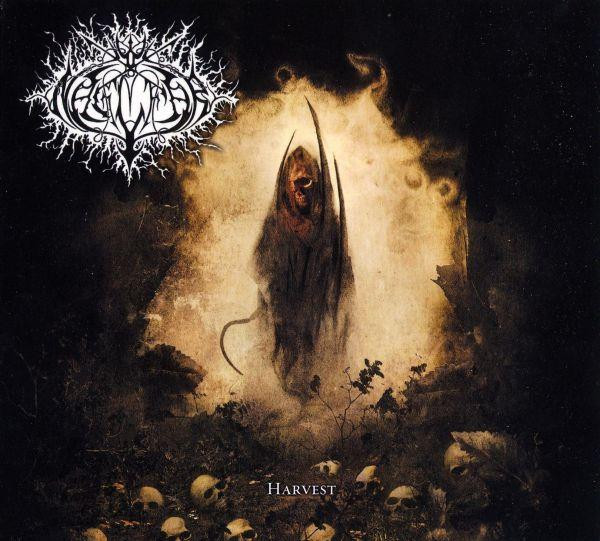
Naglfar – Harvest

Today I’m going back to 2007 and getting out a melodic black metal album that saw a subtle yet noticeable shift in the band’s sound and a change in theme from raging about external issues to focusing inward on one’s own shortcomings.

Naglfar – Harvest

Released April 2, 2007 via Century Media Records

My Favorite Tracks – Harvest, The Darkest Road, The Mirrors Of My Soul

Naglfar were fresh off their 2005 opus Pariah, which was the second to feature Kristoffer Olivius as the band’s principal member after the departure of co-founder Jens Rydén in 2003. Olivius kept at vocal duties for this album but passed bass playing to Morgan Lie. Andreas Nilsson and Marcus Norman handled guitars, and Mattias Grahn was the drummer.

While Pariah was a bomb aimed at the corruption and rot of society’s institutions, Harvest took a different approach and explored the decay of self. The themes here are depressing, bleak and suicidal. It is truly not for the faint of heart.

The album runs 9 songs out in 45 minutes. A few versions of this release had bonus material, including a DVD with live stuff, but the core album remains the same across versions.

The album opens with Into The Black. The pace is slower here, very noticeably so compared to the past few Naglfar albums. But the slower tempo works in the song’s favor, it is a creepy dive into the mind of someone who is done with life. It sets the table well for the rest of the album. Up next is Breathe Through Me, which musically sounds more like something from the prior album. It’s a faster black metal offering that gets into personal damnation, also wrapped up in the religious symbology that Naglfar often employ.

Next is The Mirrors Of My Soul and this one is a masterpiece. It a bit faster but also quite, well, groovy. It is a look at a person’s descent into total madness, with death the only option out of it. The lyrics to this one are pure poetry – the lines “Deeper into darkness, deeper I fell – When I close my eyes I see myself burn in Hell” are just amazing work by Olivius. I’ve held this as a personal favorite Naglfar track since first listen back in 2007.

It’s now on to Odium Generis Humani, which is Latin for “hatred of the human race.” This one leaves behind the self-hatred for a minute and revisits the “fuck you all” attitude of Pariah. The blistering music matches the intensity of the misanthropic delivery.

Song five is The Darkest Road and is another brilliant work from Naglfar. This is a haunting tale of someone embracing the “dark side” of life and also the nihilistic acceptance of life having no meaning. It is not necessarily a celebration, more of a matter-of-fact statement. This song was more or less an album single, and a wise pick for one as this both leaps out in its dire message and is also quite catchy.

The Way Of The Rope comes next and, if you at first think that it’s about Sweden’s long nautical history and the importance of ropes to seafaring, well, you’d be very wrong. If you guessed that it’s a savage tale of suicide, you’d be correct. After this comes Plutonium Reveries, another callback to Pariah and the misanthropic desire to see humanity perish in nuclear war as payment for misdeeds. The hits keep coming with Feeding Moloch. Moloch was an ancient entity mentioned in Hebrew texts that accepted child sacrifices, and the narrator of the song gladly supplies Moloch with its desires.

Everything winds to the end of the road and the title track Harvest. It’s clear from the drop that something extra is up here, as most of these songs run 4 or 5 minutes but this final song gets over 7. This is a dark and majestic song that feels like the whole album was building up to. Its theme is the concept of reaping what one sows, though of course it is again from a misanthropic perspective and aimed at everyone who has wronged the song’s subject, or perhaps all of humanity. While of course quite noisy like the rest of the album, the song goes out quietly with a piano outro. It’s an effective, unsettling quiet after the past 45 minutes of pure misanthropic hatred.

Harvest was another well-regarded success for Naglfar, displaying that the band still had staying power after the loss of a primary member after 2003. The band would tour behind this effort then re-enter the studio to prepare their next album in 2012. They would then take an extended layoff, something the group is known for doing, before their most recent album in 2020.

For me this has been my favorite Naglfar album, and it’s a lofty title since I love both Sheol and Pariah. The twist on theme here and the shift in music to something more catchy put this one above the others for me. When it released in ’07 I was not in the greatest of mental states, so this was either the absolute best or worst album to get into. But it all worked out in the end, and Harvest still holds up for me all these years later.

Emperor – Thus Spake The Nightspirit

This post was part of a series that I called S-Tier Songs. I later decided to abandon the series in favor of a simpler Song of the Week format. I am keeping these posts as I wrote them but removing the old page that linked to the list of S-Tier Songs. This final post in the series explains my decision to change up how I do it so I’ll leave the introductory stuff. Enjoy.

And now, a word about the series as a whole. I didn’t really think about it much when I started my new series last month, but honestly the Song of the Week thing sort of makes this S-Tier songs deal a bit obsolete. Or at least I feel like I’m running too much common ground between the two, it feels like this series doesn’t serve much of its own purpose with the new one going.

So, with this 25th entry, I’ll be putting S-Tier songs on ice. I’m not going to wipe it out or anything, I’m just going to stop doing them. I may find an occasion to start this up again the in future, who knows? But for the time being this will be the final entry in the series. Just too much here I can do already anyway with Song of the Week.

For the last one for awhile, or perhaps forever, I’m going back to one of black metal’s greatest moments, a song that helped establish black metal as something more than lo-fi noise a bunch of insane idiots were making.

Emperor – Thus Spake The Nightspirit

Today’s song is from Emperor’s second proper album Anthems To The Welkin At Dusk, released in 1997. The album took a bit to record, due in part to bassist Samoth’s conviction and sentence for arsons committed alongside the more infamous names in black metal during 1992.

At any rate, Emperor finally got back on the music train and their new push would help push black metal in new artistic directions. This wasn’t just noisy slop – there was true instrumentation, arrangement and above all else, majesty.

Thus Spake The Nightspirit is the album’s third track and guitarist/vocalist Ihsahn is credited as the song’s sole writer. The song jumps pretty well right in to some fast-moving black metal for its first few minutes. There are a few orchestral flourishes to round out the proceedings. The last few minutes shift gears into a slower, more atmospheric passage and that’s how the song closes out.

Lyrically the song is a call to power and to the night. The institution of religion, never a friend of black metal, is called out in cryptic phrases like “liars in thorns” and “the broken seal,” the latter most likely referring to the Book of Revelations. The final passage begs the “nightspirit” to “embrace my soul,” perhaps one giving themselves totally to the dark, or maybe a more abstract meaning not entirely clear to an outsider listening.

The song’s title does bring to mind a work from famed philosopher Friedrich Nietzsche – Thus Spoke Zarathustra. Metal bands have a long history of pilfering Nietzsche’s book titles and sayings for song and album titles, often without context. Perhaps there is a connection between the song and the book, but honestly I’m not well read on Nietzsche so I’m not qualified to discuss it.

Thus Spake The Nightspirit has become a standard for Emperor. It has been a part of many live sets since release and stands as the band’s fourth most-played song, though in fairness it’s worth considering the band have very few live shows compared to many other acts. The song was one of two chosen to highlight the band’s reunion sets and those albums’ retail release in the late 2000’s. In fact, I discussed that single quite awhile ago here.

Why is this an S-tier song?

Thus Spake The Nightspirit is a majestic and triumphant work of art that transcended a lot of what was on the surface for black metal in the mid-1990’s. Emperor was one of a handful of black metal bands who showcased the musical potential of the genre and sent it into orbit as extreme metal’s primary interest of the late 1990’s. Still today the song remains an integral part of Emperor’s brief yet massively influential catalog.

Well, that will just about do it for this series, or at least its first run. While it was fun to do, it’s kind of outmoded by the Song of the Week feature now and it’s time let this thing sit for a while. Perhaps it will return and the tome of great songs will add new entries to the list at some point down the road.

Emperor – Thus Spake The Nightspirit/Inno A Satana

Today I’m gonna dig out a single I’ve had since its release in 2009. So 13 years, if my math is right. It’s one of those “fun” but totally unnecessary things that was put out as a “limited bonus.” I was very, very excited about the albums being released and so I went whole hog and ordered the LP’s, a CD and DVD set, and also this 7-inch single.

The occasion was two live album releases from festival reunion shows of black metal stalwarts Emperor. The band split up in 2001 and reunited in – uh, 2006, which in the grand scheme of things is not a long time at all. But back then it was really exciting stuff and the hype was unreal. Even now as I’m looking over this paltry 5-year time gap for the first time I’m a bit taken aback at just how amped up I was for this. But hey, that comes with age I guess.

Anyway – the band began playing sporadic shows in 2006, and in early 2009 they announced a few LP and CD releases of two 2006 live sets – performances at the Inferno and Wacken festivals. The records were packaged separately, but a big CD and DVD bundle was released called Live Inferno. Oddly enough, the DVD had the Wacken performance on it.

Anyway, again – also as part of this series of releases, this 7-inch record was put out. Released on gold vinyl, it is a limited edition of 2,000 copies. This release didn’t spell out the specific number of the release by hand-numbering or anything, but I can rest comfortably knowing I’m one of 2,000 people who have this. (FYI, it is readily available on Discogs at the same street market value it sold for 13 years ago…)

Enough of that. I’m not really complaining but I am having a bit of fun with this. Whatever happened, I have this two-song single from the Live Inferno set. The two songs are among the most celebrated of Emperor’s work and my two personal favorites of their entire catalog, so that worked out well. Both performances are from the Inferno festival and are both included on that full live album – this isn’t unreleased content.

Thus Spake The Nightspirit

The A-side features a standout track from the band’s 1996 opus Anthems To The Welkin At Dusk. It was the album that first got me into black metal and this song is my absolute favorite of the group’s entire catalog.

I wont’ delve too much into the song itself here – simple fact is that it will be an S-Tier song someday and I’ll just save the discussion for that. For this version, it is a fantastically-captured live version that sounds absolutely great. You don’t really hear the crowd on it until the end, but that’s to be expected – even in a huge festival setting, black metal isn’t “stand up and shout” music. But the band’s sound got reeled in well that night and it’s easy to see why they chose to release it as a live set.

Inno A Satana

Not the version from the 7 inch

The B-side features a track from the band’s true debut full-length In The Nightside Eclipse. It’s the album that put the band’s name on the map just as all the murder and church-burning stuff made black metal famous (acts that some members of the band were involved in).

Inno A Satana (Hymn To Satan, if you were wondering), is one of the group’s many lush, majestic passages that offered something more to the listener than the chaotic lo-fi frenzy of most black metal of the time. Another of their greatest tracks and also a likely candidate for future evaluation as an S-Tier song.

That covers the two songs from the single. My copy did arrive from Europe with a few bends in the cover, but it’s not that big of a deal really. There is a funny story as to how many times the copies of the full live set LPs changed hands between me and a buddy of mine, but I’ll save that for another time. This single has remained in my collection the entire time and it’s a cool thing to have, even though it could be considered rather useless in some instances.

Memories – Straight To Hell

I’m winding down the main crux of my Memories series now. There is only really one more part to go after this one. This page recounts my older posts about what I’ve listened to over the years. This time I’m going to get into the years 2006-2010, which brought a very radical series of changes in my life that would reflect in what I chose to listen to during that time.

In the summer of 2006 I endured a few severe blows in life that left me regrouping. I relocated to where I am now, in the southwest of Missouri. I was more or less starting all over in every aspect of existence. Thankfully I still had plenty of friends from my last time living here, after all I’d only been gone about 18 months.

Everything that had happened left me clawing back toward that which was comforting and familiar, and few things were as much that to me as heavy metal. It did help that my network of friends in the area were also into the same thing. People had huge collections, played in bands and it was that community that I returned to that year.

“Metal” meant, by and large, the extreme side of things. The early 2000’s saw death metal return in a big way to prominence and black metal was mostly past its 90’s drama and about the music itself. A host of bands old and new were blazing paths in every different direction.

For me it was a bit more than just picking up the music again. It became more of an identity thing. I wasn’t just into harsh music, it was an embodiment of what I thought about society and people. All of the music’s yelling about war, death, Satan and how fucked humanity is wasn’t just there because it suited the music, it was in step with what I thought and how I felt. Perhaps not a good thing, I don’t know, but it was what it was at that time.

I didn’t just listen to the music – I wore the shirts, I went to the shows, I lived and breathed it. I can’t even count the number of friends I had who were in death metal bands at the time. I pretty well gave up on being a “normal” member of society and chose to exist in a counterculture pocket instead. Sure I worked like everyone else, but my spare time was focused on the music. I embraced the identity fully, both to express myself and to keep people the hell away from me.

I wouldn’t rest long just in one pocket of heavy metal. I would soon pick up far more on the doom subgenre around this time. I hadn’t previously been exposed to much of it beyond the obvious Black Sabbath, but in the late 00’s I went all in on doom. Old, new, it didn’t matter. The music suited my obviously not great mental state at the time and was a comforting presence during those years. I am far “better” now by most metrics than I was back then but doom metal is still a good part of what I enjoy these days even if I don’t explore the area as intently as I did back then.

As 2007 came around I would find myself exploring an unlikely genre, though it was entirely fitting for me at the time. A friend lent me a CD he’d picked up not long before and thought I should give it a spin. I’d heard the name for years and knew he’d been a bit different from his namesake and his chosen genre but I never took the time before to give his music a spin. The artist was Hank Williams III and the album was Straight To Hell. The results would kick me off into a new appreciation for country music.

I spun the Hank III album time and time again. While the genre was something I avoided up to that point, this rough and tumble outlaw tear was right up my alley at the time. There was obvious crossover between the outlaw country movement of the late 00’s and the heavy metal scene. But I didn’t just stop with Hank III, himself a metalhead with his own bands. I jumped in to country as a whole, visiting legends like Johnny Cash and Waylon Jennings along with artists of the day like Wayne Hancock and Lucky Tubb.

As luck would have it, my area was a good place to be for that country scene. Both Wayne and Lucky played shows at least once a year in my town and I was a fixture at their shows. Hank III also came through for one of the craziest, longest and booze-soaked concerts I’ve ever seen. I wasn’t alone in my newfound love of the music – many of my friends were also picking up on Hank III.

Country would last with me even after that insurgent movement of the late 00’s slid away and became something else that would eventually find its place in mainstream music. But that outlaw scene of the time hit home with me, a thread I’ll pick up another time in another fashion.

As the decade wore down I was pretty entrenched in the sounds of underground and independent movements. I had anchored my identity to them, after all. After a bit of a struggle through 2008 I entered 2009 in a more stable place though still fully vested in these counterculture leanings. I wanted to yell at the world how messed up I thought it was and I did so through the many songs around that echoed the same sentiment. It was angst that perhaps mutated into true misanthropy, at least to a degree. If anything, I didn’t realize how much of that time would just be a pregame for society’s shitshow to come.

That is where I was as 2010 came about. I had fashioned myself as some uncaring, hateful outlaw, sick of it all and armed with the tunes to prove it. I entered a bit of a different headspace around this time as my station in life slowly improved, caring less and less about what image I projected onto society and just enjoying whatever I wanted to enjoy. And it was around this time I noticed them slinking around the same corners of the record store where I was at – the metal, the independent country and roots music. Who were these man-bun wearing, beard-clad, craft beer swilling people and why were they into the same shit I was? What did it make them, or perhaps more interestingly, what did it make me?

Questions for the next time, of course.

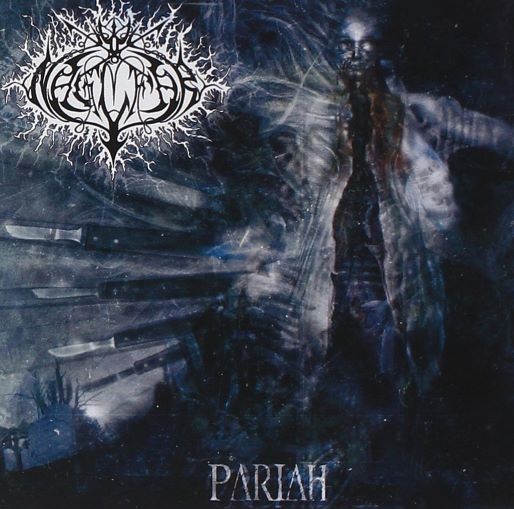
Naglfar – Pariah (Album of the Week)

Last week was fun, going back through hair metal and all the stuff that happened in 1991. This week is back to absolutely no fun. I’m going back to 2005 and grabbing one of my favorite “no fun, people suck and everything is awful” black metal albums.

Naglfar – Pariah

Released June 30, 2005 via Century Media Records

My Favorite Tracks – And The World Shall Be Your Grave, A Swarm Of Plagues, Revelations Carved In Flesh

Naglfar underwent major change before the release of Pariah. The band’s founding vocalist Jens Rydén left the group after their prior effort Sheol, leaving bassist Kristoffer Olivius to helm the group. Naglfar had just gained a fair bit of momentum from Sheol and would be tested to provide a worthy follow-up.

Pariah sees an exploration of misanthropic themes, the album’s songs connected in an evisceration of the human experience. This is a level beyond being upset that Karen can’t put her shopping cart back in the proper place at the store – this album calls for the nuclear destruction of humankind in multiple songs. It moves past the need to express angst as a way to let off some steam and enters the territory of condemning civilization as a whole. We are far past the point of breaking stuff, this is all out war.

I will visit each of the 8 proper songs track-by-track, leaving off the brief intro Proclamation.

A Swarm Of Plagues

The album begins with a mission statement focusing on the destruction of humanity. It is pure textbook misanthropy – due to the wayward nature of humanity, it should perish in nuclear flames. The destruction is judgment rather than an accident. Sonically the song flies along at a frenetic pace until a mid-section interlude that offers one of the album’s few moments of subtlety.

Spoken Words Of Venom

This song embraces hatred, whether it’s of an individual or humanity as whole is unclear. The music does not let up off the accelerator through the track, while lyrically Olivius mows down his target with every negative word in the thesaurus. It is an unsettling way to dismiss the whole of someone’s existence.

The Murder Manifesto

Here the band turn the tempo down just a hair as the song’s narrator stalks his prey. There seems to be a theme of a dark cult confronting its more holy adversaries in this song rather than simply someone killing for the sake of doing so. It is a targeted, focused effort in the album’s setting of the end times of civilization.

Revelations Carved In Flesh

Another track about murder, though this time it seems this death cult is recruiting willing sacrificial lambs for its slaughter. This song stands out a bit for its melody and creativity amongst the ever-present backdrop of misanthropy. The lyrics do quite explicitly spell out the ritual murder and are in line with a fair bit of death metal fare. The grotesque final verse is especially something as easily found on a Cannibal Corpse album as opposed to black metal.

None Shall Be Spared

This song returns to the worldwide scope of things, declaring a war against the Abarahmic faiths. It is not openly stated though the lyric’s targeted aim of “2,000 years of lies” offers up the theme well enough. It is the ceremony of opposites in its final form, bringing about the end rather than existing in a perpetual state of debate.

And The World Shall Be Your Grave

It is again time to visit the ultimate expression of misanthropic leanings – the end times. Here the world perishes by way of nuclear war. The lyrics, of course, celebrate this outcome. Nothing could justify a misanthropic perspective more than humanity dooming itself with its own creation. Misanthropy is sometimes, like nihilism, a warning rather than an outlook, but on Pariah it is the perspective and the all-consuming nuclear end is the goal. It all leads to the same end regardless of what lenses one looks through things with.

The Perpetual Horrors

Heading toward the album’s close, this song begins to turn the concept of external hatred on its head a bit. Any expression of this kind of negativity will inevitably lead one to look in the mirror, and this song is a glimpse into the themes present on Naglfar’s next album. Humanity is still suffering and dying here, but the cause is looking at his own hollow, rotten core this time.

Carnal Scorn And Spiritual Malice

Perhaps conceptually, the album ends with all of the hatred and spite being turned on the album’s “protagonist.” Finding existence pointless, he brings about his own end in disturbing and explicit fashion. Still railing against the tenants of the world that irk him, mainly religion, our humble hater goes out on his own terms rather than the nuclear war prophesied throughout the rest of the album. The album’s final sound brings the point home.

Pariah is an album executed with ferocity and a fanatical railing against humanity. It does not often contain nuance and its lyrical offerings are explicit and profane. Naglfar’s sound does recall their renowned countrymen Dissection in both music and theme but is not purely an exercise in worship of that band. While Naglfar are on a prominent record label in Century Media and have had their name discussed in many circles over the years, they remain something of an underground proposition even within the structure of black metal.

I do hold that Pariah is my favorite album from the band, though there is stiff competition in the albums both proceeding and following this. Both Sheol and especially Harvest will get time here in the future. I by no means claim to espouse the intense level of misanthropy found here but I do “get” it just the same. My time not long after this album’s release was rather dark and music like this was a release. And now from what I’ve seen of humanity in the past several years I can’t help but wonder about those nuclear fires from this record. It is scary when society starts to catch up to the dark fantasy.

None More Black

Awhile back I went over my first introduction to extreme metal. Death metal has been a part of my music diet for a long time now, and many other things associated with extreme music are also in my collection.

But today I want to get into the other big movement in extreme music, the one that hit headlines in the early 1990’s and then stood as the one viable form of heavy metal in the later half of the decade. It remains today in many forms and has morphed and shifted into several different directions over the years. It is one of metal’s most controversial subgenres that captivates many but repulses others.

Black metal got its start in the 1980’s underground with acts like Venom, Celtic Frost and Bathory leading the pioneering efforts to establish the sound. The music came to the forefront in the 1990’s, due mainly to the influence of Norwegians Mayhem and a series of criminal acts that would conclude with the murder of Mayhem founder Euronymous at the hands of Varg Vikernes of Burzum.

It was after these insane events that black metal came to my attention. I read about the murder and the preceding church arsons in the underground ‘zines I was getting my death metal news from. Like many, I became transfixed on this absolute trainwreck of murder and music. I saw an advert for the Burzum album Hvis lyset tar oss, which was the first Burzum album released after Vikernes was imprisoned for the murder and arsons. I ordered the CD and anxiously awaited to hear the sound behind this crazy story.

I couldn’t stand that album. I played it a bit and tried to wrap my head around it, but the sound was so distant and unlike anything I was used to hearing. I wound up trading the CD off and I stayed away from black metal for a few years. The music behind the insanity didn’t do anything for me.

The first time I finally found something aligned with black metal that captured my ear was in 1996. Sweden’s Dissection released Storm Of The Light’s Bane, a much-heralded masterpiece that owed a fair bit of its sound to black metal without being purely that. I took to the album immediately and it stands today as one of my absolute favorites of all-time.

It wasn’t long after that I started poking back around the sounds of black metal proper. I wasn’t the only one around who was into extreme music and I quickly got one recommendation from several people – Emperor. I came to the band after their second proper studio release, Anthems To The Welkin At Dusk. The album would mark the transition to when I truly started taking the music seriously and wasn’t simply gaping at the tabloid trainwreck the scene had been.

This remains my favorite black metal work to this day. Of course there is a whole world of black metal out there almost 30 years since it grabbed headlines, but there is no substitute for the majesty of Emperor.

Other acts would soon enter my rotation – Satyricon, Immortal, Marduk, and more were sounds I was more than willing to enjoy. Something finally clicked with the music and it worked for me. Of course it didn’t hurt that the subgenre was already starting to take different forms.

Just as black metal came to the forefront of metal music in the mid-90’s, one band quickly gathered a lot of attention. England’s Cradle Of Filth retain an enduring legacy today but were very polarizing in the scene they entered a few decades ago. I personally loved them and still do, but it’s wasn’t (or isn’t) hard to find some tr00 black metal warriors who had, and have, nothing nice to say about CoF.

That was one part of the black metal movement that kept me from wading too far out – of any music scene I’ve been involved with, black metal is by far the most elitist, gatekeeping and cringe shit I’ve ever seen. Metal as a whole can attract gatekeeping posers who think their tastes should set arbitrary bounds of what is or isn’t worthy, but black metal is on a whole other scale. It’s still a part of black metal today, but that is fading some for reasons other than maturity.

I would go on to hear bands on prominent independent labels as well as good stuff from the true underground as years wore on. As bands like Darkthrone became elder statesmen to the genre, more and more new bands brought fresh takes on the music.

Black metal exists somewhat apart from other metal subgenres in that it works very well with other forms of music. Attempts have been made to marry heavy metal with everything from rap and country, with middling results at best. But black metal has some other artistic quality to it that lends itself to merging with other sonic expressions into a viable new form.

One such dark marriage is “blackgaze,” that of black metal and shoegaze. Both modes of expression are atmospheric and distant, and seem a perfect match for each other. The success of Alcest, Deafheaven and others stands as testament to this blessed, unholy union.

Today I am still listening to black metal, even if the bulk of my focus is on other movements. Black metal still offers some of metal’s most artistic sonic canvasses, even in the wake of sensational headlines and present-day issues of cultural standing. It took me some getting used to, and also to find the right bands to pique my interest, but it all finally clicked. Metal as a whole often encompasses a theme of misanthropy, and there is nothing more misanthropic than the world’s nastiest music.

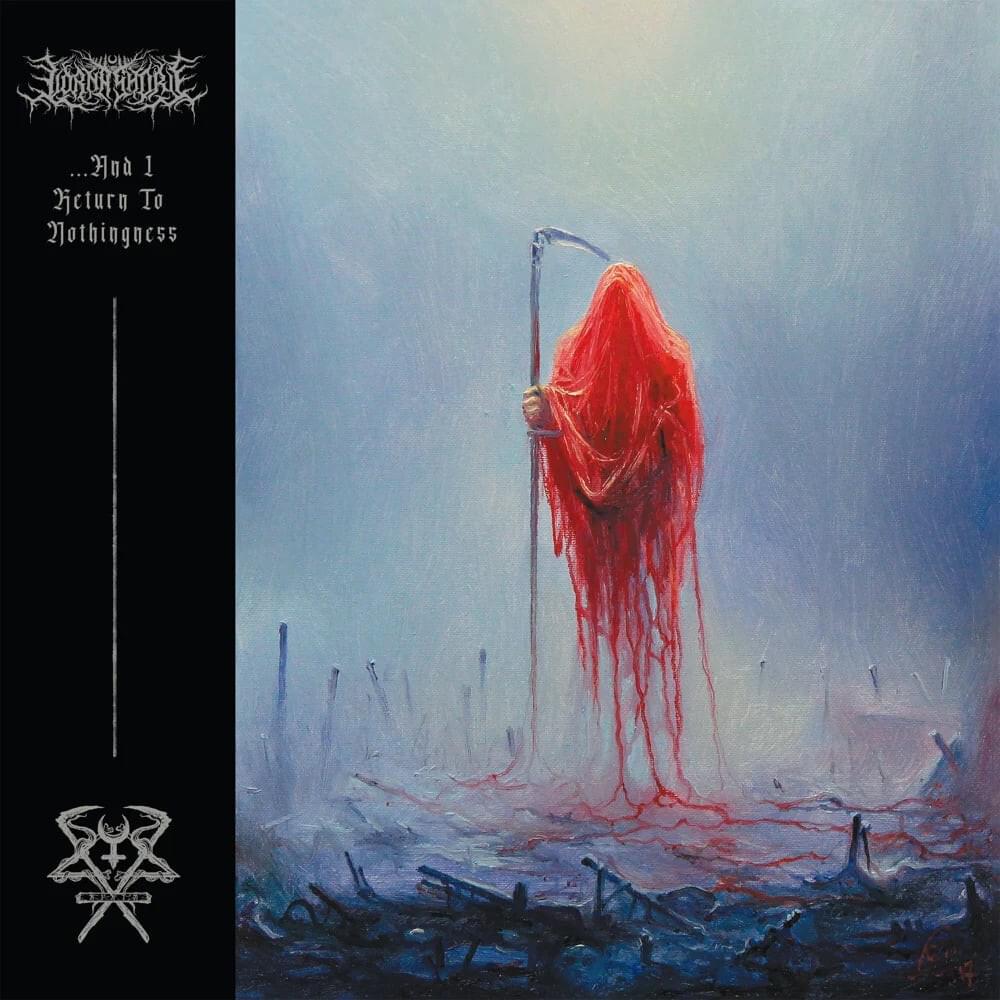
Lorna Shore – … And I Return To Nothingness (Album of the Week)

What is an album, really? If I were ranking an artist’s albums I would use some kind of metric to determine that I’m only going to include full-length studio records. No live albums, no EP’s, no extended singles, no greatest hits compilations.

But for an informal exercise like the Album of the Week? I’m certianly going to include live albums at some point. My favorite band has like 13 of them, there is no avoiding that. And EPs? Sure. Some of my favorite music is in EP form. Broken by Nine Inch Nails is probably my favorite piece of music they did and it’s not really a full-length album.

So this week it’s time to look at a newly-released EP, only 3 songs, that has moved mountains in the metal and deathcore landscape.

Lorna Shore – …And I Return To Nothingness

Released August 13, 2021 via Century Media Records

Favorite Track – To The Hellfire

Lorna Shore have been around for a bit over a decade and, like most any band, have had to endure a few lineup changs over the years. The band were left searching for a new vocalist after some unfortunate issues with their prior singer, and this new EP is a showcase of new vocalist Will Ramos as the band re-enters the touring scene after a year of pandemic-induced inactivity.

And yeah, it is quite the showcase.

It’s been a pretty kinetic summer for me – sort of coming out of the pandemic and trying to find some semblence of a life after 2020 so I haven’t really been keeping up with stuff. I do sometimes watch a fair amount of reaction content on YouTube and I noticed some of the ususal vocal coach people I watch covering To The Hellfire when it released in June. But I was too busy doing the early work to launch this blog and, well, going out and drinking beer to sit and pay attention to what was going on.

It was just before the EP’s release when the band dropped a video for And I Return To Nothingness. I was killing time one afternoon and checked it out. I hadn’t heard much at all of Lorna Shore before so I was trying to play catch-up both with an unfamiliar band and the hype that was generating around them. I liked what I heard so I went ahead and started checking out those reaction videos on To The Hellfire.

Holy shit.

I’ve been listening to extreme metal since the early ’90’s, so nearly 30 years. It has been around for roughly 40. It is exactly what the name implies – extreme. And over all this time, it makes you wonder where else there is to go with it. How far can you really go with war, death, Satan and Hell? It’s been done, redone, overdone, underdone and at every point inbetween. There’s only so much ground to cover, so much innovation to find.

And then To The Hellfire comes along. This song about the acceptance of death and damnation pulls off a rare feat – it sounds exactly like Hell. In a genre where the topic of dying and going to Hell is derivative at best, Lorna Shore invokes a soundscape that marries the lyrics and imagery and presents it in a way that transcends any individual medium. It absolutely stands out from the crowd of “Hell, fire, death, Satan” songs that are out there. Like, a person with enough money could fill a large building with nothing but physical releases of those songs.

Of special mention is the song’s final minute. Now, I’ve never had an issue with breakdowns in metal, they’re abundant. I have sometimes wondered what their purpose really is, though. I listen to plenty of stuff that has no need of a breakdown. This song employs 3 to great effect, but the final breakdown here does something totally different. In an already crazy song it puts a whole new stamp on things.

There are entire video comps of people’s reactions to simply the last minute of the song. It can be a question we ask each other in the future – where were you when you first heard that breakdown in To The Hellfire? And if you can find someone who has never heard it, well, you can have a lot of fun seeing their reaction for the first time.

This song can’t be discussed without mentioning the talent of new vocalist Will Ramos. He sounds absoulutely inhuman and has been described as everything from a demon to a Dark Souls boss. And this is all from one song, it doesn’t even consider the other 2 tracks on the record or his live performances of Lorna Shore’s older material. He has raised the bar, moved the goalposts, all of that. Hopefully he really is a demon or something because I don’t know for how many years a human can pull this kind of stuff off without shredding his throat.

I’ve been going on about To The Hellfire, as everyone has this summer. But there are 2 more songs on the EP and both are absolutely worthy of discussion. Of The Abyss is a twisted blackened metal tune about some kind of bastardized rebirth that has its own sick-as-hell breakdown. And the title track is another excellent symphonic blackened song that is its own highlight on this 3-song return.

In the end though the star of the show is To The Hellfire. Lorna Shore came out to make a statement after retooling and they very likely blew away their own expectations. Whatever the differences between my more familiar older strains of extreme metal and anything -core suffixed (a discussion for another time), this just blows any divisions or barriers clean apart. …And I Return To Nothingness is a signpost for the deepest and darkest of heavy metal.

Sometimes in our hypebeast, FOMO culture, things get built up to a level they could not possibly achieve. This often leads to disappointment and desensitization. But every now and again something lives up to all the hype. Lorna Shore is totally in the second category. This is one for the ages and something I’ll remember until I’m swallowed by the womb of death.