2 Minutes To Midnight – The Iron Maiden Singles Series

Today we enter the Powerslave album cycle and the heights of Iron Maiden’s career. Our single today has one of the signature tunes from that album, as well as a cover with a bit of trivia behind it and also our first bit of nonsense as a B-side.

For the first time in a while we get a bit of content variation across versions – the 7-inch does not have the second B-side Mission From ‘Arry, one must possess the 12-inch record to have that. Thankfully I have said 12-inch version so I’ll get to cover a funny argument secretly recorded by that bastard Bruce Dickinson.

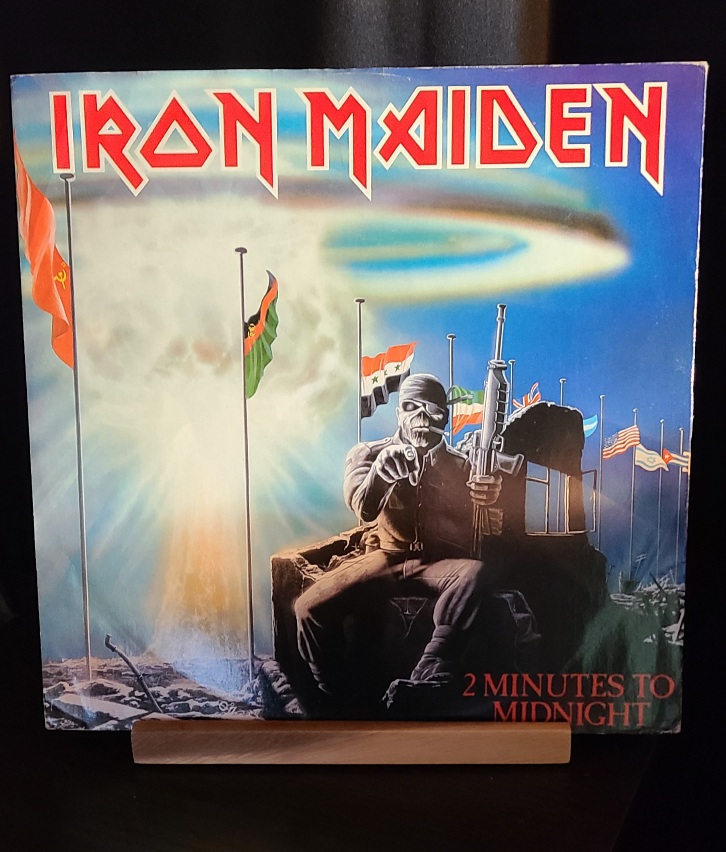
The cover art is another unique depiction of Eddie, this time posing as a military guy/arms dealer as a nuclear bomb goes off around flags of the United Nations. A very on-point theme given the main song’s content and honestly this to me is a bit of an underrated piece of Eddie art. It isn’t as iconic as several of the more noted images of Eddie but this one communicates its message really well. I do happen to have the Eddie action figure of this pose too, only one of two that I own. There may be something a bit more to my love of this cover, which we’ll get to in a minute.

2 Minutes To Midnight

The lead song is a rocker making use of a tried but true riff to set the tone. The song is perhaps a bit more basic that some of the other stuff Maiden had gotten up to around this time, it’s certainly no 13 minute long song about some old poem, that’s for sure. But the simplicity is effective in this case.

Lyrically the song discusses the art of war, or the true nature behind the greed behind needless wars. It’s all about the war machine and the dollars that generates, which is why there’s always a war.

The song’s title also references the Doomsday Clock, a thing started during the early Cold War that scientists use to indicate how close to nuclear holocaust the world is getting. 2 minutes was the closest it had ever been set, which was in 1953. In our modern age of advancement in 2023, we’re now as close as the clock has ever been, 90 seconds from midnight. Go us.

One more thing about the song – this one just happens to be my favorite Iron Maiden song. Yes, out of all of them. This song was around quite a bit when I was growing up – Powerslave hit just as I was really paying attention to music and this was probably the heaviest thing I heard at the time. Iron Maiden were never huge hit makers singles-wise but some songs got airplay on various formats and I recall this one being around a lot. I’m also a sucker for doomsday stuff, which may say something about me more than anything, but no worries.

And while the issue was long decided by the time 2003 rolled around, it didn’t hurt that this song was included on the soundtrack to my favorite video game of all time – Grand Theft Auto: Vice City. I heard this as part of the V-Rock station over and over and over again when playing the game as much as I did. I’ve truly beat this one into my brain.

Rainbow’s Gold

Our first B-side is a proper song and a cover of a perhaps not well-known act. Beckett were a 70’s progressive rock outfit from Great Britain. The band recorded one album and folded soon after, though their stuff got around a little bit. One of many Beckett/Iron Maiden trivia points of note – Beckett’s agent was Ron Smallwood, who has been Iron Maiden’s longtime manager.

Maiden does a pretty good job on this song, they take what was a pretty groovy original track and speed it up some. I’d probably say I prefer the original by a hair as it has a bit more dynamic stuff to it than Maiden’s straight-ahead cover version. But this is a worthy cover track in Maiden’s discography.

The Beckett and Iron Maiden tie-ins are numerous – Beckett singer Terry Slesser actually auditioned to replace Paul Di’Anno in Maiden. (Slesser also briefly replaced Brian Johnson in Geordie when Johnson joined AC/DC).

But that is more a footnote, there is one far deeper interaction here between the two bands. In short, Iron Maiden lifted a portion of the lyrics to their classic Hallowed Be Thy Name from Beckett’s song Life’s Shadow. While only a few lines it is pretty clearly the same lyrics. Maiden settled early on with one songwriter from Beckett, who claimed to be the sole songwriter. Decades later another former Beckett member emerged with a lawsuit – this was why Hallowed… was not played on the 2016 tour. Maiden also eventually settled the newer suit.

Mission From ‘Arry

If you thought 2 Minutes To Midnight was the main event of this single, you’d be wrong. We have an actual bout on our hands here. While the fight didn’t get physical, we have a spirited argument between Steve Harris and Nicko McBrain, with Bruce Dickinson also involved.

Here’s what happened – one night during a Nicko drum solo, Steve’s bass rig bit the bullet. Unsure of when he’d be going again, Steve sent a rigger to tell Nicko to extend his drum solo to give the crew time to repair Steve’s setup. The crewman tried getting Nicko’s attention, which distracted him and screwed up the solo. Nicko also failed to understand the message so it was a total failure.

This recording is the backstage argument after the show between Steve and Nicko. Steve was upset with Nicko’s attitude about the whole thing, while Nicko was very upset about being interrupted during his solo. Bruce seems to generally side with Steve. The argument goes on for nearly 7 minutes before Steve figures out that someone was recording, that someone being Bruce, who stumbled into the tape recorder in the room and hit record. The band later thought it was funny and here it is as a B-side.

This is a bit hard to follow if you’re unaccustomed to British accents, which I am not at all. There is a transcript of who is saying what, but without that it can take several listens to figure out who is saying what and what exactly they’re saying. But it is pretty funny stuff, hearing them all have a go at each other over miscommunication. I can see everyone’s side of it – Steve wants to set up a way to communicate to Nicko while playing, Nicko wants everyone to piss off while he’s playing. No real side to take here, everyone has a point.

While later Maiden singles would host a fair bit of nonsense as B-sides, this one is pretty cool and unique. Music acts go out of their way to present the best side of themselves to the public so it’s cool to hear people having at one another.

That does it for this week’s single, quite a whopper all told. Next week it’s time to fly.

The Iron Maiden Singles Series

Live! + One

Running Free

Sanctuary

Women In Uniform

Maiden Japan

Purgatory

Twilight Zone/Wrathchild

Run To The Hills

The Number Of The Beast

Flight Of Icarus

The Trooper

2 Minutes To Midnight (you are here)

Aces High

Run To The Hills (live)

Running Free (live)

Stranger In A Strange Land

Wasted Years

The Clairvoyant

Infinite Dreams

Bring Your Daughter … To The Slaughter
Holy Smoke

Be Quick Or Be Dead

From Here To Eternity

Virus

Out Of The Silent Planet

Rainmaker

Different World

The Reincarnation Of Benjamin Breeg

Empire Of The Clouds

The Postage of the Beast – Iron Maiden stamps

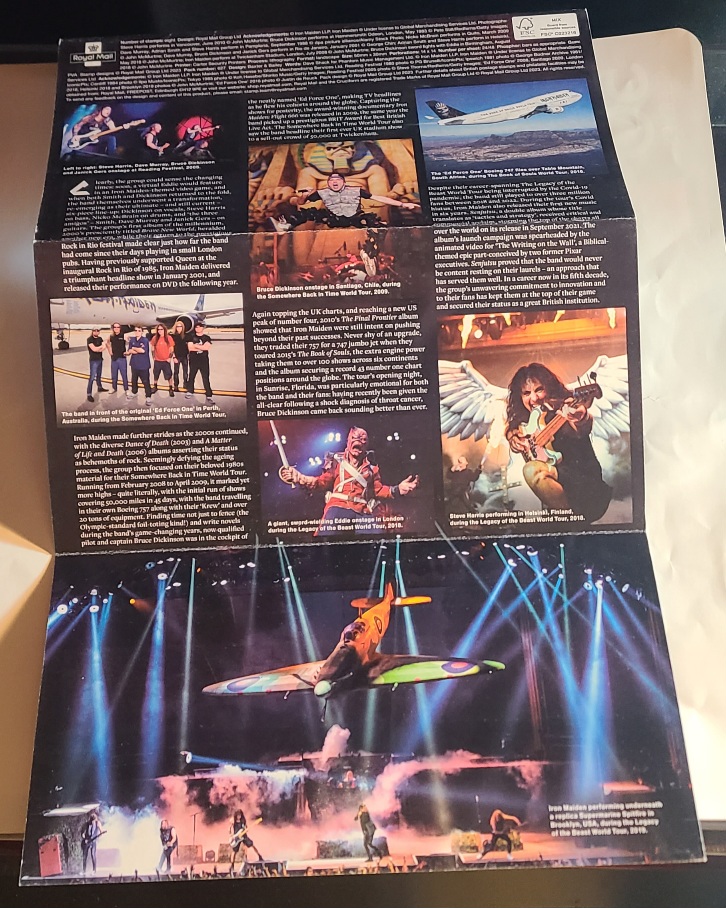
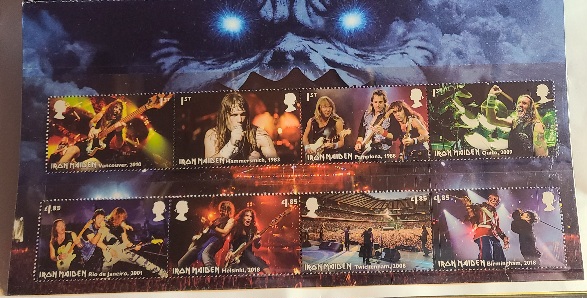
A quick post today and more of just a show-off thing. I have apparently entered the world of philately, which isn’t a strange sex act but rather the practice of stamp collecting. Since I’m pretty well broke from buying music, my stamp collecting begins and ends with this series of Iron Maiden stamps the Royal Mail issued earlier this year.

There were a wide variety of stamps and collectible packages available, I settled on the presentation pack as a one-shot deal to cover all the bases. It includes the stamps pictured below as well as a pretty detailed biography on both sides of the presentation card. Eddie gets his own bio on the back of his stamp series, as the most important member of the band surely should.

In ironic fashion it did take a little while for these stamps to arrive, because mailing stuff between the British mail and the US Post Office can’t be as quick and easy and one would figure. I know people in Canada got theirs a bit before anyone here in the US did. Though in fairness I’ve had these for a bit now, I’m just now finally getting around to taking the pictures and making this post.

I am very impressed with the setup and how well done it is. I have no previous exposure to the Royal Mail’s collectible stamp issues, as honestly Iron Maiden is the only band I’d really drop money on for stamps. My intent was to frame this and I probably still will, but it seems a bit of a shame to do that when the double-sided layout is so neatly done. But in the end framing is still likely the best option for display.

And that about does it for the Iron Maiden stamps. Not much more to say, really – they’re very nice and a pretty high-class presentation. Behold the postage of the beast.

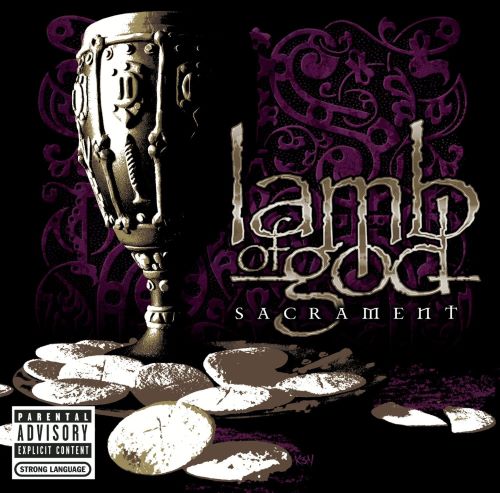
Lamb Of God – Sacrament (Album of the Week)

This week’s pick is going to turn 17 later this year, which is just screwed if you ask me. Pardon me for a moment while I tend to my joint pain.

Lamb Of God – Sacrament

Released August 22, 2006 via Epic Records

My Favorite Tracks – Walk With Me In Hell, Redneck, Descending

Lamb Of God were riding a high after the splendid reception to their 2004 landmark Ashes Of The Wake. (that Album of the Week post can be found here). Heavy metal as a whole was well on the rise in the mid 2000’s and Lamb Of God were becoming a huge part of the resurgence.

The only real way to go was up, and the band would do just that with their fifth album. Lamb Of God were breaking out of the metal underground and becoming a familiar name across the music landscape as a whole. The album today is 11 songs in 46 minutes so let’s get at it.

Walk With Me In Hell

The opener leaps out with a massive riff and the sense that something beyond just a song is going on here. Guitarist Mark Morton wrote the track knowing he was on to something more and was able to work the chorus into a dedication to his girlfriend, who would later become his wife.

One of the album’s three singles, Walk With Me In Hell exploded out of the gate and became an instant classic. It remains today as one of the band’s signature songs.

Again We Rise

The song is bordering on death metal territory with its insane guitar work and pace. Lyrically it deals with the issue of “modern” US Confederates, or people who praise the losing side of the American Civil War eons after the war ended. This is not a flattering portrayal of that crowd. And the issue would only increase in scope after 2006.

Redneck

The lead single slams in both musically and lyrically. It’s a thunderous groove metal masterclass and a pointed confrontation song. This quickly became a crowd favorite and today sits behind only Laid To Rest as the band’s most recognized song.

While Lamb Of God is often dark and dreary, Redneck is a pretty fun song. The music video is an absolute laugh riot, with the band being booked to play a kid’s birthday party and the hi-jinx that ensue.

Pathetic

Another twisted riff from Mark Morton and some great drumming from Chris Adler shape this next track, which thematically is Randy Blythe screaming at someone who sucks. It’s kind of a connecting theme of this album. Lamb Of God played this song live on Conan O’Brien’s show in early 2007, and it became far more common to see metal acts on the late-night shows after that.

Foot To The Throat

A political track this time, as the band takes aim at politicians and other “powers that be” keeping the rank and file citizens down. The music is as unrelenting as everything else on the album.

Descending

Another brutal track nearly in death metal territory, the song has lyrics purporting to reflect the duality and contradiction of religion, yet unverified sources indicate that the song is really about alcoholism. Either way it’s an album highlight.

Blacken The Cursed Sun

This was the album’s third and final single. The song is a very dark and dreary affair about being at the end of your rope and going out with one final push. There’s a bit of a call and response anti-sermon kind of thing at the end that’s pretty cool.

Forgotten (Lost Angels)

A short but slamming track that is chock full of Morton riffs and takes aim at Los Angeles and the fake and plastic culture. It was reportedly inspired by shady music industry execs. Taking aim at Los Angeles has been a favorite pastime of heavier bands but LoG pull it off in pretty convincing fashion here. This is also a song that invites comparisons to the prior kings of groove metal, that being Pantera.

Requiem

Don’t be fooled by the title – this song is not a requiem from the punishment the album delivers. It’s another song with some religious symbolism and being down and out and trying to go for it one more time after being completely broken. It has a spoken word portion that’s hard to make out in the middle before a bit of soloing. It’s another track where Chris Adler is pounding the piss out of the drums too.

More Time To Kill

This one’s a pretty evil track aimed at someone who is dying but was on the wrong side of the ledger with the narrator. It’s another confrontation, go get bent kind of song. No clue what the story might be behind this one but it’s very hard feelings and not for the faint of heart. Also a bit of black metal style vocals from Randy Blythe here, pretty neat little part.

Beating On Death’s Door

The closing track keeps with the “fuck you” theme, this time it’s about a woman of ill repute who apparently pissed some people off. The song is more aimed at the unlucky sap this woman ended up with. A fittingly brutal end to a brutal album.

Sacrament was a huge success for Lamb Of God. It joined Ashes Of The Wake with a US gold certification for more than 500,000 copies sold. It peaked at number 8 on the Billboard 200 and even higher on several other US subgenre charts. Redneck was nominated for a Grammy in 2007, an award that went to Slayer. Several metal publications had this at or near the top of their year-end lists for 2006, back when print media was still a thing.

While it was the prior album that truly broke Lamb Of God into a wider audience, it felt like Sacrament was their true superstar turn. The band had previously been a part of the wider “New Wave of American Heavy Metal” movement, but by this time had broken free and far wider than the more underground sensibilities of that designation.

And the inevitable comparisons continued for LoG – both fans and detractors noted the “new Pantera” vibe to Lamb Of God, something not really present in their more extreme early days. And on this album those comparisons seemed at least somewhat valid, even if LoG were still their own distinct entity. It’s probably fair to call them the spiritual successors to Pantera’s crown, but LoG are far from a pale imitator of a past revered act.

With Sacrament, Lamb Of God solidified their place on the top of the metal mountain, or maybe scrap heap is more appropriate. They are still going all these years later, through some kind of crazy drama and all the changes in the times. A lot of riffs and a bit of cussing can take you pretty far sometimes.

The Song Remains The Same – Bad Day

It’s time again to play that game where I take a bunch of different songs with the same title and see which one is the best. Today is especially interesting because I don’t have a clue who is going to win this as I set out to write, in fact there are a couple here I haven’t heard at all.

As per usual, this is not a comprehensive list of everyone who has ever recorded a song with this title. Hell I’d bet this list would be a mile long if I really got to looking. But these choices represent a pretty good selection of stuff so I’ll go with them.

R.E.M.

Leading off with the alt-rock behemoths and a song that was originally done in the mid-80’s but was unreleased for nearly 20 years. The version that appeared on a 2003 greatest hits comp was a re-recorded version, then an outtake from the 80’s under a different title was issued a few years later. Bad Day was released as a single and did respectably well. I’m not knowledgeable on R.E.M. at all but from what I can gather, their fans think a lot of this song.

This song is pretty good. Michael Stipe sounds a little tired here, maybe it’s just what I’m hearing. But it’s a decent track with a good groove that’s not far removed from their hit It’s The End Of The World. They lyrics deal with the media and all the wonderful stuff they bestow. Nothing rules this song out of the contest at this point.

Daniel Powter

Let’s get this one over with – this was a mega hit song in 2006 or whatever. This guy was not technically a one-hit wonder as he had one other song barely crack the Top 40, but in any practical sense this is a one-hit wonder thing.

This song is annoying. It’s adult contemporary pap. It doesn’t get into anything specific at all, it’s just a generic mish-mash of shit that happens when you have a bad day. Of course everyone can “identify” with it – there’s nothing but vague generalities here. Next.

Fuel

On to the other more or less known quantity here and also a decently-performing single from the band’s 2000 album Something Like Human which was their apex in terms of success and visibility.

This song has far more going on for it than the last one. It’s maybe not much more in terms of specific themes, but the alt-rock presentation is leagues better than whatever that last one was. Dude could sing too, that does more or less carry the tune. A pretty good one here that certainly bears consideration come decision time.

Juliana Hatfield

While I know the name, I am honestly very unfamiliar with Juliana’s work. I maybe saw a video or two on MTV back in the day but I have no recollection. This song is from her 1998 album Bed, which is where I’d rather be on a Friday morning as opposed to getting ready for work.

This song is good, I enjoyed my few plays of it. There is an actual narrative here that can be followed, something is actually going on to cause the bad day. This could be a case of a song I haven’t heard at all before coming away with the victory, though there is one more contender.

Blur

And finally on to a group I am actually a fan of, though I don’t recognize the song title right off hand. And that’s probably because it’s from their debut album, 1991’s Leisure. The album highlighted the band’s potential but was also a bit of a sloppy mess.

I don’t recall the last time I played the album or this song, it’s probably been a very long time. With it going now I think it’s a pretty cool tune. It’s maybe not representative of what Blur would become, but it’s a groovy little jam that bears resemblance to some of the stuff coming from Great Britain in that time period.

So now it’s decision time and when I take everything into consideration, I’m left with a choice between the last two – Juliana Hatfield and Blur. And while the first impulse is to pick the band I listen to, when it comes down to it, I think the other track is a bit better.

Winner – Juliana Hatfield

For the first time I’m going with a song I’ve never heard before doing this. It’s a fair indication I should explore more of Juliana’s catalog. Though in all honesty, today’s contest was fairly fought among four good contenders and only one stinker, which of course in the music biz means it was the best-selling one.

I’m gonna leave with a bit of a bonus, since they don’t always have to be bad days.

The Trooper – The Iron Maiden Singles Series

We’ve hit a big one in the single series, time to go under the hood of one of Iron Maiden’s most beloved songs.

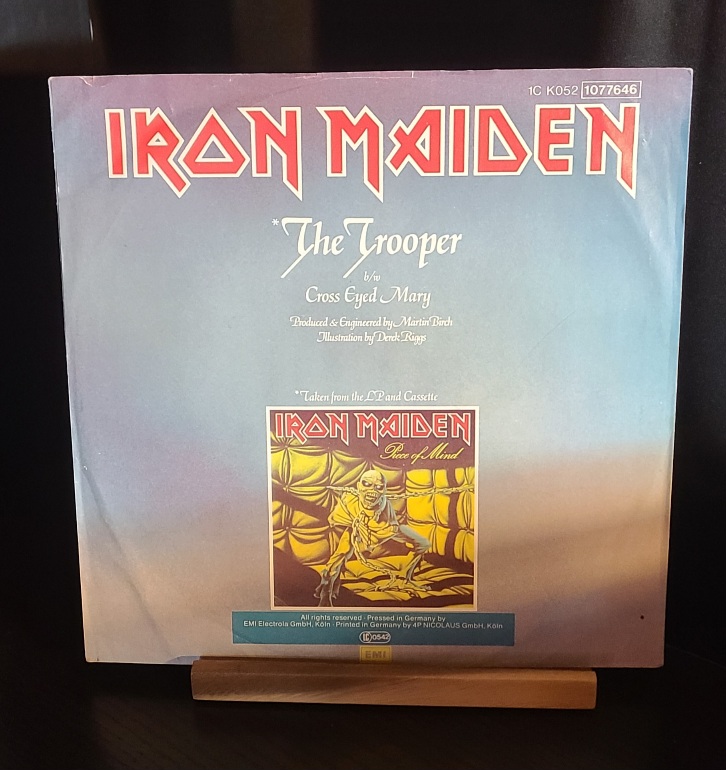
This is another from the series that is fairly standard issue – several variations but all with the same cover and track list. Mine is again a 12 inch version, note that this did get issues primarily as a 7 inch release. This song has been repackaged and re-released with other content so there are multiple releases floating around. Today’s focus will be on the original issue.

The cover art is here is beyond good – this is one of the most recognizable images of Eddie around. Redcoat Eddie holding a tattered Union Jack and his blood-spattered sword with the results of a battle and the Grim Reaper behind him is one of the instant classic pieces in Iron Maiden art. This ranks alongside Powerslave Eddie as one of the mascot’s most revered poses.

The Trooper

The cover art might be iconic, but certainly so is the featured song. It’s a bit of an exercise to pick Iron Maiden’s most recognizable and beloved song, hell those might be two different things. But The Trooper ticks both boxes and is a certain top-tier contender in those battles.

The song’s riff hits right away and is a knockout from the word go. It’s fast-paced and high energy all the way through the song, never letting up. When combined with the bass and drums, the “horse gallop” effect comes in. It’s fairly common through a lot of Iron Maiden songs but is highlighted here big time. I mean, I love it and I personally can’t stand riding horses.

This is a case of a Maiden song where Bruce really isn’t the shining star. Sure, he delivers the vocals splendidly, but there is no real “human air raid siren” moments here. He just belts out the lines and the ever-so-simple chorus that isn’t even real words. It’s the band who do the work on this one, highlighted by two fantastic solos from Adrian Smith and Dave Murray that fit the song like a glove and keep the horses charging in the right direction.

And where are these horses going? Honestly, not in the right direction. The song is based on The Charge of the Light Brigade, a huge blunder by British cavalry in the Crimean War in 1854. The British made a guess about where to best deploy their cavalry units to attack Russian positions and their guess was bad – most of the brigade died in the attack. It was immortalized in a poem by Lord Alfred Tennyson and that poem is where Iron Maiden got much of the inspiration for the song.

The Trooper has endured as one of Iron Maiden’s most popular songs. Bruce often dons a redcoat jacket to compliment the song on stage. The single just missed the UK top 10 and was also a rare notable US single, hitting number 28.

Cross Eyed Mary

The B-side is a cover of the beloved Jethro Tull classic. It is a well-done rendition, though sans flute and piano. Here Bruce really does go all out, hitting parts of a range that he wouldn’t normally tackle in Maiden tunes. It’s generally considered one of the best cover songs Maiden did and this also did get some airplay in the US. There is a radio promo single of it though I don’t own it and it’s just this song so it won’t be a part of this series.

That does it for this week’s entry in the singles series, a pretty monumental one. The hits keep rolling as the singles from Powerslave are on deck and we continue the true golden era of Iron Maiden’s career.

The Iron Maiden Singles Series

Live! + One

Running Free

Sanctuary

Women In Uniform

Maiden Japan

Purgatory

Twilight Zone/Wrathchild

Run To The Hills

The Number Of The Beast

Flight Of Icarus

The Trooper (you are here)

2 Minutes To Midnight

Aces High

Run To The Hills (live)

Running Free (live)

Stranger In A Strange Land

Wasted Years

The Clairvoyant

Infinite Dreams

Bring Your Daughter … To The Slaughter

Holy Smoke

Be Quick Or Be Dead

From Here To Eternity

Virus

Out Of The Silent Planet

Rainmaker

Different World

The Reincarnation Of Benjamin Breeg

Empire Of The Clouds

Behind The Curtain – The Case of Backing Tracks in Modern Music

The issue of backing tracks live has become a hot-button one among musicians and music news recently. It’s an argument that has been playing out over the past few years especially and a new take on the matter pops up almost every day. While there are a billion pieces about it floating around, the most recent one involves a comprehensive and level-headed take from Jeff Scott Soto, who provided his thoughts via a Cameo request. His words are transcribed in this Blabbermouth.net article.

Backing tracks are absolutely nothing new in music. It is fairly common for an act to bring part of their set on tape or hard drive and play it through the PA. It’s most commonly used for the types of instruments that rock and pop bands don’t haul around with them – strings, complex synthesizer parts and the various electronic sounds found in various styles of music. If a band comes out to an intro they did on a record that wasn’t a typical guitar/bass/drum tune, it is most likely a backing track.

The issue of backing tracks doesn’t really gain any traction when talking about that sort of use – it’s practical and no one really cares. It’s when the backing track is assisting the delivery of one of the primary instruments – guitar, bass or vocals – that musicians and fans have issues. And vocals is the big one that has caused a great deal of the back and forth in recent music headlines.

(NOTE – drums would not really have backing tracks, instead they can use “triggers” to mimic other sounds or even repeat sounds and give the appearance the drummer is playing faster than they really are. A different sort of topic.)

There are numerous names out there either outright found to be using backing tracks or very much suspected. Kiss are probably the biggest name as far as relevance to this site – Gene Simmons has ranted about backing track use in the past, yet it’s pretty evident that Paul Stanley has a track going as they wind down this iteration of their final tour. People in the Kiss camp have talked in a lot of circles about the track use, but it is there.

In other cases, musicians have freely admitted the use of backing tracks. Both Shinedown and Motley Crue members have openly stated they use backing tracks and provide various justifications for them – mainly to fill out the sound or to replicate a studio piece that can’t practically be handled live. WASP mainman Blackie Lawless has said he uses tracks to copy the layered vocals he does in studio. Other performers, like Charlie Benante of Anthrax and Marty Friedman, have spoken in favor of backing track use without explicitly mentioning that they use such tracks.

But there is a lot of buzz against the use of backing tracks. Many feel it robs the audience of an authentic performance, which is a valid argument when a track is used to cover a vocalist’s deficiencies. Piping in choir vocals for parts of one track when it’s impractical to tote a live choir around on tour is one thing, but covering for wear and tear is another. There’s an easy way for me to get a studio-worthy performance from an artist – look them up on Spotify, or put on the record or CD. I don’t see the need to spend a premium on tickets to watch that live.

I won’t personally claim to be all that off-put by these revelations about backing tracks. I’m not a purist or idealist by any means and I think that arguments over authenticity can go too far and into very unrealistic territory. But I also do see the point when it comes to buying what are pretty expensive tickets anymore just so some legacy act can piddle through their set when they aren’t actually capable of doing it. I don’t know how I’m going to retire, I don’t think I need to worry about padding Jon Bon Jovi’s 401k.

And yeah, it does have to suck for those singers that get up there and can’t hang anymore. A few rare gems like Klaus Meine and Rob Halford can keep at it, but by and large a person’s vocals fall off when they get older. And sometimes the fall-off is pretty brutal.

The issue of backing tracks doesn’t seem to be going away anytime soon – rather, it gets brought up nearly every day as it clearly drives engagement and clicks. People will make their own choices on it, but it would seem the show is going on whether or not a fair part of that show is on a computer in the back. At the end of it all, the machine of the music industry will keep churning along, and the outrage vented over backing tracks will somehow become money in someone else’s pocket.

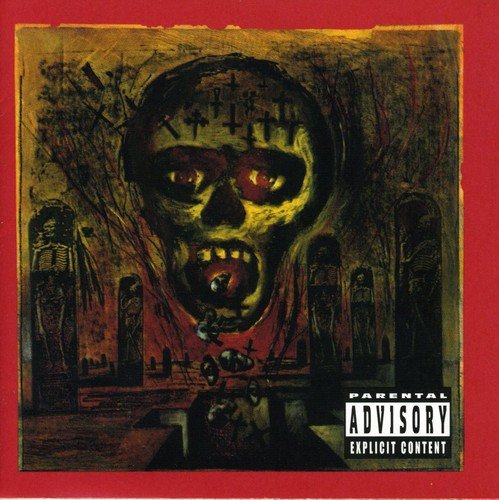
Slayer – Seasons In The Abyss (Album of the Week)

This week it’s time to head back to 1990 and have a look at an album that propelled Slayer into a new decade.

Slayer – Seasons In The Abyss

Released October 9, 1990 via Def American

My Favorite Tracks – Seasons In The Abyss, Dead Skin Mask, Skeletons Of Society

Slayer had quite a run of it through the late ’80’s, what with essentially redefining thrash metal with Reign In Blood and then pulling up on the throttle and chilling out a bit on South Of Heaven. The change in speed and/or sound did not resonate with everyone but was probably a wise choice, as attempting to do RIB again would have likely proven disastrous.

The band hit the studio with Def American mastermind Rick Rubin to crank out their next album and hit on a bit of gold with a combination of their more mid-tempo fare along with some bursts of energy. Slayer would also mostly pull back their lyrical fare from the demonic and supernatural to more of a look at real-world issues.

Seasons In The Abyss comes in with the standard American Recordings track list of the time at 10 songs (that’s all Rubin and company would pay a group for) and a run time of 42 minutes, which is a virtual eternity in Slayer world.

War Ensemble

The opener sets a quick pace as the band pound through a dark look at war, one of metal’s favorite topics. This is a stark look at the true scope of a battle and it’s supplemented with a very aggressive and re-energized Slayer. We don’t necessarily know what or where this battle is, though the Rhine is mentioned so Germany is a good guess, but it is definitely brutal.

Blood Red

The pace comes down just a hair as the band shred through a condemnation of governments using violence to silence their citizens. This one is quick and dirty and the next song kicks straight off.

Spirit In Black

This time we do revisit the more supernatural with a descent into Hell. Tom Araya is running the show as some poor sap is sent on his way to the eternal torture chamber. The song gives a few call backs to prior Slayer works, such as “blood forever rains” and “Hell awaits.” It’s also clear that the band did not piddle around with finding new guitar tones or anything – they have their sound locked in and banged this out efficiently.

Expendable Youth

A song that discusses gang violence, though of course in Slayer fashion. Gangs were the number one scapegoat of media and politicians around this time and of course the root causes of gang existence were never truly addressed. Slayer are not offering any solutions, though, this is more of an observation of the battle for turf and the cold reality of bodies on the ground.

Dead Skin Mask

This track is a look at infamous murderer and grave robber Ed Gein, the real-life influence for many Hollywood serial killers. Slayer amps up the creepiness factor with a twisted riff as Tom Araya yells through the process of a killer’s mind deteriorating. It would mirror how Gein would claim that he did not remember moments during his murders or grave robbing. This one has been one of Slayer’s marquee tracks through the years.

Hallowed Point

Pretty simple here – the band kicks the speed up a fair bit and discusses the issue of hollow point bullets, which were a hot-button issue in the early 1990’s. The bullets expand on impact and can literally tear apart a person’s insides, as opposed to the more straight shot of a “typical” bullet. The song does not really participate in the debate over the bullet, rather it simply follows the journey from firing to shredding someone apart.

Skeletons Of Society

The tempo on this one goes way down, almost to a doom metal pace. The song marches through the eyes of a survivor of an apparent nuclear holocaust. It’s probably not shocking that Slayer’s version of the post-apocalypse is a grim one. The solos from Kerry King and Jeff Hanneman here, always dissonant, are an extra special touch on this track that’s a bit of a departure from the album’s norms.

Temptation

Back to a thrash pace again and also the topic of satanism and the old classic stuff like possession and being corrupted. While couched in a lot of fanciful and supernatural stuff, the song does make a fairly real-world point about how it’s always evil that is the tempter and the attractive option, at least viewed through the lens of belief in that sort of thing.

Born Of Fire

Slayer breaks it open speed wise here as they get at least within the ballpark of Reign In Blood speed. The song is kind of a stock rundown of more evil imagery as the lyrics were written last minute by Kerry King. While Slayer’s slower pace has worked well through this album, it is nice to hear some straight-ahead bashing for a bit.

Seasons In The Abyss

The album closes with a track that really slows things down and gets into some gnarly sounding tones. A creepy intro runs for a few minutes before the song really kicks in and picks things up a fair bit. The lyrics are a bit more abstract here, they are dealing with the concept of The Abyss as presented by noted occultist Aleister Crowley. I personally have no clue what it’s really about so I’ll leave it alone. A brilliant video was also filmed for the song and was shot in Egypt, adding a huge degree of visual awe to the song.

Seasons In The Abyss would mark another notch in Slayer’s now-lengthened thrash belt. The album would get to number 40 on the Billboard album charts and also break on several other nations’ charts. An eventual US gold certification would come, and the album has sold at least 800,000 copies.

For Slayer it was a boost in reputation after South Of Heaven and its transitional nature left some fans alienated. Now people were used to the newer Slayer sound, and there were still a few all-out thrash moments to be had. It also positioned Slayer quite nicely entering the 1990’s, as their style would fit in with rising “alt-metal” movement while conventional thrash fell by the wayside. These songs, both in studio and live form, would frequent MTV programming, especially Headbanger’s Ball.

Though Slayer would make it through the very tough 1990’s relatively well, it wouldn’t come without some cost – drummer Dave Lombardo, often regarded as the band’s best asset, would quit the group in 1992. But he left after a successful album and tour cycle for a record that reinvigorated long-time fans and brought in many new ones, myself included.

Metallica – For Whom The Bell Tolls

This post was part of a series that I called S-Tier Songs. I later decided to abandon the series in favor of a simpler Song of the Week format. I am keeping these posts as I wrote them but removing the old page that linked to the list of S-Tier Songs, so that is why these posts might look a bit odd. Enjoy.

I always have the next handful of songs for this planned out. I was about to work on one of them when I went back and read through the list of what I did so far. I could have been knocked over with a feather to find that this song was not already on my list. So today it’s time to right that wrong.

Metallica – For Whom The Bell Tolls

The third track from 1984’s seminal thrash record Ride The Lightning was a massive force that captured the attention of the metal world out of the gate. The song was released as a promotional single and has endured as one of Metallica’s best-loved songs through the course of their 40-plus year career.

Ride The Lightning has been the subject of the Album of the Week before, that post is here.

The intro to the song is classic, but it actually begins with something else. Two bells ring, followed by the drop of the riff. If you hear more than two bells, then you are most likely about to enjoy the classic song Hell’s Bells by AC/DC. Or maybe some other song that has bells but isn’t as good as either this or AC/DC. It’s a fun game to play if listening to the radio or whatever and the bell starts ringing to figure out which song is playing.

Once the bell is over with it’s all guns blazing with the guitars and – wait, what is that infernal noise? It’s actually bassist Cliff Burton with his rig plugged into a few effects, doing a part he used to do in old Bay Area bands alongside Jim Martin and Mike Bordin, who would go on to form Faith No More. Cliff’s twisted bass piece fits the guitar part very well and the song trudges on to begin the verses.

The song’s lyrical fare is inspired by Ernest Hemingway’s 1940 novel of the same name as the song. I’ll just get this out of the way – I read the book in high school because of the song and I wasn’t all that into it. But it’s pretty badass when distilled into a song – it’s set in the Spanish Civil War of the 1930’s. In the book, a group of fighters are planning to blow up a bridge to stall an enemy advance when shit hits the fan and people are butchered. In the song, a group of fighters takes a strategic hill but get blown apart by an air raid or artillery strike soon after. Different specifics but same general concept.

For all the song’s epic feel and delivery, it is also a very, very simple song. This takes a few minutes for even a novice guitar player to pick up on, and yet it is the full weight of heavy metal crushing down on someone. It was proof that metal was more than just “play fast and scream” and that songwriting and arrangement were a part of the process. And also proof that Metallica especially would be sharp in that field.

For Whom The Bell Tolls entered Metallica’s setlists and did not leave – according to Setlist.fm, it is the band’s fourth most-played song live. It would appear the song has never left the stage in the band’s many gigs over the years. It would be a clear inclusion on any “greatest hits” of Metallica list and certainly ranks toward the top of many fans’ favorite songs lists. And the single went gold in the US, an impressive feat as the band were not a radio or MTV darling in their early years.

Why is this an S-Tier song?

For Whom The Bell Tolls is one of Metallica’s immortal anthems, a crushing tale of the horrors of war set to a simple yet devastating heavy metal track. Even in all the subsequent world-conquering fame Metallica would enjoy, this song remains one of their most beloved. It was a showcase for Cliff Burton and it proved the band had the writing chops to excel beyond the scope of simply playing fast and loud.

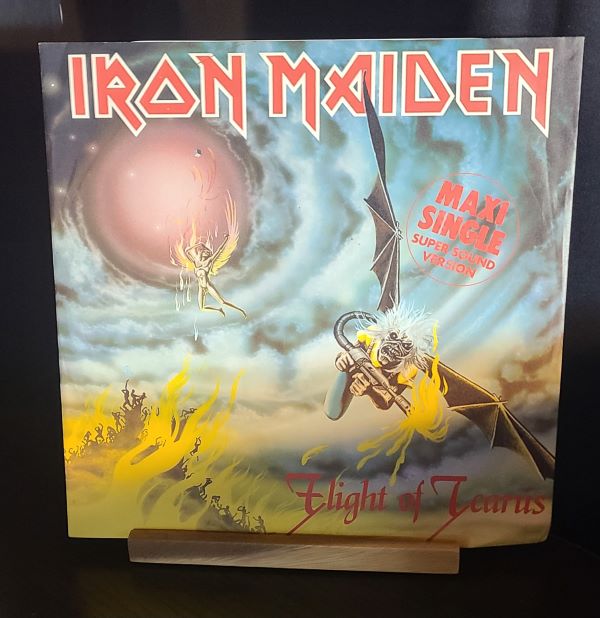
Flight Of Icarus – The Iron Maiden Singles Series

We’re back into the Iron Maiden singles series. As a note, the list presented below is now the final list for my series run through. Should I get more singles I’ll update sometime down the road but I’ll go with this for now, which is really easy since many of the ones I don’t have are getting pretty expensive.

We are now on to the band’s fourth album Piece Of Mind. With it comes a new drummer – Nicko McBrain, who had been drumming for years and had most recently worked with French outfit Trust. His replacement in Trust would be none other than Clive Burr, the man Nicko was replacing in Maiden. Nicko has held down the drumming for Maiden all the years since. And this line-up change gives us a period of stability up until the end of the 1980’s.

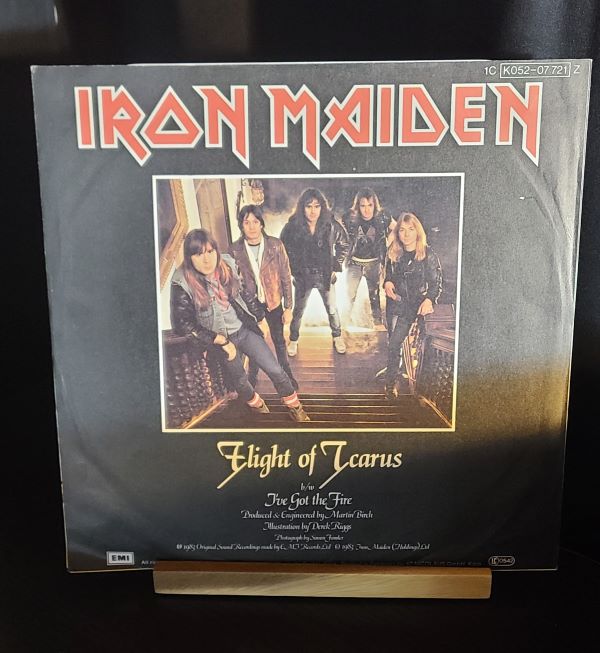
Today’s single is in similar fashion to the past few – really just one version with the same cover and content. I have a 12-inch European pressing. This single did get issued in the US as a 7-inch record but I go after the 12-inch stuff when I can. The cover art shows bat-winged Eddie with a flamethrower, because that’s how the Greek tale that this song is inspired by was told originally.

Flight Of Icarus

The single’s lead track is one that doesn’t go full blast but keeps a steady rhythm through its run. The song tends to soar rather than snap necks and would be indicative of future Iron Maiden music. The showcase of the tune is Bruce Dickinson singing his ass off, especially on a part toward the end that is almost inhuman.

Flight Of Icarus is about the Greek myth of the same name, though Maiden adjusted the story a bit to fit their song better. Icarus flew too close to the Sun and bit the dust, and that was the birth of the adage about flying too close to the Sun.

The song one of Maiden’s more popular tracks, though the band took a long time off of playing it live for a few decades. It left setlists after 1986 and didn’t return until 2018. Steve Harris has always been a bit grumpy about the song so that might explain its extended absence, though I can’t say that for sure.

I’ve Got The Fire

No, you don’t have deja vu (and won’t, that Maiden song was never a single). We are handling an Iron Maiden cover of a Montrose song for the second time and it’s the same song. Maiden did the song live with Paul Di’Anno and this time did a studio version with Bruce singing.

This version is more clear than the rougher live track done very early in the band’s recording career and Bruce is a true highlight handling the vocals of a Montrose song. This is short and sweet and is one of the better cover renditions Maiden have done, though we have a whole heap to go through as this series rolls on. And we’ll visit another Montrose song later down the line.

The Iron Maiden Singles Series

Live! + One

Running Free

Sanctuary

Women In Uniform

Maiden Japan

Purgatory

Twilight Zone/Wrathchild

Run To The Hills

The Number Of The Beast

Flight Of Icarus (you are here)

The Trooper

2 Minutes To Midnight

Aces High

Run To The Hills (live)

Running Free (live)

Stranger In A Strange Land

Wasted Years

The Clairvoyant

Infinite Dreams

Bring Your Daughter … To The Slaughter

Holy Smoke

Be Quick Or Be Dead

From Here To Eternity

Virus

Out Of The Silent Planet

Rainmaker

Different World

The Reincarnation Of Benjamin Breeg

Empire Of The Clouds

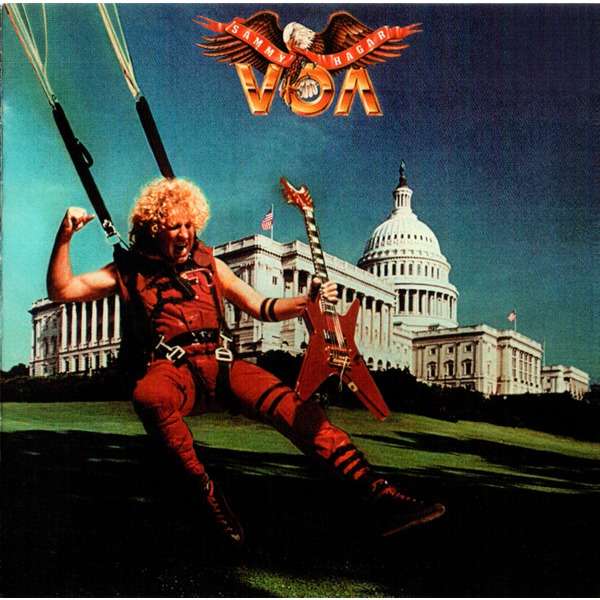
Sammy Hagar – VOA (Album Of The Week)

Today it’s time to look at one of the crown jewels in the career of the Red Rocker. After a slow grind to relevance as a solo artist, Sammy Hagar began making waves in the 1980’s and would launch the album with his most successful hit just before going on to mega-stardom with Van Halen.

Sammy Hagar – VOA

Released July 23, 1984 via Geffen Records

My Favorite Tracks – Burnin’ Down The City, I Can’t Drive 55, VOA

This marked Hagar’s third album with Geffen Records after a string of modestly-performing solo records with Capitol. On production was Ted Templeman, who’d worked with Hagar previously with Montrose and of course is also long associated with Van Halen.

It’s not a terribly long album here with 8 tracks at 36 minutes so let’s get to it.

I Can’t Drive 55

The opener was also the lead single and also the signature song from both this album and Sammy’s solo career overall. The speed limit on US highways was 55 miles per hour for a long time to offset oil consumption in the 1970’s. Sammy got a ticket for going over that and wrote the song right after.

The song is a nice power rock track backed by keyboards and cuts its message in simple and effective fashion. This wasn’t a social issue that would draw the attention of the likes of Bono, but a lot of people were fed up with the federally-mandated speed limits and this song resonated with a great deal of the country.

Aiding in the song’s popularity was its goofy and fun music video, which sees Sammy and his “pit crew” band get busted for speeding. The courtroom scene is especially funny, featuring famed Geffen A&R man John Kalonder as the judge. And the mechanic in the video’s intro is Claudio Zampolli, who also worked on Eddie Van Halen’s cars and was the one to suggest to Eddie to hire Sammy for Van Halen.

Swept Away

Going on a tropical island getaway here with some lovely gal, the verses open with an atmospheric portion but then kick into a pretty rocking riff. Not a typical verse/chorus structure here but still a pretty simple song that does its job well.

Rock Is In My Blood

Sammy always likes to make songs about rock and metal and here we are again with another choice cut of that nature. It’s a heavy riff with the keyboards accenting the song rather than being the driving force and that works very nicely. I still remember the first time I heard this and being taken aback at how Sammy worked “blood transfusion” into the lyrics and how it fit in rhythm without actually making any sense lyrically.

Two Sides Of Love

The album’s other single did modestly well on the charts and wasn’t actually all that far off of I Can’t Drive 55, but this song didn’t slam into the public consciousness quite like the other one did. This is a song about love but not a “love song,” this deals more with the complications of long-term relationships and life. It’s certainly a product of the ’80’s but it doesn’t quite fall into cliché.

Dick In The Dirt

Side two kicks off with a funny song about Dick and Jane and all the double entendre stuff they get up to. This is one of those songs that could go south real quick but again there’s a very nice riff backing it all up and it holds together pretty well.

VOA

The title track is a hard rocker with the keyboards more up front in true ’80’s power rock fashion. And in keeping with 80’s USA themes, the subject matter is American exceptionalism. There was conflict in the Middle East and also the Cold War with the Soviets was in its final stages and this song sums up the US side of things pretty well. This song might seem silly now and maybe even was back then, but it fit the times very well.

Don’t Make Me Wait

Heading toward the end we get a fairly simple love song that still stays out of real “ballad” territory and keeps with the sound and feel of the album. This one is kind of paint-by-numbers but there’s nothing wrong with it.

Burnin’ Down The City

The album closes with a real monster of a tune and my favorite on the album. The mood goes far more dark here than what’s found elsewhere on the record. The song was inspired by New York City’s street artists according the album’s liner notes. The track goes beyond street art and embraces chaos and destruction in heavy fashion. Had this song been out some years earlier it could have made the soundtrack to The Warriors.

VOA was the realization of success for Sammy Hagar. He had an album that went platinum within a year and the song that would come to define his career. I Can’t Drive 55 would blare across radios and MTV all through the ’80’s as the speed limit remained, and would become a part of auto racing culture even after the speed limit was repealed in 1995. It resonates even today in a culture of bad drivers who used the Grand Theft Auto games as driver’s ed.

The trick for Sammy would be to pull this off again and follow up his success with another hit album. He’d sidestep that issue entirely when he joined Van Halen in 1985 and saw massive success with them. He’d do one more contractually obligated solo record in 1987, but it would be another decade and his split with Van Halen before he resumed his solo career and found a different form.

Sammy Hagar arrived in 1984 with the perfect record of melodic hard rock to get on the scene and score a victory lap after his prior success in the early decade. It’s a fitting end cap to the first phase of his solo career and a launch pad to his time fronting one of rock’s greatest acts.