Making The Grade

So this week I did a new thing – I introduced grading songs and albums into my Album of the Week feature. This is going to be a new thing going forward. I’m using this post today to discuss the grading scale in detail. I will have this post around as a guide for people who happen across my album reviews. At the end of this I’ll also touch on stuff regarding the Album of the Week going forward.

I had a long period of indecision about how to do a scoring system. I was torn between the 5 point number system and a 10 point scale. The 5 point scale is nice and compact and very easy to understand scoring differences, a 2.5 is a world away from a 5 or even a 4.5. A 5 point scale with half steps is also a 10 step scale, or 11 if you count zero, but that’s beside the point.

I honestly thought about doing a 10 scale just to be “different.” A lot of people use the 5 point scale and I wanted to present things a bit differently. But I was having fits with stuff like a 6 or a 7, those kind of scores just look weird to me and seem like they’re just numbers hanging out somewhere. What the hell is a 7, really? The 10 point scale didn’t fit me.

Being bright as I am, it took me a really long time to hit on the letter grade system. Seriously, I deliberated on this for over a year and then finally messed around with letter grades just a few weeks back. I really liked the results and I feel like I can accurately express what I want with the grades so that’s what I’ll go with.

I will lay out the various letter grades and what they represent on my grading system below. And yes, I’m using plus and minus on all but the very bottom and top grades, so there are 14 possible grades for songs and albums. Most people understand the letter grade system but my top grade is somewhat unconventional in western society so I’ll lay it all out here.

F – the lowest end of the scale and a failing grade. It’s a song that sucks in irredeemable fashion. I don’t even know if I’ll use it all that much but I can think of a few total stinkers that would get the harshest of grades. No need for a plus or minus here, an F is an F.

D – really bad. Not failing, but not that far off. D on my grade scale is not a great thing. I’m not trying to keep a student from failing a class, this isn’t a pity grade. I’m judging final work here and a D is just not cutting the mustard. Anything on a D scale is a song I don’t really want to listen to again but I can find something about it that keeps if from earning the dreaded F.

C – this does generally denote average and is how I’ll use it. There are plenty of average songs out there and even great albums have some less than stellar tracks a lot of the time. There isn’t anything “wrong” with being average, though of course music fans are looking for something more. But I’m sure I’ll hand out plenty of stuff in the C range as I go along, there are a lot of ho-hum songs out there.

B – B is a very good, solid grade. Better than average, as would stand to reason. For a song it doesn’t represent a transcendent work but is still a very good song worth listening to. It is me saying that this is very much worth giving a spin to and is ideally the minimum grade for any music I listen to, but that obviously won’t happen.

A – the top of the Western grading scale, an A is usually as good as it gets. It won’t be the top rank on my scale but it will commonly be the best possible grade. This is a band or act getting the music really, really right. Every student wants an A and every band wants an A. But they’re not that easily earned.

S – S is a grade above A that is used in Japan and it has also seeped into Internet culture on tier lists and things like that. S-Tier stuff is the greatest stuff possible. An S song is a rare gem and is absolutely the best of the best. I used to run an S-tier songs series on here and that is the same concept here – any song that gets this grade is just truly magnificent. It won’t been seen a whole hell of a lot but those S-tier songs are out there. I won’t use plus or minus for S grades either – S is as good as it gets.

That sums up the letter grading scale. It will take me a bit of time to get used to doing it but early returns are pretty good so I’ll rock it out going forward. This feature will apply to the Album of the Week series, as well as any other albums I happen to write about. I won’t use it for the Song of the Week or other stuff like that. I may do brief album grades for more current releases in short review form as well.

If you came here to get an explanation for my grading scale, you’ve reached the end of relevant content. I’ll throw a YouTube clip in here and then discuss some stuff relevant to my Album of the Week series in April 2024 below, it won’t really pertain to the grading system outline. If you’re reading this on or about Friday April 12 and are a regular reader, you may (or may not) want to read the below passage.

So with this grading thing also comes a re-evaluation of the Album of the Week feature. I started it when I started the blog as a way to ensure I had something consistent to write about at least once a week. It has served that purpose well but like anything I have also evaluated it over time.

At one point last year I was actually thinking of pulling the plug on AOTW – I was getting a bit bored with it and felt it was a grind to finish off the post each Saturday before it went live. But doing the 1984 thing this year has reinvigorated me a bit and I feel fine with continuing AOTW going forward.

It will take me a little time to truly integrate the grading system into my posts. There may be one or two that pop up without it as I have a few things nearly ready to go – my inability to post a few times so far this year has left me with a bit of extra material.

As I go along I’ll be playing with the posts a little bit, small changes to formatting and such. I don’t have a grand direction here – I just want to play with a few things and see how they look, it’s not a huge deal.

One other hope as I introduce the grading system – I am reasonably confident that I can cut down the length of these album posts as I switch my focus more to the song’s grade. I’ve had a few of my posts this year really get away from me. I will be working on keeping things more compact in the near future.

Also – I’ve done nearly three years’ worth of album posts without grades. Over time I will likely drag a few back up again and hand out grades. I will make them separate posts and I’ll probably just do those on other days rather than doing a second AOTW post about those albums. Honestly I only have plans for one right now and that will come up in August on the album’s 30th anniversary, but I will recycle content a little bit to integrate this new grading scale.

And one small aside about the AOTW and the grading system – I by no means want to only review great albums. There is plenty of other music out there worth looking at that isn’t A material. But, as it would happen, the next few albums lined up in queue are, well, pretty damn amazing and so it’s gonna look like I’m the easy teacher handing out As like candy. That will be somewhat true as I keep doing the 1984 thing, but I think this will actually get me to dig into some less heralded albums as I go along. But there are a few ringers lined up here in the near future.

I think that about covers what I wanted to talk about. I will leave you to guess which 1984 classic album I’ll discuss on Monday, I’m sure it’s hard to figure out, lol. See you then.

Iron Maiden – Aces High

Today I’m off back to that wonderful year of 1984 and into my ongoing celebration of the 40th anniversary.

I do run into one problem when I do this year-long 1984-versary – I’ve already covered a lot of this ground already. And in today’s case I’ve covered it twice – I have long since talked about Powerslave, one of my favorite Iron Maiden albums. And I’ve talked about the song before, when I ran it down as a part of the series where I visited the Maiden singles in my collection. But the occasion to celberate 1984 and also Iron Maiden gives me the opportunity to talk about this song yet again.

Aces High was released on the Powerslave album and was also released as the second single from that record. The song charted decently in the band’s native UK, going number 20 there as well as 29 in Ireland. But the sheer immortality of the song goes far beyond chart positions.

Aces High has a clear subject matter on hand – it depicts a British RAF pilot flying his Spitfire during the Battle of Britain in 1940. The British held out over a long campaign of German bombing that caused devastating damage to England’s cities and military infrastructure. But the inability of Nazi Germany to affect a British surrender would be a major turning point in World War II, and the resolve of the British people during a horrifying time is the stuff of legend.

One main way Britain held off Germany’s assault was through the use of the Spitfire, which was not in vast production at the onset of the battle but did showcase that it could keep up with the Luftwaffe’s well-rendered aircraft. And while the song today doesn’t identify the RAF pilot who flew these sorties, the single’s cover clearly depicts one Eddie as the pilot in question.

The lyrics paint a daring and detailed picture of the bombings and the dogfights that would ensue to defend Great Britain. The first line mentions the air raid siren, which was a constant feature of life in England during this campaign and also, likely coincidental, is the nickname of singer Bruce Dickinson. The rest of the lyrics are filled with the plane fight to shoot down bombers and then engage German fighters. The chorus soars, just as a plane does up in the open sky.

Not only do the words do a great job of communicating the story of the Spitfire, but the music is a muscular beast that also compliments the plane fight theme. The song is all action, kicking off hard from the word go and not letting up for a millisecond throughout. The guitar work from Dave Murray and Adrian Smith is exactly the kind of twin guitar attack you’d want to depict a dogfight, and Steve Harris’ bassline here is one of the best of his career. Accompanied by the bashing of skins from Nicko McBrain, this is a metal song that couldn’t get any more complete.

As presented on Powerslave and on the single, you simply get Aces High the song. But Maiden quickly appended a verbal introduction to the video as well as when playing the song live and it has become just as much a part of the song as the instruments and vocals. The verbiage in question is from Winston Churchill and is a part of his famous June 1940 speech, informally referred to as “On the beaches.” Churchill had been vehemently opposed to Hitler for the Nazi tyrant’s entire career, and Churchill’s dogged adversity would pay off when he became Prime Minister and helped lead Great Britain through the war. His speech was a celebrated rallying cry when delivered in Parliament. Do note that Churchill’s recording of the speech is actually from 1949, the original speech was not recorded.

Aces High instantly became a highlight piece of Iron Maiden’s catalog. It would open the World Slavery tour, as famously represented on Live After Death. While the song ranks at a relatively modest number 19 in terms of how many times Maiden have played it live, it is no doubt one of the band’s most-known and loved tracks. The list of signature Maiden songs can get a bit long but Aces High belongs there no question.

1984 was a banner year for heavy metal, and it was also the year Iron Maiden unleashed one of their best albums and truly took over the world. Aces High is one of the standout metal songs from that year, from Iron Maiden and honestly from heavy metal in general.

Megadeth – Countdown To Extinction

I was absent from here last week, had a minor injury that laid me up for a moment. All is well now and things should be routine from this point.

Also – this week I’m introducing a new aspect to this – I’ll grade each song as well as the album. Instead of reviewing by numbers I’ve chosen to use letter grades. This transition will take a little time to become a regular feature and I’ll do a quick post later this week to explain it more, but I decided to go with it starting today as I’ve been sitting on it for awhile now.

Today I’m going back to 1992 and looking at an album that saw Megadeth gain a great deal of mainstream success, though not quite as much as one member was hoping for.

Megadeth – Countdown To Extinction

Released July 14, 1992 via Capitol Records

Megadeth were hot off of their 1990 masterwork Rust In Peace, widely considered one of thrash metal’s finest hours. By 1992 the music scene was still reshuffling from the nuclear fallout of the summer of 1991 – while hair metal was the biggest casualty, thrash also suffered under the weight of grunge.

Thrash also suffered due to its biggest practitioner changing tack – concurrent with grunge was the arrival of Metallica’s “Black Album,” which abandoned the general structure of thrash and offered a more accessible version of heavy metal. Dave Mustaine’s former band saw the highest levels of success possible from this shift, and less than a year later a more accessible version of Megadeth was on offer.

The band accomplished something they had not managed before this point – they brought back every member from the prior album. Dave Mustaine would lead the band on guitars and vocals. Marty Friedman was the lead guitarist. Dave Ellefson provided bass and Nick Menza was the drummer. Songwriting was credited to Mustaine, with individual music and lyrics offered up by the other members and credited as such. The album was produced by Max Norman and Dave Mustaine.

This record features 11 songs at a time of 47:26. There are several re-issue versions available with a wealth of bonus material, today I’ll stick to the base album. Four songs were released as singles and were constant presences on MTV during the album cycle.

Skin o’ My Teeth

The opener shows that Megadeth didn’t sacrifice being heavy in the quest to be more accessible. This is a rolling, groovy beast of a song that quickly establishes itself as one of the album’s highlights. The song has its subject escape a number of near-death situations. It’s not entirely clear of this is a suicidal rampage or just bad luck and Mustaine has waffled on the answer to that over the years.

Whatever the case, this is one banger of a track and even while shifting direction, Megadeth kept their heaviness and guitar-focused attack in place. Grade: A+

Symphony Of Destruction

Up next is the album’s lead single and what has become Megadeth’s most widely recognized song. This one is super simple, with a riff that anyone can play and short, concise lyrics about how power corrupts and some world leaders send their people into chaos. It borders on being overly simple but still possesses the trademark Megadeth precision and Mustaine’s snarling delivery really enhances the track. Grade: A

Architecture Of Aggression

The song itself punches well but it also very straightforward, perhaps to its detriment. Its subject matter is that of the first Gulf War in 1991, and parts of CNN reporting on the first night of bombing are interspersed through the song. The song also offers the message that a nation’s leader is often credited for building their country, while the truth is that the country is often built upon the bones and blood of common people. Grade: B

Foreclosure Of A Dream

This one offers up a bit of thrash to it while also incorporating some acoustic runs alongside the more conventional electric passages. This one is concise but does offer up some movement to it, shaping up to be a more dynamic offering. The topic at hand is the end of the American Dream, as the 1980’s and early ’90’s saw erosion of the job base and farming sector of average US households. The dream was sold out for favorable deals with corporations, something that has only grown in scope 30 years later. This song does a great job of both delivering its message and making a heavy song accessible. Grade: A

Sweating Bullets

Up next is easily the most contentious song from this record. It does seem in some cases that whether or not someone likes the album hinges on what they think of this song.

It’s a song about insanity, Mustaine inserts several references to multiple personalities and schizophrenia here as well as overall metal health demise. Some of the song’s lines can be funny or cringe, depending on how someone takes them. While I wouldn’t suggest Dave Mustaine is mentally ill, he is clearly nuts so this probably wasn’t hard for him to write. The music is again suitably heavy and kept simple.

So what do I think? I personally love this song. Hell of a jam. Grade: A

This Was My Life

This is a song that keeps pretty strictly on the rails. Here Mustaine ruminates over the wreckage of an old affair he had and has apparently composed several songs about over the years. This song is fine but it does pale compared to a lot of the other stuff on this album. Just not nearly as much going on here. Grade: C+

Countdown To Extinction

Megadeth covered nuclear annihilation on their last album but here they take the title track and do something a bit different. The band focus on the extinction of species as well as the practice of “canned hunting,” where animals are kept in confined spaces and unscrupulous hunters pay big money to “hunt” them in close quarters. This is not Ted Nugent’s favorite song.

This tracks is very well done, a melodic and mid-paced tune with a socially conscious message very much in place with the atmosphere of the early ’90’s. Grade: A

High Speed Dirt

The pace kicks up a bit here as Megadeth offer up a song about skydiving, something they were very much into around this time and did on MTV’s Headbangers Ball in a memorable episode. There is a kicker, of course – the term “high speed dirt” means the diver is getting to the ground far faster than they’re supposed to, as in the parachute isn’t working. At some point there will be a splat. Grade: B+

Psychotron

This one is a plodder to a degree, another mid-paced marching riff kind of thing that Megadeth would use a lot over the next many years. The song is about the semi-obscure Marvel comics character Deathlok, a partial cyborg of some kind. The song is good though not really a standout. Grade: B-

Captive Honour

Up next is one very curious track. It is pretty well done musically, with the arrangement going a few different places and moving the song along more than the straightline approach on many others here. The subject matter is about the pretty awful conditions of US prisons, how some young punk who did something seriously wrong gets tossed into the can and becomes the “bitch of the block.”

The lyrical presentation here is a bit all over the place and does cast the song in a dimmer light for me. There’s rumination on the famous Stalin quote “one death is a tragedy, a million is a statistic” and then there’s a whole skit between judge and convict that seems more goofy than anything. About the time the phrase “man-pussy” is used is when I kind of check out on this one, though again the music is really good and it’s a very mixed bag. Grade: C

Ashes In Your Mouth

The album’s closer is the longest song and also the biggest throwback to prior Megadeth albums. This is a blistering jam that recalls some of the more complex passages of Rust In Peace, though also keeps the verses slimmer in keeping with this album’s presentation. It’s a pretty brutal track about the human condition and the need to inflict violence on one another for perceived transgressions, all the while never being satisfied with the hollow victory of revenge. This is a total smokeshow of a song and a fantastic entry in the Megadeth catalog. Grade: A+

Countdown To Extinction would do what Mustaine set out to – generate a wider audience for Megadeth. The album debuted at number 2 on the Billboard chart and has been certified 2 times platinum, both career highs for Megadeth. It may have alienated some of the old school metalheads, but by 1992 that contingent was pretty much alienated from all sides. The pick-up of new fans more than made up for any disgruntled old fans.

Someone else who might have been disgruntled was Dave Mustaine. While Megadeth was seeing more success than ever, they still paled in comparison to Metallica, who were at stratospheric heights by this time. I do recall some derision over this album only getting to number 2, when Metallica’s opus hit the top spot. I don’t know totally how Mustaine felt about it all, trying to track his thoughts over the years would be utter madness. But barely anyone in music through that decade touched what Metallica did, there shouldn’t be any shame in how Megadeth fared in these years. Mustaine would chase the elusive “radio single” for awhile after this.

I always enjoyed Countdown To Extinction. I think it has a lot of great songs on it and even the songs that aren’t all that hot are pretty decent listens. The change to more lean songs didn’t bother me, I already had my mind well blown by the music shift of 1991 and I was game for anything by this point.

I was happy to see Megadeth get their due and with a quality album that still ran heavy and with a strain of socially aware topics.

Album Grade: A

Countdown To Extinction is a fantastic cut of metal from the “alt-metal” years of the 1990’s. Megadeth fashioned songs that could reach out to a wider audience but also held up credibly well against the rest of the now legendary Megadeth catalog. The album’s singles were memorable cuts, the lyrical commentary was often more sophisticated that what was found across other metal albums, and Mustaine and Friedman were still able to include a fair bit of guitar theatrics. Great work all around.

Metallica – Creeping Death

For today I’m gonna continue extolling the virtues of the music of 1984. In this case I have long since covered the album in question and I’ve also talked about the song a bit when I covered the cassette singles I have. But today I’m gonna go more in-depth on one of my favorite Metallica songs, which just so happens to be from that hallowed year of 1984.

Creeping Death was the only actual single released to market from the album Ride The Lightning. Two other songs, For Whom The Bell Tolls and Fade To Black, were released as promo copies to radio. While today we talk about Ride The Lightning in terms of an album that has sold roughly seven million copies in the US alone, bear in mind a lot of those sales came during the band’s world-conquering run for their 1991 Black album. The album didn’t go gold until 1987, while today’s single only has a gold certification from Australia for 35,000 copies sold. What happened in 1984, while vital to the band’s reputation and success, was a far cry from what happened when they became literally the biggest band of the 1990’s.

So let’s peel back all the layers of Metallica’s legacy and get to the core of Creeping Death – this song is an epic thrash masterpiece that centers around the plagues of Egypt as told by the Holy Bible. The verses that tell this story are in the Book of Exodus, which will become especially ironic in a moment. I don’t have the specific verses on hand but I consider it a spectacular passage from the Bible and I don’t even subscribe to the religion. It’s a goldmine for heavy metal references, only surpassed by the concluding Book of Revelations.

The short version of the biblical story is this – the Hebrew people were kept as slaves in Egypt for several hundred years. Their god finally grew tired of it and appointed Moses as his prophet to lead them out of their hardship. The Egyptian pharaoh did not release the Hebrews, so their god delivered ten plagues as reprisal. After this, the Hebrews were freed and began their forty year exodus to the promised land of Israel.

Metallica’s song picks up at the tenth and final plague, which was awfully heinous. A destroyer was sent to kill the first born son of every Egyptian family. Hebrew families were instructed to paint lamb’s blood on their doors so that the Destroyer would “pass over” their dwellings, this is the origin of the Jewish Passover holiday.

The song is unique in that it tells the story from the perspective of the Destroyer. Usually this story is recounted in the terms of Moses and his people led out of Egypt, or the Pharaoh and his dumb decisions during and after the plagues that led to he and his forces being drowned in the Red Sea. But we are dwelling in thrash metal here and we get to the heart of the matter – sometimes things are brutal.

Metallica does a masterful job of telling this story. The verses are interspersed with specific passages outlining the plight of the Hebrews and the coming storm the Egyptians faced, while the chorus outlines the role of the Destroyer and the devastation he is about to bring to Egypt. It’s honestly pretty clear and concise, nothing is really left to interpretation here even though the whole premise of the story is widely open to interpretation.

And the music only serves to further the brutal nature of the plagues. This is an absolute thrash magnum opus, being a massive serving of riffs and pummeling despite its length of 6:36. There is a bit of an intro before the meat of the song kicks in and the riffs keep slamming in consistent fashion through both verses and chorus. And of course we get a wild solo from Kirk Hammett before the most famous part of the song kicks in.

After the solo, the song breaks down into a chunky bridge that has become central to the Metallica experience. James Hetfield shouts “Die by my hand, I creep across the land, killing first-born man” as gang vocals shout “Die!” behind him. This part is often extended for several minutes live to encourage crowd participation and is one of the most compelling moments in live music.

As for how the song came about, that story comes in two parts. It was Kirk Hammett who originally came up with the signature bridge riff when he was just 16 years old, which puts this early thrash riff in 1978. He would introduce it to the band he was in prior to Metallica, who was ironically the pioneering thrash act Exodus. Exodus messed around with a demo called Die By My Hand but it went unused, then Kirk brought it to Metallica when he joined in 1983. Kirk outlined this story to Louder.com in a 2014 interview.

Metallica would fill out the song as they were writing for Ride The Lightning. While sources are locked behind unaccesible interviews, the band got the idea for the song from the old Charlton Heston movie The Ten Commandments. It was Cliff Burton who coined the “creeping death” idea from the movie, and then the band was off to the races to flesh out the song.

Creeping Death has reigned as one of Metallica’s dearest signature songs, even in a career filled with many examples of prime material. It ranks as the band’s second most-played song live, just behind Master Of Puppets. The song has been widely covered by acts like Stone Sour, Drowning Pool and Bullet For My Valentine. It has also made the cut on to classic rock radio despite not getting a ton of airplay originally.

It was dark days in Egypt when the Destroyer visited destruction upon the populace of Egypt, but it was absolute heavy metal glory when Metallica recorded a song about it a few thousand years later. For all of the arguing about Metallica these days, there is no arguing their undisputed mastery of the genre they were central to the creation of forty years ago, and Creeping Death is a pinnacle example of that.

Accept – Balls To The Wall

As 2024 rolls on, so does the 40 year anniversary celebration of the music of 1984. Today I’m going to loosen the constraints of release dates a bit and include one of metal’s landmark albums in this celebration.

Accept – Balls To The Wall

Released January 1984 (US) via Portrait Records

My Favorite Tracks – Balls To The Wall, London Leatherboys, Losers And Winners

Accept’s fifth album was released just on the “border” of a year – it came out in December 1983 across their native Germany and elsewhere in Europe, but was held back until January 1984 in the US. Its impact would be felt in 1984 and beyond so I am including it in this 1984-versary thing.

Accept’s line-up has never been one prone to long periods of stability, though most of the same group was around from the band’s prior effort Restless And Wild. Udo Dirkschneider provided his unique vocals while bandleader Wolf Hoffmann was the lead guitarist. Joining the band for this set was guitarist Herman Frank, who would be gone before the next album. Carrying on in their positions on bass and drums were Peter Baltes and Stefan Kaufmann, respectively.

Balls To The Wall was self-produced by Accept. All songwriting is credited to the band equally. Lyrics are credited to Accept and “Deaffy,” a pen name for Gaby Hauke. Hauke was Accept’s manager and would also marry Wolf Hoffmann.

The album covers offers a striking visual and was inspired by a 1977 image from photographer Robert Mapplethorpe. This cover, along with the songs London Leatherboys and Love Child, had some complaining about Accept being homoerotic. Band members and Gaby Hauke have stated that Love Child was about the suppressed gay community but overall the complaints about their links to homosexuality simply helped get Accept’s name out there more.

Today’s album offers up 10 songs in 45 minutes, a standard rock and metal offering at the time. Several reissue versions of the album exist and seem to contain various live bonus tracks, I’m not aware of any sort of demos or unreleased outtake versions of anything.

Balls To The Wall

The album opens with the title track and the song that came to be Accept’s defining moment. Much like the rest of the album, the song is tough and to the point. The riffing is simple yet aggressive and everything is in just the right spot without any embellishment.

Udo does a great job with quieter verses and loud pre-chorus dynamic, then launching into the song’s title for the to-the-point chorus. The lyrics are a manifesto for the downtrodden and oppressed, the song one of a revolution of the masses against those who keep them down.

Accept have a handful of songs as jewels in their crown, but none shine brighter than Balls To The Wall. This broke across MTV in 1984 and remained in rotation well past that. This is Accept’s signature anthem.

London Leatherboys

One of the songs that was mistakenly pegged as “homoerotic,” any cursory reading of the lyrics would offer that it’s clearly about biker culture. This is more guitar work that tells a story with riffing and without a lot of flash, Wolf’s excellent yet brief solo aside. It’s easy to chant along and headbang to, which means one big mission accomplished.

Fight It Back

Another revolution anthem here, this one has such a great turn from verse to chorus both musically and vocally, it’s impossible to not get sucked into this one. It moves at a nice clip and remains easy to digest and appreciate. Though the song is short, this one does get a lengthy solo.

Head Over Heels

This one is a total ’80’s melodic metal song. Udo delivers a very wordy chorus but glides right through it, almost rapping it. It seems someone found some nefarious activity going on at night in a park, and wound up enjoying what they found.

Losing More Than You’ve Ever Had

This one keeps the ’80’s alive and well as it rocks through a tragic tale of a guy losing his girl to another man, this other man being Udo. It’s not a bragging story, instead Udo cautions the guy how his own faults led to the split with his woman. A bit more sophisticated take on the “I stole your girl” trope found through ’80’s rock.

Love Child

It’s the song that actually was about homosexuality. Accept members have said they viewed the gay community as oppressed in the ’80’s, which is very much true, and the band’s aim was to focus on suppressed people in their lyrics through this time. It’s a song about someone out on the prowl and confused about his feelings toward a guy. It’s another groovy and basic tune that plenty of people probably headbanged to without knowing what the hell it was about.

Turn Me On

A nice dirty rocker about finding a lover and a spot to have at it, getting the deed done and getting out real quick. It’s “the ol in-out” from A Clockwork Orange fame. The line between love and lust may be a fine one, but here everything is clearly on the lust side.

Losers And Winners

This song goes into turbo mode and it’s another tale of Udo getting the girl that someone else wants. The girl doesn’t want the other guy so Udo slides in to take advantage of the situation. Udo offers up some sage advice, like “take it easy and screw the girl that’s next to you.” The lyrics here are honestly a bit of a laugh riot and are worth reading along to. And the song totally rocks out, putting the track far above the honestly goofy as all hell premise of the lyrics.

Guardian Of The Night

The song itself is another upbeat rocking track, though the lyrics are fairly dismal. Here is a man who is left to live in the night, shunning the light of day and the normal life of most people. It does seem this night owl lives a pretty brutal life and is on the wrong side of society.

Winter Dreams

The album closes with a bit of a ballad. It’s a nice, simple song about the calm and peaceful side of winter. Winter nights can be very pleasant and this song communicates that very well. The song is a bit of a curveball after nine straight ahead headbanging tracks but it also isn’t a vast departure and it closes the album well.

Balls To The Wall would be Accept’s breakthrough album. It charted modestly in a handful of countries, but it would eventually be certified gold in both Canada and the US, marking the group’s greatest US success.

Accept would roll through the ’80’s with two more solid albums, Metal Heart and Russian Roulette, before long periods of line-up instability and hiatuses plagued them. The band would eventually solidify a new line-up in the late 2000’s that did not include Udo. This modern version of Accept has run consistently through to this day, though not without some roster changes.

But back to the time period at hand – Accept were now players in the ’80’s metal game. Their sound would contribute influence to a wide number of acts across the rock and metal spectrum – anyone from the rising hair band scene to aspiring thrash bands found something to like in Accept. And while Germany had the Scorpions representing them well on the rock front, Accept helped open a wide door for a wealth of German metal acts to spread across the world in the ensuing years.

Accept’s story is long, sometimes complicated and formed of many different parts. But the most central part of that story is Balls To The Wall, the album that offered up the group’s magnum opus and broke the group to worldwide recognition.

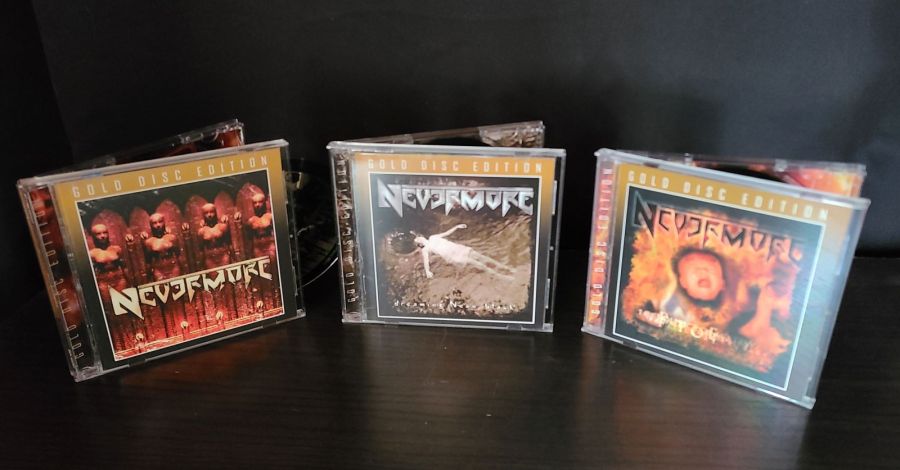
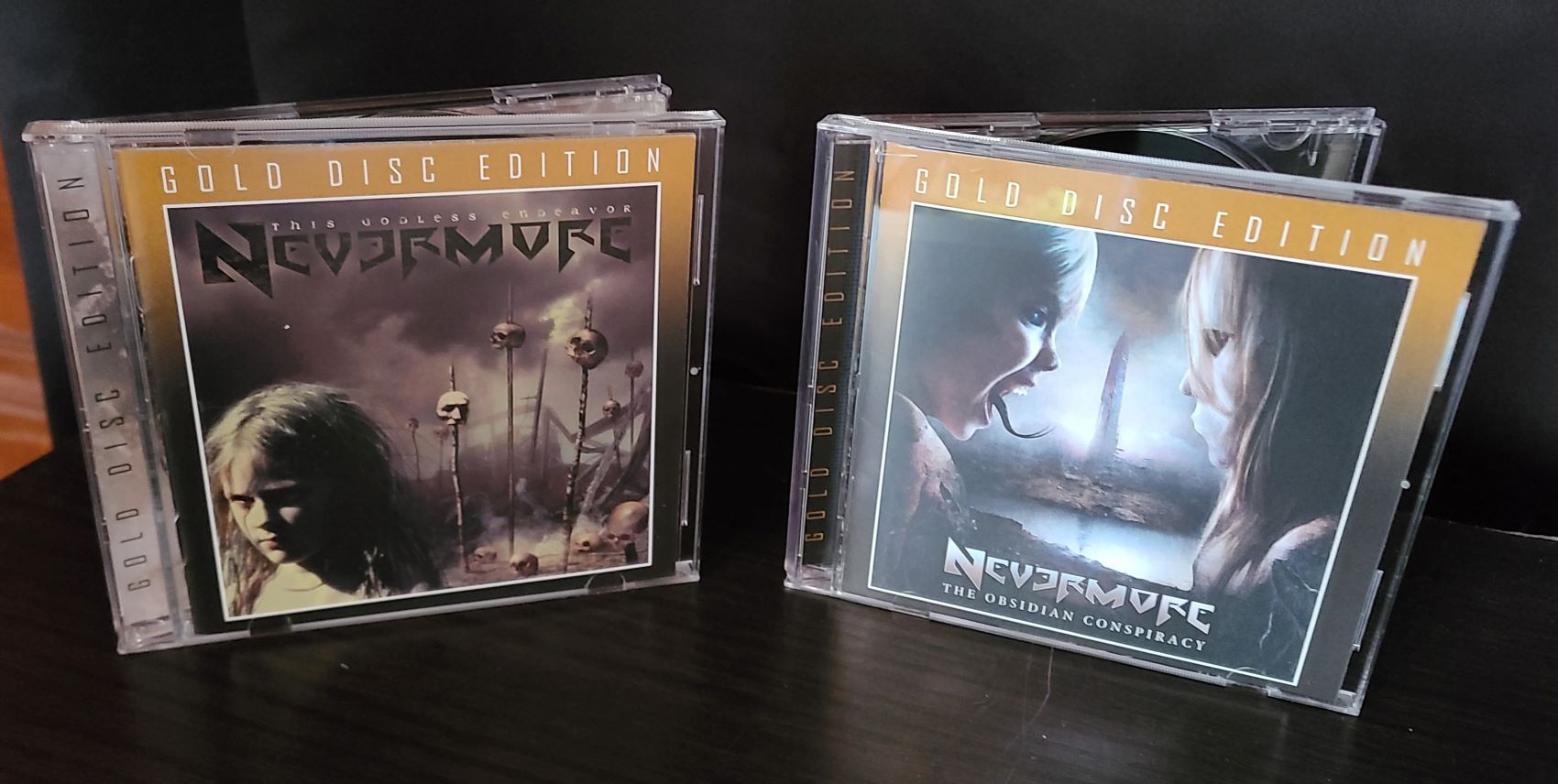
Nevermore – Gold CD Remasters

First things first – I clearly haven’t been posting this week. I was off work the week before, then when I went back this week I walked into an absolute meat grinder. My job gets busy this time of year but this week was insane to a degree beyond what I expected. Things are going to calm down some next week so I decided just to punt my posts to a week beyond in order to keep my time free.

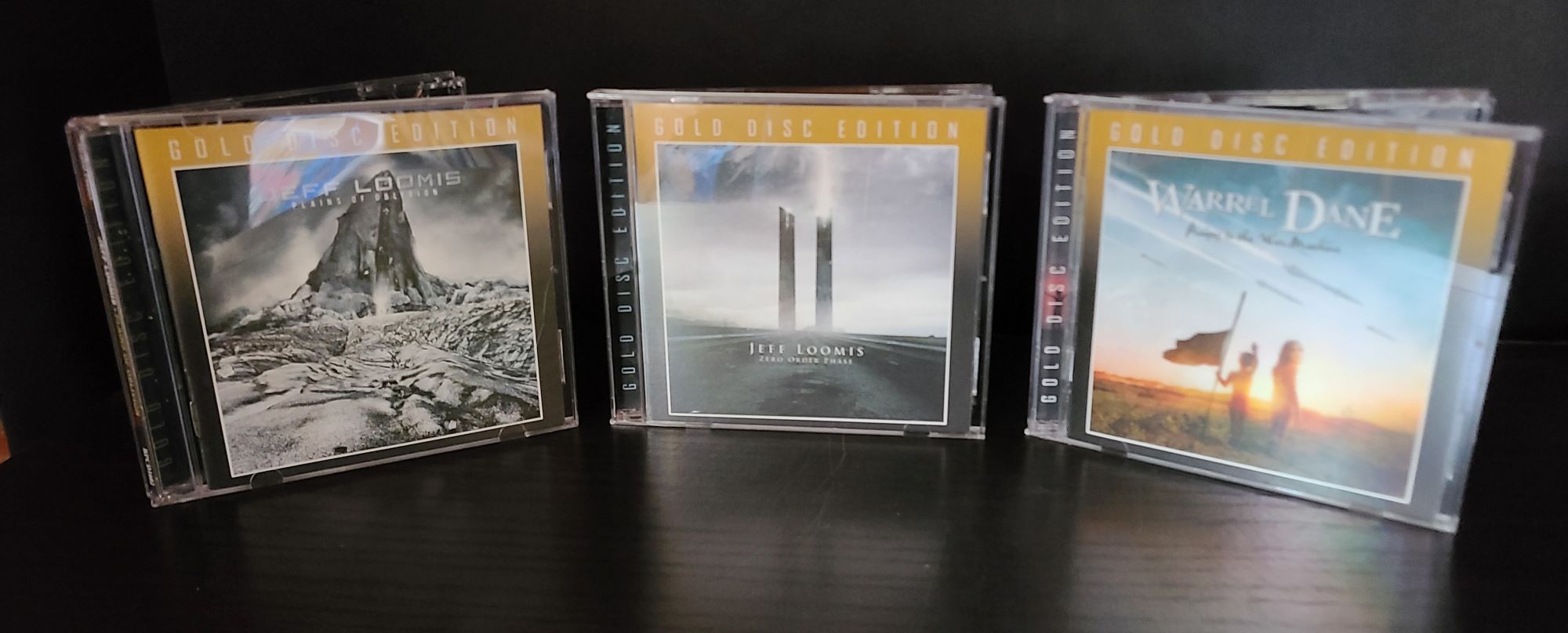
So to the point of today’s post – recently I had to make a few “money moves,” and in the end I came out a hair ahead of the curve. It allowed me to shop around for a few things I’d wanted to buy and, all of a sudden, I noticed this set of gold-disc remasters of the Nevermore catalog on sale for a great price. These were done by Brutal Planet Records and seem to be the only licensed, in-print version of the Nevermore albums available now. Their former label Century Media doesn’t have any Nevermore stock on their site. But that’s fine, as these remasters are well worth the money.

So what’s sitting here is the seven full-length Nevermore albums, as well as two solo albums from guitarist Jeff Loomis and the first solo album from singer Warrel Dane. This is nearly a complete collection, but not quite. It does give me the idea to run through a series on the Nevermore albums and associated solo works. I won’t include Sanctuary in this as I feel they should be treated as a separate entity.

There is an EP, In Memory, that wasn’t a part of this bundle but is also available in the gold remaster series and I have it on the way. Nevermore also issued one single in their career, which seems odd but hey, it is what it is. I was able to find that for a decent price and it’s also en route to my mailbox.

There is another Warrel Dane solo album, Shadow Work, released in 2018 after his death. He was working on the album when he died and this was compiled from the recording sessions. I don’t own this yet but it is pretty easy to get so I’ll pick that one up soon too.

There is one other Nevermore piece – the 2008 live album Year Of The Voyager. I had this on both CD and DVD back when it released but they wound up parting ways with my CD shelf at some point. And as it would turn out, they are out of print and pretty hard to get right now. The DVD is unobtainable but the CD seemingly can be found within some reason. It is on streaming services so if worse comes to worse I can play it on there if I can’t hunt down a copy.

After I gather the rest of the stuff I will take some time to evaluate it and then later on in the year I’ll throw together a series going over everything in detail. I might as well since there is no hope of adding to the Nevermore catalog. The only component that might add to this series later on would be another Jeff Loomis solo album, which I can happily add in if and when that comes.

So all that will come later this year, I would guess it’ll be an after summer thing. I wasn’t planning on doing it but having all these nice gold remasters got the idea going for me. Something to look forward to later on in the year.

One other thing about the reissue set – each CD also came with a cool trading card in it. It’s a bit of a tricky collectible to be inside of a CD case, but luckily I have some protective sleeves for trading cards laying around so I can keep these in a spot where they’ll stay minty fresh.

Iron Maiden – The Band Index

This post will offer up a series of links to the various posts and series I’ve written about Iron Maiden. They are my favorite band and I’ve covered them extensively here, with more to come, so I thought it’d be wise to create a central hub for easier navigation between all of the stuff I’ve posted over the years.

This will be updated with new posts as they come. Also I will eventually use this as a hub for any Maiden associated acts, such as Bruce’s solo albums, Blaze’s stuff or the wealth of side projects and other solo albums out there.

Albums

I have covered a handful of Maiden’s studio records and eventually will get to them all. I’ll just post a list of all the albums and link up to the posts for those already done.

Iron Maiden

Killers

The Number Of The Beast

Piece Of Mind

Powerslave

Somewhere In Time

Seventh Son Of A Seventh Son

No Prayer For The Dying

Fear Of The Dark

The X Factor

Virtual XI

Brave New World

Dance Of Death

A Matter Of Life And Death

The Final Frontier

The Book Of Souls

Senjutsu

The Studio Album Ranking

Here lies the post where I ranked all of the albums. Simple enough.

The Album Cover Ranking

I have also ranked the album covers. That is in two parts – Part One here, Part Two here.

The Singles Series

I’ve ran through my collection of singles and discussed the ones I presently own. I am planning on restarting the series to fill in the gaps at a future point in time when I’ve bought more.

This is the first post in the series, and this is the last post. Links to each entry in the series are contained in each post for your navigational ease.

The Live Album Series

I did a full run-through series in the same vein as the singles series. Here is the first post of that series and the, for now, most recent live album. There is also a live album ranking and a wishlist for stuff I hope gets released officially at some point. This series also has links to each post in the series within it.

Unplayed Songs Live

This two-parter looks at the songs Maiden haven’t played on a live stage. The post was heavily updated to reflect the current Future Past Tour, which knocked the list down a fair bit. Part One is here, Part Two is here.

Songs

I occasionally take a look at a specific Maiden song. I have not done a great deal of these yet but this list will grow over time.

Hallowed Be Thy Name

Alexander The Great

Charlotte The Harlot (this is all four songs in the saga)

Aces High

2 Minutes To Midnight

One-off Posts

This section will compile various posts I’ve done regarding Maiden. I am still putting this list together and will update it soon.

Other updates will come as I scan through my old posts to identify anything I missed. I hope this assists readers who want to check out the scope of things I’ve done.

For questions, comments or other concerns, use the comment form below or use my contact page to reach me.

The Oldest CD

I was thinking about the state of my music collection recently. By this point I have a fair amount of stuff – around 800 CDs and 250 or so records. But the point of today’s post isn’t really the amount, but more of the timing of it all.

I’ve had a music collection of some sort since I was probably eight. Tapes and a few old records, then CDs for a long time, then back to records to some degree. As I got to thinking about it, I realized that the vast majority of my collection is from 2008 and on. I built most of it through the 2010’s, and honestly most of my records have been picked up these past couple of years.

It’s kind of sad in a way, as I wish I had more of the stuff I used to way back when. I honestly didn’t have any real collector’s items or anything, this isn’t about that – the stuff I have bought in the past several years commands way more value than the stuff I had in 1991.

But I do kind of hate that I had to let things go over the years. In some cases, stuff simply got lost due to moving. A box misplaced at one time was actually a bunch of old records my relatives gave me. It wasn’t all great stuff but there were some cool albums in there and I liked having them. Other odds and ends I couldn’t even really tell you what happened – I’m not even sure what I did with my old tape collection, it might have walked off when my family moved houses while I was in the Navy in the mid ’90s’.

The bulk of stuff though, mostly CDs, met a more obvious fate – at various points in my life I had to sell stuff off. Back in the early 2000’s, a CD could actually fetch a few bucks from a store. Throw ten in the pile and you got enough for food and gas money, or even beer and cigarette money, which honestly was where I blew a fair bit of that cash. I had one or two times where I had to basically start my life from scratch, and the vast majority of my music collection was sold off for that purpose. These days a CD collection probably isn’t valuable enough to float a person for a month’s rent or whatever, but back then it did work.

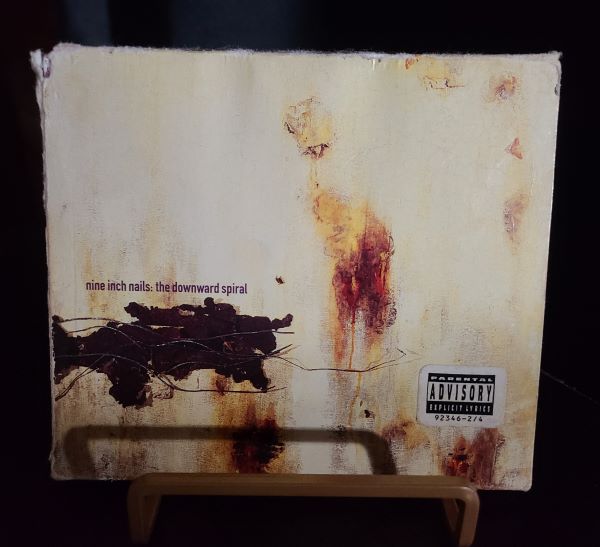
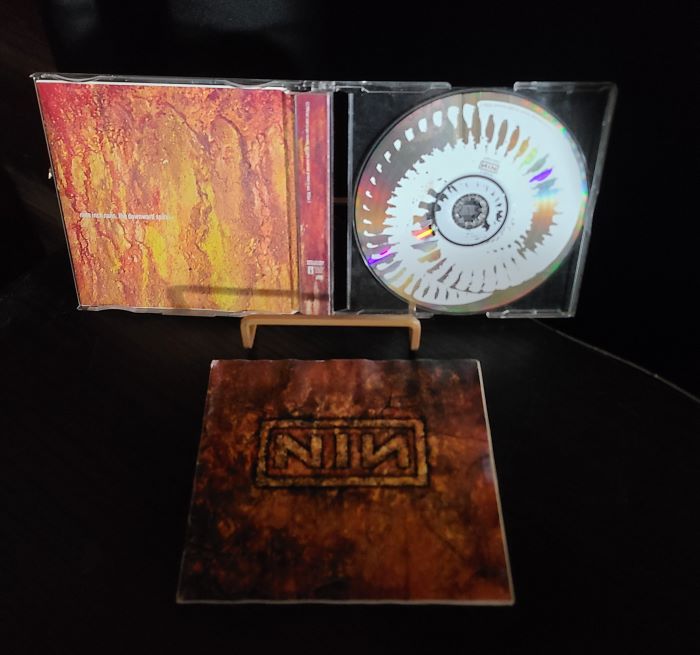
With ever rule or tendency there is an exception, of course. And my collection being a pile of stuff I’ve bought from ’08 onward does have its exception – this one CD that I bought on release day in 1994. It’s the unsellable CD – not because it’s worth anything or even for sentimental value – I love the album, but I have it on vinyl and a reissued CD edition. It’s unsellable because it’s just that – the packaging just doesn’t hold up and no one would buy it.

A lot of people reading now who were around back then probably already knew what album I was talking about. The CD packaging for The Downward Spiral was infamously “collector unfriendly.” It has a rickety cardboard sleeve to hold a slimline jewel case and a thick booklet. These did not hold up well at all and the packaging bombed out pretty quick on them, even if someone tried to take care of it. As I recall from a lot of collections back then, many people did not try to care for their stuff.

My copy I guess still holds up – the CD itself has small scratches but plays just fine and the whole jewel case part is in primo shape. But the outer packaging is hosed, in fact it broke apart when I dug it out for these pictures. It all looks a bit waterlogged but I can’t for the life of me figure when it got wet – I think it might just be from the famous Missouri humidity. Nothing else around it or in my collection at all has any signs of being waterlogged.

In the end I guess I do have one CD from my old collection, if only because it was such dim packaging that no one wanted to buy it. I’m kind of glad, it’s nice to have on hand even though it only serves sentimental purposes. I can’t be “that guy” who has an entire life’s worth of a collection on hand, but hey, that’s ok – I have this beat up old copy of a Nine Inch Nails album still.

Last week I covered The Downward Spiral in great detail for its 30th anniversary, that post is here.

For questions, comments or other concerns, use the comment form below or use my contact page to reach me.

The Chats – Smoko

For once I’m going to handle something from this century. And today’s song is only going to turn seven this year so I can conveniently ignore the fact that the year 2000 was 24 years ago.

Our song today comes from The Chats, an Australian group who got their start in 2016 but would find themselves with the kind of fame every new band wishes they could have – a viral hit. It isn’t nearly as easy to score an attention-getting Internet hit as some might believe, but when it does happen it can pay in spades.

The Chats describe themselves as “shed rock,” while the music community at large applies the punk rock label to them. The band formed in school when they were 17 years old and they quickly issued two EP’s. “Chat” in Australia is slang to mean something gross, or along those lines. It should not be confused with the general use of “chat,” as in conversation; or the American use of “chat,” as in the Oklahoma noise rock act Chat Pile, which is mining waste.

It’s the band’s second EP Get This In Ya!! that houses today’s song. Smoko is another Australian slang term, this one simply refers to a break at work, it’s the typical 15 minute or so break most workers get and doesn’t actually have to involve smoking. And yeah, like many I had never heard the term until this song.

The song is a quick and easy one. It rolls through with the bass providing the bulk of the rhythm while the guitar accents over the music. Eamon Sandwith on vocals delivers a snotty sort of vocal take that is perfect for the song. This isn’t they type of punk rock where people slam out a few distorted power chords and scream about how the government sucks – this is very ear-pleasing stuff with a good hook and premise to draw the listener in.

The song and video work together to communicate one of life’s important lessons – don’t mess with people when they’re on break. In the first verse, Eamon bothers a guy on his smoko. In the second, he tries to get his benefits payment but finds that the phone rep is on smoko. And then Eamon himself heads to smoko while on lifeguard duty and a swimmer is caught in the waters off the beach. It’s all pretty hilarious stuff and well put together on an indie budget.

Smoko took the route of becoming a viral hit – it sits at over 20 million views on YouTube and nearly 30 million Spotify plays. Buzz increased when Josh Homme brought a few friends to a Chats gig in Los Angeles, those friends were Dave Grohl as well as Alex Turner and Matt Helders of the Arctic Monkeys. The group also drew the attention of Billie Joe Armstrong of Green Day and punk legend Iggy Pop.

The Chats found that their quick shot of notoriety had staying power too – the single for Smoko was certified gold in Australia and their subsequent full length albums have charted internationally. They aren’t a case of here today, gone tomorrow – they’ve got the legs to run it out and stick around.

Smoko was a nice surprise hit and The Chats were able to take advantage of the viral success to kickstart their career. They continue to tour the world and build on the buzz from nearly seven years back. As for me, well, I’m done with this post and I’m on smoko, so leave me alone.

Bruce Springsteen – Born In The USA

By 1984, Bruce Springsteen had been on quite a run of albums – his past four records shaped his sound and defined who he was as an artist. But in 1984, The Boss would embrace some pop stylings and conquer the world.

Bruce Springsteen – Born In The USA

Released June 4, 1984 via Columbia Records

My Favorite Tracks – Born In The USA, Glory Days, I’m Goin’ Down

Recording of this landmark album turned out to be really easy – a lot of these songs were written during the same sessions for The Boss’s prior album Nebraska. In fact, there was a point where Nebraska and this record could have a been released as one double album. A trove of unreleased songs from this time period also exist, many of which wound up in the box set Tracks.

Springsteen recorded the album with his E-Street Band – Roy Bittan, Clarence Clemons, Danny Federici, Garry Tallent, Seven Van Zandt and Max Weinberg all on their chosen instruments for recording. Production was handled by Jon Landau, the journalist who had deemed Springsteen the “future of rock” in 1974 and would be Springsteen’s co-producer until the mid 1990’s. Also involved in production were Chuck Plotkin, Springsteen himself and Steven Van Zandt.

The album would get immediate press for its striking cover image – The Boss’s backside clad in jeans with a ballcap hanging in his ass pocket, standing in front of the American flag. The shot was taken by Annie Leibovitz and is one of rock’s enduring album covers. The Boss reportedly worked out to make sure his butt was in prime shape for the photo shoot.

This record comprises 12 songs with a run time of 46:57, none of the songs venture beyond 4 minutes and it’s a fairly lean playing time for that many songs. Fans have long awaited a massive reissue of this album with the surplus of unreleased songs from this time period though to date that reissue has not seen the light of day.

A note on the album’s singles – there were a total of 7. All of them wound up in Billboard’s Top 10, though famously Springsteen did not generate a number 1 hit that he performed. He still has not to this day, his only number 1 is Manfred Mann’s performance of his song Blinded By The Light. I wanted to make the note about singles here so that I don’t have to bring it up through each song.

Born In The USA

Right off the bat we’re into the storied title track. It’s a very simple song, bright keyboards and a steady march through verses and chorus that keeps a consistent tempo. While sounding very bright, the song’s verses are a dark portrayal of the struggle of the common American – many Vietnam veterans returned from an unpopular war, only to find a lack of available jobs. The simple chorus is just Bruce’s raspy delivery of the song’s title. Set against the upbeat, pop-tinged music, many mistook the song to be a celebration of the US rather than a criticism. It’s a misinterpretation that still goes on sometimes today.

In the end the song is brilliant in its simple delivery and stark contrast between the music and the theme. The plight of the working person in the early ’80’s dark economy was a focus of Bruce in his songwriting and here he hit a grand slam in his effort to highlight it.

Cover Me

This bright and grooving track was originally a song Bruce composed for Donna Summer, though Jon Landau convinced The Boss to hold on to it for his own album. Summer got the song Protection from Springsteen and Cover Me stayed here.

The song is a great jam featuring all of the E-Street band going off. The song’s theme is again a few shades darker than the music’s beat – here, Bruce seeks a companion to be into and see their way through the rough and tumble world. Stay in with the one you love to weather the “storm” of society.

Darlington County

Up next is a very fun song, highlighting two guys who couldn’t hack it in New York so they move to South Carolina to try and swing in a smaller town. They come with tall tales, bragging that their dads own the World Trade Center, and they’re trying to get lucky with the southern girls because they couldn’t get any action in NYC. It’s song that both in theme and musical style really sets the tone for the Heartland Rock scene that would explode after this album’s release.

Working On The Highway

This one has a marriage of rockabilly and ’80’s synth pop to it, another really fun song that still again possesses a darker lyrical offering. This time the song’s main character of a guy who worked on highway construction and winds up with a pretty young girl. The girl’s family is not happy with her relationship with this older, salt of the Earth kind of guy and the couple run off to Florida for a bit. The guy winds up getting busted and is out working on the highway again, this time as part of a prison work gang. It is a pretty amusing story so it’s not as “down” as other songs.

Downbound Train

Popularly known as the depressing song on this record, this song’s music actually matches the harrowing tale it tells. It’s about a guy who gets laid off of his job and loses his love in the process. The guy winds up working on the railroad, pretty brutal work that ties into the title’s figurative train. The music retains the fit of a song from this pop-oriented record but it’s also clear that this was conceived during and could have been put on the Nebraska album.

I’m On Fire

Very interesting stuff going on with this very brief song. A quiet rolling guitar part is accented by very, very quiet drums as Bruce is trying to pick up a married woman. Some misinterpret the song and believe Bruce is after an underage woman here but that is totally not the case and honestly it’s a pretty stupid take on the song. It’s clearly Bruce in over his head for a taken woman.

No Surrender

This is another straight up 80’s rock track that offers up a far more positive energy than the doom-laden lyrics of other songs. The song is a tribute to childhood friendship that endures through the struggles of life. There are some confusing parts of the song that seem to intertwine romantic interest, the meaning there is unclear and has been speculated on but I’ll leave all that alone for today.

This cut made the album at the insistence of Steven Van Zandt and can be seen as a tribute to Bruce and Steve’s long-running friendship and musical partnership. Van Zandt had wanted to see Bruce get famous and this album would accomplish that, and Van Zandt left the E-Street band just after recording on the album was wrapped. He would jump in as a guest and then later return to the group in full.

Bobby Jean

It’s on to what is another tribute to Van Zandt, the song was composed after Steve announced he was leaving and was one of the final tracks recorded. The song fits as a lost love sort of thing as well, with the fictional Bobby Jean. This one really goes in to a groove that eclipses the music found elsewhere on the album and could be seen as a lead-in to Bruce’s upcoming pop phase.

I’m Goin’ Down

This song offers up tinges of rockabilly in a very simple and pleasing rhythm through music and words. The music is again upbeat but the story told is a sad one of a couple that’s had the magic of their relationship wear off. Bruce also repeats the title about a million times through the song, making Iron Maiden and The Scorpions jealous. This one doesn’t get played much live because the band has a hard time recreating the swing of the recorded track, but the song is also offered up by some critics as one of Bruce’s best tracks.

Glory Days

Up next is one of the more well-known songs and one that still lingers on airwaves today. It’s another fun, upbeat jam with some thought-provoking lyrics but not necessarily down and dark this time. This is a tale of people who’ve gotten older looking back on their younger, more fun days as a way to relieve the tension and monotony of common adult life. It could be seen as a shot at those who “peaked in high school” but the idea of “glory days” is fairly universal.

This song did have a verse cut, it was about Bruce’s father being laid off of his long-time factory job. Versions with the missing verse are out there though it does cast the song in a more depressing light.

Dancing In The Dark

The album heads to the close with the lead single and a song that Bruce didn’t want to write that also became his biggest solo hit.

As the album was being compiled, Jon Landau felt like it needed a good hit single. Bruce and Jon got into it arguing over the point, then Bruce spent the night writing this track. The lyrics are Bruce’s frustrations with trying to do exactly what he wound up doing – writing a hit single. It’s set to a danceable pop rock beat, nothing overly complex here.

The song was the highest-charting of Springsteen’s career – it went to number 2 on the charts, blocked at first by Duran Duran and then Prince’s mega-hit When Doves Cry. It’s also the only Bruce single that sold over a million copies in the US. The music video featured a young Courtney Cox in an early acting role being picked as the girl to come on stage and dance with Bruce.

My Hometown

The finale is a somber and sparse atmospheric pop track that recounts a kid growing up and being stuck in his hometown. The song runs through racial tensions of the 60’s and the deterioration of the American job market in the 70’s. The final verse sees the narrator pass on the “legacy” of the hometown to his kid in the present day, just as his father did with him way back when. The narrator and his wife talk about packing up and splitting town, which I personally did to get out of my small hometown and I fully recommend. It’s a pretty nice song to wrap up the album.

Born In The USA was a runaway hit. The album spent a month of 1984 at number 1 on the Billboard Hot 100, then re-entered the top spot for 2 weeks in 1985. It was number 1 in 10 other countries and in the top 10 of 5 others. It has been certified diamond in the US for sales of 10 million copies, presently it has sold 17 million US and a total of 30 million worldwide. It is the best-selling album of Springsteen’s career and the best-selling album from 1984.

For Bruce this was a leap into the pop fray after years of more pure rock styling. He would continue to explore that ground on his next few albums as the E-Street band, at least officially, broke up around this time.

The success of Born In The USA would thrust the concept of “heartland rock” into the spotlight. It was already a term, meant to corral artists like Bob Seger, Tom Petty and Springsteen together. It would also envelop a few country artists, notably Steve Earle. This subgenre term, with country and rock leanings and a socially conscious song message, would mostly become entwined with Bruce and the man who’d quickly become his spiritual twin, John Mellencamp. It’s not hard to find people who confuse the two, some believing both artists are the same person.

For Bruce Springsteen, this album was the all-conquering victory he had long been plugging away for. He crafted one of the best-loved and best-selling albums in history. The seven singles from this record were inescapable in 1984 and for years beyond, the songs are still around today. The legend of The Boss was now solidified.